
Main Courses
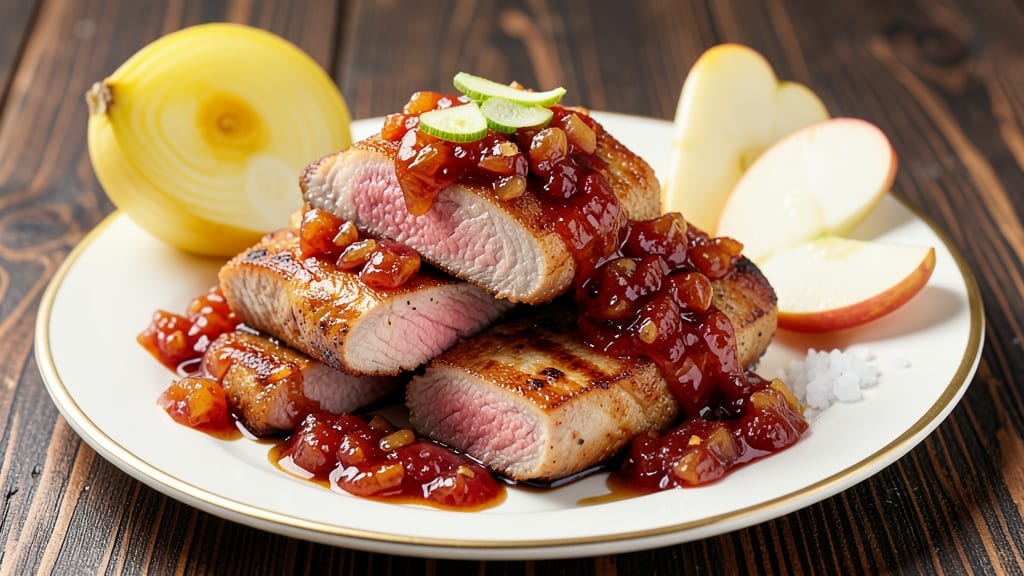
This apple chutney recipe for pork tenderloin transforms a simple weeknight dinner into a restaurant-worthy meal with minimal effort. The sweet-tart glaze caramelizes beautifully on the edges while keeping the pork's interior perfectly tender—a technique I perfected after years of testing at The Smoky Pig.
What makes this dish special is how the chutney's balance of apple, cider vinegar, and spices creates a crust that's both sticky and complex, cutting through the richness of the pork.
The secret lies in two key steps: searing the pork tenderloin until it develops a deep golden crust, then basting it with the warm chutney during the final minutes of cooking. This method ensures the meat stays juicy while absorbing just enough chutney to create that signature caramelized finish.
I've cooked this dish for everything from family dinners to high-end catering events, and it consistently delivers professional results without requiring advanced skills.
By the time you serve this dish, you'll have perfectly cooked pork with a glossy, caramelized exterior and a tender, juicy interior that melts in your mouth. The apple chutney adds a bright, fruity contrast that elevates the pork from ordinary to extraordinary.
This combination works beautifully with roasted root vegetables or a simple green salad—both of which complement the dish's rich, sweet-savory profile.
For an even more impressive presentation, drizzle extra chutney over the top and garnish with fresh thyme. Pair with a crisp white wine or sparkling cider to cut through the richness.
The recipe scales perfectly for both intimate dinners and larger gatherings, making it a versatile addition to your cooking repertoire. Let's get cooking!
Ingredients for apple chutney recipe for pork tenderloin
Sweet-tart chutney meets perfectly seared pork tenderloin—this combo transforms ordinary into extraordinary with just a few quality ingredients.
| Ingredient | Amount | Notes |
|---|---|---|
| Pork Tenderloin 🍖 | 1 ½ lb | Center-cut, trimmed of fat |
| Apples 🍎 | 2 medium | Honeycrisp or Fuji, peeled/cored |
| Yellow Onion 🧅 | 1 medium | Diced, yellow or red |
| Apple Cider Vinegar 🍶 | ½ cup | Bragg or similar quality |
| Brown Sugar 🍚 | ½ cup | Packed light brown sugar |
| Fresh Ginger 🌿 | 2 tbsp | Finely grated, fresh preferred |
| Garlic Cloves 🧄 | 3 cloves | Minced, fresh preferred |
| Ground Cinnamon 🌶️ | 1 tsp | True cinnamon, not cassia |
| Ground Cloves 🌶️ | ¼ tsp | Whole cloves ground fresh |
| Salt 🧂 | ¾ tsp | Diamond Crystal kosher |
| Black Peppercorns 🌶️ | ½ tsp | Freshly cracked, coarse |
| Unsalted Butter 🧈 | 2 tbsp | Cold, for searing |
| Fresh Thyme 🌿 | 2 sprigs | For garnish, leaves only |
The apples are the foundation, so pick Honeycrisp or Fuji—they hold up best when cooked. If you can't find them, Granny Smith works too, but it'll be more tart. I always buy organic apples for chutney since the skin adds texture. For the pork tenderloin, center-cut is non-negotiable—it's more uniform and stays juicier. Trim any visible fat before cooking. The vinegar matters too: Bragg or similar quality gives the best balance of tang and depth. Don't skimp on the fresh ginger—it's what ties all the flavors together.
No Honeycrisp apples? Substitute with a mix of Granny Smith and Gala—the tartness balances the sweetness. Running out of apple cider vinegar? White wine vinegar plus 1 tsp apple juice works in a pinch. The brown sugar can be swapped for maple syrup or coconut sugar, but it'll change the caramelization slightly. Fresh ginger too expensive? Ground ginger at half the amount, but it won't have that bright zing. For the spices, Penzeys or bulk bins are your best bet—pre-ground spices lose flavor fast. If you can't find true cinnamon, Ceylon cinnamon is the next best thing.
This chutney reheats beautifully—just warm it gently on the stove with a splash of water to loosen it up. Keeps for 2 weeks in the fridge, or 6 months frozen in ice cube trays. The pork tenderloin is best served immediately, but you can reheat it gently in the oven with a little extra chutney. I always make extra chutney—it's perfect on sandwiches, with roasted veggies, or even drizzled over grilled chicken. Store the chutney in a glass jar with a tight lid to keep it fresh longer.
Why You'll Love This Recipe
- One-Pan Magic: I swear by this recipe because it’s literally one pan—no chopping boards, no extra pots. Just sear the pork, toss in the diced apples and onions, and let the vinegar and sugar work their magic while you sip your coffee.
- Sweet-Savory Balance: That caramelized apple chutney glaze? It’s the star. The brown sugar and vinegar create this perfect tangy-sweet contrast that clings to the pork like a hug—juicy, glossy, and impossible to resist.
- Weeknight to Dinner Party: Between us, this is my go-to when I need something impressive but zero-stress. Serve it sliced for a quick weeknight dinner, or double the batch and bring it to a potluck—everyone will think you slaved away for hours.
- Leftovers That Don’t Suck: Honestly, the pork stays tender for days, and the chutney just gets better as it sits. Reheat slices with a splash of apple cider vinegar, and it’s like you’re eating fresh-off-the-grill again. Plus, the apples soften into this melt-in-your-mouth jam—no waste here.
Step-by-step instructions for sweet-tart apple chutney pork tenderloin
This method delivers melt-in-your-mouth pork with a caramelized crust and a glaze so rich it'll have everyone asking for seconds.
Prepare the Pork for Perfect Tenderness
Pat the 1.5 lb pork tenderloin completely dry with paper towels—this ensures maximum crispiness when we sear it later. I like to make a few shallow slashes along the surface with a sharp knife, about ¼-inch deep, to help the chutney penetrate deeper during cooking. Season both sides generously with 0.75 tsp salt and 0.5 tsp freshly cracked black peppercorns, pressing the spices into the meat so they adhere well.
Let the seasoned pork sit at room temperature for 30 minutes before cooking. This allows the meat to cook more evenly, preventing any potential cold spots in the center. While it rests, you'll notice the surface becomes slightly tacky—that's the salt drawing out moisture, which will evaporate during searing and create that beautiful crust we're after.
Build the Apple Chutney Base
In a medium saucepan, combine the 2 medium diced yellow onion, 2 tbsp finely grated fresh ginger, and 3 minced garlic cloves. Cook over medium heat for 5-6 minutes, stirring occasionally, until the onions become translucent and the ginger releases its aromatic oils—you'll smell that bright, citrusy ginger scent filling your kitchen.
Add the 2 medium peeled and cored apples, cut into ¼-inch dice, and cook for another 3-4 minutes until they begin to soften slightly. Here's where the magic starts: pour in the 0.5 cup apple cider vinegar and 0.5 cup packed brown sugar, then sprinkle in the 1 tsp ground cinnamon and 0.25 tsp ground cloves. Stir well to combine all ingredients, then reduce heat to low and let the mixture simmer gently for 10 minutes, stirring occasionally. You'll see the apples begin to break down and the mixture thicken into a glossy, fragrant chutney.
Sear the Pork to Golden Perfection
While the chutney simmers, heat a large oven-safe skillet over medium-high heat. Add the 2 tbsp cold unsalted butter and let it melt completely, then add the pork tenderloin. Sear for 3-4 minutes per side until the surface develops a deep golden-brown crust—this is your signal that the meat is ready for the chutney. Don't be tempted to move the pork around; let it develop that crust undisturbed.
Once both sides are beautifully seared, carefully transfer the skillet to the preheated 400°F oven (you can use the same oven you'll use for the chutney). The residual heat from the searing will help carry the pork through the initial cooking phase while the chutney finishes developing its depth of flavor.
Glaze and Roast to Juicy Perfection
Pour the simmered apple chutney mixture over the seared pork in the skillet. The chutney should coat the pork completely, with about ½-inch of liquid remaining in the pan. Return the skillet to the oven and roast for 15-18 minutes, or until the pork reaches an internal temperature of 145°F when measured at the thickest part. You'll know it's done when the edges of the pork are caramelized and the chutney has thickened into a glossy glaze.
During the last 5 minutes of cooking, you'll notice the chutney darkening and becoming more concentrated. This is exactly what we want—the sugars caramelizing and creating that perfect balance of sweet and tart flavors. The pork should be fork-tender with just a slight resistance in the center, indicating perfect doneness.
Rest and Garnish for Maximum Impact
Remove the pork from the oven and transfer it to a cutting board. Tent loosely with aluminum foil and let it rest for 10 minutes before slicing. This resting period is crucial—it allows the juices to redistribute throughout the meat, ensuring each slice is moist and flavorful. While it rests, spoon any remaining chutney from the skillet over the top of the pork.
Garnish with the 2 sprigs fresh thyme leaves, stripped from their stems, and serve immediately. The contrast of the tender, juicy pork with the sweet-tart apple chutney glaze creates a restaurant-quality dish that's surprisingly simple to prepare at home. Each bite should deliver perfectly balanced flavors with a caramelized edge that adds just the right amount of complexity.
Pro Tips For Making Apple Chutney Recipe For Pork Tenderloin
- SEAR THE PORK HARD: The chutney’s sweet-tart flavors need something to latch onto, and that’s the crust. Use a cast-iron or heavy skillet and get it screaming hot—think 450°F—before adding the pork. I used to rush this, and the meat just steamed instead of caramelizing. Two minutes per side max, until it’s golden in spots.
- GRATE THE ONION DRY: No one likes soggy chutney. After dicing the onion, toss it with a pinch of salt and let it sit for 10 minutes while you prep the apples. This draws out moisture, so when you sauté it in the chutney, it’ll caramelize properly instead of turning into a watery mess. Trust me, your chutney will taste deeper.
- COOK THE APPLES LOW: Apples release liquid fast, and if you crank the heat, you’ll end up with a gloppy chutney. Simmer the apples and onions on medium-low (around 275°F) for 15-20 minutes, stirring occasionally. Let that liquid reduce naturally—no rushing. The longer you cook it gently, the richer the flavor.
- ACIDIFY THE CHUTNEY LAST: Apple cider vinegar is the flavor bridge, but add it too early, and you’ll cook off its bright tang. Stir in the vinegar and brown sugar only in the final 5 minutes of cooking. This keeps the chutney vibrant and balances the sweetness without making it taste flat. Save it for the end, or you’ll regret it.
Wine and beer pairings for this apple chutney recipe for pork tenderloin
Crisp Whites
For this dish, I always recommend a dry Riesling or Albariño—both wines have enough acidity to cut through the sweetness of the apple chutney while complementing the pork's richness.
A 2021 Dr. Loosen Blue Slate Riesling from Germany is my go-to; its crisp apple and citrus notes mirror the chutney's flavors beautifully. Serve it slightly chilled (50-55°F) to enhance its refreshing qualities. 🍷
Sparkling Cider
If you prefer something non-alcoholic, a sparkling apple cider like Woodchuck Hard Cider's Dry Sparkling is a perfect match. The effervescence cleanses the palate between bites, while the apple notes harmonize with the chutney.
For a festive touch, serve it ice-cold in a champagne flute alongside the pork. This pairing works especially well during fall gatherings when apple flavors are in season.
Light Beer Options
A crisp lager or pilsner balances the dish's sweetness without overpowering it. I love Stella Artois or Heineken for their clean, slightly malty profiles that contrast nicely with the caramelized edges of the pork.
For a local twist, try a Southern-style wheat beer like Atlanta's SweetWater 420—its citrusy notes play well with the ginger and cinnamon in the chutney.
Red Wine for Bold Palates
If you prefer red wine, a light-bodied Pinot Noir or Gamay can work surprisingly well. Look for a 2020 Domaine Serene Pinot Noir from Oregon—its bright red fruit and earthy undertones complement the pork's savory depth.
Avoid heavy reds like Cabernet Sauvignon, as their tannins can clash with the sweet-tart glaze. Serve at 60-65°F to let the wine's fruitiness shine.
Cocktail Pairings
For a festive touch, serve a gin-based cocktail with apple and rosemary notes. My favorite is a Rosemary Apple Gin Fizz—muddle 2 sprigs fresh rosemary, 1 tbsp apple cider vinegar, and ½ oz honey syrup** with 2 oz gin, then top with soda water.
The herbal and tart flavors echo the chutney's complexity. Garnish with an apple slice for an elegant presentation. 🍸
Nutrition facts
Frequently asked questions
Can I make this apple chutney ahead of time?
The chutney actually tastes better when made a day ahead—its flavors deepen and meld beautifully. Store it in an airtight container in the fridge for up to 2 weeks or freeze it in ice cube trays for 6 months. Just reheat gently on the stove with a splash of water before using. The pork should always be cooked fresh, though.
What's the best way to slice pork tenderloin for this recipe?
Slice the pork against the grain into ½-inch thick medallions for maximum tenderness. Use a sharp knife and cut at a 45-degree angle for elegant presentation. For even cooking, let the pork rest 10 minutes after removing from the oven before slicing—this prevents juices from running out.
How do I adjust this recipe for a crowd?
Double the chutney ingredients and use a 3 lb pork tenderloin for 6-8 servings. Cook the pork in a large oven-safe Dutch oven with 2 tbsp butter per side for even searing. Increase oven time to 20-25 minutes at 400°F for proper doneness. The chutney can be made in batches and reheated together before glazing.
Can I substitute the apples in the chutney?
Yes! For a sweeter chutney, use Gala apples. For more tartness, try Granny Smith. If you can't find fresh apples, unsweetened applesauce works in a pinch (reduce other liquids by ¼ cup). Just remember that different apples will change the chutney's texture and sweetness balance.
Why did my pork turn out dry?
Overcooking is the most common cause. Always use a meat thermometer and remove the pork when it hits 145°F—it will continue cooking slightly while resting. Another tip: Don't skip the 30-minute room temperature rest before cooking, and pat the pork completely dry before searing. The chutney glaze helps keep it moist too!