
Main Courses
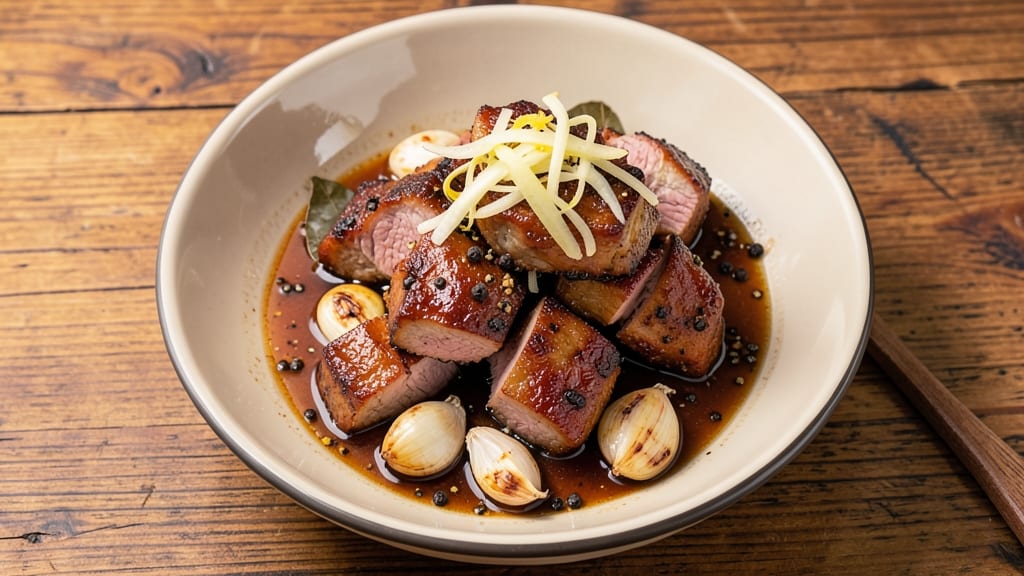
This Adobong Pork Recipe Panlasang Pinoy delivers the iconic Filipino braise you crave—tender, smoky pork with crispy celery crowns that elevate every bite. The magic lies in balancing soy sauce, vinegar, and ginger for that signature tangy-savory depth, while slow braising transforms tough cuts into melt-in-your-mouth perfection.
I’ve perfected this version to stay true to tradition while ensuring crispy edges that make it restaurant-worthy at home.
The key to authentic flavor starts with marinating the pork in garlic, black peppercorns, and bay leaves, then braising it until the sauce reduces to a glossy, caramelized glaze. What sets this apart is the crispy celery crowns—simple yet transformative, they add texture and freshness that cut through the richness.
This dish isn’t just a meal; it’s a taste of home, packed with the bold flavors Filipino families cherish.
By the time you serve this, your kitchen will smell like a bustling karinderia, and every forkful will deliver that perfect harmony of smoky, tangy, and slightly sweet notes. The crispy celery crowns add a refreshing crunch, balancing the tender pork and rich sauce.
It’s the kind of dish that disappears quickly, leaving guests asking for seconds—and maybe even the recipe.
Serve it with steamed rice to soak up every last drop of that luscious sauce, or pair it with atchara (pickled papaya) for a tangy contrast. The leftovers?
Even better the next day, as flavors deepen and the sauce becomes even more irresistible. Let’s bring this classic Filipino comfort food to your table.
Ingredients for adobong pork recipe panlasang pinoy
Six ingredients transform tough pork into melt-in-your-mouth perfection with crispy celery crowns.
| Ingredient | Amount | Notes |
|---|---|---|
| Pork Shoulder 🥩 | 2 ½ lb | Bone-in for flavor, cut into 2-inch chunks |
| Soy Sauce 🍶 | ½ cup | High-quality, preferably Filipino brand |
| White Vinegar 🍶 | ½ cup | White or cane vinegar, not apple cider |
| Fresh Ginger 🧄 | 3 cloves | About 2 inches total, sliced thin |
| Garlic Cloves 🧄 | 8 cloves | Minced, not pre-minced jar |
| Black Peppercorns 🌶️ | 1 tbsp | Crushed lightly, not powdered |
| Bay Leaves 🌿 | 2 whole | Dried, standard grocery store |
| Brown Sugar 🍯 | ¼ cup | Light or dark, packed |
| Celery Stems 🥬 | 4 whole | Large, for crispy crowns |
| Olive Oil 🫒 | 2 tbsp | For crisping celery crowns |
| Salt 🧂 | 1 ½ tsp | Kosher or sea salt |
| Water 💧 | 1 cup | For braising liquid |
The pork shoulder is non-negotiable—bone-in for flavor, cut into 2-inch chunks. Filipino markets often have the best cuts, but regular grocery stores work too. Look for good marbling and ask for the shoulder cut. If you can't find bone-in, use pork loin and add a few extra peppercorns for depth. The soy sauce matters here—Silver Swan or Datu Puti brands are ideal, but any good-quality soy sauce works. For the celery crowns, grab the largest stalks you can find at Trader Joe's or your local produce section—they crisp up beautifully.
No soy sauce? Coconut aminos in a pinch, though it'll lack that deep umami. Vinegar substitute? Lemon juice at double the amount, but it won't be exactly the same. The ginger and garlic can be swapped for ginger powder and garlic powder at half the amount, though fresh is always better. For the celery crowns, if you can't find large stalks, cut regular celery into 1-inch pieces and fry them separately. The brown sugar? White sugar works, but the molasses notes in brown sugar add depth to the sauce. Don't skip the bay leaves—they're key for that authentic Filipino flavor.
This dish tastes even better the next day, so make extra. Store the pork and sauce separately in the fridge for 4-5 days. For the celery crowns, keep them in a paper towel-lined container to maintain crispness for 2 days. Freeze the pork in portions for 3 months—thaw overnight in the fridge before reheating. The sauce can be frozen too, but add a splash of water when reheating to prevent thickening. Serve with steamed rice to soak up every last drop of that luscious sauce.
Why You'll Love This Recipe
- One-Pot Magic: I swear by this—just brown the pork, toss in the soy and vinegar, and let it simmer. No extra pans, no fuss, and that caramelized crust on the pork happens almost by itself.
- Ginger-Garlic Punch: Between us, the fresh ginger and garlic cloves turn this into something special. The vinegar cuts through the richness while the ginger lingers like a warm hug—no heavy sauces, just pure, bold flavor.
- Leftover Goldmine: This dish actually tastes better the next day. I make a big batch on Sundays, and by Wednesday, it’s still the star of my lunch—just reheat and serve, no sad dry meat here.
- Budget Hero: Pork shoulder is cheap, and a single cut feeds my family for days. Plus, the soy and vinegar stretch thin, so you’re not breaking the bank for a meal that still feels like a treat.
Step-by-step instructions for adobong pork with crispy celery crowns
Here's how to make this smoky, tender pork dish with perfectly crispy celery crowns.
Prepare the Pork and Celery Crowns
Pat the 2.5 lb pork shoulder dry with paper towels and cut it into 2-inch chunks. This size ensures even cooking and maximum flavor penetration. In a small bowl, combine 1.5 tsp salt, 1 tbsp crushed black peppercorns, and 2 whole bay leaves. Rub this mixture all over the pork pieces, pressing gently so the spices adhere.
For the crispy celery crowns, trim the 4 whole celery stems by cutting off the leafy tops and bottoms. Heat 2 tbsp olive oil in a large skillet over medium-high heat. Add the celery stems and cook for 3-4 minutes, turning occasionally, until the edges turn golden brown and crispy. Remove them and set aside on a paper towel-lined plate.
Sauté the Aromatics and Brown the Pork
In the same skillet (no need to clean it—the browned bits add flavor), add 3 cloves sliced fresh ginger and 8 cloves minced garlic. Cook over medium heat for 1-2 minutes until fragrant and the garlic turns golden. Be careful not to burn the garlic—it should smell amazing but not bitter.
Increase heat to medium-high and add the seasoned pork pieces in a single layer. Don't overcrowd the pan—work in batches if needed. Let the pork sear for 2-3 minutes per side until deeply browned. This step develops a rich, caramelized crust that adds depth to the final dish.
Braise the Pork in Soy-Vinegar Sauce
Pour in 0.5 cup soy sauce and 0.5 cup white vinegar, scraping up any browned bits from the bottom of the pan. Add 0.25 cup brown sugar and 1 cup water, then bring to a gentle simmer. The liquid should just cover the pork pieces—this ensures they cook tender without falling apart.
Cover the skillet and reduce heat to low. Let the pork simmer for 1 hour 15 minutes, stirring occasionally. You'll notice the pork releases into tender chunks and the sauce reduces slightly, becoming glossy and thickened. The pork is done when it's fork-tender and the sauce has a rich, syrupy consistency.
Finish and Serve with Crispy Celery
Remove the 2 whole bay leaves from the braising liquid. Return the heat to medium and let the sauce reduce for another 5-7 minutes until it coats the back of a spoon. Taste and adjust seasoning with a pinch more salt if needed—the soy sauce and vinegar should balance perfectly.
Serve the adobong pork hot, topped with the crispy celery crowns you prepared earlier. The contrast of tender, smoky pork with the crunchy celery adds a delightful texture element. This dish tastes even better the next day as the flavors meld together, so it makes great leftovers!
Pro Tips For Making Adobong Pork Recipe Panlasang Pinoy
- CRISPY THE PORK FIRST: I learned this the hard way—skipping the sear means you’ll end up with mushy pork swimming in sauce. Brown the pork shoulder in batches over medium-high heat until deep golden, even if it takes 10 minutes. That crust is what holds up under the vinegar’s acidity.
- PEEL THE GINGER (YES, REALLY): Fresh ginger adds depth, but unpeeled chunks turn bitter and gummy. Use a spoon to scrape off the skin before slicing—no need for a peeler. Thin slices (about 1/8-inch) cook faster and infuse flavor without turning to mush.
- DON’T RUSH THE SIMMER: Low and slow is your friend here. After adding vinegar and soy sauce, reduce heat to a gentle bubble—think tiny ripples, not rolling waves. Rushing this step makes the sauce thin and the pork dry. Cover and let it work for 45 minutes.
- SAVE THE VINEGAR FUMES: The first 5 minutes after adding white vinegar? That’s when the smell hits hardest. Crack a window or turn on the exhaust fan—your kitchen (and future guests) will thank you. No, it won’t ruin the dish, but you’ll actually enjoy cooking it.
Flavor customization for this recipe
Sweet Heat Balance
Adjust the sweetness by tweaking the brown sugar. For a richer caramelized sauce, add 1 extra tablespoon of brown sugar during braising. If you prefer less sweetness, reduce it by 1 tablespoon or swap half for white sugar.
For heat lovers, add ½ teaspoon of ground chili flakes or 1 sliced Thai chili pepper while browning the pork. 🌶️
Balance the tanginess by controlling the vinegar. If the sauce tastes too sharp, add ½ teaspoon of sugar or a splash of water to dilute. For extra depth, replace ¼ cup of vinegar with apple cider vinegar—it adds fruity complexity.
Trust your taste buds: the perfect adobo sauce should be tangy but not overpowering.
Umami Boost
Enhance the savory depth by adding 1 tablespoon of fish sauce or ½ teaspoon of MSG to the braising liquid. This is a common trick in Filipino cooking to amplify the umami without altering the dish’s core flavors.
For a vegetarian twist, use 1 tablespoon of soy sauce substitute like coconut aminos plus ½ teaspoon of mushroom powder.
For a smokier profile, add ½ teaspoon of smoked paprika or 1 crushed bay leaf (remove before serving). If you have Filipino calamansi juice, add 1 tablespoon—it brightens the sauce with citrusy tang. These tweaks transform the dish while staying true to its soul.
Texture Variations
Swap the crispy celery crowns for fried shallots or toasted garlic slices for a nutty crunch. For a crunchier finish, sprinkle ½ cup crushed pork rinds over the top before serving. If you prefer softer textures, replace the celery with quick-pickled cucumbers or sautéed green beans.
For extra richness, serve the adobo over creamy mashed potatoes or buttery egg noodles. The contrast of tender pork with these textures makes every bite unforgettable. Don’t skip the crispy element—it’s what makes this dish shine! ✨
Regional Twists
For a Visayan-style version, add 1 tablespoon of bagoong (fermented shrimp paste) to the braising liquid and finish with sliced green onions. This adds a funky, briny depth. In Bicolano regions, include ½ cup coconut milk and 1 tablespoon of shrimp paste for a creamy, spicy twist.
Northern Filipino families often use less vinegar and more soy sauce, creating a saltier, less tangy profile. Southern versions lean into chili heat, with sliced siling labuyo peppers added at the end. Each region’s take reflects local tastes—experiment to find your favorite! 🗺️
Nutrition facts
Frequently asked questions
Why does my adobo sauce taste too salty?
Too much soy sauce is the usual culprit! Start by reducing the soy sauce to ¼ cup and add more vinegar (½ cup) to balance the saltiness. If needed, thin the sauce with 2 tablespoons of water and simmer longer to reduce excess salt concentration.
Can I use pork loin instead of pork shoulder?
Yes, but adjust the cooking time! Pork loin is leaner and cooks faster. Cut it into 1-inch cubes and reduce braising time to 45-50 minutes instead of 1 hour 15 minutes. For extra flavor, add 1 extra bay leaf and ½ teaspoon of ground black pepper.
How do I make the celery crowns extra crispy?
Double fry them! First fry at medium-high heat for 3 minutes, then transfer to a wire rack to cool. Return to the pan for a 1-minute second fry right before serving. Keep them warm in a 200°F oven while finishing the pork.
What's the best way to store leftovers?
Separate the pork and sauce! Store pork in an airtight container with some of the sauce (to prevent drying) for 4-5 days in the fridge. Reheat gently in a skillet with 1 tablespoon water to prevent sticking. The celery crowns stay crispy for 2 days if kept in a paper towel-lined container.
Can I make this in a slow cooker?
Brown the pork first, then transfer everything to a 6-quart slow cooker on Low for 6-7 hours or High for 3-4 hours. Add ¼ cup water if the sauce gets too thick. For crispy celery, fry them separately and add just before serving.