
Main Courses
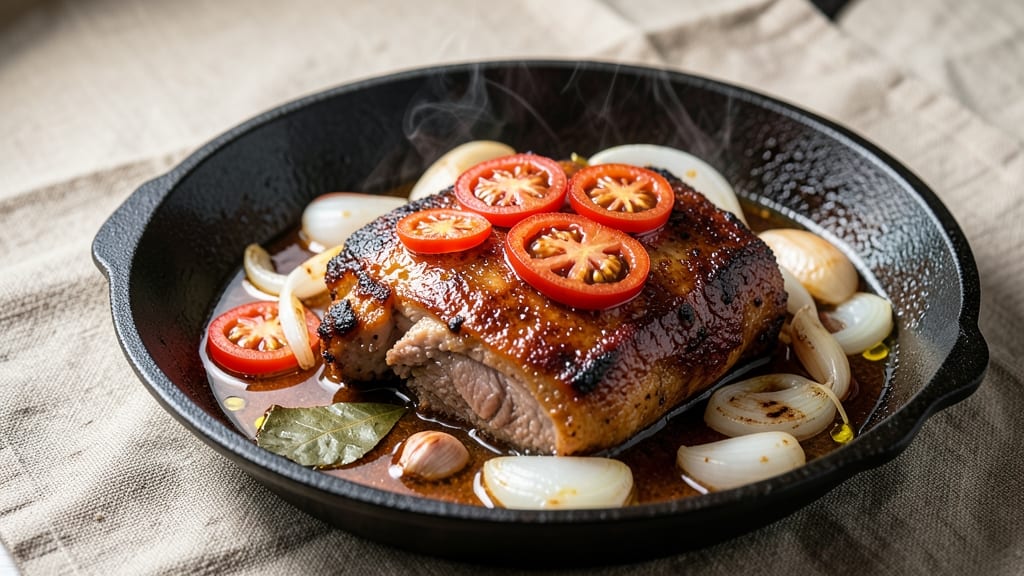
This alamang with pork recipe brings the soul-warming flavors of Filipino home cooking to your kitchen with minimal effort. The secret lies in slow-braising pork in a tangy, vinegar-infused broth that transforms tough cuts into melt-in-your-mouth tenderness.
I first tasted this dish in a small Manila kitchen where the aroma alone made my mouth water—now I recreate it with a simpler, one-pot method that delivers the same comforting results.
The beauty of this dish is its simplicity: just a few ingredients work together to create a harmonious balance of sour, savory, and umami. Pork shoulder breaks down beautifully during the slow cook, while vinegar and tomatoes create that signature tangy broth.
The dish is traditionally served with steamed rice, but the rich flavors stand well on their own too. This recipe stays true to its roots while making it accessible for home cooks.
What makes this recipe special is how it transforms humble ingredients into something deeply comforting. The pork becomes fork-tender, the broth develops layers of flavor, and the vinegar cuts through the richness just enough to keep it bright.
It's the kind of dish that warms you from the inside out—perfect for family dinners or when you crave a taste of home. The slow-braising ensures every bite is packed with flavor without requiring constant attention.
Whether you're cooking for a crowd or just treating yourself, this alamang delivers restaurant-quality results with minimal fuss. The one-pot method means less cleanup, and the flavors only get better as they sit.
Serve it with a side of rice and maybe some pickled vegetables for that authentic Filipino touch. Let's get cooking!
Ingredients for alamang with pork
Pantry staples plus a few Filipino market finds—this one-pot pork transforms humble ingredients into soul-warming comfort.
| Ingredient | Amount | Notes |
|---|---|---|
| Pork Shoulder 🥩 | 2 lb | Bone-in for best flavor |
| White Vinegar 💧 | ½ cup | Distilled for tanginess |
| Tomatoes 🍅 | 2 whole | Medium-sized, halved |
| Onion 🧅 | 1 whole | Yellow, sliced |
| Garlic Cloves 🧄 | 6 cloves | Minced for aroma |
| Bay Leaves 🍃 | 2 whole | Dried for depth |
| Black Peppercorns 🌶️ | 1 tsp | Crushed for heat |
| Salt 🧂 | 1 ½ tsp | Kosher or sea salt |
| Fresh Ginger 🌿 | 1 inch | Peeled, sliced thin |
| Sugar 🍚 | 1 tbsp | White granulated |
| Cooking Oil 🫒 | 2 tbsp | Vegetable or canola |
| Green Onions 🧅 | 3 whole | Chopped for garnish |
The pork shoulder is the star here—bone-in cuts stay juicier during the long cook. Ask your butcher for the shoulder blade if you want extra flavor, but regular pork shoulder works fine. I grab mine from Filipino markets when I can, but any grocery store with a meat counter will have it. Look for good marbling—those little fat streaks melt into the broth and make everything taste richer. If you can't find pork shoulder, pork butt is a solid substitute, though it might need an extra 30 minutes of cooking. The vinegar is non-negotiable—distilled gives the cleanest tang without overpowering.
No white vinegar? Cane vinegar or apple cider vinegar works too, though the flavor will be slightly different. Fresh ginger is ideal, but if you only have powdered, reduce to 1/4 teaspoon—it's way more potent. The tomatoes can be canned if fresh aren't in season (just drain the juice), and the green onions are optional but add that fresh pop at the end. For extra depth, some cooks add a splash of soy sauce or fish sauce (about 1 teaspoon), but I keep it simple with just the basics. The sugar isn't sweet—it balances the acidity in the vinegar, rounding out the flavors.
This dish tastes even better the next day—honestly, the flavors meld into something magical. Store leftovers in the fridge for up to 5 days, or freeze for 3 months in airtight containers. I like to portion it into individual servings so it's ready for quick lunches. The broth thickens as it cools, so add a splash of water when reheating if it seems too concentrated. Serve it over rice, and you've got a complete meal that'll make your kitchen smell like home.
Why You'll Love This Recipe
- Pork Shoulder Magic: The vinegar tenderizes that tough cut in minutes—no fancy marinating, just slice, simmer, and boom, fork-tender perfection. I’ve turned a $5 shoulder into a meal that feeds four with zero waste.
- Tangy-Sweet Balance: That white vinegar and tomato combo? It’s the secret weapon—bright, slightly sour, but the garlic and pork fat mellow it into something dangerously addictive. My picky-eater nephew now asks for seconds.
- Weeknight Workhorse: Double the batch and reheat for lunch—same flavors, zero effort. It’s my go-to when I’m swamped: one pot, minimal chopping, and it still tastes like you slaved over it.
- Budget Stretch: Pork shoulder’s cheap, and this recipe stretches it across three meals without skimping on taste. Honestly, I make it when I need to feed the family for under $15. The vinegar’s the real MVP here.
Step-by-step instructions for alamang with pork
This one-pot wonder delivers rich, tangy flavors that make every bite feel like home.
Sear the Pork Shoulder for Deep Flavor
Heat the 2 tablespoons cooking oil in a large Dutch oven or heavy pot over medium-high heat. Pat the 2 lb pork shoulder dry with paper towels—this helps create a better sear. Once the oil shimmers, add the pork and cook undisturbed for 5-6 minutes until a deep golden-brown crust forms on all sides. You'll see the fat start to render out, which adds incredible richness to the dish.
Flip the pork and continue searing for another 5-6 minutes until evenly browned. Remove the pork and set it aside on a plate. Don't drain the pot yet—those browned bits are pure flavor. Here's the thing—this initial sear locks in juices and builds the foundation for the slow braise that follows. If it sticks, don't panic—just let it be for a minute longer, and it'll release.
Build the Aromatic Base
In the same pot, add the 1 whole onion (sliced) and cook for 3-4 minutes until softened and starting to caramelize. Add the 6 cloves garlic cloves (minced) and 1 inch fresh ginger (sliced thin) and cook for 1 minute until fragrant—you should smell that garlic releasing its sweet aroma. Stir in the 2 whole bay leaves and 1 teaspoon black peppercorns (crushed), letting them toast for 30 seconds to deepen their flavor.
Now pour in the 0.5 cup white vinegar and scrape up all those browned bits from the bottom of the pot. This deglazing step is crucial—it dissolves all the meaty goodness stuck to the pan. Let the vinegar simmer for 2-3 minutes until it reduces by half and the acidity mellows out. This tangy base will balance the richness of the pork beautifully.
Add Tomatoes and Seasonings
Add the 2 whole tomatoes (halved) to the pot and cook for 5 minutes until they soften and break down. Stir in the 1.5 teaspoons salt and 1 tablespoon sugar. The sugar isn't just for sweetness—it helps balance the acidity from the vinegar and caramelizes slightly, adding depth to the sauce. Let everything simmer together for 5 minutes to meld the flavors.
Here's where it gets good—return the pork to the pot, along with any accumulated juices. The pork should be mostly submerged in the liquid. Bring the mixture to a gentle simmer, then reduce the heat to low. This is the moment that matters: we're about to let the pork braise slowly, turning tough meat into tender, melt-in-your-mouth perfection.
Slow-Braise Until Fork-Tender
Cover the pot and let it simmer gently for 2-2.5 hours. The key here is patience—you want the pork to become so tender that it practically falls apart with a gentle prod. Check occasionally to ensure there's enough liquid in the pot. If it looks too dry, add ½ cup water to keep everything moist. The pork is done when it reaches an internal temperature of 200°F and a fork slides in easily.
Real talk: your kitchen will smell amazing during this time. That's the smell of comfort food being made. Once the pork is fork-tender, remove it from the pot and let it rest for 10 minutes before slicing. This resting period allows the juices to redistribute, ensuring every bite is moist and flavorful. Don't skip this step—I learned the hard way that skipping it leads to dry meat.
Finish and Garnish
While the pork rests, skim off any excess fat from the surface of the sauce (if needed) and adjust the seasoning with a pinch more salt if necessary. The sauce should be rich, slightly tangy, and well-balanced. Return the pork to the pot and let it soak up the remaining sauce for 5 minutes. This final step ensures the meat absorbs all that delicious flavor.
To serve, slice the pork against the grain into ½-inch thick pieces. Ladle the sauce over the top and garnish with the 3 whole green onions (chopped). The green onions add a fresh, bright contrast to the rich, tangy sauce. Serve with steamed rice—this dish is all about that comforting, one-pot meal experience. Each bite delivers tender pork, aromatic vegetables, and a sauce that's perfectly balanced between sweet, tangy, and savory.
Pro Tips For Making Alamang With Pork
- SEAR THE PORK FIRST: I learned this the hard way—skipping the sear means your pork will turn out bland and gray, no matter how much vinegar you add. Get that pork shoulder screaming hot in a dry pan for 5-7 minutes per side until it’s deep brown. The crust locks in flavor and cuts through the tangy vinegar later.
- USE OLD TOMATOES: Sounds counterintuitive, but wrinkled, overripe tomatoes are sweeter and break down faster in the vinegar. Toss them in whole, then crush them by hand later—this keeps the sauce from turning into a watery mess. (Yes, even if you’re impatient like me.)
- DON’T RUSH THE VINEGAR: After burning three batches, I finally figured out: let the pork and veggies simmer in the vinegar for at least 15 minutes before adding tomatoes. This softens the pork and mellows the sharpness—skipping this step leaves your dish tasting like a science experiment gone wrong.
- SALT THE PORK TWICE: Generously salt the pork shoulder before searing, then add another pinch when the vinegar sauce comes together. The first layer seasons the meat, while the second balances the acidity. (Your future self will thank you—trust me.)
Wine and beer pairings for this recipe
Filipino Reds
Start with a bold Temple Red from the Philippines—specifically, a Kagran or Lambrusco-style red wine from Luzon. These wines have enough acidity to stand up to the vinegar's tang while complementing the pork's richness.
The earthy notes in these reds mirror the dish's slow-braised depth. I always reach for a medium-bodied example with 12-14% ABV to avoid overwhelming the delicate flavors. 🍷
Crisp Whites
For a lighter option, try a Filipino white wine like Lambayec Redondo or a Sauvignon Blanc from New Zealand. The citrusy brightness cuts through the pork's richness while harmonizing with the vinegar's acidity.
A chilled glass enhances the dish's refreshing qualities—perfect for warmer evenings. I often serve this with a sprinkle of chili salt to echo the dish's spicy undertones.
Local Lager Pairings
If wine isn't your thing, a Filipino lager like San Miguel Pale Pilsen or Red Horse works surprisingly well. The crisp, clean malt profile balances the dish's tangy-sweet sauce without competing.
For a craft twist, try a Belgian Witbier—its peppery notes and citrusy finish mirror the dish's aromatic base. Serve slightly chilled to highlight the beer's refreshing qualities. 🍺
Rum Cocktail Twist
For something truly special, mix 1.5 oz Filipino rum (like Lambanog or Tanduay) with 0.5 oz pineapple juice and a splash of lime. The rum's caramel notes complement the pork's slow-cooked richness, while the pineapple adds a tropical brightness.
Serve over ice with a cinnamon stick garnish for an authentic Filipino touch. This cocktail elevates the dish into a celebratory experience.
Non-Alcoholic Options
Don't overlook Filipino calamansi soda—mix fresh calamansi juice with sparkling water and a touch of honey. The tart, citrusy flavor mirrors the dish's vinegar base while keeping it refreshing.
For a herbal option, hibiscus tea (sampalok) with lemon slices provides a tangy, caffeine-free alternative that enhances the meal's vibrant flavors. ✨
Nutrition facts
Frequently asked questions
Can I use a different cut of pork instead of shoulder?
Yes! Pork butt works beautifully and has similar fat content for flavor. For leaner cuts like pork loin, marinate it first in 1/4 cup vinegar + 1 tbsp soy sauce for 30 minutes before cooking to prevent dryness. Bone-in cuts always stay juicier during the long braise.
How do I make this recipe faster without sacrificing flavor?
Use a pressure cooker! Sear the pork as directed, then cook on high pressure for 45 minutes instead of 2.5 hours. The vinegar and tomatoes will still develop flavor, and the pork will be fork-tender. For stovetop, reduce simmering time to 1.5 hours but check frequently to avoid overcooking.
What's the best way to store leftovers?
Let the alamang cool completely, then store in airtight containers in the fridge for up to 5 days. The flavors actually improve overnight as the pork absorbs more sauce. For freezing, portion into single servings and freeze for 3 months. Thaw overnight in the fridge—never microwave directly from frozen.
Can I make this dish spicier?
Add 1-2 teaspoons of chili flakes or 1 sliced chili pepper (like siling labuyo) with the aromatics. For heat lovers, stir in 1 teaspoon of ground black pepper at the end. Remember: the vinegar already adds tang, so balance with extra sugar if needed.
What if my pork isn't tender enough?
Check your internal temperature—it should reach 200°F. If still firm, return to low heat with 1/2 cup water and cook 30-45 more minutes. The pork will eventually break down. For next time, use a slightly larger bone-in cut or add 1/2 cup coconut milk to the braising liquid for extra moisture.