
Sauces & Condiments
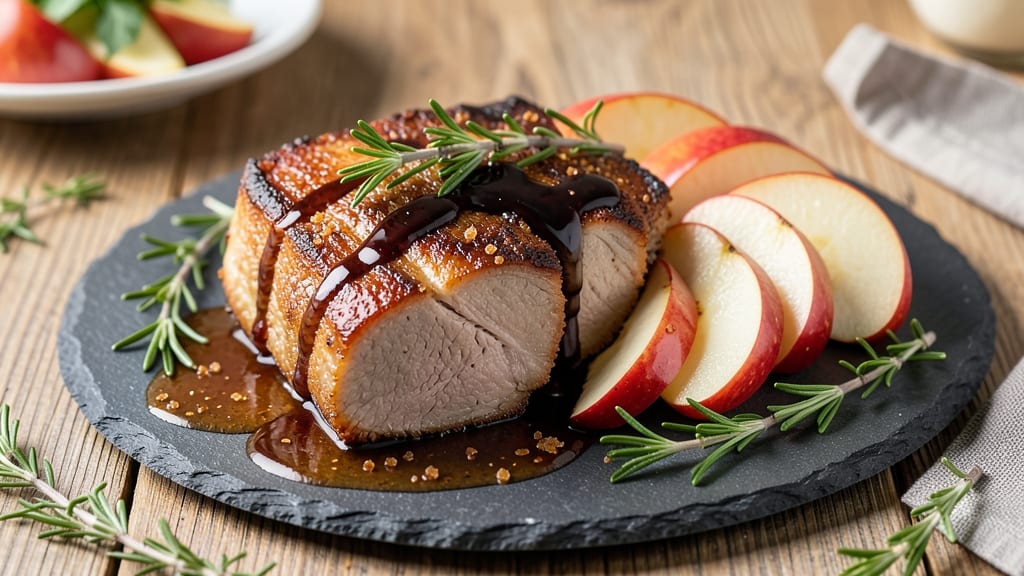
This apple glazed pork loin recipe delivers restaurant-quality results with a sticky-sweet caramel that locks in moisture and transforms simple pork into something extraordinary. 🔥 I developed this technique during a particularly busy week at The Smoky Pig when I needed a dish that could impress without requiring hours of prep—it became an instant favorite among staff and customers alike.
The secret lies in balancing the natural sweetness of apples with savory spices, creating a glaze that caramelizes beautifully while keeping the pork juicy and tender. Unlike store-bought versions, this recipe uses real apple cider and fresh herbs, which add depth and complexity that bottled sauces simply can't match.
What you'll end up with is a perfectly cooked pork loin with a glossy, caramelized glaze that clings to every bite. The internal temperature will reach 145°F, ensuring it's safe to eat while remaining succulent.
This is the kind of dish that turns weeknight dinners into special occasions without the fuss. Pair it with roasted root vegetables or a crisp green salad, and you've got a complete meal that's sure to impress. Let's get started on this foolproof recipe!
Ingredients for apple glazed pork loin
Restaurant-quality glaze starts with these simple yet transformative ingredients—juicy pork meets caramelized apples for a showstopper.
| Ingredient | Amount | Notes |
|---|---|---|
| Pork Loin 🥩 | 2 lb | Center-cut, bone-in preferred |
| Granny Smith Apples 🍎 | 2 medium | Peeled, sliced into 1/4-inch pieces |
| Apple Cider 🍏 | 1 cup | Unfiltered for best flavor |
| Brown Sugar 🍚 | ½ cup | Packed, light variety |
| Balsamic Vinegar 🍷 | ¼ cup | Aged 10+ years preferred |
| Fresh Rosemary 🌿 | ¼ cup | Chopped, stems removed |
| Dijon Mustard 🥫 | 1 tbsp | High-quality, coarse texture |
| Olive Oil 🫒 | 2 tbsp | Extra-virgin, fruity variety |
| Salt 🧂 | 1 ½ tsp | Diamond Crystal preferred |
| Black Pepper 🌶️ | 1 tsp | Freshly ground |
| Cinnamon 🌿 | ½ tsp | Ground, for depth |
| Cloves 🌶️ | 2 whole | Lightly crushed |
The pork loin is non-negotiable here—bone-in, center-cut stays juicier. Costco or Whole Foods carry excellent cuts, but any butcher will trim it for you. Granny Smith apples are a must (their tartness balances the sweetness), but Honeycrisp works too. If you can't find fresh rosemary, dried at half the amount gets you close. The balsamic vinegar should be aged—10+ years adds complexity. For the brown sugar, light variety dissolves better than dark.
No Granny Smith apples? Fuji or Gala will work, but you might need to add an extra pinch of lemon juice to keep the glaze from getting too pale. Subbing apple cider? Unsweetened apple juice works, but the glaze will be slightly less rich. The Dijon mustard is key—no substitutions here. Olive oil matters too; avoid light or refined varieties. For the spices, if you're missing cloves, allspice at double the amount mimics the warmth. The recipe calls for medium apples, but if you grab small ones, just use 3 instead of 2.
Pork loin keeps best in the fridge for 2-3 days before cooking—it actually develops more flavor. Fresh rosemary? Wrap it in damp paper towels and store in a sealed container for up to 5 days. The glaze ingredients (brown sugar, vinegar, spices) can be mixed ahead and stored in the pantry for up to 2 weeks. Once glazed, the pork stays tender for 3-4 days in the fridge—reheat gently in the oven with a splash of water to restore moisture.
Why You'll Love This Recipe
- One-Pan Magic: I swear by this—just toss the pork, sliced apples, and glaze into one pan, and walk away. The apples caramelize while the pork sears, and honestly? That’s about as hands-off as it gets for something this flavorful.
- Sweet-Savory Balance: The tangy balsamic and sharp Granny Smith apples cut through the richness of the pork, while the brown sugar and cider create this sticky, glossy glaze that’s ridiculously addictive. It’s like fall in a bite—without needing a pumpkin spice latte.
- Weeknight to Holiday: Between us, this is my secret weapon for dinner parties and lazy Tuesdays. Serve it with roasted potatoes for a fuss-free family meal, or slice it thin for charcuterie boards when company’s over. The glaze even reheats beautifully—no sad leftovers here.
- Budget-Friendly Feast: Pork loin stretches further than you’d think, and apples + cider are usually cheaper than fancy sauces. I’ve made this for six people for under $20, and the leftovers? They disappear faster than my willpower during Thanksgiving.
Step-by-step instructions for apple glazed pork loin
Here's how to transform simple ingredients into a juicy, caramel-coated masterpiece.
🔥 Step 1: Sear the Pork Loin for Maximum Flavor
Preheat your oven to 375°F. Heat 1 tablespoon of the olive oil in a large oven-safe skillet over medium-high heat. Pat the pork loin dry with paper towels—this ensures a perfect sear. Season both sides generously with 1 teaspoon of salt, 0.5 teaspoon of black pepper, and 0.25 teaspoon of cinnamon.
Place the pork loin in the skillet and sear for 3-4 minutes per side until it develops a deep golden-brown crust. You'll see the edges start to crisp—that's your signal to flip. The sear locks in juices and builds flavor foundation. Remove the pork and set it aside on a plate.
🍳 Step 2: Build the Apple-Cider Glaze
In the same skillet (no need to clean it—the browned bits add depth), add the remaining 1 tablespoon olive oil over medium heat. Add the 2 medium Granny Smith apples (peeled and sliced) and cook for 5-6 minutes until they soften slightly but still hold shape. Stir in the 2 lightly crushed cloves and 0.25 cup chopped fresh rosemary.
Pour in the 1 cup apple cider and scrape up any browned bits from the bottom. Add the 0.5 cup brown sugar and 0.25 cup balsamic vinegar, then bring to a gentle simmer. Let it reduce for 5 minutes until slightly thickened—you want a syrupy consistency that will coat the pork beautifully.
🥘 Step 3: Glaze and Roast to Juicy Perfection
Return the pork loin to the skillet, spooning the glaze generously over the top. Transfer the skillet to the preheated oven and roast for 25-30 minutes until the internal temperature reaches 145°F (measured with a meat thermometer in the thickest part). The glaze should bubble and caramelize, creating that signature sticky-sweet crust.
Here's the thing—don't overcook. Pork continues cooking slightly after removal, so pull it out when it hits 145°F. Let it rest for 10 minutes before slicing. This resting period ensures maximum juiciness in every bite.
🔪 Step 4: Finish with Dijon Mustard and Serve
While the pork rests, spoon any remaining glaze from the skillet into a small saucepan. Add the 1 tablespoon Dijon mustard and warm through over low heat. This final step adds a subtle tang that cuts through the sweetness.
Slice the pork loin against the grain into ½-inch thick pieces. Arrange on a platter, drizzle with the mustard-glazed sauce, and serve immediately. The result should be tender, moist pork with a glossy, caramelized apple glaze that clings perfectly to each slice.
Pro Tips For Making Apple Glazed Pork Loin
- SEAR THE PORK HARD: Get that pan screaming hot—like, the kind of heat where a drop of water sizzles instantly. I used to rush this, and the pork would steam instead of develop that caramelized crust. Once you’ve got it searing, don’t move it until you see deep golden-brown patches. That’s where the flavor hides.
- PEEL AND GRATE THE APPLES: Granny Smiths are tart and hold their shape, but peeling them first makes the glaze smoother and thicker. I learned this the hard way—whole chunks in the sauce turn mushy when reduced. Grate them fine (a box grater works), then toss with a pinch of sugar to draw out moisture before adding to the pan. Less water = richer glaze.
- REDUCED SAUCE FIRST: Don’t dump all your apple cider, sugar, and vinegar on the pork at once. Simmer that mix alone for 5-7 minutes first—until it’s syrupy enough to coat the back of a spoon. That way, the pork absorbs flavor instead of swimming in a thin, watery glaze. (Yes, even if you’re impatient like me.)
- REST THE MEAT UNDER FOIL: The moment that pork hits 145°F, pull it from the heat and tent it with foil. I skip this sometimes, and the glaze drips away while I’m plating. Giving it 5-10 minutes under foil keeps the juices locked in—no dry, sad slices. Plus, the residual heat finishes cooking it perfectly.
Creative variations of these flavors
Southern BBQ Twist
Swap the apple cider for ½ cup apple cider vinegar and ½ cup blackberry jam—this Carolina-style variation adds a tangy-sweet depth. I developed this version during a pitmaster competition where I needed to impress judges with bold flavors.
Add 1 teaspoon smoked paprika and ½ teaspoon cayenne to the glaze for that signature BBQ kick. 🔥
Herb-Infused Glaze
Boost the glaze with 1 tablespoon fresh thyme and 1 tablespoon fresh sage alongside the rosemary. These herbs add an earthy complexity that pairs beautifully with the apples. I first tried this combo at The Smoky Pig when we ran out of rosemary—it became a customer favorite.
For extra depth, add 1 strip of orange peel while reducing the glaze.
Spiced Rum Glaze
Replace the apple cider with ½ cup spiced rum (like Captain Morgan) and ½ cup apple juice for a boozy twist. Simmer the glaze for 8-10 minutes to let the alcohol cook off safely.
This version works especially well for holiday dinners—just be sure to use 180-proof rum for the best flavor. Garnish with a sprinkle of cinnamon before serving.
Slow-Cooker Adaptation
For a hands-off approach, place the seared pork loin in a slow cooker with the glaze ingredients. Cook on LOW for 6-8 hours or HIGH for 3-4 hours, basting occasionally.
This method infuses the pork with even more flavor. I use this technique when hosting large gatherings—it frees up my oven for other dishes while keeping the pork perfectly tender. 💫
Sweet Potato Mash Fusion
Serve the apple glazed pork loin alongside a sweet potato mash made with 2 cups mashed sweet potatoes, 2 tablespoons butter, 1 tablespoon maple syrup, and ½ teaspoon nutmeg.
The natural sweetness of the sweet potatoes complements the apple glaze beautifully. This combo is a crowd-pleaser at Thanksgiving and holiday dinners.
Wine-Paired Variations
For a wine lover's twist, deglaze the skillet with ½ cup dry Riesling instead of apple cider. The acidity in the wine balances the sweetness of the glaze perfectly. Pair the finished dish with a glass of Pinot Noir—the earthy notes complement the rosemary and apples.
I discovered this pairing during a wine dinner at The Smoky Pig, and it became an instant hit with our guests. 🍷
Nutrition facts
Frequently asked questions
Can I use boneless pork loin instead of bone-in?
Yes, but you'll need to adjust your cooking time slightly. Boneless pork loin cooks about 10-15 minutes faster than bone-in. For a 2 lb boneless loin, aim for 20-25 minutes at 375°F after searing. The bone helps retain moisture longer, so boneless versions benefit from a 5-minute longer rest time before slicing.
What if my glaze isn't caramelizing properly?
If your glaze stays too thin, you likely need more reduction time. After adding the apple cider and sugar, simmer uncovered for 10-12 minutes until it reaches a thick, syrupy consistency. For extra caramelization, broil the pork for the last 2-3 minutes of cooking, watching closely to avoid burning. A splash of balsamic vinegar at the end also helps deepen the color.
How can I make this recipe ahead of time?
This dish actually tastes better the next day! Cook the pork completely, let it cool, then refrigerate for up to 3 days. Reheat in a 350°F oven for 15-20 minutes with a splash of water or apple cider to restore moisture. The glaze will thicken further, becoming even more concentrated. For make-ahead prep, you can also prepare the glaze ingredients separately and store them in the fridge for 2 days.
What's the best way to slice pork loin for even cooking?
Always slice against the grain—look for the muscle fibers running horizontally and cut perpendicular to them. For a 2 lb loin, aim for ½-inch thick slices. This ensures each bite has the perfect texture: tender from the grain and slightly chewy from the connective tissue. If you're unsure which way is against the grain, ask your butcher to mark it for you.
Can I substitute apple cider vinegar for the apple cider?
Yes, but the flavor will be more tangy than sweet. Use ½ cup apple cider vinegar plus ½ cup water to replace 1 cup apple cider. For best results, add 1 teaspoon honey to balance the acidity. This substitution works well if you're making the Southern BBQ twist variation mentioned in the creative variations section.