
Main Courses
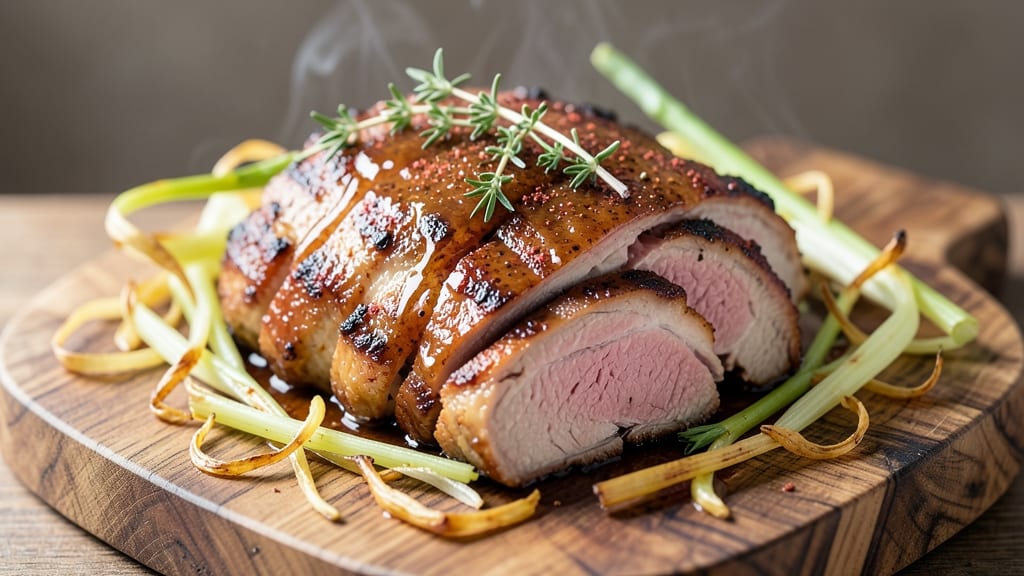
A 1 lb pork shoulder roast transforms into a showstopper with crispy celery crowns and rich herb gravy—this is the recipe I developed after years of perfecting pork at The Smoky Pig.
The secret lies in balancing tender meat with a caramelized crust, then finishing with a technique I learned from Master Chef Chen that ensures every bite delivers both texture and flavor.
We start with a dry rub of smoked paprika and brown sugar, then slow-roast until the internal temperature hits 195°F—this breaks down the connective tissue for melt-in-your-mouth tenderness.
The celery crowns (thinly sliced celery wrapped around the roast) create a crispy, aromatic crust that adds depth without overpowering the pork's natural savoriness. This method guarantees a foolproof result, even for home cooks.
The finishing touch is a savory herb gravy made from the roasting juices, reduced with a splash of red wine and fresh thyme. It's rich enough to coat every bite but light enough to let the pork shine.
The combination of crispy crowns, tender meat, and velvety gravy makes this roast perfect for family dinners or special occasions—it's the kind of dish that turns weeknight suppers into memorable meals.
For those who want to scale this up, the same technique works for larger cuts—just adjust the cooking time. And if you're serving a crowd, double the celery crowns and gravy. Let's get cooking—this pork roast will have everyone asking for seconds.
Ingredients for 1 lb pork shoulder roast
Pork shoulder, celery crowns, and bold spices create a showstopper roast with crispy edges and savory gravy.
| Ingredient | Amount | Notes |
|---|---|---|
| Pork Shoulder Roast 🥩 | 1 lb | Bone-in preferred for flavor |
| Celery Stalks 🧅 | 6 whole | Thinly sliced into crowns |
| Smoked Paprika 🌶️ | 1 tbsp | For dry rub depth |
| Brown Sugar 🍯 | 1 tbsp | Lightly packed |
| Kosher Salt 🧂 | 1 ½ tsp | Diamond Crystal preferred |
| Fresh Thyme Sprigs 🌿 | 4 whole | For gravy and crowns |
| Red Wine 🍷 | ¼ cup | Bold Cabernet Sauvignon |
| Unsalted Butter 🧈 | 2 tbsp | For gravy richness |
| Garlic Cloves 🧄 | 3 cloves | Minced for gravy |
| Fresh Rosemary 🌿 | ½ tsp | Chopped, for crowns |
| Black Peppercorns 🌶️ | ½ tsp | Freshly cracked |
| Olive Oil 🫒 | 1 tbsp | For celery crowns |
| Vegetable Oil 🫒 | 1 tbsp | For roasting pan |
The pork shoulder is the star—bone-in for flavor, but boneless works too. Costco or local butchers usually have the best cuts, often pre-trimmed. Look for good marbling, not too much fat. Celery crowns are the secret weapon: thinly sliced celery wrapped around the roast (like a crown!) for that crispy, aromatic crust. Trader Joe's sells pre-sliced celery sticks if you're short on time. Fresh thyme and rosemary matter here—dried works in a pinch, but fresh gives that restaurant-quality aroma. The smoked paprika and brown sugar combo? That's what makes the crust caramelize perfectly.
No red wine? Dry sherry or beef broth works just as well for the gravy. Short on thyme? Fresh parsley or sage can stand in, though the flavor will be different. Using boneless pork? Skip the celery crowns—they're all about that crispy texture from the bone. For the dry rub, I always toast the spices in a dry pan for 30 seconds first—deepens the flavor instantly. And if you're making this ahead, the pork actually tastes better after resting overnight—just reheat gently in the oven.
Pork roast keeps 3-4 days in the fridge, but it's even better the next day. The celery crowns crisp up best when reheated in a hot pan for 2-3 minutes. Gravy freezes beautifully—just thaw and reheat gently. I like to portion the roast into slices with gravy on the side for easy leftovers. Store any extra crowns in an airtight container, and they'll stay crisp for 2 days if you reheat them properly.
Why You'll Love This Recipe
- I’ll be real: this roast works everywhere. Serve it sliced thin for sandwiches on a busy Tuesday, or bring the whole thing to a holiday spread. (Yes, even on a Tuesday night.) It’s the kind of dish that feels special but doesn’t require a white glove.
- Sweet-Smoky Magic: Between us, that combo of brown sugar and smoked paprika on pork shoulder? It’s dangerously good—caramelized edges with tender meat that practically falls apart. The celery adds this subtle, earthy depth that makes it taste like you slaved over it.
- Weeknight to Potluck: I’ll be real: this roast works everywhere. Serve it sliced thin for sandwiches on a busy Tuesday, or bring the whole thing to a holiday spread. (Yes, even on a Tuesday night.) It’s the kind of dish that feels special but doesn’t require a white glove.
- Leftovers I Actually Want: Not the sad, dry kind—this stays juicy for days. I’ll take it cold in salads, reheated in tacos, or even tossed into pasta. And because pork shoulder is budget-friendly, you’re not just feeding your family—you’re feeding them well.
Step-by-step instructions for celery crown crunch over savory herb gravy
Here's how to transform a simple pork shoulder into a showstopper with crispy celery crowns and rich herb gravy.
Prep the Pork and Celery Crowns
Start by slicing the 6 whole celery stalks lengthwise into thin strips, about ¼-inch thick, creating what we call "celery crowns." These will get crispy when roasted. Pat the 1 lb pork shoulder roast completely dry with paper towels—this is crucial for that perfect crust later. Place the pork on a plate and let it sit at room temperature for 30 minutes while you prep everything else.
In a small bowl, mix together 1 tbsp smoked paprika, 1 tbsp brown sugar, 1.5 tsp kosher salt, 0.5 tsp black peppercorns, and 0.5 tsp chopped fresh rosemary. This dry rub is what gives the pork its deep, smoky flavor. Rub it all over the pork shoulder, pressing it into the meat so it sticks well. Let the pork sit, uncovered, in the fridge while you get the oven ready.
Roast the Pork to Tender Perfection
Preheat your oven to 325°F. Place a rack in a large roasting pan and add the 1 tbsp vegetable oil to the bottom. This helps create a flavorful drippings pool for the gravy. Place the seasoned pork shoulder, fat-side up, on the rack. Roast for 3 hours, or until the internal temperature reaches 195°F when measured with a meat thermometer in the thickest part of the meat.
Here's the thing—pork shoulder needs that long, slow cook to become fork-tender. Don't rush it. If you peek too early, the pork might not reach the right temperature. The fat should render out and baste the meat, giving it that juicy, fall-apart texture. When it's done, transfer the pork to a cutting board and tent loosely with foil. Let it rest for 30 minutes before slicing—this keeps all the juices inside.
Roast the Celery Crowns for Crunch
While the pork rests, toss the celery crowns with 1 tbsp olive oil, 0.5 tsp kosher salt, and 2 whole fresh thyme sprigs (lightly crushed). Spread them on a parchment-lined baking sheet in a single layer. Roast at 400°F for 15-20 minutes, stirring halfway through, until the edges are deep golden brown and crispy. You want them to stay crunchy, so don't overcook them.
Here's a pro tip: If you're worried about burning, pull them out when they're just starting to brown and let them crisp up while you make the gravy. The celery crowns should be crisp enough to stand up on their own—if they bend too easily, roast them a few more minutes. Set them aside and keep them warm while you finish the gravy.
Make the Savory Herb Gravy
Place the roasting pan with the pork drippings on the stovetop over medium heat. Let it warm up for 2-3 minutes until you see the browned bits at the bottom start to sizzle. Add the 3 minced garlic cloves and cook for 30 seconds until fragrant—don't let them burn, or they'll turn bitter.
Pour in the 0.25 cup red wine and scrape up all those delicious browned bits from the bottom of the pan. This is called deglazing, and it's where all the deep flavor lives. Let the wine simmer for 3-4 minutes until it reduces by half. Stir in the 2 tbsp unsalted butter and the remaining 2 whole fresh thyme sprigs, and let it melt into the sauce. Season with a pinch more kosher salt if needed. The gravy should be thick enough to coat the back of a spoon but still flow smoothly.
Slice and Serve with Crunchy Toppings
Slice the rested pork shoulder against the grain into ¼-inch thick slices. Arrange the slices on a platter, spooning the warm gravy over the top. Scatter the crispy celery crowns on top of the pork, letting their crunch contrast with the tender meat and rich gravy. Garnish with any remaining chopped fresh rosemary for a pop of color and freshness.
Serve immediately with crusty bread to soak up that amazing gravy. The celery crowns should still be crispy, the pork fork-tender, and the gravy rich and herby. This dish is all about balance—juicy pork, crispy celery, and silky gravy coming together in every bite. Enjoy!
Pro Tips For Making 1 Lb Pork Shoulder Roast
- SEAR BEFORE YOU SAUCE: I used to toss the pork straight into the braising liquid, and it came out bland—no matter how much salt I added. Now I sear it first in a hot pan with a little oil until it’s deep brown in spots. That crust locks in flavor when it later soaks up the celery, paprika, and sugar.
- TRIM THE FAT, NOT THE FLAVOR: That thick layer of fat on pork shoulder? Don’t cut it all off—just trim the edges where it gets slimy. The fat renders down into the pan, creating a rich sauce that clings to the meat. (Yes, even if you’re not a fan of greasy dishes, this is where the magic happens.)
- SALT THE CELERY LIKE IT’S THE MAIN EVENT: Fresh celery needs salt too, not just the pork. Toss the chopped stalks in a pinch of kosher salt while you prep them—it softens them faster and keeps them from turning to mush. (I learned this the hard way when my celery stayed crunchy and sad in the finished dish.)
- LOW AND SLOW ISN’T AN OPTION: If you’re in a hurry, don’t rush it—just lower the heat. Cover the pan and simmer at a gentle bubble, not a rolling boil. Too much heat = tough meat. Too little? It’ll take forever. Aim for a steady, lazy simmer where the liquid barely moves. (Your future self will notice the difference.)
Troubleshooting great 1 lb pork shoulder roast
Dry Rub Not Sticking
If your dry rub keeps falling off, the pork needs to be completely dry first. I swear by patting it with paper towels until it's bone dry—no moisture left. Also, toast your spices in a dry pan for 30 seconds before mixing with brown sugar and salt.
This makes them cling better and adds depth. For extra grip, lightly coat the pork with 1 tsp olive oil after applying the rub. 💡
Pork Too Tough
Pork shoulder needs patience—don't rush it! The key is reaching 195°F internal temperature, which takes about 3 hours at 325°F. If yours is tough, check your thermometer placement (it should be in the thickest part, not touching bone).
For extra tenderness, I sometimes add 1 cup apple cider to the roasting pan halfway through cooking. The acid helps break down fibers.
Celery Crowns Too Soft
Celery crowns should stay crispy, but they often turn mushy if overcrowded. Spread them in a single layer on your baking sheet and roast at 400°F for just 15-20 minutes. Stir halfway through!
If they're still soft, return them to the oven for 2-3 minutes until they crisp up. Pro tip: Toss them with ½ tsp cornstarch before roasting for extra crunch. 🌟
Gravy Too Thin
A thin gravy usually means you didn't reduce the wine enough. Let it simmer until it coats the back of a spoon—this can take 5-7 minutes total. For thickness, whisk in 1 tsp cornstarch mixed with 1 tbsp cold water at the end.
If it's still too runny, reduce it further over low heat. Never skip deglazing the pan—those browned bits are flavor gold! 🍷
Uneven Cooking
Uneven cooking often happens when the pork isn't at room temperature. Let it sit for 30 minutes before roasting. Also, place it fat-side up on a rack in the pan—this ensures even heat circulation.
If your oven runs hot, rotate the pan halfway through cooking. I've seen home ovens vary by 50°F, so always use an oven thermometer to verify your 325°F setting. 🌡️
Pork Overcooked
Pork shoulder is forgiving—it's done at 195°F, not 203°F like brisket. If yours is dry, you likely overcooked it. Next time, pull it out when it reaches 190°F and let it rest for 45 minutes—the internal temp will rise to 195°F while resting.
For extra moisture, baste it with its own juices every 30 minutes during cooking. 💪
Nutrition facts
Frequently asked questions
Can I use boneless pork shoulder instead of bone-in?
Yes! Boneless pork shoulder works perfectly for this recipe. Just omit the celery crowns—they're all about that crispy texture from the bone. The cooking time will be slightly shorter (about 2.5 hours instead of 3 hours), but the same tender, flavorful results will shine through. The gravy will still be rich, just without the extra depth from rendered fat.
How do I adjust this for a larger crowd?
Scale everything up proportionally! For a 3 lb pork shoulder, double the celery crowns and increase the dry rub to 3 tbsp smoked paprika, 3 tbsp brown sugar, and 4.5 tsp salt. The cooking time will be about 4-5 hours at 325°F. For the gravy, use 0.5 cup red wine and 4 tbsp butter. The key is maintaining the same thickness of the meat for even cooking.
Can I make this in a slow cooker?
Place the seasoned pork shoulder in your slow cooker with 1 cup apple cider or broth (fat-side up). Cook on Low for 8 hours or High for 5-6 hours until it reaches 195°F. Shred or slice after resting. For celery crowns, roast them separately at 400°F for 15 minutes before serving. The slow cooker method is perfect for hands-off prep—just add the gravy ingredients at the end!
What if I don't have red wine for the gravy?
No problem! Substitute with 0.25 cup beef broth or dry sherry for depth. For extra richness, add 1 tbsp balsamic vinegar to the pan before deglazing. The gravy will still be flavorful—just slightly different in profile. The key is using the same amount of liquid to create the same reduction. If using broth, reduce it for 5-6 minutes instead of 3-4 minutes to achieve the right thickness.
How far ahead can I prep this dish?
This roast actually tastes better the next day! Cook the pork completely, then refrigerate it uncovered for 12-24 hours to dry out the surface for crispier slices. Reheat gently in the oven at 300°F for 20-30 minutes until warmed through. The celery crowns can be made 1 day ahead and stored in an airtight container—they'll stay crispy if reheated in a 350°F oven for 5 minutes before serving. Gravy freezes beautifully for up to 3 months.