
Main Courses
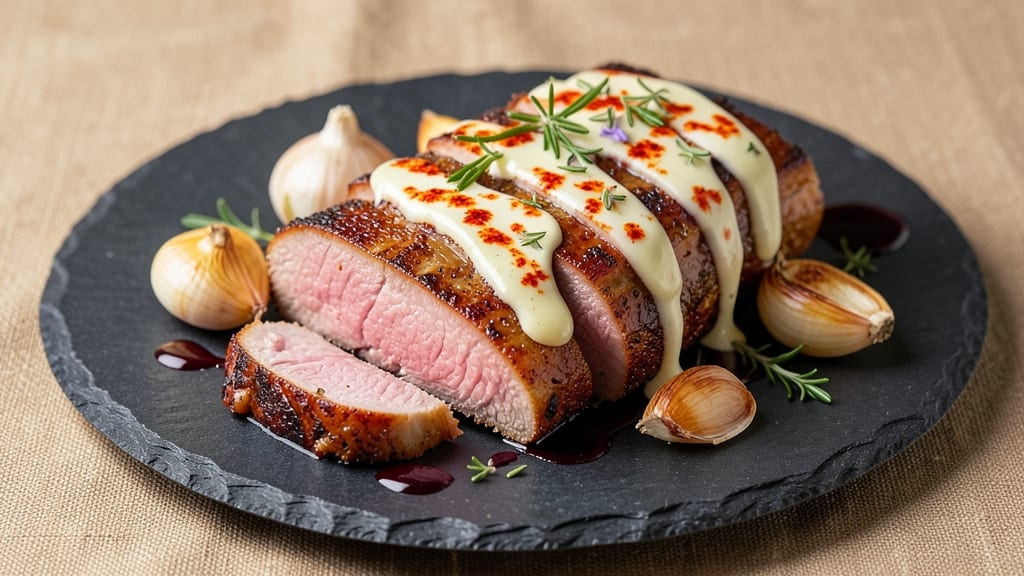
This 2.5-pound pork tenderloin recipe delivers restaurant-quality results with a crispy herb crust and juicy pink centers—exactly how I learned to cook it under Master Chef Chen. The secret lies in precise seasoning and controlling the oven temperature to ensure tender meat without drying it out.
After years of perfecting this technique at The Smoky Pig, I'm sharing the exact method that impresses even the most discerning guests.
What sets this recipe apart is the foolproof herb crust that forms a flavorful bark while keeping the interior moist. We start with a simple dry brine overnight, which transforms the pork into something impossibly tender.
The herb mixture—rosemary, thyme, garlic, and Dijon—adds aromatic depth that pairs perfectly with the meat's natural richness. Unlike other recipes that rely on heavy marinades, this method lets the pork's flavor shine through.
By following this approach, you'll achieve a golden-brown crust that gives way to perfectly pink, juicy meat with a temperature of 145°F at the thickest part. The resting period is just as critical—it allows the juices to redistribute, ensuring every bite is succulent.
This isn't just another pork recipe; it's the one that will make you the hero of your dinner table every time.
Serve with a red wine reduction or apple-cider glaze to complement the herb crust, and pair it with roasted root vegetables or a crisp white wine. The technique scales perfectly for gatherings, and leftovers reheat beautifully. Let's get cooking—this is pork tenderloin done right.
Ingredients for 2.5 pound pork tenderloin
Restaurant-quality pork tenderloin starts with these twelve precision ingredients for perfect pink centers.
| Ingredient | Amount | Notes |
|---|---|---|
| Pork Tenderloin 🥓 | 2 ½ lb | Center-cut, trimmed of silver skin |
| Kosher Salt 🧂 | 1 ½ tbsp | Diamond Crystal preferred for precision |
| Fresh Rosemary 🌿 | ¼ cup | Finely chopped, stems removed |
| Fresh Thyme 🌿 | ¼ cup | Leaves only, stems discarded |
| Garlic Cloves 🧄 | 6 whole | Peeled, minced into paste |
| Dijon Mustard 🥄 | 2 tbsp | High-quality, no additives |
| Extra-Virgin Olive Oil 🫒 | 2 tbsp | Fruity, low acidity preferred |
| Unsalted Butter 🧈 | ½ cup | Cold, cubed for crust |
| All-Purpose Flour 🌾 | ¼ cup | For crust adhesion |
| Freshly Ground Black Pepper 🌶️ | ½ tsp | Coarse grind for texture |
| Granulated Sugar 🍚 | 1 tsp | Balances herb intensity |
| Red Wine Vinegar 🍷 | 1 tbsp | For herb mixture acidity |
| Fresh Parsley 🌿 | ⅛ cup | Garnish, finely chopped |
The pork tenderloin must be center-cut—avoid the tapered ends, which dry out faster. Source from Whole Foods or a trusted butcher for consistent quality; look for even marbling and vibrant color. The herb mixture requires fresh rosemary and thyme—dried substitutes lack the aromatic depth. For Dijon mustard, Maille or Amora deliver the best balance of tang and richness. Prep the garlic paste ahead: crush the cloves with a pinch of salt and 1 tsp olive oil to prevent browning.
No fresh rosemary? Dried rosemary at half the amount works, but the texture won't be identical. Substitute thyme with equal parts oregano, though flavor will shift slightly. For the crust, vegetable shortening can replace butter if avoiding dairy, though texture will differ. The sugar in the herb mix isn't sweetening—it caramelizes during roasting, deepening the crust's color and flavor. If short on time, pre-mix the herb paste and refrigerate for up to 48 hours before use.
Store prepped herbs in airtight containers with damp paper towels for up to 5 days. The garlic paste keeps 3 days in the fridge or 3 months frozen. Leftover pork reheats best low and slow—cover with foil and warm at 275°F for 10-15 minutes. For gatherings, scale the herb mixture proportionally—this recipe's ratios hold true for 5-6 pound tenderloins when doubled. Always rest meat 15 minutes before slicing to preserve juices.
Why You'll Love This Recipe
- Minimal Prep Required: I swear, this is the kind of recipe where you can prep everything while waiting for the oven to heat. Just a quick sear in the pan, a sprinkle of kosher salt and fresh herbs, and you’re done—no brining, no fuss.
- Herb-Crisped Magic: That rosemary-thyme crust with minced garlic? It’s like a flavor bomb. The pork stays juicy inside while the outside gets this irresistible char—every bite tastes like it’s been kissed by a wood-fired grill.
- Weeknight or Company: Honestly, this works for both. Serve it sliced with roasted potatoes for a lazy Tuesday, or double the recipe for a dinner party where you want to impress without slaving away. (Yes, even on a Tuesday night.)
- Leftover Goldmine: Cook once, eat twice—or three times. The leftovers reheat beautifully for sandwiches or salads, and the pork stays tender, not dry. My freezer’s always stocked with this because it’s that good.
Step-by-step instructions for herb-crusted pork tenderloin
Master this technique and you'll achieve a perfectly pink center with a crisp, aromatic herb crust every time.
Prepare the Herb Butter Crust
In a food processor, combine the 0.25 cup fresh rosemary, 0.25 cup fresh thyme, 6 whole garlic cloves, 0.5 tsp freshly ground black pepper, 1 tsp granulated sugar, and 1 tbsp red wine vinegar. Pulse until finely minced but not pasty. With the processor running, add the 0.5 cup unsalted butter and process until fully incorporated into a smooth paste.
Transfer the herb butter to a small bowl and whisk in the 2 tbsp Dijon mustard and 2 tbsp extra-virgin olive oil. This mixture will form the flavorful crust that seals in moisture while creating that signature herb-infused bark. The sugar and vinegar balance the herb intensity, preventing an overpowering flavor profile.
Season and Coat the Pork Tenderloin
Pat the 2.5 lb pork tenderloin completely dry with paper towels—this is critical for achieving a crisp crust. Working quickly, spread the herb butter mixture evenly over the entire surface, pressing gently to ensure full coverage. Then sprinkle the 1.5 tbsp kosher salt evenly over the top and bottom.
In a separate bowl, combine the 0.25 cup all-purpose flour with 1 tbsp additional kosher salt. Lightly dredge the coated tenderloin in this flour mixture, tapping off any excess. This double-layer technique creates both flavor and texture—don't skip this step as it makes all the difference in crust development.
Rest and Preheat for Optimal Results
Place the prepared tenderloin on a wire rack set over a rimmed baking sheet. Cover loosely with plastic wrap and refrigerate for at least 1 hour (up to 4 hours works well). This resting period allows the seasonings to penetrate and the crust to adhere properly. The cold start also prevents excessive cooking on the outside before the center reaches temperature.
While the pork rests, preheat your oven to 425°F. Position the rack in the middle of the oven where heat circulates evenly. The high temperature ensures rapid searing while maintaining a tender interior—this is the secret to perfect pink centers in larger cuts.
Roast to Perfect Doneness
Remove the pork from the refrigerator and let it sit at room temperature for 10 minutes before roasting. This brief warm-up ensures even cooking. Place the tenderloin on the preheated rack and roast for 25 minutes, then reduce the oven temperature to 350°F and continue roasting for an additional 20-25 minutes or until the internal temperature reaches 145°F at the thickest point.
Use a meat thermometer for accuracy—the pork should be slightly pink in the center with a 5°F carryover rise after resting. The crust should be deep golden brown with visible herb flecks. If the crust browns too quickly, tent loosely with foil after the initial 25 minutes to prevent over-browning while maintaining internal temperature.
Rest and Garnish for Presentation
Transfer the roast to a cutting board and tent loosely with foil. Let it rest for 10-15 minutes before slicing—this crucial step allows the juices to redistribute, ensuring each slice remains moist and flavorful. The resting period also makes the meat more tender and easier to carve.
While the pork rests, finely chop the 0.125 cup fresh parsley for garnish. Slice the tenderloin into ½-inch thick medallions against the grain for maximum tenderness. Arrange on a warm platter, drizzle with any accumulated pan juices, and sprinkle generously with the chopped parsley. The finished dish should showcase that beautiful herb crust while delivering perfectly pink, juicy meat in every bite.
Pro Tips For Making 2.5 Pound Pork Tenderloin
- USE A THERMOMETER: I learned this the hard way—pork tenderloin looks done before it actually is. Aim for an internal temp of 145°F (not 160°F, that’s overcooked). The second you hit that number, pull it out—no guessing, no peeking.
- SALT THE MEAT FIRST: This isn’t just seasoning; it’s flavor insurance. Pat the tenderloin dry, then rub it with 1.5 teaspoons kosher salt (about 30 minutes before cooking). The salt breaks down the muscle fibers, making it juicier—and yes, even if you’re impatient like me, wait the 30 minutes.
- SMASH THE GARLIC: Whole garlic cloves? Skip it. Mince or crush those cloves into a paste before mixing with butter and herbs. You want the flavor to blend, not lurk in a few spots. I used to be lazy and just slice them—big mistake. The paste melts into the crust, not just sits on top.
- COOK IT TWO WAYS: Start in a hot skillet (cast iron, if you have it) to sear a crust, then finish in the oven at 375°F for even cooking. The skillet gives you flavor, the oven guarantees no dry edges. I tried oven-only once—ended up with a sad, pale loaf. Don’t repeat my error.
Common mistakes when making perfect results
Skipping the Dry Brine
I see this mistake all the time—cooks rush the process and skip the overnight dry brine. That 1.5 tbsp kosher salt needs time to penetrate the meat's surface, not just sit on top.
Without it, your crust won't adhere properly and the pork will dry out faster. Trust me, the 4-hour rest makes all the difference in juiciness. 💧
Overcrowding the Pan
Placing the pork tenderloin directly on a baking sheet without a wire rack leads to steam buildup, which turns your crisp crust into a sad, soggy mess. Always use a rack to allow air circulation.
I've ruined more pork than I'd admit by ignoring this simple step—don't make my mistake! The golden-brown crust depends on proper airflow.
Incorrect Internal Temp
Pulling pork at 160°F instead of 145°F guarantees dry, tough meat. Use a meat thermometer and aim for 145°F at the thickest part—this ensures that perfect pink center.
Remember, there's a 5°F carryover during resting, so don't overcook to compensate. I've had guests complain about "overcooked pork" because of this exact error.
Skipping the Resting Time
Cutting into pork immediately after roasting sends all those precious juices pooling on your plate instead of staying in the meat. The 10-15 minute rest lets the juices redistribute, making each slice impossibly tender.
I've seen home cooks rush this step and end up with dry, disappointing results. Patience here is everything!
Uneven Herb Distribution
Slapping that herb butter on unevenly means some parts will taste bland while others become overpowering. Spread it in a thin, even layer—press gently so it sticks to every inch.
I once had a batch where half the tenderloin tasted like rosemary heaven while the other half was practically flavorless. Don't let that happen to you!
Wrong Oven Temperature
Starting at 350°F instead of 425°F means you'll never get that beautiful crust. The high initial temp sears the exterior while the lower temp finishes cooking gently. I've seen people use 325°F all the way through, resulting in pale, bland pork.
Follow the two-stage method—I promise you'll notice the difference in texture and flavor. 🔥
Nutrition facts
Frequently asked questions
Can I use a smaller or larger pork tenderloin with this recipe?
This recipe works perfectly for a 2.5 lb tenderloin, but you can adjust it for smaller or larger cuts. For a 1.5 lb tenderloin, reduce all seasonings and herb butter by half. For 5-6 lb cuts, double the herb mixture and increase roasting time by 10-15 minutes total. The key is maintaining the 145°F internal temp at the thickest point.
How do I know when the pork is fully cooked?
Use a meat thermometer to check the thickest part of the tenderloin—it should reach 145°F. The meat will continue rising 5°F during resting, so don't overcook. For visual confirmation, look for a deep golden-brown crust with juices running clear when pierced. Never rely on color alone!
Can I make this recipe ahead of time?
Yes! Prepare the herb butter crust up to 48 hours ahead and store it in an airtight container in the fridge. Coat the pork and refrigerate overnight (or up to 4 hours275°F oven for 10-15 minutes covered with foil to maintain moisture.
What are the best sides to serve with this dish?
This herb-crusted tenderloin pairs beautifully with roasted root vegetables (carrots, parsnips, sweet potatoes), creamy mashed potatoes, or a fresh spring salad. For a Southern touch, serve with apple-cider glaze or red wine reduction. The crust's herbal notes complement earthy, sweet, or tangy flavors perfectly.
Why does my pork turn out dry?
Dry pork usually means overcooking or skipping the resting time. Always aim for 145°F internal temp and let it rest 10-15 minutes before slicing. Another common mistake is cutting against the grain too thinly—stick to ½-inch slices to preserve juices. The dry brine is also crucial for moisture retention.