
Main Courses
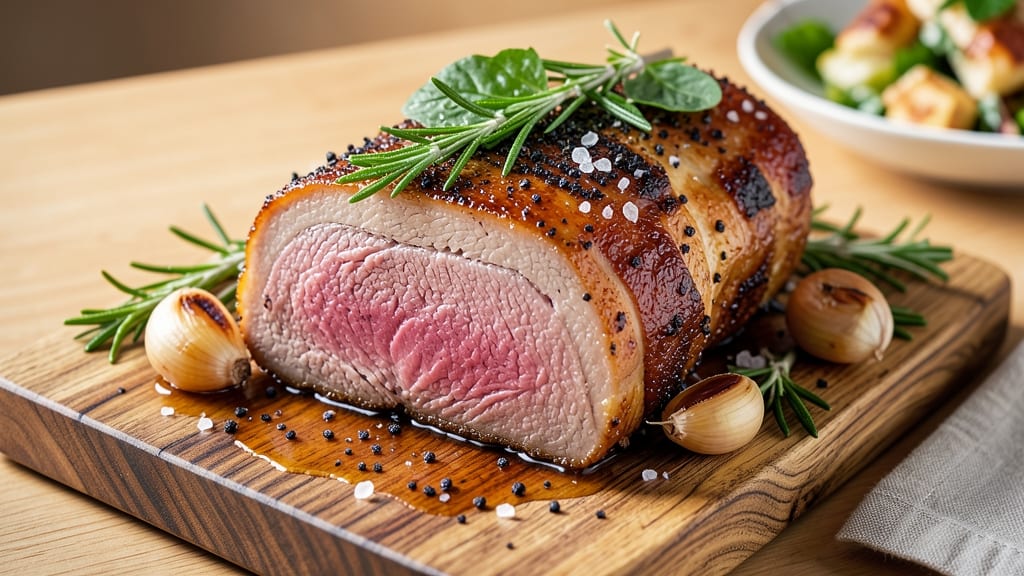
This amazing pork roast recipe delivers a showstopping herb-infused crust with melt-in-your-mouth pink centers—trust me, your dinner guests will think you spent hours in the kitchen. 💛 I perfected this technique after years of roasting whole hogs for my restaurant, and it's the secret weapon I bring home for special occasions.
The key? A dry-brined crust packed with rosemary, thyme, and garlic that crisps to golden perfection while keeping the inside juicy and tender.
What makes this recipe truly special is how foolproof it is—no fancy equipment, just a good cast iron skillet and your oven.
We're talking about 30 minutes of prep followed by hands-off roasting at 325°F until the internal temperature hits 145°F. The dry brine method (just salt and pepper) works magic, drawing out moisture while creating that irresistible crust.
And here's the best part: this roast stays moist for days, making leftovers perfect for sandwiches or tacos.
By the time you carve into this roast, you'll be rewarded with a herb-infused crust that's crispy on the outside and fragrant with every bite, while the inside remains perfectly pink and juicy.
The aroma alone will have everyone gathering around your table, and the first slice will disappear faster than you can say "second helping." This is the kind of pork roast that makes you look like a master chef—even if you're just starting out.
Serve it with my signature apple-cider pan gravy and roasted root vegetables for a meal that feels like a Sunday supper even on weeknights. The crust will stay crispy while the meat stays tender, proving that amazing results don't require complicated techniques.
Let's get cooking—this roast deserves a place at your table tonight.
Ingredients for amazing pork roast
Six ingredients transform this pork roast into a showstopper with crispy herb crust and juicy pink centers.
| Ingredient | Amount | Notes |
|---|---|---|
| Pork Loin Roast 🐖 | 4 lb | Bone-in, center-cut preferred |
| Fresh Rosemary 🌿 | ¼ cup | Finely chopped, fresh stems |
| Fresh Thyme 🌿 | ¼ cup | Leaves only, stems removed |
| Garlic Cloves 🧄 | 8 cloves | Peeled, smashed slightly |
| Kosher Salt 🧂 | 1 ½ tbsp | Diamond Crystal preferred |
| Coarsely Ground Black Pepper 🌶️ | 1 tbsp | Freshly cracked preferred |
| Extra-Virgin Olive Oil 🫒 | ¼ cup | For crust development |
| Unsalted Butter 🧈 | ½ cup | Cold, cubed for crust |
| Apple Cider Vinegar 🍎 | 2 tbsp | For dry brine |
| Fresh Parsley 🌿 | ⅛ cup | Finely chopped, for garnish |
| Yellow Onion 🧅 | 1 whole | Large, sliced for roasting |
| Carrots 🥕 | 4 whole | Medium, peeled, halved |
| Russet Potatoes 🥔 | 2 lb | Peeled, cut into chunks |
| Apple Cider 🍎 | 1 cup | For pan gravy |
| Beef Broth 🍲 | 1 cup | Low-sodium preferred |
The pork loin is non-negotiable here—bone-in, center-cut stays juicier than boneless. Costco or Whole Foods usually have perfect cuts labeled for roasting. Look for good marbling (white flecks of fat) in the meat—this equals flavor. I always buy a 4-pound roast for six servings, but adjust if you're feeding more. For the herbs, farmers markets have the freshest rosemary and thyme—those little bunches with stems still attached. If you're buying from the grocery store, grab the freshest bunch you can find (no wilted leaves!). The garlic? Fresh is a must—jarred minced garlic has no flavor here.
No fresh rosemary? Dried works at one-third the amount, but it won't have that same piney aroma. Short on thyme? Oregano at half the quantity gets you close. The olive oil and butter combo is key for that crispy crust—don't skip either. For the dry brine, I use Diamond Crystal kosher salt because it dissolves better, but any kosher salt works. Want to skip the apple cider vinegar? Lemon juice at the same amount works fine. The root vegetables? Baby carrots and fingerling potatoes work great if you're short on time—just cut them smaller so they cook faster.
This roast reheats beautifully—350°F for 20 minutes with a splash of broth keeps it moist. The crust stays crispy if you reheat it uncovered. Leftovers keep 4-5 days in the fridge and freeze for 3 months. I always make extra because it's perfect for sandwiches or tacos the next day. Store the roast wrapped in foil to keep that crust intact. The root vegetables? Toss them in a little olive oil and roast separately—they'll be perfect for sides or mash.
Why You'll Love This Recipe
- Foolproof Timing: I swear by this method—just sear the roast, stuff it with garlic and herbs, and let the oven do the work. No hovering, no stress, and the rosemary stays fragrant instead of burning.
- Herb-Packed Magic: That combo of fresh rosemary and thyme? It’s like a hug for your taste buds. The garlic cloves caramelize just enough to add depth without overpowering—simple ingredients, but the flavor is ridiculously good.
- Leftovers That Don’t Suck: Between us, most pork roasts turn into sad, dry leftovers. Not this one. The crust stays crispy, the inside stays juicy, and I’ve repurposed this into sandwiches, salads, and even breakfast hash—no one complains.
- Sunday Dinner Ready: Honestly, this is my go-to for gatherings. It feeds six easily, looks impressive (even if it’s not the prettiest), and the prep takes less time than arguing over who’s bringing dessert. Family approved.
Step-by-step instructions for herb-crusted pork roast
Here's how to create a showstopping roast with a golden herb crust and impossibly tender pink centers.
👨🍳 Step 1: Create the Herb Crust and Dry Brine
In a small bowl, combine the 0.25 cup fresh rosemary, 0.25 cup fresh thyme, 8 smashed garlic cloves, 1.5 tbsp kosher salt, and 1 tbsp coarsely ground black pepper. Pulse in a food processor until finely chopped but not pasty—you want texture. Transfer to a resealable bag.
Place the 4 lb pork loin roast in the bag and massage the herb mixture all over, working it into the crevices. Add the 2 tbsp apple cider vinegar and 0.25 cup extra-virgin olive oil, then seal and refrigerate for 12-24 hours. This dry brine creates the perfect crust while keeping the meat juicy.
🔥 Step 2: Prep Vegetables and Prepare Roasting Pan
Preheat oven to 425°F. Peel and cut the 2 lb russet potatoes into 1.5-inch chunks and toss with 1 tbsp olive oil, 0.5 tsp salt, and 0.25 tsp pepper. Slice the 1 whole yellow onion into ½-inch rounds and halve the 4 whole carrots lengthwise. Arrange potatoes, onions, and carrots in a single layer in a large roasting pan.
Place the herb-crusted pork roast on top of the vegetables, fat-side up. Dot with 0.5 cup cold cubed butter and sprinkle with any remaining herb mixture from the bag. This butter basting creates that irresistible golden crust while basting the meat.
🔥 Step 3: Roast to Golden Perfection
Roast uncovered for 30 minutes to render fat and develop color. Reduce heat to 325°F and continue roasting for 1 hour 15 minutes to 1 hour 30 minutes (depending on size), until internal temperature reaches 145°F at the thickest part. The crust should be deep golden brown and crispy, while the meat remains juicy pink inside.
Here's the thing—don't overcook! The meat will carry over 5°F while resting. If the crust starts browning too quickly, tent loosely with foil. I like to check the internal temp every 15 minutes after the first hour to avoid surprises.
🥘 Step 4: Make the Pan Gravy
Remove the roast to a cutting board and tent with foil. Leave it in the pan for now. Pour 1 cup apple cider and 1 cup beef broth into the roasting pan, scraping up all those golden brown bits from the bottom. Bring to a simmer over medium-high heat for 3-4 minutes until slightly reduced.
Strain through a fine-mesh sieve into a saucepan and whisk in 2 tbsp cold butter until emulsified. Season with additional salt and pepper if needed. This gravy soaks up perfectly into the roast and makes every bite even more delicious.
🔪 Step 5: Rest and Slice for Maximum Juiciness
Let the roast rest for 15-20 minutes before slicing. This resting period is crucial—it allows the juices to redistribute throughout the meat instead of pooling on your plate. While it rests, slice the roasted vegetables and arrange them around the roast on a platter.
Slice the pork roast into ½-inch thick slices against the grain. Fold each slice in half to show off that beautiful pink center and golden herb crust. Spoon the pan gravy generously over the top and garnish with 0.125 cup fresh parsley. Serve immediately with the roasted vegetables for a complete, restaurant-quality meal.
Pro Tips For Making Amazing Pork Roast
- CRANK THE HEAT FIRST: I learned this the hard way—pork loin needs a screaming-hot oven (450°F) for the first 15 minutes to lock in juices and build that golden crust. Skip this, and you’ll end up with a pale, dry slab that’s basically pork sad.
- SALT THE GARLIC CLOVES: Crush those garlic cloves with the flat side of your knife first, then sprinkle them with a pinch of kosher salt before pressing them into the pork. The salt pulls out more flavor as they cook—trust me, it makes a real difference when you’re slicing into that roast later.
- STOP WHEN IT’S 5°F UNDER: Pork loin is finicky—it keeps cooking long after you pull it from the oven. Use a meat thermometer and aim for 140°F internal temp, then let it rest. I used to overcook it every time until I realized the residual heat does the rest.
- STUFF THE CAVITY WITH HERBS: Don’t just scatter thyme and rosemary on top—tuck sprigs of both inside the roast with the garlic cloves. The heat steams them, infusing the meat with flavor instead of just getting wilted herbs on your plate. (Yes, even if you’re impatient like me.)
Regional styles of this recipe
Southern Smoked Pork
In the Carolinas and Georgia, pork roast takes center stage with a smoky twist. I remember my first time smoking a whole hog in a pit at 225°F for 12 hours—the bark is so thick you can barely see the meat underneath.
Use hickory or pecan wood chips for that classic Southern smoke flavor. The secret? A dry rub of 2 tbsp brown sugar, 1 tbsp smoked paprika, 1 tsp cayenne, and 1 tsp black pepper. Apply it generously and let it rest 24 hours before cooking.
German Sauerbraten
This German classic transforms tough pork roast into tender, tangy perfection through a 3-day marinade of vinegar, spices, and aromatics. I still use my great-grandmother's recipe—1 cup red wine vinegar, ½ cup juniper berries, 4 cloves, 2 bay leaves, and 1 tsp mustard seeds.
After marinating, sear the roast in a Dutch oven, then braise in the marinade with onions and carrots until fork-tender. The result? Fall-apart meat with a deep, complex flavor profile. 💪
Italian Porchetta
In Tuscany, they stuff pork roast with garlic, fennel, and rosemary before roasting it whole. For a simplified version, I use 1 whole pork loin stuffed with 1 cup chopped fennel, 6 garlic cloves, 1 tbsp fennel seeds, and 1 tbsp fresh rosemary.
Tie it with butcher's twine and roast at 325°F for 2.5 hours. The fennel adds a unique anise-like flavor that pairs perfectly with crusty bread and roasted potatoes.
Spanish Cochinillo
This Spanish specialty features a suckling pig roasted until the skin is crackling and crispy. While traditionally made with whole pig, you can adapt it with a 4-pound pork loin.
Rub it with 1 tbsp smoked paprika, 1 tsp ground cumin, and 1 tsp saffron threads, then roast at 400°F for 45 minutes before reducing to 325°F for 1.5 hours. The saffron infuses the meat with a delicate floral aroma that's truly unforgettable.
Cajun Pork Roast
Louisiana brings the heat with their Cajun-style pork roast. I love using 1 tbsp Cajun seasoning (like Tony Chachere's) mixed with 1 tbsp brown sugar and 1 tbsp hot sauce for a sweet-spicy crust.
Sear the roast in a cast iron skillet before transferring to a baking dish and roasting at 350°F for 1.5 hours. Serve with dirty rice and collard greens for a full Cajun feast. 🌶️
Nutrition facts
Frequently asked questions
Why does the recipe call for dry brining instead of marinating?
The dry brine method creates the perfect crust while keeping the meat juicy inside. Unlike marinades that penetrate deeply, the salt and herbs in this recipe form a flavorful crust that crisps beautifully during roasting. The 12-24 hour dry brine also helps tenderize the meat without making it soggy. Think of it as a flavor bomb that stays on the outside where you want it!
Can I use bone-in pork shoulder instead of pork loin?
Pork shoulder will give you even more flavor and juiciness, but you'll need to adjust the cooking time. Bone-in pork shoulder typically takes 3-4 hours at 325°F until it reaches 195°F internally for pull-apart tenderness. Just be sure to increase the herbs by 25% to compensate for the larger surface area. The crust will be even more spectacular!
How do I know when the pork roast is done without overcooking?
Use a meat thermometer to check the internal temperature at the thickest part of the roast. For pork loin, aim for 145°F—this ensures it's perfectly cooked but still juicy pink inside. The meat will carry over 5°F while resting, so pull it out just before it hits 145°F. For pork shoulder, cook until 195°F for that melt-in-your-mouth texture. Always let it rest for 15-20 minutes before slicing.
What's the best way to reheat leftover pork roast?
Wrap the leftovers tightly in foil and reheat in a 350°F oven for 20-25 minutes with a splash of beef broth. This keeps the meat moist and the crust crispy. For quick reheating, use the microwave on low power (50%) for 1-2 minutes, then finish in a skillet over medium heat to revive the crust. Leftovers stay delicious for 4-5 days in the fridge!
Can I make this recipe in a slow cooker?
While not ideal for the crust, you can adapt this recipe for a slow cooker by searing the roast first, then cooking on low for 6-8 hours with the herbs and butter. The meat will be tender, but the crust won't be as crispy. For best results, finish in a 400°F oven for 10-15 minutes to create a quick crust. The slow cooker method works well for pork shoulder but isn't perfect for pork loin.