
Main Courses
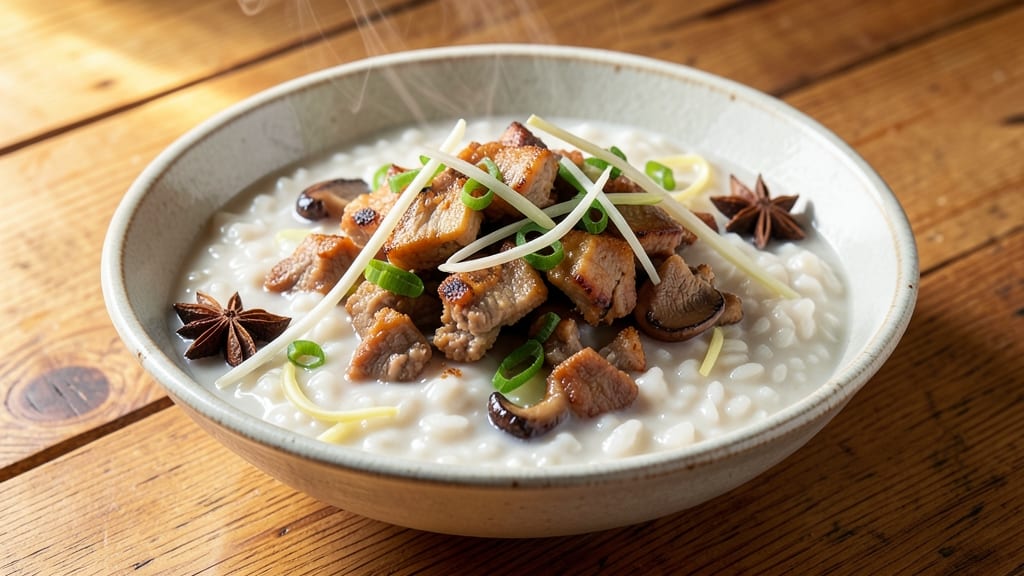
This minced pork congee recipe transforms humble rice into a luxurious, comforting bowl that's been warming tables across Asia for generations. 🌟 The secret lies in slow-simmering jasmine rice until it dissolves into a velvety porridge, then infusing it with fragrant star anise and ginger that create layers of warmth.
I first perfected this version while working in Charleston, where I adapted traditional techniques to highlight the pork's natural richness.
The foundation is simple: rice soaked overnight for maximum tenderness, pork minced finely to distribute flavor evenly, and a broth built with aromatics that simmer for hours. What makes this different is the balance of textures—silky rice, tender pork, and crisp toppings like fried shallots or scallions that add contrast.
The star anise and ginger don't just flavor; they create an aromatic experience that lingers long after the first spoonful.
By the time you're done, you'll have a dish that's both deeply comforting and impressively elegant—perfect for chilly evenings or when you crave something nourishing yet sophisticated. The technique is straightforward, but the result feels like a restaurant-quality meal.
This congee adapts beautifully to modern tastes too, with optional additions like mushrooms or herbs for extra depth.
The beauty of congee lies in its versatility. Serve it as a light meal with pickled vegetables or as a hearty breakfast with soft-boiled eggs. The leftovers reheat beautifully, making it ideal for meal prep. Let's create this silky, fragrant bowl that's equal parts tradition and innovation.
Ingredients for minced pork congee
Jasmine rice, minced pork, and aromatic spices transform into this velvety congee masterpiece.
| Ingredient | Amount | Notes |
|---|---|---|
| Jasmine Rice 🍚 | 1 cup | Uncooked, long-grain preferred |
| Minced Pork Shoulder 🥩 | 1 lb | Finely minced, fat content ideal |
| Fresh Ginger Root 🧄 | 2 tbsp | Finely grated, aromatic |
| Star Anise Pods 🌿 | 2 whole | Whole, for infusion |
| Dried Shiitake Mushrooms 🍄 | 2 pieces | Rehydrated, sliced |
| Green Onions 🧅 | 4 whole | White and green parts separated |
| Garlic Cloves 🧄 | 4 cloves | Minced, aromatic |
| Low-Sodium Chicken Broth 💧 | 6 cups | Homemade or high-quality |
| Sesame Oil 🫒 | 1 tbsp | Toasted, for finishing |
| Light Soy Sauce 🍶 | 2 tbsp | For umami depth |
| White Peppercorns 🌶️ | ½ tsp | Freshly ground |
| Vegetable Oil 🫒 | 2 tbsp | High smoke point |
| Fried Shallots 🧅 | ¼ cup | Store-bought or homemade |
The jasmine rice is the heart of this dish—Thai Kitchen brand or Lotus Foods are my go-tos for consistent quality. Soak it overnight in cold water to soften, then rinse thoroughly before cooking. For the pork, look for shoulder cuts with good marbling—ask your butcher to mince it finely if they don't pre-cut it. Star anise and ginger are non-negotiable for that authentic aroma; Penzeys Spices carries excellent whole star anise pods. The dried shiitake mushrooms should be plump and dark brown—avoid any that look dry or shriveled. If you can't find them, cremini mushrooms work in a pinch, though they won't have the same depth of flavor.
No fresh ginger? Powdered ginger at half the amount works, but the flavor won't be as vibrant. Substituting pork with finely minced chicken thigh keeps the dish moist—just add 1 tbsp extra broth. For a vegetarian version, swap the pork for extra-firm tofu pressed and minced, plus 1 tbsp soy sauce. The chicken broth can be homemade (simmer chicken bones with ginger, garlic, and onion for 4 hours) or store-bought—just check for low sodium. If you can't find light soy sauce, regular soy sauce at half the amount works, but it'll be saltier. The fried shallots? Trader Joe's sells them pre-made, or you can quickly fry thin shallot slices in oil until crispy.
Congee reheats beautifully—just add a splash of water or broth and stir gently. Store in airtight containers for up to 3 days in the fridge, or freeze for 2 months. When reheating from frozen, thaw overnight in the fridge first. The aromatics (star anise, ginger) can be removed after simmering if you prefer a milder flavor. For extra richness, stir in a spoonful of vegetable oil when reheating. This dish tastes even better the next day as the flavors meld together—perfect for meal prep. Portion into individual bowls for quick grab-and-go meals.
Why You'll Love This Recipe
- One-Pot Magic: I swear by this recipe when I’m too tired to scrub pots—just a single pot, simmering jasmine rice with minced pork and star anise until it’s creamy perfection. No chopping, no fuss, just hands-off cooking while the flavors meld.
- Umami Bomb: That combo of dried shiitake mushrooms and star anise? It’s like a slow dance of deep, savory notes that stick with you. The ginger adds a bright kick, but the pork stays tender and rich—every spoonful feels like a hug.
- Leftovers That Shine: Between us, this congee actually improves the next day. The rice softens just right, the pork gets even more flavorful, and I’ve reheated it for breakfast, lunch, or dinner—no one ever complains. (Yes, even on a Tuesday night.)
- Budget Meal Superstar: Minced pork shoulder stretches across bowls, the mushrooms add texture without cost, and a single star anise pod flavors the whole pot. I’ve fed four people for under $10, and honestly? They didn’t even notice I saved money.
Step-by-step instructions for minced pork congee
Here's how to craft velvety congee with rich pork flavors and aromatic spices.
🍳 Step 1: Sauté the Pork and Aromatics
Heat the 2 tablespoons vegetable oil in a heavy-bottomed pot over medium heat. Add the 1 lb minced pork shoulder and cook, stirring constantly, until the pork loses its raw color and becomes light brown—about 5-6 minutes. This releases the fat and builds deep flavor.
Add the 4 cloves minced garlic and 2 tablespoons finely grated fresh ginger root, cooking for 30 seconds until fragrant. Stir in the 2 whole star anise pods and 2 pieces rehydrated, sliced dried shiitake mushrooms. The star anise will infuse the congee with subtle licorice notes while the mushrooms add earthy depth.
🥘 Step 2: Toast the Rice and Build the Base
Add the 1 cup jasmine rice to the pot and stir for 1 minute to lightly toast, allowing the grains to absorb some of the pork fat. This step prevents the rice from becoming mushy and adds a subtle nuttiness to the congee.
Pour in the 6 cups low-sodium chicken broth and bring to a gentle boil. Immediately reduce heat to low and maintain a barely simmering state—this is critical for achieving that signature silky texture. The broth should just barely bubble around the edges without vigorous boiling.
⏰ Step 3: Simmer Until Perfectly Silky
Cover the pot and let the congee simmer for 45-50 minutes, stirring occasionally to prevent sticking. You'll know it's ready when the rice is completely tender and the mixture has thickened into a creamy, porridge-like consistency that coats the back of a spoon.
If the congee becomes too thick before the rice is fully cooked, add hot broth in ¼-cup increments until you reach the ideal texture—thick enough to coat a spoon but still smooth and silky. This might take an extra 10-15 minutes of gentle simmering.
👨🍳 Step 4: Finish with Seasonings and Garnishes
Remove the 2 star anise pods (they're done infusing) and stir in the 2 tablespoons light soy sauce and 0.5 teaspoon freshly ground white peppercorns. The soy sauce adds umami depth while the white pepper provides a subtle, clean heat that complements the pork.
Divide the congee among 4 bowls, drizzle each serving with 1 teaspoon toasted sesame oil, and top with 1 tablespoon fried shallots and 1 green onion (white and green parts separated). The fried shallots add a delightful crunch while the green onions bring freshness to balance the rich flavors.
Pro Tips For Making Minced Pork Congee
- STIR THE PORK LOW AND SLOW: I learned this the hard way—minced pork shoulder turns rubbery if you rush it. Once the pork hits the wok, keep the heat at medium-low and stir constantly for at least 5 minutes. The goal is to break down the fat and collagen without browning it into leather.
- SOAK SHIITAKES IN HOT WATER: Dried shiitakes absorb flavor better when soaked in hot water (not boiling) for 20 minutes. Skip the cold soak—it’ll make them tough and dilute their umami. Use that soaking liquid later to boost the congee’s richness.
- ADD RICE GRADUALLY: Dumping all the jasmine rice in at once turns your congee into glue. Instead, add half the rice first, simmer until translucent, then add the rest. This guarantees a creamy texture without gummy patches—trust me, your spoon will thank you.
- CRUSH STAR ANISE FIRST: Whole star anise pods float and underseason the broth. Lightly crush them with the flat side of a knife before adding to release the oils. Remove them after 20 minutes of simmering—don’t let them stew too long or the congee will taste bitter.
Essential equipment for minced pork congee
Heavy-Bottomed Pot
You'll need a large, heavy-bottomed pot—I recommend a 5-6 quart Dutch oven like the Le Creuset Signature or Lodge Cast Iron. The thick base distributes heat evenly, preventing hot spots that can burn your congee.
My Lodge 5.5-quart has been my workhorse for years, especially when making large batches. If you're cooking for fewer than 4 servings, a 3-quart pot works fine, but avoid thin, lightweight pans that can't maintain consistent temperatures. 🌡️
Fine-Mesh Strainer
A fine-mesh strainer is essential for rinsing your jasmine rice thoroughly after soaking—this removes excess starch that can make your congee gummy. I prefer the OXO Good Grips model because it's sturdy and has a comfortable handle.
For the pork, a sharp chef's knife and meat grinder (like the West Bend 52010) will give you the finest minced texture. If you don't have a grinder, a food processor with a fine-disk attachment works in a pinch, but hand-mincing with two knives is the traditional method. 🔪
Wooden Spoon
Use a long-handled wooden spoon (I love the Lodge 12-inch) to stir your congee gently—it won't scratch your pot like metal utensils. The wood also helps distribute heat more evenly. Avoid plastic spoons, as they can melt at the low, prolonged simmering temperatures.
For scraping the bottom, a flexible silicone spatula comes in handy to prevent sticking. Pro tip: Keep your wooden spoon nearby while simmering to stir occasionally and prevent burning. 🥄
Instant-Read Thermometer
While not strictly necessary, an instant-read thermometer like the Thermoworks ThermoPop helps you monitor your broth temperature—ideal simmering range is 185-195°F. This ensures your congee cooks evenly without boiling vigorously. I also use it to check the internal temperature of my pork before mincing (safe to 145°F).
For the star anise infusion, it's not critical, but it gives you confidence in the process. 🌡️
Fine-Mesh Ladle
A fine-mesh ladle (like the OXO Good Grips) makes serving congee effortless—it scoops up the silky porridge without breaking the texture. I use mine to portion congee into bowls for reheating or freezing.
For garnishing, a small slotted spoon helps place fried shallots and green onions precisely. If you're making this for a crowd, a ladle with a comfortable handle will save your wrists from strain. 🍽️
Optional: Immersion Blender
If you prefer your congee extra-smooth, an immersion blender (like the Ninja CB101) lets you blend small batches directly in the pot after simmering. Pulse briefly for a velvety texture—just don't over-blend, or you'll turn it into rice pudding.
I reserve this for special occasions when I want a restaurant-quality finish. For everyday cooking, the traditional stirring method is perfectly adequate. ✨
Nutrition facts
Frequently asked questions about minced pork congee
Why does the rice need to soak overnight?
Soaking the jasmine rice for 8-12 hours softens the grains, allowing them to break down completely during simmering into that signature silky texture. This step prevents gummy congee and ensures each bite is smooth and comforting. Regular rice won't work—it lacks the starch needed for proper dissolution.
Can I use ground pork instead of minced pork?
Ground pork works in a pinch, but fresh minced pork shoulder gives better flavor and texture. The fat content in fresh pork renders beautifully during cooking, creating a richer broth. If using ground pork, look for 80/20 fat ratio and add an extra ½ teaspoon salt to compensate for processing.
How do I adjust the texture if it's too thick or thin?
For thick congee, add hot broth in ¼-cup increments while stirring. If too thin, remove from heat and simmer uncovered for 5-10 minutes to evaporate excess liquid. The ideal consistency coats the back of a spoon but still flows smoothly—like warm pudding.
What can I serve with this congee?
This dish pairs beautifully with pickled vegetables (like daikon and carrot), soft-boiled eggs, or steamed dumplings. For extra richness, serve with chili crisp or sriracha. The Southeast BBQ tradition often includes cornbread or collard greens on the side.
Can I make this in an Instant Pot?
Yes, but with adjustments! Use the Sauté function to cook the pork and aromatics, then add rice and broth. Cook on High Pressure for 12 minutes, then natural release. The texture will be slightly different—more like thick porridge—but still delicious. Stir in sesame oil and toppings after pressure releases.