
Side Dishes
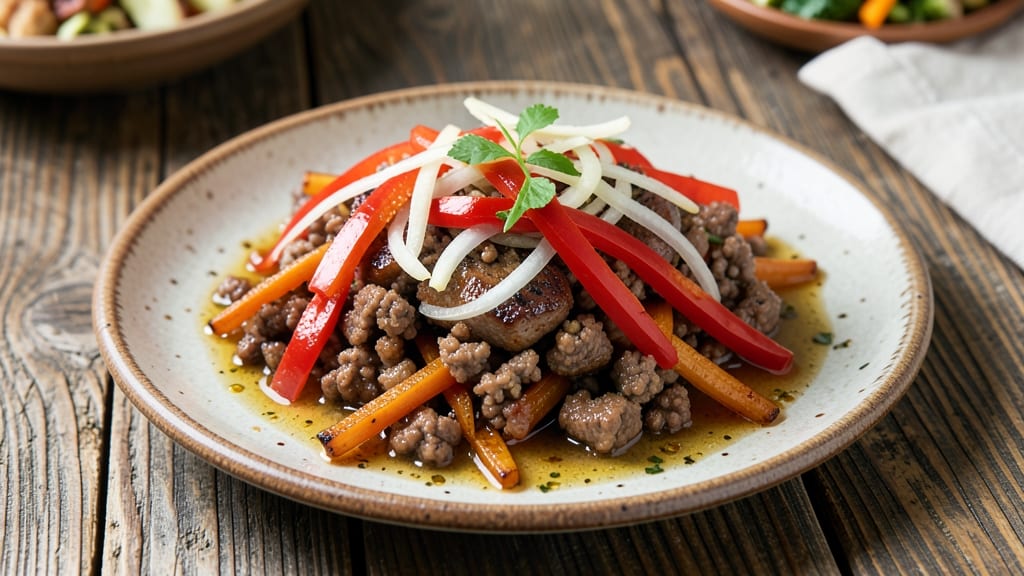
This minced pork and vegetables recipe transforms humble ingredients into a restaurant-worthy one-pan stir-fry that carries the bold flavors of my Georgia upbringing. The secret lies in proper pork preparation—freshly minced with just the right fat ratio—and a balanced blend of vegetables that stay crisp-tender through high-heat cooking.
I've perfected this technique over years of cooking for crowds at The Smoky Pig, where pork is our foundation.
What sets this dish apart is the savory depth achieved through proper seasoning and cooking method. We'll start with a quick sear of the pork to render fat and develop flavor, then add vegetables in stages so they cook evenly without turning mushy.
The result is a dish that's rich yet balanced, with tender pork and vibrant vegetables that hold their texture. This method works equally well as a stir-fry, stuffed into peppers, or served over rice.
The beauty of this recipe is its versatility—it's hearty enough for a main dish but simple enough to serve as a side. The pork absorbs the aromatics of garlic, ginger, and soy sauce, while the vegetables add freshness and color.
Whether you're feeding a family or meal prepping for the week, this one-pan approach minimizes cleanup while delivering maximum flavor. It's the kind of dish that gets better with each bite and leaves everyone asking for seconds.
For those who love pork with heritage roots, I've included tips for selecting quality meat and adapting the recipe to different vegetable preferences. The technique I'm sharing today comes from years of working with heritage pigs and perfecting pork preparations—methods that ensure every bite is tender, flavorful, and satisfying.
Let's get started on creating this comforting yet sophisticated dish that brings restaurant quality to your home table.
Ingredients for minced pork and vegetables
Freshly minced pork and vibrant vegetables come together for a one-pan stir-fry with restaurant-worthy savory depth.
| Ingredient | Amount | Notes |
|---|---|---|
| Pork Shoulder 🐖 | 1 ½ lb | Freshly minced with fat ratio |
| Vegetable Oil 🫒 | 2 tbsp | High smoke point preferred |
| Carrots 🥕 | 2 medium | Julienned into matchsticks |
| Bell Peppers 🌶️ | 2 whole | Assorted colors, sliced |
| Onion 🧅 | 1 large | Thinly sliced |
| Fresh Ginger 🌿 | 1 ½ tbsp | Finely grated |
| Garlic Cloves 🧄 | 6 cloves | Minced |
| Soy Sauce 🥢 | ½ cup | Low-sodium preferred |
| Sesame Oil 🫒 | 1 tbsp | For finishing |
| Honey 🍯 | 1 tbsp | For balance |
| Rice Vinegar 🍶 | 1 tbsp | White vinegar substitute |
| Salt 🧂 | 1 tsp | Kosher or sea salt |
| Black Pepper 🌶️ | ½ tsp | Freshly ground |
| Green Onions 🧅 | 3 whole | Sliced for garnish |
| Sesame Seeds 🌾 | 1 tbsp | Toasted for crunch |
The pork shoulder is the foundation here. Look for well-marbled cuts at your local butcher or Whole Foods—the fat renders beautifully during cooking, adding richness. If you're mincing it yourself, use a meat grinder or food processor for even texture. Pre-minced pork from the store works in a pinch, but it lacks the freshness and fat ratio you'd get from freshly minced. The vegetables should be fresh and crisp—local farmers markets often have the best selection. Bell peppers hold up well to high heat, but avoid anything soft or discolored. Carrots should be firm and bright orange, not limp or woody.
No sesame oil? Extra-virgin olive oil works in a pinch, though it has a different flavor profile. Short on ginger? Substitute with 1/2 teaspoon ground ginger, but fresh is ideal for that bright, zesty kick. The soy sauce can be swapped for coconut aminos if you're avoiding sodium. For extra depth, add a splash of fish sauce—just 1/2 teaspoon goes a long way. If you're meal prepping, double the recipe and store components separately. The pork and vegetables can be prepped ahead, then stir-fried together when ready to serve. The stir-fry reheats beautifully, though the texture may soften slightly.
This dish reheats beautifully—just toss it in a hot pan with a splash of water to revive the crispness. Keeps for 4-5 days in the fridge, though the flavors deepen over time. For longer storage, freeze portions for up to 3 months. I like to portion mine into meal prep containers with a side of steamed rice—ready to grab and go. The sesame seeds and green onions should be added fresh right before serving for maximum brightness. If you're serving a crowd, double the recipe and use two large skillets to maintain even cooking.
Why You'll Love This Recipe
- One-Pan Magic: I swear by this recipe when I’m too tired to wash extra dishes—just brown the pork, toss in the chopped veggies, and let it simmer. The onions caramelize right in the pan, so you don’t even need a separate sauté step.
- Savory Crunch Combo: That crisp-tender pork shoulder with the sweet, slightly charred bell peppers? It’s the kind of contrast that makes you go back for seconds. Honestly, the carrot pieces stay just firm enough to bite into, not mushy.
- Lunchbox Hero: Between us, this is my secret weapon for meal prep—it reheats like a dream and keeps its texture for days. Pack it in containers for work or school lunches, and you’ll have something hearty that doesn’t taste like leftovers.
- Budget Stretch: A single pork shoulder feeds my family for three meals, and the veggies are cheap staples. I’ll be real: it’s the kind of dish that makes grocery day feel like a win, especially when you’re stretching a budget.
Step-by-step instructions for one-pan minced pork stir-fry
Master this technique and you'll achieve restaurant-quality stir-fry with tender pork and vibrant vegetables.
Prep All Ingredients for Even Cooking
Start by mincing the 1.5 lb pork shoulder into small, even pieces—about ¼-inch in size. I use a sharp knife and cut against the grain for maximum tenderness. While the pork rests, julienne the 2 medium carrots into matchsticks and slice the 2 whole bell peppers into ½-inch strips. Thinly slice the 1 large onion and grate the 1.5 tbsp fresh ginger using a microplane for fine texture.
Mince the 6 cloves garlic and slice the 3 whole green onions for garnish. The key here is uniformity—consistent-sized ingredients cook at the same rate. Keep all prepped vegetables separate until ready to use. This prep work ensures everything cooks perfectly in the one pan.
Sear the Pork Until Browned
Heat 2 tbsp vegetable oil in a large skillet or wok over medium-high heat until shimmering. Add the minced pork in batches—don't overcrowd the pan—to prevent steaming. Cook for 4-5 minutes, stirring occasionally, until the pork is lightly browned and no longer pink. This step develops deep flavor through the Maillard reaction.
Once fully cooked, remove the pork with a slotted spoon and set aside. Leave the rendered fat in the pan—it's packed with flavor and will form the base for your stir-fry. If the pan appears dry, add 1 tbsp vegetable oil to maintain heat. The pork should be fully cooked but still tender, not rubbery.
Stir-Fry Vegetables Until Tender-Crisp
In the same skillet, add the sliced onion, carrots, and bell peppers over medium-high heat. Stir-fry for 3-4 minutes until the onions soften and the carrots begin to brighten in color. Add the minced garlic and grated ginger, cooking for another 30 seconds until fragrant—this prevents raw garlic flavor.
Return the pork to the pan and stir to combine. Pour in the 0.5 cup soy sauce, 1 tbsp honey, and 1 tbsp rice vinegar, mixing well. The sauce should begin to coat the ingredients immediately. If the mixture appears too dry, add 2-3 tablespoons water to help the sauce cling. Cook for 2-3 minutes until everything is heated through.
Finish with Aromatics and Garnish
Reduce heat to medium-low and drizzle in the 1 tbsp sesame oil. Stir gently to distribute evenly, allowing the oil to infuse into the dish. Sprinkle with 1 tsp salt and 0.5 tsp black pepper, tasting as you go. The dish should balance sweet, savory, and slightly tangy flavors.
Remove from heat and immediately garnish with sliced green onions and 1 tbsp toasted sesame seeds. The sesame seeds add a delightful crunch that contrasts with the tender pork and vegetables. Serve immediately over steamed rice to soak up every bit of that flavorful sauce.
Pro Tips For Making Minced Pork And Vegetables
- COOL THE PORK FIRST: I learned this the hard way—dumping cold minced pork straight into a hot pan makes it steam instead of sear. Pat it dry, then let it sit at room temp for 10 minutes before cooking. The meat will brown properly and won’t turn mushy when the veggies release moisture.
- CHOP VEGETABLES UNIFORM: Bell peppers and carrots should be cut into roughly ½-inch cubes—same size as the pork. I used to chop them randomly, and some would turn to mush while others stayed crunchy. Consistency = even cooking.
- DON’T OVERCROWD THE PAN: Resist the urge to dump everything in at once. Cook the pork in batches if needed, then add the veggies in stages. Overcrowding steams the meat instead of browning it, and the onions will turn soggy before the peppers get any color.
- USE HIGH HEAT FOR FLAVOR: Start with the oil smoking-hot, then add the pork—it’ll sizzle like crazy for 2-3 minutes. After the pork pulls away from the pan, toss in the onions first (they’re the most delicate). This caramelizes them fast and builds real depth of flavor before the softer veggies join.
Make-ahead tips for this recipe
Prep Ahead Components
I always prep the pork and vegetables separately for maximum freshness when making ahead. Start by mincing the 1.5 lb pork shoulder and storing it in an airtight container with a splash of 1 tbsp soy sauce and ½ tsp salt to prevent browning.
The vegetables should be chopped and stored in a separate container with a paper towel to absorb excess moisture. This keeps them crisp for up to 2 days in the fridge. 🌿
Freezer-Friendly Packaging
For longer storage, freeze the minced pork in 1-cup portions using heavy-duty freezer bags. Flatten the bags to save space and label with the date. The vegetables can be frozen too—toss them with 1 tsp cornstarch to prevent ice crystals.
Both components keep well for 3 months when properly sealed. Just thaw overnight in the fridge before cooking.
Stir-Fry Assembly Timeline
When ready to cook, I recommend this timeline: Thaw the pork in the fridge for 8-12 hours (or overnight). Let the vegetables sit at room temperature for 15 minutes before cooking to ensure even heating.
This prevents temperature shock when they hit the hot pan. The pork should be at room temperature too—pat it dry with paper towels before searing for better browning. ⏰
Reheating for Best Texture
This stir-fry reheats beautifully on the stovetop. Add 1 tbsp water or vegetable oil to a hot skillet and toss in the pork and vegetables. Cook over medium-high heat for 3-4 minutes until everything is heated through.
The vegetables will soften slightly but maintain their vibrant colors. For extra crispness, add fresh green onions and sesame seeds after reheating.
Meal Prep Containers
Portion the stir-fry into glass meal prep containers with a side of steamed rice. Store in the fridge for up to 4 days. When reheating, microwave for 1-2 minutes covered with a damp paper towel, then finish in a hot skillet for 1 minute to revive the flavors.
The rice will absorb the sauce perfectly, making each bite delicious. 💡
Batch Cooking Tips
Double the recipe and cook in batches to feed a crowd. Use two large skillets to maintain even cooking and prevent overcrowding. Store components separately in airtight containers—pork, vegetables, and sauce can be combined fresh when ready to serve.
This approach saves time and ensures you always have a flavorful meal ready. I often make extra to freeze for busy weeks ahead. 🍛
Nutrition facts
Frequently asked questions
Can I substitute ground pork for minced pork in this recipe?
Yes, but there's a key difference! Ground pork from the store is often leaner and may dry out faster during cooking. For best results, look for 80/20 fat ratio pork shoulder and mince it yourself with a sharp knife or meat grinder. The extra fat keeps the pork tender and adds rich flavor to the stir-fry.
What vegetables work best with minced pork in this recipe?
The classic combo of bell peppers, carrots, and onions works perfectly, but you can swap in almost any firm vegetable. Try broccoli florets, snap peas, or mushrooms for extra depth. Just ensure they're cut to similar sizes so they cook evenly. Zucchini or eggplant can be added but may need less cooking time.
How do I prevent the pork from becoming rubbery?
Overcooking is the main culprit! Cook the pork in batches over medium-high heat until just browned (4-5 minutes total), then remove it from the pan. The residual fat in the pan will keep it moist during the vegetable cooking stage. Avoid stirring constantly—let it develop a slight crust for better texture.
Can I make this recipe without sesame oil?
If you don't have sesame oil, substitute with 1 tbsp neutral oil like vegetable or avocado oil for finishing. For extra aroma, add a pinch of ground sesame seeds to the dish instead. The flavor will be different but still delicious—this stir-fry is all about adaptability while keeping that savory depth.
How can I adjust this for a spicier flavor profile?
Add heat by incorporating 1-2 tbsp of chili paste or 1 tsp red pepper flakes when combining the sauce ingredients. For fresh heat, stir in minced Thai chilies or sliced jalapeños during the final cooking stage.