
Main Courses
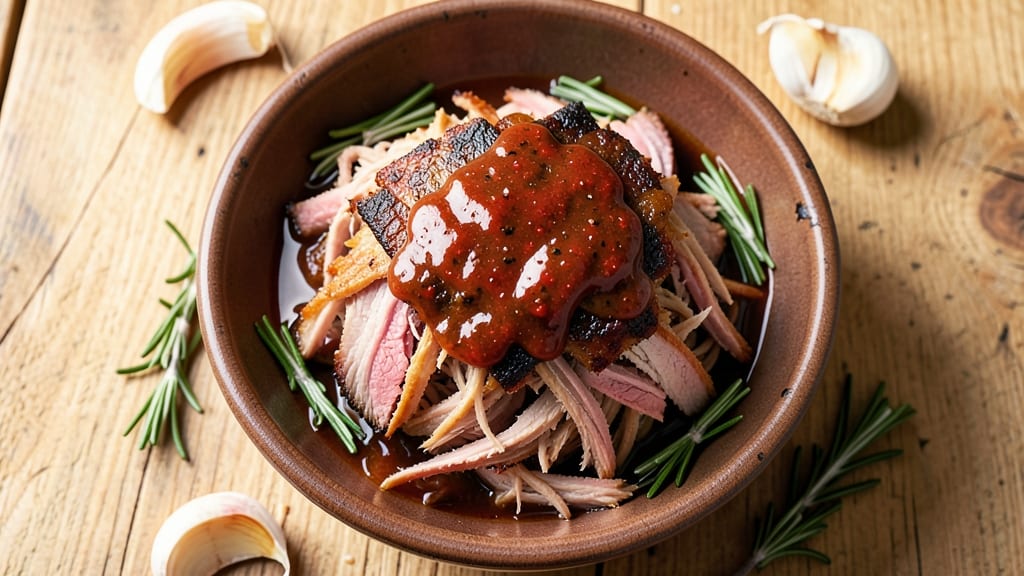
Michael Symon's pulled pork recipe transforms tough pork shoulder into melt-in-your-mouth perfection with a smoky herb crust and signature celery crown crunch. This isn't just pulled pork—it's a masterclass in slow-cooked flavor that builds depth through precise technique and bold seasoning.
I've adapted Symon's approach after years of perfecting my own pitmaster methods, ensuring every bite delivers that perfect balance of tender meat and aromatic crust.
The secret begins with selecting a well-marbled pork shoulder and building a flavor-packed crust using mustard, brown sugar, and fresh herbs. Slow cooking at 225°F for 8 hours creates that signature bark while keeping the meat juicy and tender.
The celery crown—crispy, salty, and herby—adds a textural contrast that makes this dish unforgettable. This method delivers restaurant-quality results without requiring specialized equipment.
By the time you shred that pork, you'll have fall-apart tender meat with a caramelized crust that clings to every bite. The celery crown adds a satisfying crunch that cuts through the richness, while the smoky-sweet glaze ties everything together.
It's the kind of dish that makes your house smell like a Southern BBQ joint and leaves everyone asking for seconds.
Perfect for game day, family gatherings, or a special weekend meal, this pulled pork serves a crowd with minimal effort after the initial setup. The technique scales beautifully, and leftovers reheat just as well as the first batch. Let's get started on creating your own showstopping pulled pork masterpiece.
Ingredients for michael symon pulled pork
Pantry staples meet pitmaster secrets for this crowd-pleasing pulled pork masterpiece.
| Ingredient | Amount | Notes |
|---|---|---|
| Pork Shoulder (Bone-In) 🐖 | 8 lb | Well-marbled, 3-4 inches thick |
| Yellow Mustard 🍯 | ½ cup | Dijon preferred for tang |
| Brown Sugar 🍚 | ½ cup | Light or dark variety |
| Smoked Paprika 🌶️ | 2 tbsp | For deep smoky flavor |
| Garlic Cloves 🧄 | 6 cloves | Minced for crust |
| Fresh Rosemary 🌿 | ¼ cup | Chopped, stems removed |
| Fresh Thyme 🌿 | ¼ cup | Chopped, stems removed |
| Kosher Salt 🧂 | 2 tbsp | Diamond Crystal preferred |
| Black Peppercorns 🌶️ | 1 tbsp | Freshly cracked |
| Apple Cider Vinegar 🍎 | ¼ cup | For tangy depth |
| Celery Stalks 🥬 | 4 whole | Thick, trimmed evenly |
| Vegetable Oil 🫒 | ¼ cup | For frying crown |
| Granulated Garlic 🧄 | 1 tbsp | For celery crown |
| Celery Salt 🧂 | 1 tsp | For crown seasoning |
The pork shoulder is the foundation. Look for bone-in cuts with good marbling—this ensures juicy, tender meat. Costco and Whole Foods carry excellent options, but any reputable butcher will have what you need. Fresh herbs make all the difference here: rosemary and thyme should smell vibrant, not dried out. If you can't find fresh, dried works at one-third the amount, but fresh delivers that restaurant-quality aroma. The mustard and brown sugar combo creates that signature caramelized bark, so don't skimp on either—this is what makes Symon's version special.
No Dijon mustard? Any good-quality yellow mustard works, but the tang matters. Short on fresh herbs? Dried thyme and rosemary are fine in a pinch, but fresh is ideal. The celery crown requires thick stalks—avoid the thin, stringy ones. For the crust, if you can't find smoked paprika, regular paprika plus a pinch of liquid smoke gets you close. The apple cider vinegar adds depth, but white vinegar works in a bind. For the celery crown, trim the stalks evenly so they fry uniformly—this is where the magic happens for that satisfying crunch.
Pork shoulder keeps 3-4 days in the fridge before cooking, wrapped tightly. The crust mixture can be prepped a day ahead and stored in the fridge. Celery crown pieces stay crisp for 2 days if kept in an airtight container. Leftovers? This dish gets better as it sits—4-5 days in the fridge, 3 months frozen. I always make extra crust for sandwiches the next day—trust me, it's worth it.
Why You'll Love This Recipe
- Sweet-Savory Magic: The brown sugar and smoked paprika create this perfect balance—caramelized edges with a deep, smoky warmth. Between us, the garlic cloves roasted right into the meat? That’s where it gets dangerous.
- Leftovers That Win: This recipe makes way more than you’ll eat in one sitting, and the best part? The flavor only gets better the next day. Sandwiches, tacos, or just reheated with a fork—it’s my go-to for lazy afternoons.
- Budget-Friendly Feast: Bone-in pork shoulder is a steal, and this recipe stretches it to feed a crowd without breaking the bank. I’ll be real: I’ve made this for game nights, potlucks, and even a last-minute dinner for my book club, and no one ever questions the cost.
Step-by-step instructions for smoky herb-crusted pulled pork
Here's how to create tender, smoky pulled pork with that signature celery crown crunch—just like Michael Symon's version.
Prepare the Pork Shoulder for Maximum Flavor
Start by trimming any excess fat from the pork shoulder, leaving about a ¼-inch layer to protect the meat during cooking. Pat the entire surface dry with paper towels—this ensures a better crust later. In a large bowl, combine the 0.5 cup yellow mustard, 0.5 cup brown sugar, 2 tbsp smoked paprika, 6 cloves minced garlic, 0.25 cup chopped fresh rosemary, 0.25 cup chopped fresh thyme, 2 tbsp kosher salt, and 1 tbsp freshly cracked black peppercorns. Mix thoroughly until evenly distributed.
Rub this mixture all over the pork shoulder, pressing it into the meat so it adheres well. Place the seasoned pork in a resealable plastic bag and refrigerate for at least 4 hours, or preferably overnight. This step allows the flavors to penetrate deeply and creates that signature bark that Michael Symon is known for. Real talk: don't skip this marinating time—it makes all the difference in the final texture and taste.
Create the Celery Crown for Extra Crunch
While the pork marinates, prepare the celery crown. Trim the 4 whole celery stalks evenly, removing any stringy leaves. Cut each stalk into 1-inch pieces. In a small bowl, mix together 0.25 cup vegetable oil, 1 tbsp granulated garlic, and 1 tsp celery salt. Toss the celery pieces in this mixture until evenly coated.
Heat a large skillet over medium heat and add the coated celery. Fry for 3-4 minutes until golden brown and crispy. Remove from heat and set aside—these will be your crunchy topping. The celery crown adds a fantastic textural contrast to the tender pulled pork, balancing the rich, smoky flavors perfectly. I like to keep these warm in a low oven (200°F) until ready to serve.
Cook the Pork Shoulder Low and Slow
Preheat your smoker or grill to 225°F. Place the marinated pork shoulder on the grill grates, fat side up. This position allows the rendered fat to baste the meat as it cooks. Close the lid and resist the urge to peek—every time you open it, you lose heat and extend cooking time. I've found that smoking the pork for 6-8 hours gives you that perfect balance of tenderness and bark.
After about 4 hours, check the internal temperature using a meat thermometer. When it reaches 165°F, wrap the pork tightly in butcher paper (not foil—it breathes better and preserves that beautiful bark). Return it to the smoker and continue cooking until the internal temperature reaches 203°F. This is the "probe-tender" stage where the meat should practically fall apart with gentle pressure. The whole process typically takes 8-10 hours total, depending on your smoker's consistency.
Shred and Combine With Celery Crown
Once the pork reaches 203°F, remove it from the smoker and let it rest for 15 minutes. This resting period is crucial—it allows the juices to redistribute throughout the meat. Using two forks or meat claws, shred the pork into bite-sized pieces. Discard any large fat chunks or connective tissue.
Return the shredded pork to the smoker or place it in a large bowl and cover it with the 0.25 cup apple cider vinegar. This adds a nice tangy depth to the flavor. Mix well to distribute the vinegar evenly. Now, add the crispy celery crown pieces and toss gently to combine. The celery will soften slightly but maintain its crunchy texture, creating that perfect contrast with each bite. Serve immediately on buns with your favorite toppings like coleslaw or pickles.
Pro Tips For Making Michael Symon Pulled Pork
- Trim the Fat First: Scrape off that thick layer of fat on the pork shoulder before seasoning—it’s not just for looks. I used to leave it, thinking it added flavor, but it just makes your rub slide off and burns before the meat does. A quick 10-minute trim with a sharp knife saves you from fighting smoke and ensures even seasoning.
- Brown Sugar Wet First: Mix the brown sugar with the yellow mustard before adding it to the pork. Dry sugar clumps like a stubborn guest at a party, and you’ll end up with uneven coating. A splash of water or apple cider vinegar (just 1 tablespoon) dissolves it into a sticky glaze that clings like it’s supposed to.
- Don’t Rush the Sear: Let the pork shoulder sit uncovered in the fridge for 30 minutes after seasoning—yes, even if you’re eager to cook. Cold meat sears better, and the spices stick like they’re glued on. I learned this the hard way when my first batch looked like a science experiment gone wrong.
- Check Internal Temp Early: Start pulling the pork at 195°F, not 203°F—it’ll keep rising another 10 degrees while you rest it. Use a meat thermometer in the thickest part, away from bone, and resist the urge to poke it multiple times (yes, I’ve done that too). Patience here means tender, not dry, meat.
Wine and beer pairings for this recipe
Southern-Style Beer Pairings
For this rich, smoky pulled pork, I always reach for a crisp Southern-style lager like Shiner Bock or Blue Moon Belgian White. The malty sweetness and subtle citrus notes complement the caramelized bark beautifully, while the effervescence cuts through the richness.
A local craft IPA from Georgia, like Atlanta Brewing Company's Hoppy Hour, also works wonders—the hoppy bitterness balances the pork's sweetness. 🍺
Red Wine Contrasts
If you prefer wine, a dry Rioja or Cabernet Sauvignon from Napa Valley stands up to the dish's bold flavors. The tannins in these reds help cleanse your palate between bites, while their dark fruit notes mirror the pork's smoky depth.
I love pairing it with a 2018 Caymus Vineyards Cabernet—it's rich enough to handle the dish but not so heavy it overpowers the celery crown's freshness.
Cider Harmony
For a refreshing alternative, try a dry hard cider like Angry Orchard Crisp Apple. The crisp acidity and apple notes echo the apple cider vinegar in the recipe, creating a harmonious flavor bridge.
A half-and-half of cider and lager also works—pour equal parts Angry Orchard and Shiner Bock for a lighter, more approachable sip.
Non-Alcoholic Options
Don't overlook sparkling apple cider—it's a fantastic non-alcoholic match, especially if you're serving this at a family gathering. Brands like Martinelli's or Woodchuck Hard Cider's non-alcoholic version provide that same crisp, refreshing contrast.
For a savory twist, try sparkling water with a splash of lime juice—it's surprisingly effective at cutting through the dish's richness.
Symon's Signature Sip
Michael Symon himself often recommends a bourbon cocktail for pulled pork—specifically a bourbon smash with mint and lemon. The caramel notes in bourbon mirror the brown sugar in the crust, while the herbal mint complements the rosemary and thyme.
I like to make a batch ahead and keep it chilled for serving—it's a showstopper that elevates the whole meal. 🥃
Nutrition facts
Frequently asked questions
Can I use a different cut of pork instead of shoulder?
While pork shoulder is ideal for its fat marbling and collagen, you can use pork butt (which is essentially the upper shoulder) as a direct substitute. Avoid leaner cuts like tenderloin—they lack the fat needed for juicy, tender pulled pork. If using pork butt, increase cooking time slightly as it's often slightly leaner than shoulder.
How do I adjust the recipe for a smaller crowd?
This recipe serves 12—for 6 servings, reduce all ingredients by half. Use a 4-pound pork shoulder and cut the crust ingredients proportionally. The cooking time will be about 6 hours instead of 8. For 4 servings, use 2 pounds of pork and reduce everything by half again, with a 4-hour cook time.
What's the best way to reheat leftovers?
Reheat in a 350°F oven for 20-30 minutes with a splash of apple cider vinegar or broth to restore moisture. Avoid microwaving—it makes the pork dry. For sandwiches, warm the pork in a skillet with a little butter for 3-5 minutes until heated through. The celery crown loses crispness when reheated, so make fresh for serving.
Can I make this in an oven instead of a smoker?
Preheat oven to 275°F and place the pork on a rack in a roasting pan. Add 1 cup of water or broth to the pan to create steam. Cook for 6-7 hours until internal temp reaches 203°F. For smokiness, add a few wood chips to the pan or use a smoker box. The bark will be less pronounced but still delicious.
Why does my pulled pork turn out dry?
Overcooking or skipping the rest period are the most common causes. Always cook to 203°F (probe-tender) and let it rest 15 minutes before shredding. If using a leaner cut, increase the cooking liquid or wrap in butcher paper earlier. The vinegar at the end helps retain moisture—don't skip this step! Also, avoid peeking at the meat too often when smoking.