
Main Courses
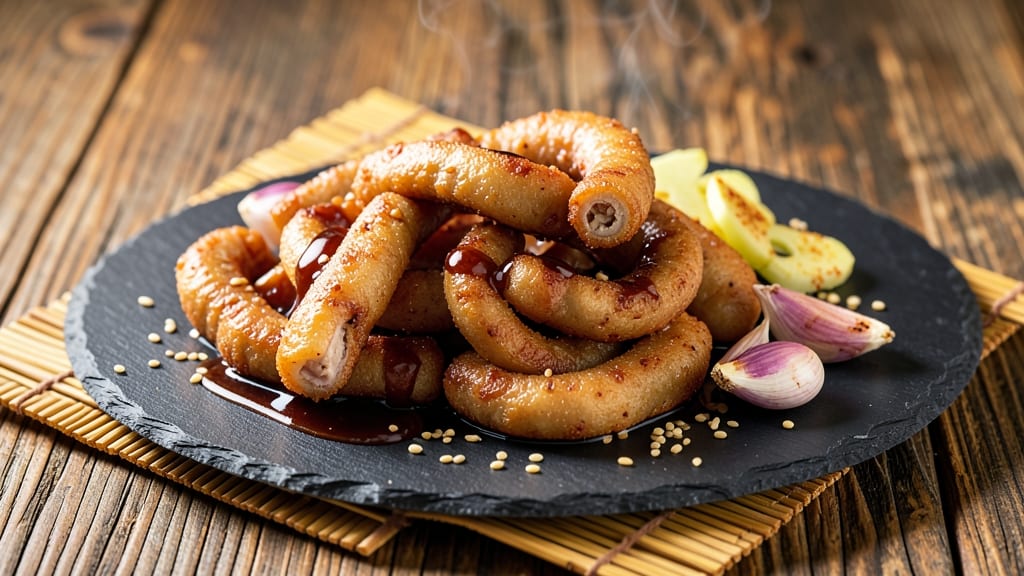
This Chinese deep-fried pork intestine recipe delivers the perfect balance of crispy golden edges and tender hearts that melt in your mouth—just like my abuela used to make. The secret lies in the five-spice powder marinade, which infuses the intestines with aromatic warmth while keeping them juicy.
I first learned this technique from a street food vendor in Charleston, where the sizzle of hot oil and the scent of spices drew crowds at every turn.
The process begins with meticulous cleaning and marinating, ensuring the intestines absorb the five-spice blend and soy sauce for that signature umami depth. Deep-frying at the right temperature—350°F—creates that addictive crunch without sacrificing tenderness.
This isn’t just a recipe; it’s a taste of tradition, where every bite carries layers of smoky, spiced flavor that lingers long after the last piece disappears.
What you’ll end up with is a dish that’s both restaurant-quality and deeply satisfying—crispy on the outside, tender on the inside, and bursting with the aromatic complexity of five-spice powder. The key is patience: letting the intestines marinate overnight and frying them in small batches to maintain even heat.
Serve with a side of chili oil or a tangy vinegar dip for the full experience.
Perfect for sharing at gatherings or enjoying as a bold, flavorful snack, this recipe brings the vibrant energy of Chinese street food to your kitchen. Whether you’re a seasoned cook or trying this for the first time, the results will leave everyone asking for seconds. Let’s get started!
Ingredients for chinese deep fried pork intestine
Nine essential ingredients for crispy, aromatic pork intestines that taste like street food magic.
| Ingredient | Amount | Notes |
|---|---|---|
| Pork Intestines (Chitterlings) 🥩 | 1 ½ lb | Fresh, cleaned, and rinsed thoroughly |
| Five-Spice Powder 🌶️ | 2 tbsp | Homemade or store-bought blend |
| Soy Sauce 🍶 | ½ cup | Light or dark, for marinade |
| Garlic Cloves 🧄 | 6 cloves | Minced for marinade |
| Ginger Root 🌿 | 1 tbsp | Freshly grated |
| Sesame Oil 🫒 | 1 tbsp | For aroma and flavor |
| Vegetable Oil 🫒 | 4 cups | For deep-frying, high smoke point |
| Salt 🧂 | 1 ½ tsp | Kosher or sea salt |
| Black Pepper 🌶️ | ½ tsp | Freshly ground |
| Cornstarch 🌾 | ½ cup | For crispy coating |
| Green Onions 🧅 | 4 whole | Sliced thin for garnish |
| Chili Oil 🌶️ | ¼ cup | For serving, optional |
| Lime Wedges 🍋 | 2 whole | For serving |
The intestines are the star, so don’t skimp on quality. Look for fresh, clean intestines at Asian markets—they’ll usually have them pre-cleaned, but give them a thorough rinse anyway. Trader Joe’s or H Mart are great spots for this. If you're nervous about handling them, wear gloves and work in a well-ventilated area. The five-spice powder is non-negotiable—it’s what gives this dish its signature aromatic warmth. I like to make my own blend (equal parts star anise, cinnamon, fennel, cloves, and peppercorns), but a good store-bought version works too. The soy sauce should be light or dark—just avoid low-sodium if you want that deep umami flavor.
No five-spice powder? Mix 1 tsp each of cinnamon, fennel seeds, and cloves for a close substitute. Short on time? Skip the overnight marinade and let the intestines soak for at least 4 hours. The cornstarch is key for that addictive crunch—don’t substitute flour. If you can’t find fresh ginger, a teaspoon of ground ginger works in a pinch, but fresh is always better. The chili oil can be store-bought (like Lao Gan Ma) or homemade—just blend chili flakes, garlic, and oil. And if you’re serving this at a gathering, double the batch—it disappears fast.
Marinate the intestines overnight for maximum flavor, but they’ll keep in the fridge for up to 2 days if you’re prepping ahead. The fried intestines are best served immediately, but they’ll stay crispy for about 1 hour if you keep them warm in a 200°F oven. Store leftovers in an airtight container for 3 days, but honestly, they’re so good you’ll eat them all. Freezing isn’t recommended—the texture changes. Garnish with green onions and lime wedges right before serving to keep everything fresh and vibrant.
Why You'll Love This Recipe
- No Fuss Prep: I’ll be real—this isn’t the prettiest dish, but the prep is ridiculously simple. Soak the intestines overnight (or even just 2 hours if you’re in a rush), then a quick rinse, marinate in soy sauce and five-spice for 30 minutes, and you’re ready to fry. That’s it. No peeling, no dicing—just hands-off time while the magic happens.
- Crispy-Creamy Magic: Between us, the texture is chef’s kiss: the outside gets that golden, shatteringly crisp shell from the deep fry, while the inside stays tender and juicy. The five-spice powder—star anise, clove, fennel—adds this warm, earthy depth that cuts through the richness, and the garlic-ginger punch? It’s like a hug in every bite.
- Crowd-Pleaser Any Day: Honestly, this is the kind of dish that disappears fast. Serve it at a potluck, family gathering, or even as a late-night snack—everyone will ask for seconds. It’s hearty enough for a main but light enough for a side, and the leftovers? Still solid reheated the next day (just crisp them up in a pan).
- Budget Hero: I swear by this for stretching meals without sacrificing flavor. Pork intestines are way cheaper than other cuts, and a pound feeds four easily. Plus, the spices and soy sauce cost pennies, so you’re basically getting gourmet satisfaction for next to nothing. My wallet and my taste buds thank me every time.
Step-by-step instructions for crispy five-spice fried chitterlings
Here's how to transform tough chitterlings into golden, crunchy bites with tender centers—every time.
Clean and Parboil the Chitterlings
Start by rinsing the 1.5 lb pork intestines (chitterlings) thoroughly under cold running water. You'll want to remove any remaining impurities by gently rubbing them with your fingers while submerged. After rinsing, place them in a large pot and cover with cold water by about 2 inches.
Bring to a boil over high heat, then immediately reduce to a simmer for 30 minutes. This parboiling step removes any lingering impurities and begins breaking down the collagen for tender results. Drain and rinse again with cold water to stop the cooking process and remove any scum that rises to the surface.
Prepare the Five-Spice Marinade
In a large bowl, combine the 0.5 cup soy sauce, 6 minced garlic cloves, 1 tbsp freshly grated ginger root, 1 tbsp sesame oil, 1.5 tsp salt, and 0.5 tsp freshly ground black pepper. Mix well until the spices are fully dissolved and the marinade has a rich, aromatic consistency.
Add the rinsed chitterlings to the marinade and coat them thoroughly. Let them marinate for at least 30 minutes at room temperature—this ensures maximum flavor absorption. I like to press the marinade into the folds of the intestines with my fingers to guarantee even seasoning throughout.
Create the Cornstarch Battering Station
In a separate shallow dish, spread out the 0.5 cup cornstarch evenly. This will be your crispy coating station. After marinating, remove the chitterlings and shake off any excess marinade (don't rinse—we want that flavor!). Dip each piece into the cornstarch, pressing gently to adhere a thin, even layer.
This cornstarch coating is what creates that perfect golden crust when fried. Work quickly so the cornstarch doesn't absorb moisture from the chitterlings. You'll know you've done it right when each piece is lightly but completely coated—no bare spots should remain.
Deep-Fry to Crispy Perfection
Heat 4 cups vegetable oil in a deep fryer or heavy pot to 350°F—this is crucial for even cooking. Use a thermometer to monitor the temperature; if it drops below 340°F during frying, your chitterlings will absorb oil instead of crisping up.
Working in batches (don't overcrowd the pot), fry the chitterlings for 3-4 minutes until they float to the surface and develop a deep golden brown color. This indicates they're properly cooked through with a crispy exterior. Drain on a wire rack or paper towels to remove excess oil—this prevents sogginess and keeps them crispy.
Serve with Fresh Garnishes
While still hot, arrange the crispy chitterlings on a serving platter. Thinly slice the 4 whole green onions and scatter them over the top for freshness. Serve immediately with the 2 whole lime wedges and 0.25 cup chili oil on the side for dipping.
The contrast of the crispy exterior with the tender interior makes each bite satisfying. The lime wedges cut through the richness while the chili oil adds just the right amount of heat. Serve with steamed rice to soak up all the delicious flavors—this dish is best enjoyed fresh while everything is at its peak texture and temperature.
Pro Tips For Making Chinese Deep Fried Pork Intestine
- Blanch First, Fry Fast: After learning the hard way that raw intestines turn to rubber in oil, I now blanch them in salted boiling water for 3-4 minutes first. This removes impurities and lets them crisp up properly—no more greasy, chewy messes. (Yes, even if you're impatient like me.)
- Dry Like a Pro: Pat those blanch-washed intestines thoroughly with paper towels—no half-measures. Wet spots turn to steam in the fryer, making the coating stick unevenly. I use a clean kitchen towel for the final press; it’s faster than towels and leaves them bone-dry.
- Skip the Overcrowding: Fry in batches no thicker than 2 inches, or the oil temp will tank. I’ve fried 10 intestines at once thinking I’d save time—ended up with soggy, greasy results. A single layer in hot oil (350°F/175°C) guarantees that golden, blistering crust.
- Toast the Spices: Bloom the five-spice powder in oil for 30 seconds before adding garlic and ginger—it deepens the flavor. My grandmother swore by this, and she was right: the aroma alone makes the dish taste more complex. (No, you can’t skip it.)
Essential equipment for perfect results
Deep Fryer Essentials
For authentic results, I recommend using a commercial-grade deep fryer like the Presto 06300—it maintains consistent 350°F temperature and holds 4 cups of oil perfectly for this recipe. If you're working with limited space, a heavy-duty Dutch oven (like Lodge 5.5-quart) works just as well.
The key is keeping the oil hot and stable—never let it drop below 340°F or your chitterlings will turn greasy instead of crispy. 🌡️
Oil Selection
Use high-smoke-point vegetable oil (like Avocado Brand or Crisco All-Vegetable Shortening)—these stand up to 350°F without breaking down. Avoid olive oil or butter; they burn at these temperatures and create bitter flavors.
I like to reuse oil for up to 3 batches if I strain it through a fine-mesh sieve after each use. Always store leftover oil in an airtight container in a cool, dark place.
Temperature Control
A digital instant-read thermometer (like Thermoworks ThermoPop) is non-negotiable for this recipe. The oil must stay at 350°F—any lower and the cornstarch won't crisp properly. I keep a small pot of oil on the stove at low heat nearby to quickly restore temperature if it drops during frying.
Pro tip: Never overcrowd the fryer—3-4 pieces at a time is ideal for even cooking.
Draining Setup
Set up a wire mesh cooling rack over a baking sheet to drain the fried chitterlings. This keeps them crispy by preventing steam buildup (unlike paper towels, which make them soggy).
I also keep a small fan nearby to speed up cooling—this helps maintain that perfect crunch while they rest. For extra crispiness, sprinkle with ½ tsp cornstarch right after draining. ✨
Safety Gear
Deep-frying demands respect—wear heat-resistant gloves (like Oven Mitts by OXO) and have a fire extinguisher (Class B or K) within reach. I also keep a large metal spatula and tongs handy for quick oil transfers if needed.
Never leave the fryer unattended, and keep a bowl of flour nearby to smother any grease fires (though proper ventilation is your first line of defense).
Optional Upgrade
For restaurant-quality results, invest in a deep-fat fryer with a temperature gauge (like Sunbeam FB400). These maintain precise heat and make batch frying a breeze.
I also like using a cornstarch sifter to create an even, ultra-fine coating—just sprinkle it over the chitterlings before frying for that perfect golden crust. 💫
Nutrition facts
Frequently asked questions
How do I properly clean pork intestines for this recipe?
Start by rinsing them thoroughly under cold water, then gently rub with your fingers to remove impurities. Parboil for 30 minutes in salted water to remove any remaining debris, then rinse again with cold water. Always wear gloves and work in a well-ventilated area for comfort.
Can I substitute cornstarch with flour for the coating?
No, cornstarch creates a lighter, crispier crust that won't get soggy. Flour absorbs more moisture and can make the coating gummy. For a gluten-free alternative, use rice flour instead—it works almost as well. The key is an ultra-fine, even coating.
What's the best way to store leftover fried intestines?
Keep them in an airtight container at room temperature for up to 3 days, or refrigerate for 5 days. For longer storage, freeze them for 1 month (though texture may change slightly). Reheat in a 350°F oven for 5-7 minutes to restore crispiness.
How do I adjust the spice level for sensitive eaters?
Reduce the five-spice powder to 1 tbsp and omit chili oil entirely. For extra mildness, add 1 tsp sugar to the marinade to balance flavors. Serve with plain rice and steamed veggies to complement the natural pork taste.
Why did my fried intestines turn out greasy instead of crispy?
This usually happens when oil temperature drops below 340°F. Use a thermometer to maintain 350°F and fry in small batches. Also ensure your cornstarch coating is dry before frying—moisture prevents crispiness. For extra crunch, sprinkle with ½ tsp cornstarch right after draining.