
Main Courses
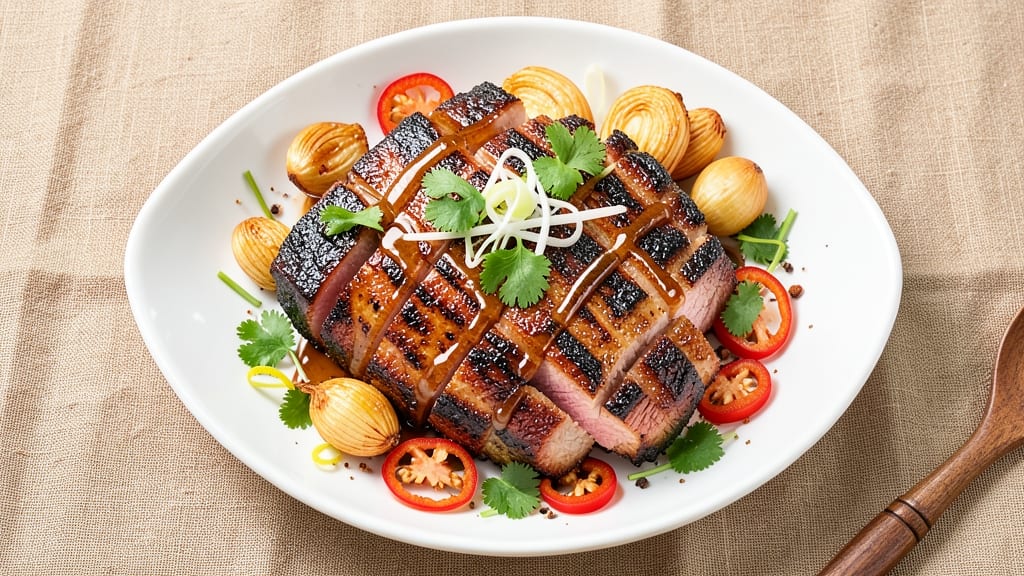
This Chinese barbecue pork belly recipe delivers silky pink tenderness with crispy, charred edges that crackle at every bite. After years of perfecting Cantonese-style techniques, I've developed a method that balances traditional slow-roasting with modern precision—no smoky haze or tough meat in sight.
The secret lies in a marinade that tenderizes while building flavor, followed by careful charring that transforms the fat into golden, crispy layers.
The process begins with a simple yet powerful marinade of soy sauce, honey, and five-spice powder that penetrates deeply during the overnight soak.
What sets this apart is the controlled cooking method: starting with a high-heat sear to render the fat, then finishing in the oven at a lower temperature to ensure even cooking. This approach guarantees restaurant-quality results without requiring specialized equipment—just patience and attention to detail.
By the time you're done, you'll have pork belly that's tender enough to slice with a fork yet holds its shape beautifully when served. The exterior boasts a deep mahogany crust from careful charring, while the interior remains juicy and pink—proof that great barbecue doesn't require hours of smoking.
The aroma alone will have everyone gathering around your table, and each bite delivers that perfect balance of sweet, savory, and umami.
This recipe works equally well for family dinners or special occasions, and the leftovers reheat beautifully for sandwiches or fried rice. Whether you're serving it with steamed rice and pickled vegetables or wrapping it in fresh lettuce leaves, the flavor will shine through.
Let's get started on creating pork belly that rivals your favorite Asian restaurant—without the wait.
Ingredients for chinese barbecue pork belly
The perfect balance of crispy edges and tender pink pork belly starts with these quality ingredients.
| Ingredient | Amount | Notes |
|---|---|---|
| Pork Belly 🥓 | 2 lb | Skin-on, cut into 1-inch slices |
| Light Soy Sauce 🥢 | ½ cup | Kikkoman preferred for balance |
| Honey 🍯 | ¼ cup | Wildflower for depth of flavor |
| Five-Spice Powder 🌶️ | 1 tbsp | Toasted for enhanced aroma |
| Garlic Cloves 🧄 | 6 cloves | Minced for even distribution |
| Ginger Root 🌿 | 1 tbsp | Freshly grated, not powdered |
| Sesame Oil 🫒 | 1 tbsp | Toasted sesame oil for nutty depth |
| Rice Vinegar 🍶 | 1 tbsp | Seasoned for subtle tang |
| Neutral Oil 🫒 | 2 tbsp | Avocado or vegetable oil |
| Brown Sugar 🍚 | 1 tbsp | Lightly packed for caramelization |
| Salt 🧂 | 1 ½ tsp | Diamond Crystal kosher salt |
| Black Pepper 🌶️ | ½ tsp | Freshly cracked for heat |
| Scallions 🧅 | 2 whole | Thinly sliced for garnish |
The pork belly is non-negotiable here—skin-on, thick-cut pieces from Costco or Whole Foods work best. Look for cuts with good marbling; the fat is what creates that signature crisp. If you're buying pre-sliced, check for even thickness—1-inch slices ensure consistent cooking. For the soy sauce, Kikkoman is my go-to, but any light soy will do. The honey should be wildflower or clover—avoid the overly processed kind that crystallizes fast. Five-spice powder varies wildly in quality; Penzeys or Spicewalla are worth the splurge for that authentic Cantonese depth.
No sesame oil? Toasted peanut oil works in a pinch, though the flavor won't be identical. Running short on ginger? Substitute with 1 tsp of ground ginger plus 1 tsp of extra honey—it's not the same, but close. The rice vinegar can be swapped for apple cider vinegar at half the amount, though it'll be slightly sharper. For the oil, avocado oil has the highest smoke point, but vegetable oil is fine if you're searing on medium-high. If you can't find toasted sesame oil, lightly toast regular sesame oil in a dry pan for 2 minutes before using—it makes a difference. And for the brown sugar? Turbinado sugar works too, though it won't caramelize as smoothly.
Marinate the pork belly overnight—24 hours max—or it'll turn mushy. Store the marinade in an airtight container in the fridge. The cooked pork belly reheats beautifully; wrap portions in foil and reheat at 300°F for 15 minutes to restore crispiness. Leftovers keep for 4 days in the fridge or 3 months frozen. For freezing, slice first, then portion into single servings. The charred edges soften when reheated, so always reheat from cold. Garnish with scallions just before serving—they add a fresh contrast to the rich, charred pork.
Why You'll Love This Recipe
- One-Pan Magic: I swear by this recipe because it’s literally one sheet pan, one brush, and done. No chopping boards, no mess—just slice the pork, mix the sauce (soy, honey, five-spice, garlic), slather it on, and broil. The honey caramelizes into a glossy glaze while the five-spice adds warmth without extra effort.
- Crispy-Creamy Obsession: That contrast? Chef’s kiss. The edges crackle like a perfect chip, but the inside stays juicy and tender—thanks to the pork belly’s fat. The garlic and soy sauce cut through the richness, while the honey adds just enough sweetness to make it dangerously addictive. Honestly, I’ve caught myself eating it straight off the pan.
- Leftover Goldmine: This dish begs to be made extra. The leftovers reheat beautifully—crispy again if you broil them for 2 minutes—and turn into the best fried rice, bao fillings, or even a quick stir-fry. I’ll be real: half the time, I make a double batch just to have it on hand for lazy nights.
- Budget-Friendly Luxury: Pork belly feels fancy, but this recipe stretches it far. A single slab feeds four, and the sauce costs pennies. Five-spice and garlic are pantry staples, so you’re not hunting for obscure ingredients. Plus, the honey glaze makes it feel special without breaking the bank—my wallet and taste buds both win.
Step-by-step instructions for Chinese barbecue pork belly
Here's how to transform simple pork belly into restaurant-quality barbecue with crispy edges and melt-in-your-mouth tenderness.
Marinate the Pork Belly for Maximum Flavor
In a large bowl, combine the 2 lb pork belly with the 0.5 cup light soy sauce, 0.25 cup honey, 1 tbsp five-spice powder, 1 tbsp brown sugar, 1.5 tsp salt, and 0.5 tsp black pepper. Use your hands to massage the marinade into every inch of the pork belly, making sure it penetrates all the way to the edges. The five-spice powder and brown sugar will create a beautiful caramelized crust while keeping the interior silky.
Cover the bowl with plastic wrap and refrigerate for at least 4 hours or overnight for best results. This extended marination ensures the pork belly absorbs all the flavors and becomes tender. I like to marinate overnight because it gives the spices time to fully infuse and the pork belly to break down just enough to make slicing easier later.
Parboil for Even Cooking
In a large pot, bring 6 cups of water to a boil. Add the marinated pork belly and cook for 10 minutes. This parboiling step is crucial—it helps the pork belly cook evenly and prevents it from becoming too dry during the long roasting process. The pork belly should be just barely cooked through but not fully done yet.
Drain the pork belly and pat it dry thoroughly with paper towels. This step removes excess moisture, which is essential for achieving that perfect crispy exterior. Don't skip this—wet skin won't crisp up properly. While the pork belly is still warm, rub it with 2 tbsp neutral oil to help the skin crisp up beautifully during roasting.
Roast Until Crispy and Tender
Preheat your oven to 325°F. Place the pork belly on a wire rack set over a baking sheet to allow air to circulate on all sides. Roast for 1 hour 15 minutes, flipping halfway through the cooking time. The pork belly is done when it reaches an internal temperature of 195-203°F and the skin is deep golden brown and crispy.
Here's the thing—pork belly needs time to render its fat and become tender. Don't rush this step. The internal temperature will continue to rise even after you remove it from the oven, so pull it out when it's just shy of fully done. This carryover cooking ensures perfect doneness without drying out the meat.
Create the Glazing Sauce
While the pork belly is roasting, prepare the glaze by combining 1 tbsp sesame oil, 1 tbsp rice vinegar, 6 minced garlic cloves, and 1 tbsp freshly grated ginger root in a small saucepan. Cook over medium heat for 2 minutes until fragrant. Add 2 tablespoons of the pork belly's rendered fat from the roasting pan and stir to combine.
Increase the heat to medium-high and bring the mixture to a simmer. Reduce the heat to low and let it cook for 5 minutes until slightly thickened. This sauce will add a beautiful sheen to the pork belly and complement its rich flavors. The ginger and garlic will provide a nice aromatic contrast to the sweet and savory notes.
Glaze and Rest the Pork Belly
Remove the pork belly from the oven and transfer it to a cutting board. Brush the glaze evenly over the top and sides of the pork belly. Let it rest for 10 minutes before slicing—this allows the juices to redistribute and ensures each slice is moist and flavorful.
Slice the pork belly against the grain into ¼-inch thick slices. Garnish with the 2 thinly sliced scallions and serve immediately. The contrast of crispy edges and tender, pink interior is what makes this dish so special. Each bite should deliver a perfect balance of sweet, savory, and aromatic flavors that will have everyone asking for seconds.
Pro Tips For Making Chinese Barbecue Pork Belly
- CRISP THE SKIN FIRST: I learned this the hard way—skipping the initial sear means your pork belly stays greasy and chewy. Sear the skin-side down in a cold pan over medium heat until it releases fat and turns golden (about 5 minutes). This locks in flavor and sets up that perfect crisp later.
- USE THICK HONEY, NOT LIQUID: Thin honey burns fast and makes your glaze turn bitter. Grab a jar of thick, dark honey (like clover or wildflower) and mix it with the soy sauce—it’ll coat the pork evenly without scorching. Trust me, your glaze won’t clump or stick to the pan.
- DON’T OVERMIX THE MARINADE: Stirring the five-spice, garlic, and soy sauce into a paste makes it cling better, but too much mixing = mushy garlic and uneven coating. Smash the garlic cloves flat with the side of your knife first, then toss the pork in the marinade just until sticky—no need to drown it.
- LOW AND SLOW AFTER SEARING: After the initial crisp, drop the heat to 275°F (135°C) and cover loosely with foil. This slows the cooking enough to render fat without turning the edges rubbery. I used to blast it on high, and the outside burned before the inside finished—now I just let it work.
Regional styles of chinese barbecue pork belly
Cantonese Style
This is the classic approach you'll find in Hong Kong and Guangzhou restaurants, where pork belly is slow-roasted until the skin becomes a deep mahogany color and crackles like glass. The marinade focuses on soy sauce, honey, and five-spice powder to create that signature sweet-savory balance.
After roasting, the pork is often glazed with a mixture of hoisin sauce and chili oil for extra depth. I remember the first time I tried this at a dim sum spot in Chinatown—the aroma alone made my mouth water. 🌶️
The key difference here is the cooking method: Cantonese chefs often use a combination of oven and wok for that perfect char. Start by roasting at 325°F for 1 hour, then finish with a quick sear in a screaming-hot wok to get those dramatic char marks.
The result is a perfect marriage of tender meat and crispy skin that's impossible to resist.
Sichuan Spicy Twist
For those who love heat, the Sichuan version turns up the spice with Sichuan peppercorns and chili oil in the marinade. I like to add 1 tsp of chili flakes and ½ tsp of Sichuan peppercorns to the marinade for a numbing, spicy kick.
The pork belly is still roasted, but the finishing glaze includes chili oil and a touch of black vinegar for that signature Sichuan tang. This version is perfect for serving with steamed buns or pickled vegetables to balance the heat.
The Sichuan approach also often includes a quick char over an open flame before roasting, which adds an extra layer of smokiness. If you don't have access to a grill, a cast-iron skillet over high heat works beautifully.
Just be sure to work quickly to avoid burning the skin before it's properly rendered.
Taiwanese Char Siu
Char siu is Taiwan's answer to barbecue pork belly, and it's what most people think of when they hear "Chinese barbecue pork." The marinade here is sweeter and stickier, often including pineapple juice and honey for that signature caramelized crust.
I've found that adding 2 tbsp of pineapple juice to the marinade gives it that authentic char siu flavor. The pork is traditionally roasted in a char siu oven, but a home oven works just fine with the right technique.
The key to authentic char siu is the double-cooking method: first roast the pork belly in the oven, then finish it under a broiler for a few minutes to get that glossy, caramelized crust.
For extra authenticity, brush the pork with a glaze made from hoisin sauce and a touch of maltose syrup before the final broil. The result is a pork belly that's sweet, sticky, and deeply aromatic—perfect for serving with steamed rice and pickled mustard greens.
Modern Adaptations
If you're looking for a quicker method, try the sous-vide approach. Vacuum-seal the marinated pork belly and cook it at 165°F for 6 hours before finishing with a quick sear in a hot pan. This method ensures perfect tenderness every time, and the skin crisps up beautifully when seared.
I've also experimented with using an air fryer for the final crisping step—just air fry at 375°F for 8-10 minutes until the skin is golden and crispy.
For a fusion twist, consider adding a touch of smoked paprika or a splash of bourbon to the marinade. This gives the pork belly a smoky depth that pairs beautifully with the traditional flavors.
Another modern adaptation is to serve the pork belly in a banh mi sandwich with pickled daikon, cilantro, and sriracha mayo for a Vietnamese-inspired twist. The possibilities are endless once you master the base technique! 🔥
Nutrition facts
Frequently asked questions
Why does the pork belly need to marinate overnight?
The overnight marinade is key for two reasons: it tenderizes the tough pork belly fibers and lets the five-spice powder and soy sauce deeply penetrate the meat. The honey and brown sugar also start caramelizing during this time, creating that signature sticky-sweet crust. If you're short on time, a 4-hour minimum still works, but the flavor won't be as rich.
Can I substitute pork belly with pork shoulder?
You can try, but pork shoulder won't give the same crispy skin or rich fat content. The fat cap on pork belly is essential for that signature texture. If you must substitute, use pork loin with extra fat trimmed off, but expect less dramatic results. For best texture, stick with the traditional cut—it's what makes this dish special.
How do I get the skin extra crispy?
Start by thoroughly drying the pork belly after parboiling—pat it with paper towels until completely dry. Then rub with neutral oil before roasting. The wire rack method ensures air circulates on all sides, and flipping halfway through cooking helps both sides crisp. For extra crunch, finish under a broiler for 2-3 minutes at the end.
What if my pork belly is too fatty?
Don't trim too much fat—it's what creates the crispy skin! Instead, score the fat cap in a crosshatch pattern before roasting to help it render more evenly. For extra control, start roasting fat-side down to render excess fat first, then flip. The parboiling step also helps control fat content by partially cooking the meat before the long roast.
Can I make this in an air fryer instead of oven?
After parboiling and drying, air fry at 375°F for 12-15 minutes, flipping halfway. For extra crispiness, brush with a mix of 1 tbsp honey and 1 tsp soy sauce before air frying. The air fryer works best for smaller cuts—thicker slices may need more time. Just watch closely to avoid overcooking.