
Sauces & Condiments
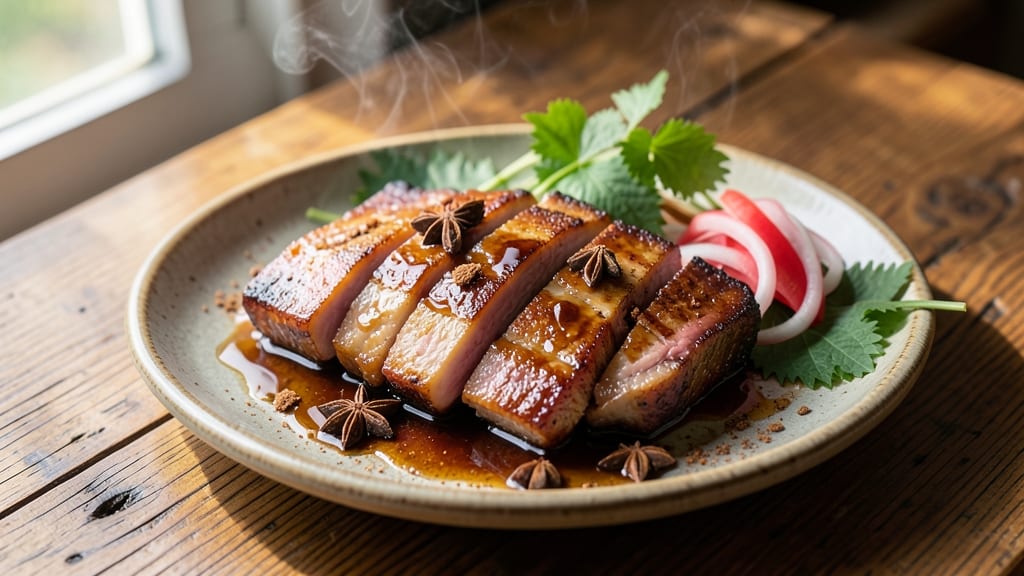
This chashu pork marinade recipe transforms simple pork into melt-in-your-mouth perfection with just five ingredients and a touch of five-spice magic. 🔥 The secret lies in balancing sweet, salty, and aromatic notes—soy sauce, sake, mirin, and sugar create a glaze that caramelizes beautifully during braising, while star anise and cinnamon add depth.
I developed this marinade after years of perfecting chashu at Atlanta The Smoky Pig, where we braise 2,000 pounds of pork weekly.
The beauty of this marinade is its simplicity: just 10 minutes of prep, followed by an overnight soak to infuse the pork with flavor.
The five-spice blend—star anise, cinnamon, cloves, fennel, and peppercorns—elevates the dish beyond basic soy-based marinades, giving it a warm, slightly sweet complexity that pairs perfectly with rice or noodles. This isn't just a marinade; it's the foundation for restaurant-quality chashu you can make at home.
What you'll achieve is pork that's tender, glossy, and packed with flavor—each bite delivers a perfect balance of sweet, savory, and aromatic notes. The marinade caramelizes during braising, creating a sticky, flavorful crust that clings to the meat.
Store leftovers in the fridge for up to 3 days, or freeze for longer storage, making this marinade a versatile tool for any pork dish.
Whether you're preparing for a family dinner or a weeknight meal, this marinade ensures your chashu pork will be the star of the show. The technique is foolproof, and the results are consistently perfect—just like the chashu I served during my time competing in the Southeast BBQ circuit.
Let's get started on creating your own braised masterpiece.
Ingredients for chashu pork marinade
Five aromatic ingredients transform basic pork into restaurant-quality chashu perfection.
| Ingredient | Amount | Notes |
|---|---|---|
| Kosher Soy Sauce 🍶 | 1 cup | High-quality, low-sodium preferred |
| Dry Sake 🍶 | ½ cup | Unfiltered for authentic flavor |
| Mirin 🍶 | ½ cup | Sweet cooking rice wine |
| Granulated Sugar 🍚 | ¼ cup | Light brown sugar for depth |
| Star Anise Pods 🌿 | 2 whole | Freshly cracked for aroma |
| Ground Cinnamon 🌶️ | 1 tsp | True Ceylon cinnamon preferred |
| Whole Cloves 🌿 | 4 whole | Lightly crushed for intensity |
| Ground Fennel Seeds 🌿 | ½ tsp | Toasted for enhanced flavor |
| Black Peppercorns 🌶️ | ½ tsp | Freshly cracked preferred |
| Garlic Cloves 🧄 | 3 cloves | Peeled, lightly smashed |
The soy sauce is your flavor foundation—Kikkoman or Yamasa are my go-tos, but any high-quality brand works. Mirin and sake should be unfiltered for that authentic depth (the sweet, umami punch makes all the difference). Sugar isn't just for sweetness—it helps caramelize during braising. For the five-spice blend, spice markets or bulk bins give you the freshest aromatics. Star anise and cloves can be found in the international aisle at Whole Foods or Trader Joe's. If you're short on time, pre-ground spices work, but whole spices toasted in a dry pan for 30 seconds release way more flavor.
No mirin? Equal parts sugar and dry sake mimics the sweetness and acidity. Running out of sake? Dry sherry or even white wine in a pinch (though sake's unique funk is irreplaceable). Fresh fennel seeds hard to find? Ground fennel at half the amount works, but you'll miss that anise-like warmth. The garlic can be roasted for a sweeter profile—just toss peeled cloves on a baking sheet at 400°F for 10 minutes. For extra depth, add a 1-inch piece of ginger, peeled and sliced.
This marinade keeps 1 week in the fridge, sealed tightly in a jar. The spices mellow over time, so it actually improves with age. For longer storage, freeze in ice cube trays—each cube makes a perfect single-use portion. If you've got leftover pork, the marinade makes an incredible glaze when reduced by half. I always double the batch—half for the pork, half for drizzling over rice or noodles. The aroma alone will have everyone at the table asking what's for dinner.
Why You'll Love This Recipe
- Five-Ingredient Magic: I swear by this marinade—just dump those five pantry staples (kosher soy, sake, mirin, sugar, star anise) into a bowl and stir. No peeling, no chopping, no stress. The star anise adds this subtle licorice warmth that transforms basic pork into something special without extra effort.
- Umami Bomb: That combo of mirin and kosher soy? It’s like a flavor explosion in your mouth. The sugar caramelizes just enough to give it this sticky, glossy finish, while the star anise lingers in the background like a cozy whisper. One bite and you’ll forget about takeout.
- Meal Prep MVP: Make a big batch of this marinade on Sunday—it keeps for weeks in the fridge—and use it for pork belly, shoulder, or even quick stir-fries. I’ve got it marinating ribs one day, sliced thin for buns the next, and still have enough left for a potluck. Versatile like that.
- Budget-Friendly Luxury: Honestly, this marinade costs me pennies but tastes like I spent hours. The star anise might be the priciest bit, but you only need one pod—it stretches the flavor so far. Plus, the pork stays juicy and tender, so you’re not wasting a thing. My wallet and taste buds both win.
Step-by-step instructions for chashu pork marinade
Here's how to craft a marinade that transforms simple pork into melt-in-your-mouth chashu perfection.
👨🍳 Step 1: Toast the Whole Spices for Maximum Flavor
In a dry skillet over medium heat, toast the 4 whole cloves and 2 whole star anise pods for 1-2 minutes until fragrant. You'll smell their essential oils releasing—this is when they develop their deepest, most complex aromas. Watch carefully; they'll darken quickly but shouldn't burn.
Transfer the toasted spices to a mortar and lightly crush them with a pestle. I like to leave them whole but slightly broken—this allows their flavors to infuse the marinade without overpowering it. If you don't have a mortar, use a clean spice grinder for 5 seconds just to break them open.
🍳 Step 2: Bloom the Spices in the Liquids
In a saucepan, combine the 1 cup kosher soy sauce, 0.5 cup dry sake, and 0.5 cup mirin over low heat. Add the crushed spices along with the 1 tsp ground cinnamon, 0.5 tsp ground fennel seeds, and 0.5 tsp black peppercorns. Bring to a gentle simmer and cook for 5 minutes—this allows the spices to steep and release their oils into the liquid.
Here's the thing—don't let it boil. You want the flavors to meld gently, not evaporate. The mixture should smell like a spice market exploded in your kitchen. Remove from heat and let it cool completely before adding the remaining ingredients.
👨🍳 Step 3: Sweeten and Incorporate Garlic
While the spiced liquid cools, whisk in the 0.25 cup granulated sugar until fully dissolved. This creates the perfect balance of sweet and salty that defines authentic chashu. The sugar will caramelize slightly as it cools, deepening the marinade's complexity.
Add the 3 cloves garlic that you've peeled and lightly smashed. The slight release of their juices will help distribute their flavor throughout the marinade. Give everything a final stir—you're looking for a smooth, glossy consistency with no visible sugar grains.
⏰ Step 4: Rest and Prepare for Braising
Let the marinade sit at room temperature for 30 minutes before using. This resting period allows the flavors to truly marry together. The sugar will continue to dissolve, the spices will soften their intensity, and the garlic will infuse its aromatic oils.
For best results, use this marinade immediately on pork belly or pork shoulder. The longer it sits, the more its flavors concentrate—but don't let it sit more than 24 hours in the refrigerator, as the sugar can start to ferment and alter the taste.
🔥 Step 5: Apply to Pork and Braise to Perfection
Coat your pork thoroughly with the marinade, massaging it into the meat so it penetrates deeply. For pork belly, I like to let it marinate for 1 hour at room temperature before braising. This ensures maximum flavor absorption.
When you're ready to braise, use half the marinade> as the braising liquid. Simmer the pork gently at 300°F for 3-4 hours until fork-tender. The remaining marinade can be reduced into a glossy glaze by simmering it uncovered until thickened—perfect for drizzling over the finished chashu.
Pro Tips For Making Chashu Pork Marinade
- Simmer the Star Anise: Toss the whole pods into the marinade before heating, then remove them after 10 minutes—this extracts their flavor without bitterness. I used to crush them (bad move), which turned the sauce bitter. Just steep and pull them out.
- Balance the Sugar First: Dissolve the granulated sugar in the mirin before adding sake and soy—this prevents clumping and ensures even distribution. I skipped this once and ended up with sticky, uneven pockets of sweetness. Stir it in cold, then heat.
- Low and Slow for Depth: Reduce the marinade on low heat until it’s syrupy enough to coat the back of a spoon—about 20 minutes. Rushing it makes the sauce thin and flavorless. Patience here means richer, stickier pork.
- Use Dry Sake, Not Cooking Wine: Dry sake has the right acidity and umami to cut through the sugar’s sweetness. Substituting with cooking wine? You’ll taste the artificial aftertaste. If you must, add a splash of rice vinegar to mimic the balance.
Serving suggestions for this dish
Rice Pairings
Steamed jasmine rice is my go-to pairing—its delicate floral notes complement the marinade's sweet-savory depth. Cook 1 cup jasmine rice with 1.25 cups water and ½ tsp salt, then fluff with a fork.
For extra richness, mix in 1 tbsp butter and 1 tsp toasted sesame oil after cooking. The rice absorbs the reduced marinade beautifully, creating a cohesive bite. 🍚
For a heartier option, try short-grain sushi rice—its stickiness holds up to the braised pork's saucy texture. Rinse 1 cup rice thoroughly, then cook with 1 cup water and 2 tbsp rice vinegar. The vinegar's acidity cuts through the marinade's richness, balancing each forkful.
Noodle Combinations
Thick udon noodles are a match made in heaven—their chewy texture contrasts perfectly with tender chashu. Cook 8 oz dried udon according to package instructions, then toss with 1 tbsp neutral oil> and a pinch of salt.
Serve with extra marinade drizzled over the top for a silky-sweet sauce. 🍜
For a lighter option, ramen noodles work surprisingly well. Use 4 oz fresh ramen> (discard seasoning packet) and simmer in 4 cups chicken broth> for 3 minutes. The broth's savory depth enhances the pork's natural sweetness without overpowering it.
Vegetable Sides
Quick-pickled daikon radish adds a crisp, tangy contrast to the rich pork. Thinly slice 1 cup daikon>, then toss with ½ cup rice vinegar, 1 tbsp sugar, and ½ tsp salt. Let sit for 30 minutes> before serving—this brightens the plate instantly. 🥕
Sautéed bok choy with garlic brings freshness to the meal. Heat 1 tbsp sesame oil> in a pan, add 2 cups chopped bok choy> and 2 minced garlic cloves, then stir-fry for 3 minutes> until wilted. Finish with a splash of soy sauce for umami harmony.
Dipping Sauces
A simple soy-ginger dip elevates every bite. Mix 2 tbsp soy sauce, 1 tbsp rice vinegar, 1 tsp grated ginger, and ½ tsp honey. The ginger's warmth complements the pork's caramelized crust beautifully. Serve at room temperature for best flavor balance. 🥢
For heat lovers, try a spicy chili oil drizzle. Combine 2 tbsp chili oil, 1 tsp gochujang, and ½ tsp black vinegar. The oil's heat cuts through the pork's richness while adding smoky depth. Drizzle lightly over sliced chashu for a restaurant-quality finish.
Nutrition facts
Frequently asked questions
Can I substitute sake or mirin if I can't find them?
For sake, use ½ cup dry sherry or white wine—though sake's unique funk is ideal. For mirin, mix ¼ cup sugar with ¼ cup dry sake or white wine. The sugar mimics mirin's sweetness while the alcohol helps tenderize the pork. Just remember these substitutes won't have the same depth of flavor as authentic ingredients.
How long should I marinate the pork for best results?
For pork belly or shoulder, marinate at room temperature for 1 hour before braising. If refrigerating overnight, use 4-8 hours maximum—longer marinating can make the pork mushy. The five-spice blend works its magic quickly, so don't overdo it. For extra tenderness, pound thicker cuts slightly before marinating.
What's the best cut of pork for chashu?
Pork belly is ideal—it's fatty enough to stay moist during braising and develops beautiful crackling. For leaner options, use pork shoulder (butterflied for even cooking) or pork loin. Avoid tenderloin, as it's too lean and will dry out. Look for cuts with good marbling—the fat renders during cooking, keeping the meat juicy.
Can I make this marinade ahead of time?
Yes! Store the marinade in an airtight container in the fridge for up to 1 week—the flavors actually improve with time. For longer storage, freeze in ice cube trays. Thaw overnight in the fridge before using. Pro tip: Double the batch—use half for marinating and reduce the other half into a glaze for serving. The spices mellow beautifully over time.
Why does my chashu turn out too salty?
Too much soy sauce is usually the culprit. Start with ½ cup soy sauce and adjust to taste—you can always add more later. The sugar in mirin and brown sugar helps balance saltiness, but if your pork tastes overly salty, try reducing the marinade by simmering it uncovered until thickened, then use just ¼ cup of the reduced marinade per pound of pork.