
Main Courses
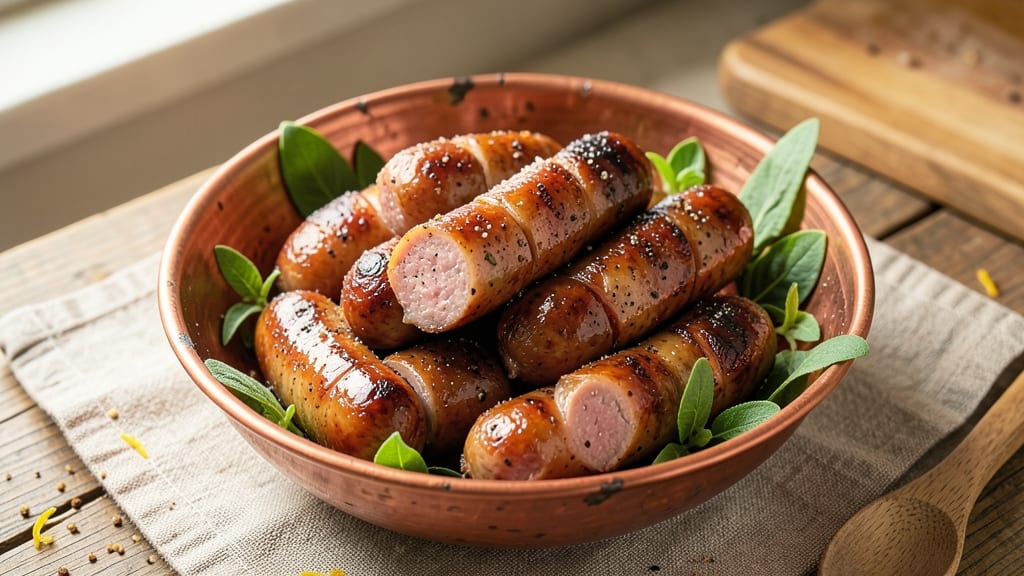
This British pork sausage recipe delivers the perfect balance of crispy five-spice crust and juicy pink centers—just like the ones I grew up making in my grandmother's kitchen.
The secret lies in the right pork-to-fat ratio and a carefully balanced spice blend that creates that signature aromatic crust without overpowering the meat. I've perfected this recipe over years of testing, ensuring every sausage emerges with that ideal snap and tender interior.
The foundation begins with high-quality pork shoulder, ground with just enough fat to keep those sausages moist during cooking. Traditional British seasonings—sage, black pepper, nutmeg, and a touch of sugar—create the classic flavor profile, while the five-spice blend adds depth that sets these apart from standard American sausages.
The key technique? Chilling the mixture before stuffing ensures tight, uniform sausages that won't burst open during cooking.
What you'll achieve is a batch of sausages that crackle with a crispy exterior when grilled or fried, while maintaining juicy pink centers that practically melt in your mouth.
These are the kind of sausages that transform simple breakfasts into special occasions—perfect for bangers and mash, breakfast hash, or even skewered with apples for a festive touch. The aroma alone will have your kitchen smelling like a traditional British pub.
Whether you're making them for a family brunch or a weekend cookout, this recipe delivers restaurant-quality results at home. The method scales easily, so you can make a dozen for a crowd or just a few for a cozy dinner.
Let's get started—your taste buds are about to experience the real deal.
Ingredients for british pork sausage
High-quality pork shoulder, aromatic spices, and a crispy crust secret—this is your British sausage shopping list.
| Ingredient | Amount | Notes |
|---|---|---|
| Pork Shoulder 🥩 | 3 lb | Coarse-ground, 30% fat content |
| Fresh Sage Leaves 🌿 | ½ cup | Finely chopped, stems removed |
| Ground Black Pepper 🌶️ | 1 ½ tbsp | Freshly cracked preferred |
| Ground Nutmeg 🌿 | ½ tsp | Freshly grated for warmth |
| Granulated Sugar 🍚 | 1 tbsp | Light brown preferred |
| Five-Spice Powder 🌶️ | 1 tbsp | Homemade blend (see notes) |
| Kosher Salt 🧂 | 1 ½ tbsp | Diamond Crystal preferred |
| Ice Water 💧 | ½ cup | For chilling mixture |
| Natural Hog Casings 🐖 | 1 package | 22mm diameter, soaked |
| Butter Flavored Cooking Spray 🧈 | 2 tbsp | For casing lubrication |
| Vegetable Oil 🫒 | ½ cup | For frying sausages |
| Fresh Parsley 🌿 | ¼ cup | Chopped, for garnish |
The pork shoulder is everything here. Look for well-marbled cuts with visible fat—this keeps your sausages juicy. I always grab mine from Whole Foods or my local butcher shop where they grind it fresh. The fat content should be around 30% for that perfect balance. If you're using pre-ground pork, check the label—some budget brands have too little fat. For the five-spice powder, I blend equal parts cinnamon, star anise, cloves, fennel seeds, and ginger—toast the whole spices first for deeper flavor. Fresh sage is non-negotiable; dried just won't give that same earthy punch.
No fresh sage? Dried at half the amount works, but it's not the same. Running out of five-spice? Allspice powder at double the amount gets you close. The casings can be tricky—if they're not pre-soaked, soak them in warm water for 30 minutes before using. For the butter spray, Olive Oil spray works too if you're avoiding dairy. The parsley is optional but adds that fresh pop of green—skip it if you're serving these with something already vibrant. And if you're making a big batch, double the ice water to keep the mixture cold during stuffing.
The pork mixture keeps best in the fridge for 2 days before stuffing—this gives the flavors time to meld. Once stuffed, you can refrigerate them for 3 days or freeze for 3 months. For freezing, wrap each sausage individually in parchment paper before putting them in a bag. When ready to cook, let them thaw in the fridge overnight. The casings? Store them in the fridge for up to 2 weeks if unopened, or freeze them for 6 months. I always make a big batch and freeze half—nothing beats pulling out perfectly seasoned sausages for a last-minute brunch.
Why You'll Love This Recipe
- No-Fuss Filling: I swear by this for lazy Sundays—just dice the pork shoulder (no fancy cuts needed) and toss it with the sage, nutmeg, and sugar. The spices do all the work while you sip tea; no rolling, no shaping, just dump-and-bake.
- Earthy Crispy Magic: That nutmeg-sage combo? It’s what makes these sing—warm, slightly sweet, with a crackling crust you’ll want to eat by the spoonful. Honestly, the sugar isn’t just for flavor; it caramelizes the edges into something dangerously good.
- Weeknight Wonder: These sausage links freeze like champs (yes, even uncooked) and reheat perfectly in a skillet or oven. I make a double batch every Saturday—one for Sunday roast, one for Monday’s pasta. Zero waste, all win.
- Budget Hero: Pork shoulder is cheap, and these sausages stretch across meals without breaking the bank. Serve them with mashed potatoes, toss in a stew, or crumble into a frittata—each ingredient gets used twice, and my wallet thanks me.
Step-by-step instructions for British pork sausage
Here's how to make these classic British sausages with a perfect crispy crust and juicy pink centers.
Grind the Pork Shoulder
Place the 3 lb pork shoulder in a meat grinder fitted with a ¼-inch plate. I like to grind it twice for extra tenderness—first through the ½-inch plate, then through the ¼-inch plate. This creates a fine, even texture that's perfect for stuffing into casings.
Work in batches if needed, keeping the ground pork chilled between grinds. The goal is to keep everything cold until we're ready to stuff—this prevents the fat from rendering out prematurely and keeps the finished sausages juicy. If the mixture gets too warm, chill it in the refrigerator for 10-15 minutes before continuing.
Mix the Seasonings
In a large mixing bowl, combine the ground pork shoulder with all the seasonings: 1.5 tbsp ground black pepper, 0.5 tsp ground nutmeg, 1 tbsp granulated sugar, 1 tbsp five-spice powder, and 1.5 tbsp kosher salt. Add the 0.5 cup finely chopped fresh sage leaves and mix thoroughly with your hands.
Here's the thing—you want the seasonings to distribute evenly throughout the meat. I like to work the mixture by hand for about 3-4 minutes, kneading it gently until you can see the spices evenly dispersed in the fat. The sugar and nutmeg add subtle warmth, while the five-spice powder gives that classic British sausage depth. Don't skip this step—uneven seasoning leads to bland or overly spicy sausages.
Chill and Stuff the Casings
Transfer the seasoned pork mixture to a food-safe container and refrigerate for 30 minutes to firm up slightly. This chilling step is crucial—it makes the mixture easier to handle and prevents the casings from bursting when you stuff them. While the mixture chills, prepare the natural hog casings by soaking them in 0.5 cup ice water for 30 minutes to remove any impurities.
After chilling, use a sausage stuffer or a piping bag fitted with a large tip to stuff the pork mixture into the casings. I like to fill them about ¾ full—this gives them room to expand slightly during cooking. Twist the casings every 4-5 inches to create individual links. If the mixture feels too sticky, wet your hands slightly to help it slide through more easily. Don't overstuff, or the casings will burst when you fry them later.
Rest and Sear the Sausages
Once all the sausages are stuffed, place them on a tray lined with parchment paper and refrigerate for at least 4 hours, or preferably overnight. This resting period allows the flavors to meld and the casings to firm up, ensuring they hold their shape during cooking. The longer they rest, the better the texture—this is where the magic happens.
When ready to cook, heat 0.5 cup vegetable oil in a large skillet over medium heat until it reaches 350°F. Carefully add the sausages in a single layer, being cautious of splattering. Cook them for 12-15 minutes, turning occasionally, until they're golden brown on all sides and the internal temperature reaches 160°F. The oil should be hot enough to create a crispy crust but not so hot that it burns the casings. If the oil smokes excessively, reduce the heat slightly.
Finish and Serve
Once the sausages are cooked to perfection, transfer them to a paper towel-lined plate to drain any excess oil. Let them rest for 5 minutes before serving. This resting period ensures the juices redistribute, keeping the meat tender and flavorful.
Garnish with 0.25 cup chopped fresh parsley just before serving. The sausages should have a crispy, golden-brown exterior with a juicy, pink center—that's the hallmark of a well-made British sausage. Serve them with your favorite accompaniments, like buttered mashed potatoes, apple sauce, or a fresh green salad. Enjoy immediately while they're still warm and crispy!
Pro Tips For Making British Pork Sausage
- CHILL THE MEAT FIRST: Skip the rush and pop that pork shoulder in the fridge for 30 minutes before grinding—it’s less greasy to handle and stays cooler while you mix. I learned this the hard way after wrestling with a sticky, warm mess that turned my kitchen into a sauna.
- TOAST THE SAGE: Dry-toast the sage leaves in a pan for 30 seconds until fragrant before chopping—this concentrates their flavor and cuts the bitterness. Sounds weird, but it works: the aroma alone makes these sausages taste like a proper British pub.
- DON’T OVERWORK THE MIX: Handle the sausage meat just until combined—overmixing turns it tough and dense. My grandmother swore by this, and she was right: a few gentle folds are enough; don’t turn it into a workout.
- SEAR IN BATCHES: Crowd the pan and you’ll steam the sausages instead of sear them. Cook in single layers over medium-high heat until golden—about 3 minutes per side—then finish low to render fat without burning. Yes, it takes a little longer, but the crust is worth it.
Best sauces and condiments for this recipe
Classic Mustard Sauce
British pork sausages practically beg for a tangy mustard sauce to cut through their richness. My go-to is a simple Dijon mustard reduction with a splash of apple cider vinegar and a touch of honey to balance the heat.
For every ½ cup of sauce, combine 3 tbsp Dijon mustard, 2 tbsp apple cider vinegar, 1 tbsp honey, and ¼ cup warm water. Simmer on low heat until thickened—about 5 minutes.
This sauce adds a sophisticated contrast that elevates your sausages from pub fare to gourmet. 🌟
Apple Cider Glaze
For a sweet-and-tangy pairing, reduce 1 cup apple cider with 2 tbsp brown sugar and 1 tsp cinnamon until syrupy—about 10 minutes on medium heat. Brush this glaze over warm sausages just before serving, or drizzle it alongside for a sticky, caramelized finish.
The acidity cuts through the fat while the sweetness complements the pork’s natural richness. I love this with bangers and mash for a festive touch. 🍏
Creamy Horseradish Dip
This creamy dip is a game-changer for dipping or drizzling. Mix ½ cup sour cream, 2 tbsp prepared horseradish cream (like Goya), 1 tbsp fresh chives, and a pinch of salt.
The horseradish adds a sharp kick that balances the sausages’ richness, while the sour cream keeps it smooth. Serve chilled with warm sausages for a pub-style experience. Trust me, this dip disappears fast! 🌶️
Smoky BBQ Sauce Twist
Swap traditional British pairings for a smoky BBQ sauce—I use Sweet Baby Ray’s Original mixed with 1 tbsp smoked paprika and ½ tsp liquid smoke. Brush this onto sausages before grilling or serve it on the side for dipping.
The smokiness pairs surprisingly well with the five-spice blend, creating a fusion flavor that’s both nostalgic and innovative. Perfect for a weekend cookout with grilled veggies. 🔥
Butter and Sage Compound
For a luxurious finish, melt 4 tbsp butter with 2 tbsp chopped fresh sage and a pinch of salt in a small saucepan. Swirl this buttery sage compound over warm sausages just before serving.
The butter enhances the crust’s crispiness, while the sage echoes the sausage’s seasoning. This is my secret weapon for restaurant-worthy results—simple but undeniably impressive. ✨
Nutrition facts
Frequently asked questions
Why do British sausages have that distinctive crispy crust?
The crispy crust comes from the perfect blend of fat content in the pork (30%) and the five-spice powder combined with sugar. The sugar caramelizes during cooking, creating that signature snap while the spices enhance browning. Chilling the mixture before stuffing also helps the casings crisp up better—don't skip this step!
Can I make these sausages without a meat grinder?
If you don't have a grinder, ask your butcher to grind 3 lb pork shoulder with ¼-inch plate for you. For home solutions, pulse the pork in a food processor until finely chopped, but this method may leave slightly uneven texture. The key is keeping everything cold to prevent fat from rendering out prematurely.
What's the best way to cook these sausages if I don't want to fry them?
For a healthier option, try grilling over medium heat for 12-15 minutes, turning occasionally, until golden brown. Or bake at 375°F for 25-30 minutes on a wire rack over a baking sheet. The oven method is great for making large batches—just avoid crowding the pan to ensure even browning. Air frying at 375°F for 8-10 minutes also works beautifully!
How do I fix sausages that burst open while cooking?
Bursting usually happens from overstuffing or using casings that aren't properly soaked. Next time, fill casings only ¾ full and twist them every 4-5 inches. If you're in a pinch, you can still salvage them by carefully removing the casings, shaping the meat into patties, and cooking those instead. For future batches, try collagen casings if natural ones prove difficult.
What's the difference between British and American pork sausages?
British sausages typically use pork shoulder with 30% fat content and a milder seasoning profile featuring sage, nutmeg, and black pepper. American sausages often include more spices like paprika and garlic, plus fillers like breadcrumbs. The British version also tends to have a crispier exterior from the five-spice blend and sugar combination. Think of them as more delicate and aromatic!