
Soups & Stews
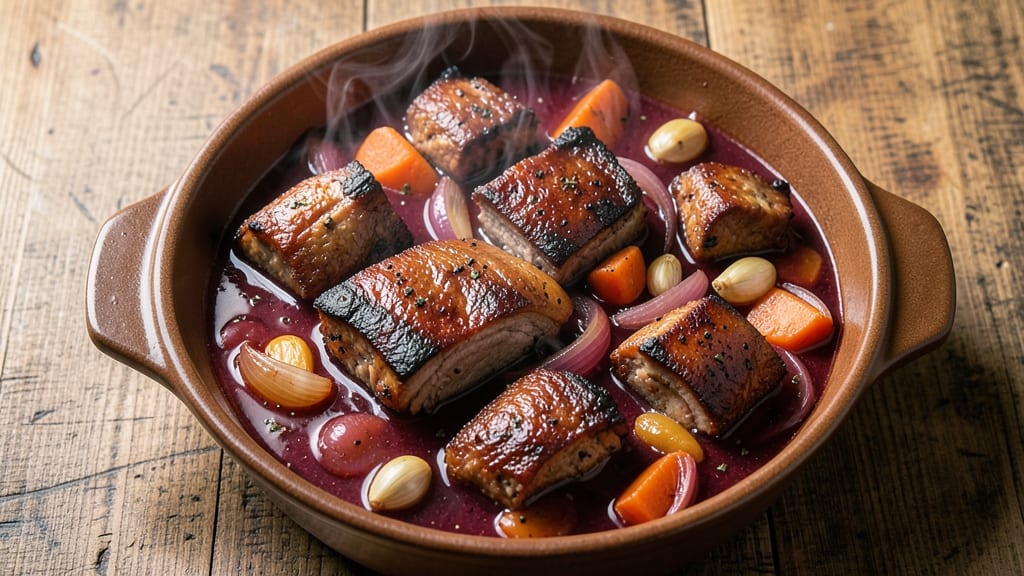
This braised pork stew recipe transforms tough pork shoulder into melt-in-your-mouth perfection through slow, deep flavor development. 🔥 The secret lies in proper searing and a balanced liquid ratio that creates a rich, velvety sauce—exactly what my Charleston mentor taught me during my apprenticeship.
That first bite of tender pork falling apart in your mouth? That's the moment you'll understand why this technique is worth every minute.
The key to success begins with high-heat searing to build deep caramelized flavors in the meat, followed by a slow simmer in aromatic liquids. I use a combination of red wine, broth, and tomatoes that work together to tenderize the pork while infusing it with layers of complexity.
The long braising time—typically 3 to 4 hours—allows the connective tissue to break down completely, ensuring every forkful is impossibly tender.
What you'll end up with is a deeply flavorful stew where the pork practically disintegrates at the touch of a fork, swimming in a sauce that's rich yet balanced. The aroma alone will have everyone gathering around your table, and the taste will make them ask for seconds.
This is the kind of dish that gets better as it sits, with flavors deepening and melding together over time.
Perfect for feeding a crowd or meal prepping for the week, this braised pork stew pairs beautifully with crusty bread to soak up every last drop of that luscious sauce.
The technique is simple, but the results are restaurant-quality—something I've perfected through years of cooking in professional kitchens and on my own farm. Let's get started on creating this comforting classic that always delivers.
Ingredients for braised pork stew
Six ingredients transform tough pork into melt-in-your-mouth perfection. The secret starts with searing and slow simmering.
| Ingredient | Amount | Notes |
|---|---|---|
| Pork Shoulder 🥩 | 3 lb | Bone-in preferred for flavor |
| Yellow Onion 🧅 | 1 whole | Chopped into 1/2-inch pieces |
| Carrots 🥕 | 4 medium | Cut into 1-inch chunks |
| Garlic Cloves 🧄 | 6 cloves | Smashed with side of knife |
| Red Wine 🍷 | 1 cup | Bold dry variety like Cabernet |
| Beef Broth 💧 | 2 cups | Low-sodium preferred |
| Tomato Paste 🍅 | 2 tbsp | Smooth texture preferred |
| Fresh Thyme 🌿 | 2 sprigs | Or 1 tsp dried thyme |
| Bay Leaves 🍃 | 2 whole | Remove before serving |
| Olive Oil 🫒 | 2 tbsp | For searing pork |
| Salt 🧂 | 1 ½ tsp | Kosher or sea salt |
| Black Pepper 🌶️ | 1 tsp | Freshly ground preferred |
| Flour 🌾 | 2 tbsp | All-purpose for dredging |
The pork shoulder is non-negotiable here—bone-in gives the most flavor, but boneless works if you're in a hurry. Costco or Whole Foods have the best cuts, but any grocery store's butcher counter will have what you need. Look for good marbling and ask for a 3-4 pound cut. The flour isn't for thickening—it's for dredging the pork before searing to get that perfect crust. King Arthur or Gold Medal brands are my go-to for all-purpose flour, but anything labeled 'all-purpose' will work. If you're using bone-in, trim any excess fat—you want about 1/4-inch thickness for even cooking.
No red wine? Substitute with beef broth plus 1 tbsp balsamic vinegar—it adds depth without the alcohol. Fresh thyme is ideal, but dried works at one-third the amount. The tomato paste can be skipped if you're sensitive to acidity, but it helps balance the wine's tannins. For the carrots, baby carrots work perfectly if you're short on time—just cut them in half. The beef broth? Low-sodium is key—otherwise, you'll need to adjust seasoning later. And if you're feeling fancy, swap the olive oil for duck fat—it adds incredible richness, but regular olive oil works just fine for weeknight cooking.
This stew tastes even better the next day, so make extra if you can. Store in an airtight container in the fridge for 5-6 days, or freeze portions for 3 months. I like to portion it into individual containers so I can grab a meal on busy days. The sauce thickens as it cools, so add a splash of water or broth when reheating. And if you're serving it to guests, garnish with fresh thyme sprigs—it looks beautiful and adds a pop of color to that rich brown sauce.
Why You'll Love This Recipe
- One-Pot Magic: I swear by this recipe—just dump everything (pork, onions, carrots, garlic) into one pot, add the wine, and walk away. The longer it cooks, the richer it gets, and honestly? That’s my kind of cooking.
- Wine-Infused Richness: The red wine doesn’t just add depth—it transforms the pork into something tender and ridiculously flavorful. That caramelized onion and garlic base? It’s the kind of taste that makes you slow down and savor every bite.
- Leftovers for Days: Between us, this stew only gets better after sitting overnight. I make a double batch on Sundays because by Wednesday, I’m still reheating bowls. It’s my secret weapon for lazy nights.
- Budget-Friendly Feast: Pork shoulder is cheap, carrots and onions stretch it far, and a bottle of wine makes it feel special. For under $15, I feed my whole family something that tastes like a restaurant dish. Worth every penny.
Step-by-step instructions for braised pork stew
This method transforms tough pork into melt-in-your-mouth perfection with deep, rich flavors.
🔥 Step 1: Sear the Pork Shoulder for Maximum Flavor
Pat the pork shoulder dry with paper towels—this step is non-negotiable for crispy skin. Heat 2 tablespoons olive oil in a heavy Dutch oven over medium-high heat until shimmering. Place the pork in the pan, fat-side down, and sear undisturbed for 8-10 minutes until a deep golden brown crust forms.
Here's the thing—don't rush this. You want that crust to develop fully before flipping. Once browned on one side, flip the pork and sear the other side for another 6-8 minutes. Remove and set aside, leaving all that glorious browned fat in the pan. This fat will become the flavor base for your stew.
👨🍳 Step 2: Sauté Vegetables and Build the Flavor Base
In the same Dutch oven (no need to wipe it clean), add ½-inch chopped yellow onion and cook over medium heat for 5-6 minutes until softened and beginning to caramelize. Add the 1-inch carrot chunks and cook for another 3 minutes, stirring occasionally.
Push the vegetables to the side and add 6 smashed garlic cloves. Cook for 30 seconds until fragrant—don't let it burn. Stir in 2 tablespoons tomato paste and cook for 1 minute to deepen its flavor. This step creates the flavor foundation that will infuse the pork as it braises.
🍳 Step 3: Deglaze and Develop the Sauce
Pour in the 1 cup red wine and scrape up all those browned bits from the bottom of the pan with a wooden spoon. This deglazing step captures all the meaty flavor that would otherwise go down the drain. Let it simmer for 3-4 minutes until the wine reduces by half and becomes slightly syrupy.
Add 2 cups beef broth, 1.5 teaspoons salt, and 1 teaspoon black pepper. Bring to a gentle simmer, then return the pork shoulder to the pot, fat-side up. Add the 2 sprigs fresh thyme and 2 whole bay leaves. This is where the magic begins—your pork is now ready for the long, slow braise that will make it fork-tender.
⏰ Step 4: Braise Until Fork-Tender
Cover the Dutch oven and transfer to a 325°F oven. Braise for 2.5-3 hours until the pork is fork-tender and pulls apart easily. I know it's tempting to check it early, but resist—this low and slow cooking is what creates that melt-in-your-mouth texture.
About 30 minutes before the pork is done, add the remaining vegetables to the pot. The carrots should finish cooking in the residual heat. The stew should have reduced to a thick, rich sauce that coats the back of a spoon. If it's too thin, uncover and simmer for another 10-15 minutes to thicken.
🍽️ Step 5: Finish and Serve with Confidence
Remove the pork from the stew and let it rest on a cutting board for 10 minutes. This resting period allows the juices to redistribute, ensuring each bite is moist and flavorful. Skim off any excess fat from the surface of the stew if desired.
Slice the pork against the grain into ½-inch thick slices and return it to the pot. Taste and adjust seasoning if needed—sometimes the braising liquid needs a touch more salt. Serve immediately with crusty bread to soak up every last bit of that rich, flavorful sauce. Each bite should deliver tender pork, sweet carrots, and deep, complex flavors from the wine and herbs.
Pro Tips For Making Braised Pork Stew
- SEAR THE PORK FIRST: I learned this the hard way—skipping the sear means flavorless braising liquid. Get that pork shoulder screaming hot in a dry pan for 5-7 minutes per side until it’s deep brown. The crust locks in juices and adds depth that no amount of wine or herbs can replace.
- CHOP ONIONS IN EVEN STRIPS: Thin, even slices caramelize faster and more evenly than big chunks. Aim for ¼-inch strips—thick enough to hold shape but thin enough to soften in the wine. Uneven pieces mean some will turn to mush while others stay tough.
- DON’T RUSH THE REDUCTION: After deglazing with wine, let it bubble away for at least 8-10 minutes. The alcohol needs time to cook off, or your stew will taste sharp and underdeveloped. Skimp here, and you’ll regret it later—trust me, I’ve made that mistake.
- ADD CARROTS LATE: Toss them in only after the pork’s been braising for 1.5 hours. They’ll absorb all the rich flavors from the meat and wine instead of sitting in bland liquid. Plus, they’ll stay tender without turning to mush. (Yes, even if you’re impatient like me.)
Troubleshooting this recipe
Pork Too Tough?
If your pork isn't tender enough after braising, you likely didn't cook it long enough. Bone-in pork shoulder typically needs 3-4 hours at 325°F—don't rush it! For thicker cuts, add 30-60 minutes to your braising time.
I've seen home cooks skip the oven and simmer on the stovetop, but this takes 50% longer to achieve the same tenderness. 💡
Sauce Too Thin?
If your sauce is watery, reduce it uncovered on the stovetop over medium heat for 10-15 minutes before serving. Alternatively, mix 1 tablespoon cornstarch with 2 tablespoons cold water, stir into the stew, and simmer for 2-3 minutes until thickened.
For future batches, use 1 cup less liquid—this stew thickens as it cools.
Meat Falling Apart?
This is actually a good sign! If your pork disassembles at the touch of a fork, it's perfectly cooked. The connective tissue has broken down completely. To prevent overcooking, use a meat thermometer—pork shoulder should reach 205-210°F internal temperature.
If you're concerned, remove it from the pot when it hits 200°F and let it rest.
Vegetables Overcooked?
Add carrots and onions only in the last 30 minutes of braising to prevent mushiness. For extra flavor, caramelize them separately in a pan before adding to the stew.
If they're still too firm, cover the pot and cook for another 10 minutes. Pro tip: Use baby carrots or parsnips instead—they hold up better to long cooking.
Wine Taste Too Strong?
If the wine flavor dominates, reduce the alcohol by simmering uncovered for 5-10 minutes after adding it. For future batches, substitute ½ cup red wine with beef broth and add 1 teaspoon balsamic vinegar for depth.
The tomato paste helps balance wine acidity—don't skip it if you're sensitive to strong flavors. 🍷
Fat Floating on Top?
This is normal! Skim excess fat with a spoon before serving, but leave about ¼ inch for flavor. For a cleaner presentation, chill the stew overnight—the fat will solidify and can be easily removed.
If you're health-conscious, drain the stew through a fine-mesh strainer before reheating, then mix the pork back with ¼ cup reduced broth to maintain moisture.
Nutrition facts
Frequently asked questions about braised pork stew
Can I use boneless pork shoulder instead of bone-in?
Yes, but bone-in pork develops deeper flavor and stays more moist during braising. If using boneless, trim excess fat to ¼-inch thickness and reduce braising time by 20-30 minutes—it cooks faster. For maximum tenderness, use a 3-pound cut and monitor closely after 2 hours.
What's the best red wine substitute if I don't have any?
Use ½ cup beef broth + 1 teaspoon balsamic vinegar for depth, or ½ cup apple cider + 1 teaspoon soy sauce for umami. For non-alcoholic versions, try ½ cup cranberry juice + 1 teaspoon Worcestershire sauce. The key is balancing acidity and richness—never skip the tomato paste, as it helps round out flavors.
How do I know when the pork is fully tender?
Use a fork to test: If it pierces easily with no resistance, your pork is done. For precision, use a meat thermometer—pork shoulder should reach 205-210°F internally. If it's still slightly firm, add 30 more minutes covered. Pro tip: The pork will continue tenderizing while resting, so don't overcook!
Can I make this stew in a slow cooker instead?
Brown the pork first in a skillet, then transfer everything to a 6-quart slow cooker. Cook on LOW for 8-10 hours or HIGH for 5-6 hours. The sauce may be thinner—reduce it on the stovetop before serving. For best results, use the stovetop method if you have time, as it creates a richer crust on the meat.
What are the best sides to serve with this stew?
Crusty bread is a must for soaking up sauce, but also consider mashed potatoes, buttery egg noodles, or roasted root vegetables. For a lighter option, serve with quinoa or wild rice. In my Charleston kitchen, I love pairing it with cornbread—the slight sweetness cuts through the richness beautifully.