
Main Courses
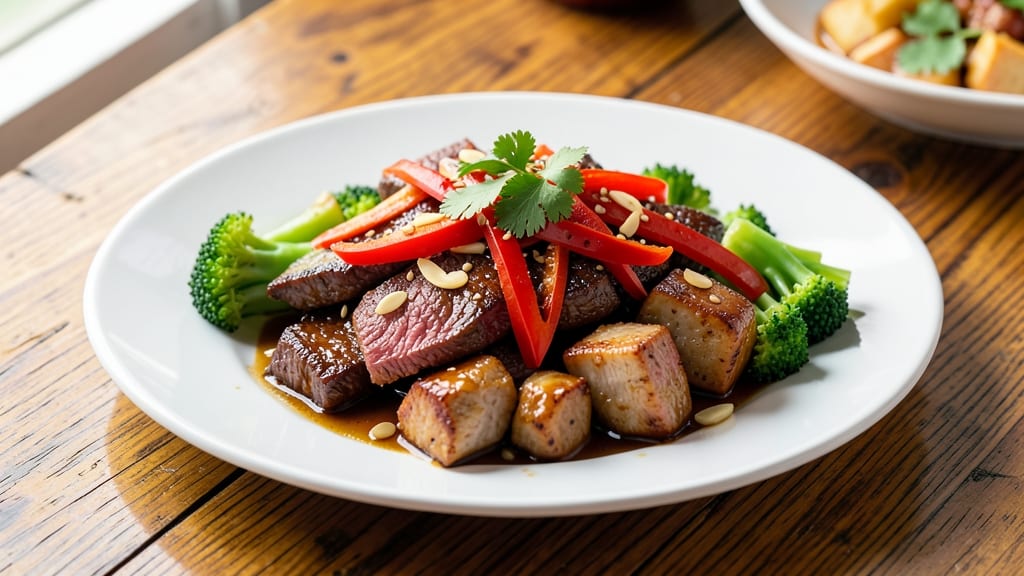
This beef and pork stir fry recipe delivers restaurant-quality wok-heated perfection with caramelized edges that'll make your taste buds sing. 🔥 I developed this technique after years of perfecting stir-fry methods in professional kitchens, and it's the one I reach for when I want bold flavors without complicated prep.
The key? High-heat searing that creates those coveted charred edges while keeping the meat tender inside.
The secret lies in marinating the beef and pork separately—one with soy and ginger, the other with five-spice and garlic—to create distinct flavor profiles that complement each other.
We'll use a simple wok hei technique (that smoky wok breath) to infuse the dish with aromatic depth, and a homemade sauce that balances sweet, salty, and umami notes perfectly. This isn't your average stir-fry; it's a fusion of textures and flavors that'll impress even skeptical dinner guests.
What you'll end up with is a vibrant stir-fry featuring perfectly seared beef strips and tender pork chunks, all coated in a glossy sauce that clings beautifully. The vegetables stay crisp-tender, adding freshness to every bite, while the aromatics create layers of complexity.
The caramelized edges on the meat provide that satisfying contrast to the tender centers, making each bite a textural delight.
This recipe scales perfectly for weeknight dinners or dinner parties, and the technique translates beautifully to other protein combinations. Whether you're cooking for two or feeding a crowd, the same principles apply—high heat, quick cooking, and proper prep.
Let's get started on creating this wok-heated masterpiece that'll become your new go-to stir-fry.
Ingredients for beef and pork stir fry
Restaurant-quality stir-fry starts with these carefully chosen ingredients for caramelized edges and vibrant flavors.
| Ingredient | Amount | Notes |
|---|---|---|
| Flank Steak 🥩 | 1 lb | Thinly sliced against grain |
| Pork Shoulder 🐷 | 1 lb | Cut into 1-inch chunks |
| Red Bell Pepper 🍆 | 1 whole | Sliced into thin strips |
| Broccoli Florets 🥦 | 2 cups | Cut into bite-sized pieces |
| Garlic Cloves 🧄 | 6 cloves | Minced for marinade and sauce |
| Fresh Ginger 🌿 | 1 ½ tbsp | Grated finely (peeled) |
| Soy Sauce 🍶 | ½ cup | High-quality, reduced |
| Five-Spice Powder 🌶️ | 1 tsp | For pork marinade |
| Sesame Oil 🫒 | 1 tbsp | Toasted for finishing |
| Honey 🍯 | 2 tbsp | For sauce sweetness |
| Rice Vinegar 🍶 | 2 tbsp | For sauce balance |
| Cornstarch 🌾 | 1 tbsp | For sauce thickening |
| Neutral Oil 🫒 | 2 tbsp | High smoke point (avocado/peanut) |
| Sesame Seeds 🌰 | 1 tsp | Toasted for garnish |
| Green Onions 🧅 | 3 whole | Sliced for garnish |
The flank steak and pork shoulder are non-negotiable for texture—flank stays tender when sliced thin, while pork shoulder holds up to the high heat. Grab flank steak from the butcher counter (it's leaner than sirloin) and pork shoulder pre-cut from the grocery store meat section. For the aromatics, garlic and ginger need to be fresh—penzeys spices if you want to splurge, but the regular grocery store stuff works fine if it's not ancient. The red bell pepper should be firm with no soft spots, and broccoli should have tight florets—Trader Joe's has great pre-cut options if you're short on time.
No five-spice powder? Substitute 1/2 tsp cinnamon + 1/4 tsp cloves + 1/4 tsp fennel seeds—toast the spices first for deeper flavor. Soy sauce matters here—Kikkoman is reliable, but Japanese brands like Yamasa add more complexity. The honey can be swapped for maple syrup if you prefer, and rice vinegar is essential for that bright tang. Sesame oil is for finishing—don't cook with it (it burns easily). For the neutral oil, avocado or peanut oil are best—they handle high heat without smoking.
Prep the meat first—marinate both separately for 30 minutes minimum. Store raw meat on the bottom shelf of your fridge, and use within 2 days for best texture. The sauce keeps for 5 days in the fridge, and the cornstarch slurry needs to be made fresh (it thickens immediately). Freeze any leftovers for up to 3 months—the flavors actually improve as it sits. Garnish with toasted sesame seeds right before serving (they add crunch and aroma).
Why You'll Love This Recipe
- One-Pan Magic: I swear by this for nights when I’m too tired to clean up. Sear the flank steak and pork shoulder in the same pan, toss in the bell peppers and broccoli—no extra pots, no extra stress. That caramelized garlic? Stays right where you need it.
- Double-Protein Power: Between the tender flank steak and juicy pork shoulder, this isn’t just a stir-fry—it’s a full-on meal. The beef adds a rich bite, while the pork melts in your mouth. Honestly, I’ve never met a protein combo this satisfying.
- Meal Prep MVP: Make a big batch on Sunday, and you’ve got lunch or dinner covered all week. The flavors actually improve the next day—yes, really. Pack it in containers, and you’ll be the hero of your lunchbox.
- Budget-Friendly Feast: Flank steak and pork shoulder stretch further than you’d think, especially with veggies like bell peppers and broccoli in the mix. It’s one of those recipes where you get restaurant-quality for half the price—and zero guilt about leftovers.
Step-by-step instructions for beef and pork stir fry
Here's how to create a restaurant-quality stir fry with perfectly caramelized edges.
🍳 Step 1: Marinate and Prep the Proteins
In a bowl, combine the 1 lb pork shoulder with 0.5 cup soy sauce, 1 tsp five-spice powder, and 1 tbsp sesame oil. Mix well and let it marinate for 20 minutes at room temperature. This ensures deep flavor penetration and tender meat.
While the pork marinates, prepare the 1 lb flank steak by slicing it thinly against the grain into ¼-inch strips. This cut guarantees tender bites that cook quickly in the wok. Keep both proteins separate until ready to cook.
👨🍳 Step 2: Prep Vegetables and Sauce Components
Slice the 1 whole red bell pepper into thin strips and cut the 2 cups broccoli florets into bite-sized pieces. Mince 4 cloves garlic and grate 1 tbsp fresh ginger finely for the sauce base. Keep 2 cloves garlic whole for finishing.
In a small bowl, whisk together 0.5 cup soy sauce, 2 tbsp honey, 2 tbsp rice vinegar, and 1 tbsp cornstarch. This sauce will create a glossy, slightly sweet glaze that coats every bite perfectly. Set aside until ready to use.
🔥 Step 3: Cook the Pork to Caramelized Perfection
Heat a wok or large skillet over high heat until smoking. Add 1 tbsp neutral oil and swirl to coat. Working in batches if needed, add the marinated pork shoulder and stir-fry for 4-5 minutes until golden brown and crispy around the edges.
Remove the pork and set aside. The residual heat will keep it warm while you cook the beef. Don't overcrowd the pan—this prevents proper browning and creates steam instead of caramelization. Here's the thing—you want those edges to develop a deep mahogany color, which adds incredible depth of flavor.
🍳 Step 4: Sear the Beef and Add Vegetables
Add another 1 tbsp neutral oil to the wok and heat until shimmering. Add the flank steak strips and sear for 2-3 minutes until just cooked through but still slightly pink in the center. Remove and set aside with the pork.
In the same wok, add a bit more oil if needed and stir-fry the red bell pepper strips for 2 minutes until slightly softened. Add the broccoli florets and cook for another 2 minutes until bright green and just tender-crisp. Here's where it gets fun—toss in the minced garlic and ginger, cooking for 30 seconds until fragrant.
🥘 Step 5: Combine and Finish with Sauce
Return all the proteins and vegetables to the wok. Pour in the prepared sauce and toss everything together vigorously for 1-2 minutes until the sauce coats everything evenly and thickens slightly. The cornstarch will create that perfect glossy sheen we're after.
Finish with 1 tbsp sesame oil and 1 tsp toasted sesame seeds, tossing gently to distribute. Garnish with sliced 3 whole green onions and serve immediately over steamed rice. Each bite should deliver a perfect balance of tender proteins, crisp-tender vegetables, and that beautiful caramelized edge we worked so hard to create.
Pro Tips For Making Beef And Pork Stir Fry
- SLICE THINLY BEFORE SEASONING: I learned this the hard way—thinly sliced flank steak and pork shoulder cook faster than you think. Cut against the grain to ¼-inch slices before adding salt or marinade, or they’ll turn into chewy rubber in your wok.
- REST MEAT 15 MINUTES: Skip this, and your pork shoulder will release juices like a sad sponge. Pat it dry, then let it sit uncovered on a plate while you prep veggies—15 minutes makes a real difference in browning and texture.
- DON’T OVERCROWD THE PAN: I used to toss everything in at once, and half the broccoli just steamed. Start with the meat in a single layer over medium-high heat, then push it to the edges and add bell peppers and garlic. Only add broccoli when the meat’s halfway cooked.
- USE FROZEN BROCCOLI FLORETS: Sounds weird, but it works: frozen florets stay crispier longer than fresh when stir-frying. Toss them in after the meat’s browned, and they’ll blister instead of turn mushy—no need to blanch or wait for fresh to dry out.
Perfect pairings for beef and pork stir fry
Rice Pairings
Steamed jasmine rice is my go-to base for this stir fry—its delicate floral aroma complements the bold flavors beautifully. Cook 1 cup jasmine rice with 1.5 cups water for perfectly tender grains.
For extra flair, try short-grain sushi rice—it absorbs the sauce better and adds a subtle chewiness. I often make a big batch and refrigerate leftovers for quick lunches. 🍚
Noodle Alternatives
Swap rice for udon or soba noodles for a heartier dish. Cook 8 oz dried noodles according to package, then toss with the stir fry. The noodles soak up the sauce beautifully, creating a satisfying one-bowl meal.
For extra texture, add 1 tbsp toasted sesame seeds to the noodles before mixing. I love using Japanese wheat-free soba for a gluten-free option.
Vegetable Sides
A simple steamed bok choy or sautéed garlic green beans adds freshness to balance the rich stir fry. For the bok choy, blanch for 2 minutes in boiling water, then shock in ice water.
For green beans, sauté with 1 tbsp sesame oil and 2 minced garlic cloves for 4 minutes until crisp-tender. Both sides keep the dish vibrant and light. 🥬
Protein Additions
Boost the meal with extra protein like shrimp or tofu. For shrimp, toss ½ lb peeled shrimp with 1 tbsp soy sauce and ½ tsp five-spice powder before adding to the wok in the final 2 minutes of cooking.
For tofu, press 1 block extra-firm tofu for 20 minutes, cube, and pan-fry until golden before mixing in. Both additions work beautifully with the beef and pork. 🦐
Sauce Variations
Customize the sauce to match your taste preferences. For a spicier kick, add 1 tsp chili crisp or ½ tsp red pepper flakes to the sauce. For a nutty depth, stir in 1 tbsp peanut butter or 1 tsp tahini when combining with the stir fry.
I often keep both versions on hand—one for everyday meals and one for special occasions. 🌶️
Dessert Pairings
Finish the meal with something light to cleanse the palate. A scoop of mango sorbet or lychee jelly provides refreshing contrast. For a warm option, serve fortune cookies or almond cookies dusted with powdered sugar. These pairings keep the meal balanced and satisfying from start to finish. 🍡
Nutrition facts
Frequently asked questions
Can I substitute pork shoulder with another cut?
For a leaner option, try pork tenderloin cut into ½-inch cubes—it cooks faster and stays juicy. If you prefer more flavor, pork belly adds richness but requires 5-6 minutes of cooking to render fat. The key is to keep pieces similar in size to ensure even cooking.
Why does my stir fry turn out soggy?
Soggy stir fries usually happen from overcrowding the pan or undercooking the proteins. Always cook in batches—never exceed ½-inch thickness for meat or 1 cup of veggies at a time. Use high heat and work quickly to maintain caramelization. The sauce should coat everything, not pool at the bottom.
How do I make this gluten-free?
Replace soy sauce with tamari or coconut aminos (use ⅓ cup for the marinade and ⅓ cup for the sauce). For thickening, mix 1 tbsp cornstarch with 2 tbsp water instead of using regular cornstarch slurry. Double-check all ingredients—some sesame oils contain wheat.
Can I prep this ahead of time?
Marinate the proteins and chop all veggies 1 day ahead—store separately in airtight containers. Keep the sauce ingredients separate until ready to cook (mix just before using). For the best texture, cook fresh, but you can refrigerate prepped components for 24 hours. Never marinate meat overnight—it can make it mushy.
What's the best way to reheat leftovers?
Reheat in a wok or skillet over medium-high heat with 1 tbsp neutral oil for 2-3 minutes, adding 1 tsp water to prevent drying. Microwaving works but kills the caramelized edges. For extra flavor, add a splash of soy sauce or a pinch of five-spice powder when reheating.