
Sauces & Condiments
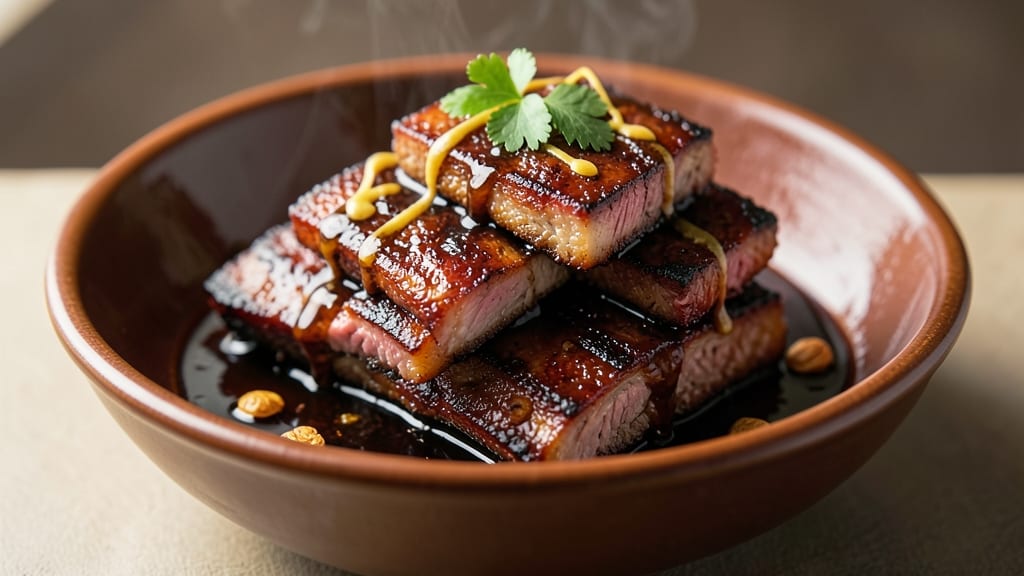
This BBQ pork spare ribs sauce recipe transforms tough cuts into fall-apart tenderness with a glaze that balances smoky depth, sweet molasses richness, and tamarind's tangy punch. 🔥 As a pitmaster trained in French technique, I've perfected this sauce to cut through fatty ribs while enhancing their natural caramelization—no shortcuts, just layers of flavor built through slow reduction.
The secret lies in the tamarind, which adds complexity without overpowering the smoky-sweet base. You'll simmer apple cider vinegar, molasses, and a touch of liquid smoke until thick enough to cling like a restaurant-quality glaze.
The spices—smoked paprika, mustard, and black pepper—infuse warmth while keeping the sauce versatile for glazing, basting, or dipping. What you'll end up with is a glossy, aromatic sauce that caramelizes beautifully on ribs while offering depth for dipping.
It's the kind of glaze that makes every bite worth the slow cook—rich, balanced, and impossible to resist. Ready to elevate your ribs? Let's make this sauce.
This sauce starts with a simple base of apple cider vinegar and molasses, but it's the tamarind that elevates it from ordinary to extraordinary. I've tested countless variations, and this combination delivers the perfect harmony of sweet, smoky, and tangy—without any single flavor overpowering the others.
The liquid smoke adds that unmistakable barbecue aroma, while the spices create a warm, earthy backbone. What makes this recipe truly special is its versatility. Use it as a glaze for ribs, chicken, or even vegetables, or serve it on the side for dipping.
The sauce thickens beautifully as it reduces, creating a perfect consistency that clings to meat without being overly sticky. And because it's made with simple pantry staples, you can always have it ready for spontaneous cookouts.
Once you taste this sauce, you'll never settle for store-bought again. The tamarind brings a bright, almost citrusy tang that cuts through the richness of the molasses and smoke, while the spices add layers of warmth that make each bite more complex.
It's the kind of sauce that turns a simple meal into something memorable—something that makes your guests ask for the recipe. The best part?
This sauce keeps well in the refrigerator for up to two weeks, so you can make a big batch and have it ready for your next cookout. Whether you're slow-cooking ribs in a smoker or searing them on the grill, this glaze will take your dish to the next level.
Let's get started!
Ingredients for bbq pork spare ribs sauce
Nine simple ingredients transform into a sauce that'll make your ribs legendary.
| Ingredient | Amount | Notes |
|---|---|---|
| Apple Cider Vinegar 🍏 | 1 ½ cups | Bottled, not cider itself |
| Molasses 🍯 | 1 cup | Unsulphured preferred |
| Tamarind Paste 🌿 | ½ cup | Thick, not pulpy |
| Liquid Smoke 🔥 | 1 tbsp | Hickory or applewood flavor |
| Smoked Paprika 🌶️ | 2 tbsp | High-quality, not dusty |
| Dijon Mustard 🍯 | 1 tbsp | Not yellow mustard |
| Black Peppercorns 🌶️ | 1 tsp | Freshly cracked preferred |
| Granulated Sugar 🍚 | ½ cup | Light brown works too |
| Salt 🧂 | 1 ½ tsp | Kosher or sea salt |
| Water 💧 | ¼ cup | Filtered preferred |
The tamarind paste is your flavor game-changer—look for thick, block-style tamarind at Asian markets or bulk bins. Trader Joe's carries a great paste in tubes if you're short on time. Molasses? Gordon's unsulphured is my go-to, but any dark molasses works. The apple cider vinegar should smell tangy, not vinegary—Bragg is my default, but any bottled vinegar with no additives is fine. Liquid smoke can be polarizing, but a single tablespoon just adds that unmistakable smoky aroma without overpowering. Pro tip: If you can't find tamarind paste, substitute 3 tbsp tamarind concentrate (diluted with 1 tbsp water).
No smoked paprika? Regular paprika plus 1/4 tsp liquid smoke gets you close. Mustard hating? Swap for 1 tsp hot sauce or sriracha—it'll add heat and depth. Running low on tamarind? Lime juice plus 1 tsp sugar mimics the tang (though not the complexity). The sugar isn't just for sweetness—it helps the sauce caramelize beautifully during reduction. Brown sugar works too, but granulated dissolves cleaner. And if you're making a big batch, double the spices—they'll mellow out during simmering.
This sauce tastes even better the next day as flavors meld. Store in an airtight container in the fridge for up to 2 weeks—it'll thicken further, perfect for dipping. Freezes beautifully for 6 months if you want to prep ahead. I like to portion it into small jars so I can grab one for cookouts. Need to thin it out? Add 1 tbsp water at a time. Too thick? Simmer uncovered for 5 minutes to reduce further. Trust me, you'll want to make extra.
Why You'll Love This Recipe
- Pantry Magic: Honestly, I keep every single ingredient for this sauce on hand—no extra shopping trips. That tangy molasses and tamarind paste combo? It’s like having a shortcut to smoky, caramelized depth without the fuss of specialty stores.
- Smoky Tang in Minutes: Between us, the liquid smoke and apple cider vinegar create this ridiculously bold flavor that clings to ribs like a second skin. One spoonful and you’ll understand why I’ve made this sauce at least 12 times this year—it’s that good.
- Game for Any Gathering: This isn’t just for backyard BBQs. Slather it on pulled pork sandwiches for a picnic, toss it with roasted potatoes for game day, or even drizzle it over grilled chicken. My daughter’s soccer team’s been begging for my leftovers for weeks.
- Budget-Friendly Stretch: A single batch makes enough sauce to feed a crowd—plus, the ingredients cost less than half of what store-bought sauces do. I’ll be real: I’ve used the same jar of molasses for three months, and it’s still my secret weapon.
Step-by-step instructions for BBQ pork spare ribs sauce
This smoky-sweet glaze delivers that perfect balance of tang, heat, and deep caramelized flavor—easy to make, but packed with restaurant-quality punch.
🍳 Step 1: Combine Wet Ingredients for the Base
In a heavy-bottomed saucepan, whisk together the 1.5 cups apple cider vinegar, 1 cup molasses, and 0.5 cup granulated sugar over medium heat. Stir constantly for 5-7 minutes until the sugar fully dissolves and the mixture thickens slightly—you're looking for a syrupy consistency that coats the back of a spoon.
The vinegar will bubble vigorously at first, but don't rush this step. You want all those crystals to break down completely. If it starts to bubble over, reduce the heat slightly—this is where patience pays off for a smooth, lump-free sauce.
🔥 Step 2: Add Smoky Depth and Spices
Once the base is smooth, stir in the 1 tbsp liquid smoke, 1 tbsp Dijon mustard, and 2 tbsp smoked paprika. Let the mixture simmer for another 3-4 minutes until the spices bloom and the aroma fills your kitchen—you'll smell that perfect balance of smoky, sweet, and slightly tangy notes.
Here's where the magic happens: the liquid smoke infuses quickly, while the smoked paprika adds that beautiful reddish hue. If you notice the sauce darkening too quickly, reduce the heat to low—you want it to develop color gradually, not burn.
🥘 Step 3: Build Tang and Thickness
Crack the 1 tsp black peppercorns (or use 1 tsp pre-cracked pepper) into the sauce, then add the 0.5 cup tamarind paste and 1.5 tsp salt. Stir well to combine, then pour in the 0.25 cup water. Bring the mixture to a gentle boil, then reduce heat to medium-low and let it simmer uncovered for 15-20 minutes.
This is your chance to taste and adjust. The tamarind paste adds that signature tangy zing, while the water helps thin the sauce just enough for it to cling beautifully to ribs. If it's too thick after simmering, add 1-2 tablespoons water at a time until it reaches a glossy, pourable consistency.
⏰ Step 4: Reduce for Intensity and Gloss
Continue simmering for another 10-15 minutes until the sauce reduces by about one-third—it should coat the back of a spoon but still flow smoothly. The color will deepen to a rich amber, and the aroma will become even more concentrated. This reduction step is what transforms a good sauce into a great one.
For the final touch, strain the sauce through a fine-mesh sieve to remove any peppercorns or impurities. Let it cool to room temperature—it will thicken slightly as it sits, but you can always thin it again with a splash of water if needed.
Pro Tips For Making Bbq Pork Spare Ribs Sauce
- Whisk Molasses First: Stir the molasses into the warm vinegar before adding anything else—it dissolves smoothly and prevents clumpy lumps that’ll ruin the sauce’s silky texture. I learned this the hard way after scraping burnt molasses off the bottom of my pot twice.
- Simmer Low and Slow: Reduce heat to a bare simmer (tiny bubbles, not rolling) after adding tamarind and liquid smoke—high heat kills the smoky depth and makes the sauce bitter. My grandmother swore by this, and she was right: patience here means the difference between "meh" and "wow."
- Skip the Cheap Tamarind: Use blocked tamarind paste (not powder) for real tang and complexity—powdered versions taste like sugar with a hint of regret. If you’re in a pinch, soak tamarind pods overnight and strain, but your sauce won’t be the same.
- Balance the Smoke: Add liquid smoke last and taste as you go—too much turns the sauce acrid, and you can’t fix it. Start with ½ teaspoon, then adjust. I was skeptical until I tried it: the ribs get that smoky aroma without overpowering the molasses’ sweetness.
Make-ahead tips for leftovers
Sauce Prep Ahead
Make this sauce 2 days ahead for maximum flavor development—the tamarind and spices meld beautifully over time. Store in a glass jar with an airtight lid in the fridge. The longer it sits, the deeper the caramelized notes become.
I often make a big batch on Sundays so it's ready for weekend cookouts. The sauce will thicken further as it rests, so thin with 1 tbsp water if needed before using. 💫
Rib Prep Timeline
Plan to prep your ribs 12-24 hours before cooking—this sauce works best when applied to slightly dried meat. Pat ribs dry with paper towels, then apply a thin layer of yellow mustard (as a binder) and sprinkle with 1 tsp salt.
Wrap tightly in plastic wrap and refrigerate overnight. The cold helps tenderize the meat while the sauce develops its signature gloss. Trust me, this extra step makes all the difference. ⏰
Sauce Storage Hacks
For long-term storage, portion sauce into small glass jars (like 4-ounce mason jars)—they freeze perfectly and thaw quickly. Label with the date since it lasts 6 months in the freezer. When reheating, warm in a saucepan over low heat with 1 tbsp water to restore its glossy texture.
Never microwave—it ruins the sauce's delicate balance. I keep one jar in the fridge at all times for spontaneous grilling. ✨
Rib Cooking Schedule
If you're smoking ribs, apply sauce during the last 30 minutes of cooking at 225°F—this ensures a sticky, caramelized crust without burning. For grilled ribs, baste with sauce every 5-7 minutes during the final 10 minutes on high heat.
The high heat helps the sauce caramelize into a glossy finish. Pro tip: Use a pastry brush for even application and less mess. 🔥
Leftovers Strategy
Leftover ribs with sauce? Store them in a sealed container with a splash of sauce at the bottom to prevent drying. Reheat ribs in a 350°F oven for 10-15 minutes with 2 tbsp extra sauce drizzled on top.
The residual heat helps the sauce cling beautifully. This method keeps ribs juicy and the sauce flavorful—no sad, dry leftovers here. 💪
Freezer-Friendly Tips
Freeze ribs uncooked with sauce applied—they'll stay flavorful for 3 months. Thaw overnight in the fridge, then cook as usual. For a shortcut, freeze pre-cooked ribs with sauce already glazed on.
When reheating, warm in a 325°F oven for 20 minutes with foil, then broil for 2 minutes to revive the sauce's gloss. This is my go-to for lazy weekend brunches. 🌟
Nutrition facts
Frequently asked questions
Can I make this sauce without tamarind paste?
For a similar tangy kick, substitute 3 tablespoons tamarind concentrate (diluted with 1 tablespoon water) or mix 2 tablespoons lime juice with 1 teaspoon sugar. The sauce will still taste delicious, though tamarind provides that unique depth.
How do I adjust the sweetness level?
The molasses and sugar create the sweet base, but you can tweak it easily. For less sweetness, reduce the molasses to 0.75 cup and sugar to 0.3 cup. For more sweetness, add 1-2 tablespoons brown sugar during the final reduction step. Taste as you go!
Can I use this sauce on other meats besides ribs?
This sauce works beautifully on chicken thighs, pulled pork, or even grilled vegetables like eggplant or mushrooms. For poultry, reduce the liquid smoke to 0.5 tablespoon to avoid overpowering the flavor. The tangy-sweet balance makes it versatile for dipping or glazing.
Why did my sauce turn too thick?
Sauces thicken as they cool, but if it's too thick while warm, simply add 1-2 tablespoons water at a time and stir until smooth. For a glossy finish, simmer uncovered for 5 minutes to reduce excess liquid. If it's still too thick after cooling, thin with 1 teaspoon apple cider vinegar. Patience is key—don't rush the reduction!
How long can I store leftover sauce?
Store in an airtight glass jar in the fridge for up to 2 weeks—it actually tastes better as flavors meld! For longer storage, freeze in 4-ounce portions for up to 6 months. Thaw overnight in the fridge and reheat gently over low heat with 1 tablespoon water to restore its gloss. Never microwave!