
Main Courses
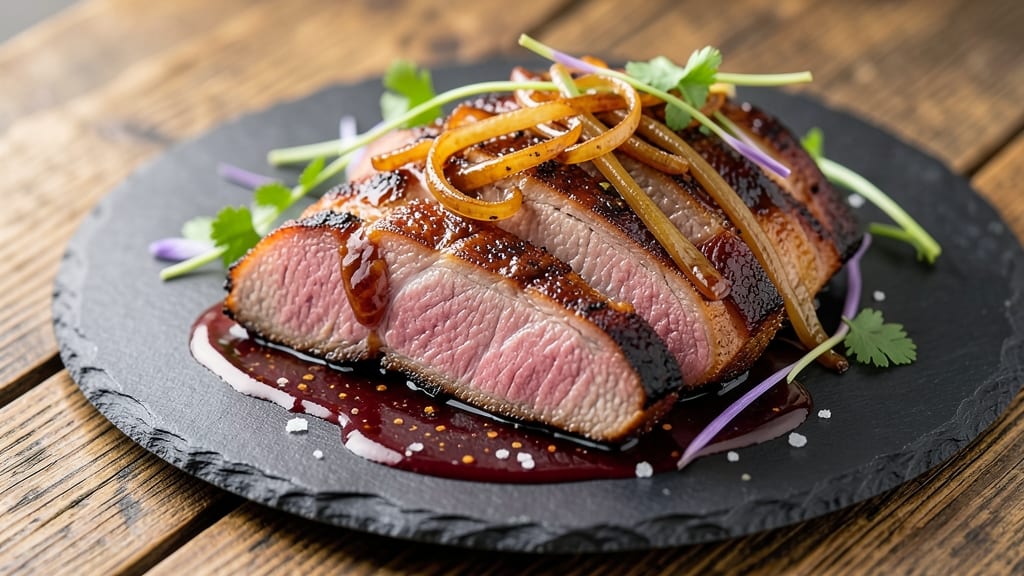
This crispy BBQ pork belly slices recipe delivers restaurant-quality results with a perfect balance of smoky, spiced bark and sweet-tangy caramelized drizzle. 🔥 After years of perfecting my technique—starting with that first backyard cookout where the smell of hickory smoke hooked me—I’ve developed a method that transforms fatty pork belly into irresistible, melt-in-your-mouth slices with a crackling exterior.
The secret lies in slow-rendered fat and a five-spice rub that builds layers of warmth and depth, finished with a tamarind glaze that adds just the right amount of complexity.
The process begins with marinating the pork belly overnight in a blend of soy sauce, brown sugar, and five-spice powder, ensuring deep flavor penetration. Then, it’s roasted low and slow until the fat renders into crispy, caramelized bark—this is where patience pays off.
Slicing against the grain guarantees tender, juicy bites that hold up perfectly to the tamarind drizzle, which adds a bright, almost candy-like finish. Every step is designed to maximize flavor while keeping the technique accessible for home cooks.
What you’ll end up with is a dish that’s equal parts indulgent and impressive—golden, crackling slices with a glossy glaze that ties everything together. The contrast of the crispy bark and tender meat, balanced by the sweet-savory drizzle, makes this recipe a showstopper for gatherings or a special weeknight dinner.
The best part? Leftovers reheat beautifully, so you can enjoy the flavors for days.
Pair these slices with steamed greens, a simple cucumber salad, or even crusty bread to soak up every last drop of that caramelized drizzle. The technique is straightforward, but the results are undeniably restaurant-worthy. Let’s get cooking—your taste buds will thank you.
Ingredients for bbq pork belly slices
Pork belly, five-spice magic, and tamarind drizzle—this is your shortcut to restaurant-worthy crispy slices.
| Ingredient | Amount | Notes |
|---|---|---|
| Pork Belly 🥓 | 2 lb | Skin-on, fatty cut preferred |
| Soy Sauce 🍶 | ¼ cup | Low-sodium preferred for balance |
| Brown Sugar 🍚 | ½ cup | Light or dark, packed |
| Five-Spice Powder 🌶️ | 2 tbsp | Homemade or quality blend |
| Garlic Cloves 🧄 | 6 cloves | Minced for marinade |
| Ginger Root 🌿 | 1 tbsp | Freshly grated, aromatic |
| Sesame Oil 🫒 | 1 tbsp | Toasted, for depth |
| Tamarind Paste 🍯 | ¼ cup | Thick, for glaze |
| Honey 🍯 | 2 tbsp | Wildflower preferred |
| Rice Vinegar 🍶 | 1 tbsp | For tangy balance |
| Olive Oil 🫒 | 1 tbsp | For crisping |
| Salt 🧂 | 1 ½ tsp | Diamond Crystal preferred |
| Black Pepper 🌶️ | ½ tsp | Freshly cracked |
| Red Chili Flakes 🔥 | ½ tsp | Optional for heat |
The pork belly is non-negotiable—look for thick-cut pieces with a thick layer of fat. Costco or your butcher shop are your best bets for quality cuts. If you can't find pork belly, thick-cut pork shoulder works in a pinch, but the fat content is lower. The five-spice powder is the soul of this dish—Penzeys or a trusted Asian market blend will give you the best balance of cinnamon, star anise, fennel, clove, and Szechuan peppercorn. If you're making your own, toast the whole spices first for deeper flavor. Tamarind paste can be tricky to find, but Trader Joe's carries it, or check the international aisle at Whole Foods.
No tamarind? Lime juice plus extra brown sugar mimics the tangy sweetness. Running short on five-spice? Swap in equal parts cinnamon, ginger, and clove, but you'll lose that signature warmth. The soy sauce—use low-sodium if you can, or cut the salt in half. For the glaze, agave nectar works as a honey substitute, though it lacks floral notes. If your pork belly is lean, brush it with an extra 1 tbsp olive oil before roasting to ensure crispiness. The garlic and ginger should be freshly grated or minced—they make all the difference in the marinade's punch.
Marinate the pork belly overnight, uncovered in the fridge, for maximum flavor penetration. Once roasted, let it rest 20 minutes before slicing—this keeps the juices locked in. The slices reheat beautifully in a 350°F oven for 10 minutes, but they're best fresh. Store leftovers in the fridge for 4 days, wrapped tightly in foil to preserve that crispy bark. For longer storage, freeze portions for up to 3 months. The glaze can be made ahead and reheated with a splash of water if it thickens.
Why You'll Love This Recipe
- One-Pan Magic: I swear by this recipe when I’m too tired to scrub pots—just slice the pork belly, toss it with soy sauce and five-spice, then roast it all on one sheet. The brown sugar caramelizes into crispy pockets without any extra work, and honestly? That’s my kind of cooking.
- Crave-Worthy Crunch: Between us, the contrast of crispy edges and tender inside is chef’s kiss—especially when the five-spice powder and garlic cloves seep into every bite. It’s the kind of flavor that makes you reach for seconds without even thinking, and the soy-browned exterior? Pure satisfaction.
- Weeknight Hero: This isn’t just for special occasions—it’s my go-to when I need something hearty but still feels like a treat. Slap it on toast for breakfast, toss it in noodles for dinner, or serve it cold in lettuce wraps. My kids even ask for it, and that’s saying something.
- Budget-Friendly Leftovers: Pork belly stretches further than you’d think, and the five-spice marinade keeps it tasting fresh for days. I’ll make a big batch on Sunday, then repurpose it in fried rice, tacos, or sandwiches all week—no takeout needed. (Yes, even on a Tuesday night.)
Step-by-step instructions for crispy pork belly slices
Here's how to transform fatty pork belly into irresistible, crackling slices with a perfect five-spice glaze.
👨🍳 Step 1: Prepare the Pork Belly and Dry Rub
Start by scoring the pork belly in a diamond pattern—about ½-inch apart—using a sharp knife. This creates channels for the marinade to penetrate while allowing the fat to render beautifully. Pat the skin completely dry with paper towels, then rub with 1 tablespoon olive oil to help the rub adhere.
In a small bowl, mix the 2 tablespoons five-spice powder, 1.5 teaspoons salt, and 0.5 teaspoon black pepper. Generously coat the pork belly with this mixture, pressing it into the scored channels. The five-spice blend gives that signature aromatic depth, while the salt helps draw out moisture for better browning. Let it sit at room temperature while you prepare the marinade.
🍳 Step 2: Marinate and Render the Fat
In a food processor, combine the 6 minced garlic cloves, 1 tablespoon grated ginger root, 0.25 cup soy sauce, 0.5 cup brown sugar, 1 tablespoon rice vinegar, and 1 tablespoon toasted sesame oil. Pulse until smooth but still slightly textured. Pour this marinade over the pork belly, ensuring it coats all surfaces.
Place the pork belly on a wire rack set over a baking sheet (fat-side up) and refrigerate for 4-6 hours or overnight. This slow marinating allows the flavors to penetrate deeply while the fat begins to render naturally. The longer it marinates, the more flavorful and tender the meat becomes—don't rush this step.
🔥 Step 3: Slow-Roast for Maximum Tenderness
Preheat your oven to 275°F. Roast the pork belly uncovered for 2.5-3 hours until the internal temperature reaches 160°F. The low temperature ensures the fat renders slowly and evenly, creating that signature crackling texture. You'll know it's ready when the skin starts to pull away from the meat in some spots and the fat looks like liquid gold.
Here's the thing—don't peek during cooking. Every time you open the oven, you lose heat and steam, which can make the skin tough instead of crispy. If you're worried, use an instant-read thermometer to check the temperature instead of relying on visual cues.
🥘 Step 4: Create the Tamarind Glaze
While the pork belly roasts, prepare the glaze by combining 0.25 cup tamarind paste, 2 tablespoons honey, and 0.5 teaspoon red chili flakes in a small saucepan. Simmer over medium heat for 5-7 minutes, stirring constantly until the mixture thickens to a glossy consistency. The tamarind adds that signature tangy-sweet balance that pairs perfectly with the five-spice rub.
Remove from heat and let it cool slightly. This glaze will be sticky, so work quickly when applying it later. If it thickens too much, add a splash of hot water to loosen it back to a drizzling consistency.
🔪 Step 5: Crisp the Skin and Slice
Increase oven temperature to 425°F and place the pork belly on a baking sheet. Roast for 15-20 minutes until the skin is deep golden brown and crispy. Watch closely—once it starts to darken, it only takes a few minutes to go from perfect to burnt.
Let the pork belly rest for 15 minutes before slicing. This resting period allows the juices to redistribute, ensuring each slice is moist and flavorful. Using a sharp knife, slice against the grain into ¼-inch thick pieces. Drizzle generously with the tamarind glaze and serve immediately with the crispy skin intact.
Pro Tips For Making Bbq Pork Belly Slices
- CRANK THE HEAT FIRST: Pork belly needs that initial sear to render fat fast and lock in flavor. Start your pan or grill screaming hot—no need to wait for it to warm up—then lower to medium after the first 2 minutes. I used to baby it, and the slices ended up greasy instead of caramelized.
- SALT THE BELLY BEFORE SLICING: Toss the whole slab with salt (about 1 tablespoon per pound) and let it sit uncovered in the fridge for at least 2 hours. This dries the surface just enough so the five-spice and soy sauce cling instead of sliding off like rain on a duck. Yes, it looks weird, but the crust sticks better.
- DON’T OVERMIX THE MARINADE: Once you mix soy sauce, brown sugar, and five-spice, resist the urge to stir it into the pork like a smoothie. Brush it on in thin layers—let the first coat caramelize before adding more. I learned this after slathering everything at once and ending up with sticky, uneven slices.
- GARLIC: MINCE, DON’T CHOP: Finely minced garlic (not chopped) blends into the pork belly better and toasts evenly with the fat. Use a knife or microplane—no food processor here. I was skeptical until I tried it: the slices got a deeper, more consistent flavor without garlic chunks hiding in every bite.
Essential equipment for great bbq pork belly slices
Oven Essentials
Your oven is the heart of this recipe, so invest in a quality instant-read thermometer like the ThermoWorks Smoke to monitor internal temperature accurately. I use my Lodge cast iron Dutch oven for the initial slow-roast—it distributes heat evenly and handles the rendered fat beautifully.
For crisping, a baking sheet with a wire rack elevates the pork belly for even browning. 🌡️
Scoring Tools
A sharp boning knife is non-negotiable for scoring the pork belly—dull blades tear the meat instead of creating clean channels. I keep a Wüsthof Classic in my kitchen for this exact purpose.
The diamond pattern should be about ½-inch apart to allow fat to render without collapsing the skin. Never rush this step; precision here ensures crispy bark later.
Marinade Mixer
Use a food processor or mortar and pestle to blend the marinade ingredients—this ensures the garlic and ginger are finely minced for maximum flavor penetration. I love my Cuisinart Mini-Prep for small batches.
For the five-spice powder, a fine-mesh sieve helps distribute it evenly over the pork belly without clumping. Avoid pre-ground spices—they lose potency quickly.
Resting Rack
After roasting, transfer the pork belly to a wire cooling rack set over a rimmed baking sheet. This allows air circulation to keep the skin crispy while it rests. I use my OXO Good Grips rack—it’s sturdy and elevates perfectly.
Resting for 15-20 minutes before slicing is crucial; this step prevents juices from leaking out when you cut into the meat. 💡
Glaze Tools
A small saucepan with medium heat control is ideal for making the tamarind glaze—you need to simmer it just enough to thicken without burning. I keep a Calphalon stainless steel pan for this because it heats evenly.
For drizzling, a small silicone brush or spoon works best; avoid metal spoons that can scratch your serving dishes.
Slicing Knife
Slice against the grain using a long, sharp chef’s knife—I swear by my Victorinox 8-inch for this. The blade should be at least 8 inches long to cut through the fat cleanly.
Angle the knife slightly for ¼-inch thick slices that stay intact. A cutting board with grip (like my John Boos Maple) prevents slipping, which is especially important with fatty pork belly. 🔪
Nutrition facts
Frequently asked questions
Can I use pork shoulder instead of pork belly for this recipe?
Pork shoulder works in a pinch, but you'll lose some of that signature crispy bark since it has less fat. For best results, trim excess fat and brush the meat with an extra 1 tablespoon olive oil before roasting. The marinade and five-spice rub will still deliver great flavor, though the texture will be slightly less indulgent.
How do I store and reheat leftovers to keep the bark crispy?
Wrap slices tightly in foil and refrigerate for up to 4 days. To reheat, place them on a baking sheet at 350°F for 10-12 minutes until warmed through. The foil helps retain moisture while the oven reheats the bark. For freezing, wrap portions individually and store for up to 3 months—thaw overnight in the fridge before reheating.
What's the best way to slice pork belly for maximum tenderness?
Always slice against the grain at a 45-degree angle for ¼-inch thick slices. Use a sharp 8-inch chef's knife and angle it slightly to prevent tearing. The grain runs parallel to the skin, so cutting perpendicular ensures each bite has that perfect tender texture. A John Boos Maple cutting board provides grip for clean slices.
Can I make the tamarind glaze ahead of time? Yes! Prepare the glaze up to 3 days ahead and store it in an airtight container. Reheat gently in a saucepan with a splash of water if it thickens. The flavors actually improve as it sits, developing deeper complexity. Just
Why did my pork belly skin turn rubbery instead of crispy?
This usually happens from opening the oven too early or not rendering fat slowly enough. For crispy skin, maintain 275°F for 2.5-3 hours without peeking, then finish at 425°F for 15-20 minutes. If your oven runs hot, lower the initial temp to 250°F. The wire rack elevates the meat for even browning—never skip this step!