
Main Courses
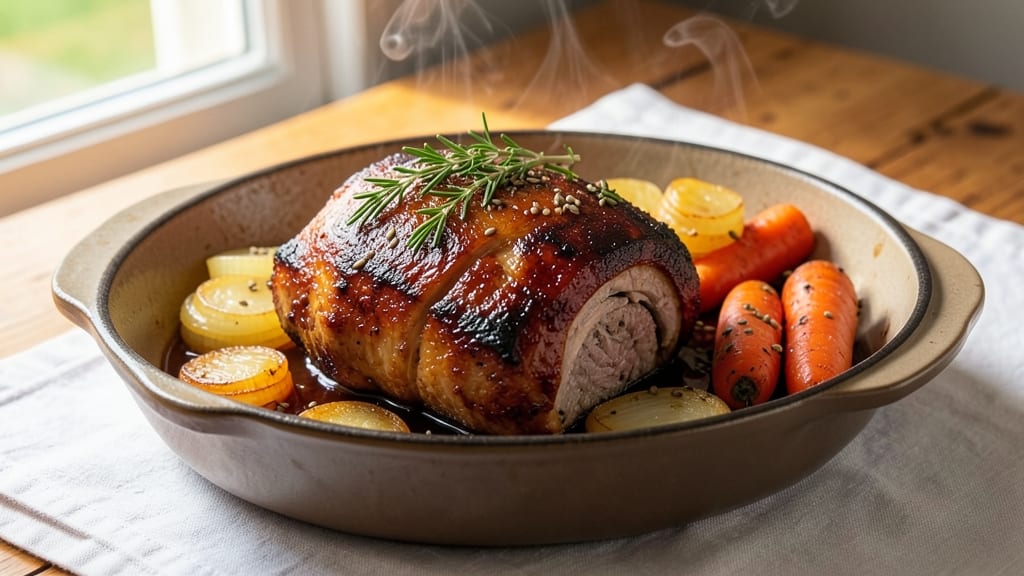
This Bavarian pork recipe delivers the hearty, smoky satisfaction of a German beer hall—tender, fall-apart meat braised in dark lager until it absorbs deep caramelized flavors. The key lies in slow cooking with marjoram and caraway, transforming tough cuts into melt-in-your-mouth perfection.
I first perfected this technique during my apprenticeship, where we spent hours coaxing flavor from every bite.
The magic happens in layers: crispy-skinned pork knuckle roasted until golden, then simmered with onions until caramelized into a glossy, sweet glaze. A rich beer gravy ties it all together, balancing sweetness with just enough tang.
This dish is the centerpiece of any Bavarian feast, but it’s also forgiving enough for weeknight dinners—just plan ahead for the slow cook.
What you’ll end up with is restaurant-quality pork that’s juicy, aromatic, and packed with depth—each bite reveals layers of caramelized onions, smoky beer, and warm spices. The gravy clings to every forkful, making this a meal that feels like a celebration.
Serve with buttery dumplings or crispy potatoes to soak up every drop.
This recipe honors tradition while keeping it approachable—no fancy equipment, just time and patience. The result? A dish that tastes like home, whether you’re hosting Oktoberfest or feeding a hungry family. Let’s get cooking.
Ingredients for bavarian pork
Pantry staples meet German tradition for this hearty, beer-braised pork that tastes like Oktoberfest in your kitchen.
| Ingredient | Amount | Notes |
|---|---|---|
| Pork Knuckle 🍖 | 2 lb | Bone-in for maximum flavor |
| Yellow Onions 🧅 | 3 whole | Yellow or red, peeled |
| Dark Lager Beer 🍺 | 2 cups | German-style, like Paulaner |
| Carrots 🥕 | 4 whole | Medium-sized, peeled |
| Fresh Marjoram 🌿 | 1 tbsp | Dried works at 1 tsp |
| Ground Caraway Seeds 🌾 | 1 tsp | Freshly ground preferred |
| Fresh Thyme 🌿 | 1 tbsp | Leaves only, chopped |
| Garlic Cloves 🧄 | 6 cloves | Peeled, smashed |
| Bay Leaves 🌿 | 2 whole | Fresh or dried |
| Unsalted Butter 🧈 | 2 tbsp | For basting |
| All-Purpose Flour 🌾 | 1 tbsp | For gravy thickening |
| Salt 🧂 | 1 ½ tsp | Kosher or sea salt |
| Black Peppercorns 🌶️ | ½ tsp | Freshly cracked |
| Apple Cider Vinegar 🍎 | 1 tbsp | For balancing sweetness |
| Brown Sugar 🍚 | 1 tbsp | Light or dark |
The pork knuckle is non-negotiable here—bone-in cuts develop the richest flavor. Local butchers often have the best selection, but Costco or Trader Joe's carry good-quality knuckles too. Look for good marbling and avoid anything with a grayish tint. The beer matters just as much: Paulaner or Ayinger are my go-tos, but any German dark lager works. If you can't find one, a 5% ABV amber ale in a pinch. The onions should be yellow or red—Spanish onions caramelize beautifully but aren't required. For the caraway, Penzeys Spices sells pre-ground, but toasting whole seeds first adds depth.
No dark lager? Substitute with beef broth plus 1 tbsp balsamic vinegar—it mimics the maltiness. Fresh marjoram is ideal, but dried at one-third the amount works fine. The thyme can be dried too, but fresh has a brighter punch. Short on butter? Olive oil works, though it won't give the same rich finish. For the gravy, arrowroot powder thickens better than flour if you're avoiding gluten. The brown sugar balances the beer's bitterness—maple syrup is a 1:1 swap if you prefer. If your beer is too hoppy, add an extra splash of vinegar to cut through it.
Pork knuckles keep 3-4 days in the fridge before cooking, but you can freeze them for up to 6 months—just thaw overnight in the fridge. The braised pork reheats beautifully: 350°F for 20 minutes covered with foil, then uncovered to crisp. Store leftovers in the gravy—they'll stay moist for 5 days. For make-ahead prep, caramelize the onions and roast the pork knuckles up to 2 days ahead. The gravy can be reheated separately and thickened with a cornstarch slurry if it gets too thin.
Why You'll Love This Recipe
- One-Pot Magic: I swear by this—just toss the pork knuckle, onions, and beer in a Dutch oven, add the carrots and marjoram, and let it simmer. No chopping boards, no extra pans, just hands-off perfection while you sip that same beer you’re cooking with.
- Beer-Braised Bliss: That dark lager doesn’t just flavor the dish—it transforms the pork into melt-in-your-mouth tenderness with a deep, malty richness. The marjoram adds a fresh herbal note that cuts through the richness like a breath of alpine air.
- Leftovers That Shine: Between us, the second day is better. The pork gets even more fall-off-the-bone tender, and the beer-gravy thickens into something you’ll slather on mashed potatoes or dumplings. Honestly, I make this on Sundays just to have dinner covered.
- Budget-Friendly Feast: Pork knuckle is the secret weapon—cheaper than chops but packed with flavor, and it feeds four (or five if you’re like me and sneak extra bites). Carrots and onions stretch the meal, and that bottle of beer? Doubles as your dinner companion.
Step-by-step instructions for smoky beer-braised pork knuckle
Transform the humble pork knuckle into melt-in-your-mouth tenderness with rich beer braising and caramelized onions.
Prepare the Pork Knuckle for Maximum Flavor
Pat the 2 lb pork knuckle thoroughly dry with paper towels—this is crucial for crispy skin and even browning. Place it in a large Dutch oven fat-side up, then rub all over with 1.5 tsp salt and 0.5 tsp freshly cracked black peppercorns. The bone-in cut ensures deep flavor penetration as it braises.
In a small bowl, combine 1 tbsp fresh marjoram, 1 tbsp fresh thyme, 1 tsp ground caraway seeds, 6 smashed garlic cloves, and 2 whole bay leaves. Sprinkle this aromatic blend evenly over the pork, pressing gently so it adheres. This herb mixture is the secret to that authentic Bavarian depth of flavor.
Sear the Pork for Deep Color and Flavor
Heat the Dutch oven over medium-high heat until hot. Add 2 tbsp unsalted butter and let it foam. Carefully place the pork knuckle in the pot, fat-side down, and sear for 8-10 minutes until the fat is golden brown and crispy in spots. This step develops the rich, caramelized crust that carries through the braising process.
Flip the pork and continue searing for another 5-7 minutes until all sides are deeply browned. Remove the pork and set it aside on a plate. Here's the thing—don't clean the pot yet. Those browned bits are pure flavor waiting to be dissolved into the braising liquid.
Build the Braising Liquid with Caramelized Onions
In the same Dutch oven, add 3 whole peeled yellow onions cut into even wedges and 4 whole peeled carrots cut into thick rounds. Cook over medium heat for 8-10 minutes, stirring occasionally, until the onions soften and begin to caramelize at the edges. This process adds sweetness that balances the beer's bitterness.
Stir in 1 tbsp brown sugar and 1 tbsp apple cider vinegar, then cook for another 2 minutes until the sugar dissolves and the onions develop a deeper golden hue. Pour in 2 cups dark lager beer, scraping up all those flavorful browned bits from the bottom of the pot. This deglazing step captures all the meaty essence that would otherwise be lost.
Braise Until Fork-Tender
Return the pork knuckle to the Dutch oven, fat-side up. Bring the liquid to a gentle simmer over low heat, then cover tightly with a lid. Here's where patience pays off—braise for 2.5 to 3 hours until the pork is fork-tender and falls apart easily. The internal temperature should reach 200-205°F when measured in the thickest part of the meat.
About halfway through cooking (1.25 to 1.5 hours), check the liquid level. If it's reduced too much, add ½ cup hot water to maintain proper moisture. The pork should be swimming in flavorful liquid by the end, which will become our rich gravy. Real talk: Don't peek or lift the lid during cooking—each time you do, you lose valuable heat and moisture.
Finish with Rich Gravy
Once the pork is tender, remove it from the pot and set it aside to rest. Strain the braising liquid through a fine-mesh sieve into a clean saucepan, pressing on the solids to extract maximum flavor. Return the liquid to medium heat and whisk in 1 tbsp all-purpose flour to thicken the gravy.
Simmer for 3-5 minutes until the gravy coats the back of a spoon and reaches your desired consistency. Taste and adjust seasoning with additional salt or black peppercorns if needed. The gravy should be rich, slightly tangy from the vinegar, and perfectly balanced between the beer's bitterness and the caramelized sweetness of the onions.
Pro Tips For Making Bavarian Pork
- SEAR THE KNUCKLE FIRST: High heat for 10 minutes on each side—this isn’t the time to rush. A deep, caramelized crust locks in flavor and keeps the meat from drying out later, especially since you’re braising it in beer afterward.
- CHOP ONIONS THICK: Slice them into ½-inch chunks, not paper-thin rings. Thicker pieces hold up better during the long simmer and release flavor more steadily—no mushy, watery mess in your pot.
- DON’T SKIP THE SKIM: After the first 30 minutes of simmering, skim off any foam or scum that rises. I learned this the hard way—leaving it in makes the beer taste bitter and the broth cloudy, no matter how good your lager is.
- USE COLD BEER: Pour the lager straight from the fridge over the hot meat—it cools the pot down just enough to prevent a sudden boilover. Sounds weird, but it works: you’ll get a cleaner reduction and richer flavor without losing liquid.
Make-ahead tips for this recipe
Prep Ahead for Perfect Pork
Start by prepping the pork knuckle 2 days ahead—pat it dry, season generously with salt and pepper, and refrigerate uncovered on a wire rack. This creates a dry, flavorful crust that crisps beautifully when seared.
I do this the night before hosting, saving myself 30 minutes of prep the next day. 💡
Caramelize Onions Early
Caramelizing onions takes 45-60 minutes—do this first while the pork rests. Use 3 yellow onions, sliced into even wedges, and cook them in 2 tbsp butter over medium-low heat for 45 minutes.
Add 1 tbsp brown sugar and 1 tbsp apple cider vinegar in the last 5 minutes to deepen the flavor. Store in an airtight container in the fridge for up to 3 days.
Herb and Spice Prep
Combine 1 tbsp fresh marjoram, 1 tbsp thyme, 1 tsp caraway seeds, 6 garlic cloves, and 2 bay leaves in a small bowl. Store in a resealable bag in the fridge for up to 5 days.
This herb blend is the backbone of Bavarian flavor—use it on other dishes too, like roasted potatoes or cabbage. 🌿
Beer Braising Shortcut
Measure out 2 cups dark lager beer and store in a sealed bottle in the fridge. If using a substitution (like beef broth), prep it ahead too—add 1 tbsp balsamic vinegar to mimic the beer’s depth.
Keep the beer cold until ready to use; cold liquid helps maintain a gentle simmer during braising. 🍺
Gravy Prep for Leftovers
Make extra gravy while you’re cooking and store it separately in a glass jar in the fridge for up to 4 days. Reheat over low heat, stirring constantly, and thin with hot water if needed. This ensures every bite of reheated pork stays moist and flavorful. 💫
Serving Suggestions
Prep sides like Semmelknödel (bread dumplings) or roasted red cabbage the day before. Dumplings keep well in an airtight container for 2 days, and cabbage reheats beautifully in a 350°F oven for 20 minutes.
Serve with mustard cream sauce (mix ½ cup sour cream with 1 tbsp Dijon mustard) for a complete Bavarian spread. 🍽️
Nutrition facts
Frequently asked questions
Can I substitute pork shoulder for pork knuckle in this recipe?
Yes, but with adjustments! Pork shoulder (butt) cooks faster and is leaner, so reduce braising time to 1.5-2 hours and use 1.5 lbs per person. Cut it into 2-inch chunks before searing to ensure even cooking. The flavor will be slightly different but still delicious—just expect less connective tissue for that signature fall-apart tenderness.
What's the best way to reheat leftover Bavarian pork?
Place pork in an oven-safe dish with gravy, cover tightly with foil, and reheat at 300°F for 20-25 minutes. For the crispy skin, broil for 2-3 minutes uncovered at the end. Never microwave—it makes the meat rubbery. The gravy can be reheated separately on the stovetop over low heat, stirring constantly to prevent lumps.
Why does my pork turn out dry instead of tender?
Most likely, you didn't braise long enough or lifted the lid too often. Pork knuckle needs 200-205°F internal temp—use a meat thermometer! Also, ensure the pot stays covered and only add water if the liquid reduces too much. For extra moisture, add ½ cup broth during the last 30 minutes of cooking. The key is patience—rushing ruins the texture.
Can I make this recipe without alcohol?
Replace the beer with 2 cups beef broth plus 1 tbsp balsamic vinegar for depth. For extra richness, add 1 tbsp molasses to mimic beer's maltiness. The flavor will be slightly different but still hearty. Just ensure the liquid covers the pork by at least 1 inch for proper braising.
What are the best sides to serve with this Bavarian pork?
Classic pairings include Semmelknödel (bread dumplings), roasted red cabbage, or buttered spaetzle. For a lighter option, try creamy potato salad with mustard or steamed green beans with almonds. In Bavaria, they often serve dark rye bread and pickled vegetables to cut through the richness. The gravy makes everything taste even better!