
Main Courses
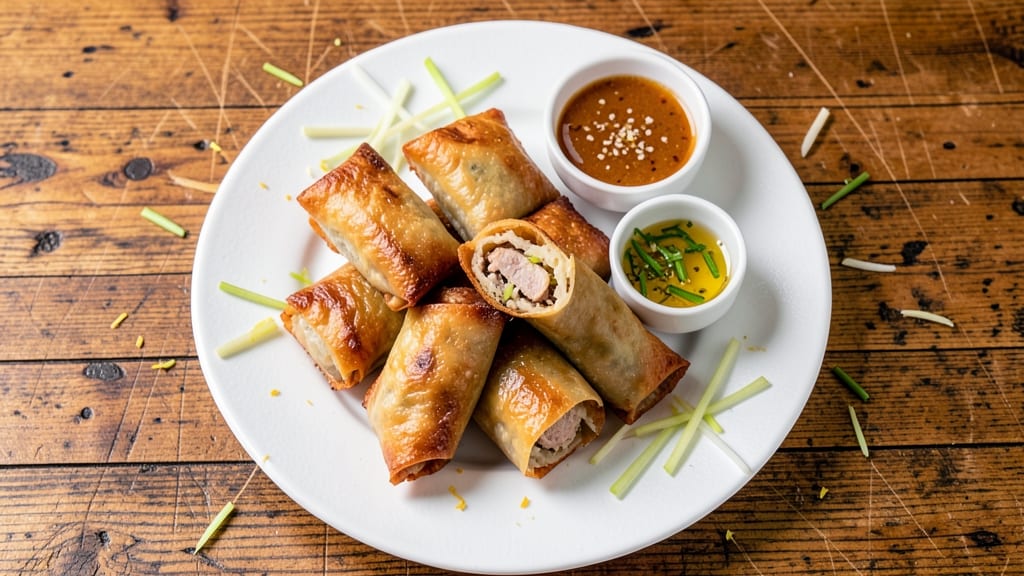
This authentic pork egg roll recipe brings the crispy, golden layers and silky fillings of your favorite takeout—made perfectly at home. After years of perfecting the technique, I’ve cracked the code for achieving that signature crunch without deep-frying shortcuts.
The secret lies in the right balance of ground pork, seasonings, and delicate wonton wrappers, all wrapped with precision for that restaurant-quality bite.
The key to authenticity starts with the filling: finely ground pork, aromatic ginger, garlic, and a touch of soy sauce create a flavorful base that stays tender while the wrappers crisp to golden perfection.
I’ve tested countless methods, and this approach ensures every bite delivers that satisfying contrast—crispy outside, juicy inside. The wrapping technique is just as crucial; tight, even layers prevent leaks and maintain shape during cooking.
What you’ll end up with is a plate of egg rolls that rivals any Chinese restaurant, complete with that irresistible aroma and satisfying crunch. Serve with a classic soy-vinegar dipping sauce or sweet chili for the full experience.
The beauty of this recipe is its versatility—you can deep-fry for maximum crispiness or bake for a lighter alternative, all while keeping that authentic taste.
Ready to impress? This method delivers professional results with simple ingredients and clear steps. Whether you’re feeding a crowd or treating yourself, these egg rolls will become a staple. Let’s get started on creating your own crispy, golden masterpieces.
Ingredients for authentic pork egg roll
Twelve ingredients, twelve crispy golden egg rolls with that signature restaurant crunch and juicy filling.
| Ingredient | Amount | Notes |
|---|---|---|
| Ground Pork 🐷 | 1 ½ lb | Finely ground, 80% lean preferred |
| Wonton Wrappers 🥟 | 24 whole | Square, round, or rectangular |
| Fresh Ginger 🌿 | 1 ½ tbsp | Finely grated, aromatic variety |
| Garlic Cloves 🧄 | 4 cloves | Minced, fresh preferred |
| Light Soy Sauce 🥢 | 2 tbsp | Kikkoman or similar |
| Oyster Sauce 🍜 | 1 ½ tbsp | High-quality, slightly sweet |
| Sesame Oil 🌰 | 1 tsp | Toasted, for aroma |
| White Pepper 🌶️ | ½ tsp | Freshly ground preferred |
| Cornstarch 🌾 | 1 tbsp | For crispy coating |
| Vegetable Oil 🫒 | 3 cups | High smoke point, for frying |
| Green Onions 🧅 | 3 whole | Thinly sliced, for garnish |
| Salt 🧂 | ½ tsp | Kosher or sea salt |
| Water 💧 | ½ cup | For cornstarch slurry |
The pork is the heart of these egg rolls—ground finely makes all the difference. Ask your butcher for 80% lean ground pork if possible; it stays juicier during cooking. Fresh ginger and garlic are non-negotiable here—they build the aromatic base that sets authentic egg rolls apart. I always grab Kikkoman soy sauce and Lee Kum Kee oyster sauce from the Asian market, but any good-quality brands work. The wonton wrappers? King Noodle or T&T are my go-tos—they’re delicate enough for perfect wrapping without tearing.
No fresh ginger? Substitute with 1 tbsp ground ginger, but it won’t have the same punch. Short on oyster sauce? Hoisin sauce or extra soy sauce works in a pinch, though the flavor profile shifts slightly. For the crispy coating, the cornstarch slurry is key—mix it with water first, then brush it on the wrapped egg rolls just before cooking. Vegetable oil is best for frying—it has a high smoke point and stays neutral. If you’re baking instead of frying, use avocado oil spray and bake at 400°F for 18-20 minutes, flipping halfway.
Store uncooked wrappers in the fridge for up to 2 weeks or freeze for 3 months. Once filled, keep them chilled until ready to cook—no need to rush. Cooked egg rolls reheat best in a 350°F oven for 10 minutes to revive that crispy texture. I always make a double batch and freeze half—just thaw overnight in the fridge before reheating. The filling keeps well for 2 days in the fridge, so you can prep ahead and wrap as needed.
Why You'll Love This Recipe
- No Chopping Chaos: I swear by this recipe because the prep is ridiculously simple—just minced garlic, grated ginger, and pork that cooks in one pan. The wrappers? Store-bought, no fuss. Even my college apartment kitchen could handle it.
- Umami Bomb: That light soy sauce and fresh ginger? It’s the secret weapon here. The pork stays juicy while the edges get crispy, and the garlic adds a punch that makes these taste nothing like the frozen stuff.
- Party or Pantry: I’ve served these at game nights (they disappear fast) and packed them for lunch the next day—same great flavor, zero regrets. Honestly, they’re my go-to for any gathering where I don’t want to slave over the stove.
- Budget Crispy Magic: Ground pork is affordable, wrappers are cheap, and a little soy sauce stretches far. I made a double batch last week, froze half, and still had leftovers for lunch—no waste, all flavor. My wallet and taste buds both win.
Step-by-step instructions for authentic pork egg rolls
Here's how to craft restaurant-quality pork egg rolls with that signature crispy exterior and silky filling.
Prepare the Pork Filling
In a large bowl, combine the 1.5 lb ground pork, 1.5 tbsp finely grated fresh ginger, 4 minced garlic cloves, 2 tbsp light soy sauce, 1.5 tbsp oyster sauce, 0.5 tsp salt, and 0.5 tsp white pepper. Mix gently with your hands until just combined—overworking the meat will make the filling dense.
Transfer the mixture to a clean work surface and shape it into a log about 1.5 inches in diameter. Wrap it tightly in plastic wrap and refrigerate for 30 minutes. This resting period allows the flavors to meld and the meat to firm up slightly, making it easier to roll later.
Assemble the Egg Rolls
Unwrap the chilled pork log and cut it into 24 equal pieces, each about 1.5 inches long. Place one wonton wrapper on a flat surface and add 1 piece of pork to the center. Fold the wrapper diagonally to form a triangle, then roll it tightly from the wide end toward the point, sealing the edges with a dab of water.
I like to make a small slit at the tip before sealing to allow steam to escape during frying—this prevents the egg rolls from bursting. Arrange the completed egg rolls on a plate, seam-side down, and cover lightly with a damp towel to keep them pliable while you work.
Create the Cornstarch Slurry
In a small bowl, whisk together the 1 tbsp cornstarch and 0.5 cup water until completely dissolved. This slurry will create a light, crispy coating on the egg rolls. The mixture should be smooth with no lumps—strain it through a fine-mesh sieve if needed for an ultra-smooth finish.
Transfer the slurry to a shallow dish. Dip each assembled egg roll into the mixture, letting the excess drip off before placing it on a wire rack. This step is crucial for that authentic, shatteringly crisp exterior. Work in batches to avoid overcrowding the rack.
Fry to Perfect Crispiness
Heat 3 cups vegetable oil in a deep fryer or heavy pot to 350°F—use a thermometer to monitor the temperature carefully. Fry 6 egg rolls at a time, turning occasionally, until they're deep golden brown and crispy all over, about 3-4 minutes. The oil should bubble gently but not violently around them.
Remove the egg rolls with a slotted spoon and drain on a wire rack or paper towels. Don't stack them—they'll lose crispness. Keep the oil at 350°F for the next batch. For extra authenticity, sprinkle with 1 tsp sesame oil while still hot and garnish with thinly sliced green onions before serving.
Serve Immediately
Serve the egg rolls piping hot, either as an appetizer or with a dipping sauce of your choice. The contrast between the crispy exterior and silky filling is what makes these egg rolls so satisfying. If you need to hold them briefly, keep them warm in a 200°F oven on a wire rack to maintain crispness.
For the most authentic experience, serve with a side of sweet chili sauce or duck sauce. The egg rolls are best enjoyed immediately, but you can reheat them in a 375°F oven for 5-7 minutes if needed—just watch closely to prevent over-browning.
Pro Tips For Making Authentic Pork Egg Roll
- STIR-FRY IN BATCHES: I learned this the hard way—trying to cook all the pork at once just turns it into a sad, greasy mess. Work in 2-3 tablespoons of meat per pan, cooking until just done (about 2-3 minutes per batch), then set aside while you finish the rest. The pork stays crisp and flavorful, not rubbery from overcrowding.
- MINCE GINGER FINE: Skip the lazy pre-chopped ginger—it’s too watery and ruins texture. Use a sharp knife to finely mince fresh ginger into a paste (almost like a sauce), not just small pieces. This way, it blends smoothly into the pork filling instead of leaving awkward chunks that bite into your wrappers.
- SEAL WRAPPERS TIGHT: Press the edges of your wonton wrappers firmly with dampened fingertips—don’t just fold them. A little water on your fingers helps the glue stick better, and a tight seal means fewer leaks when frying. (Yes, even if you’re impatient like me, take the extra 10 seconds per roll.)
- USE COLD WRAPPERS: Pull your wonton wrappers straight from the fridge—never let them sit out. Cold wrappers are easier to handle, less sticky, and crisp up better when fried. If they soften too much, pop them back in the fridge for 5 minutes while you finish prepping. Trust me, this makes all the difference in the final crunch.
Common mistakes when making this dish
Overworking the Pork
I’ve seen too many home cooks ruin their egg rolls by overhandling the pork filling. Once you’ve mixed the ingredients with your hands, stop immediately—any extra kneading or pressing will make the filling dense and tough.
The goal is a silky, juicy texture, not a meatloaf. Remember, the filling should hold its shape when rolled but still feel tender. 🐷
Skipping the Rest
That 30-minute rest for the pork log is non-negotiable. Without it, the filling stays too soft and leaks when wrapped, causing messy egg rolls. The rest also lets the flavors meld, so don’t rush this step.
I once made a batch without resting and ended up with 12 sad, soggy egg rolls. Trust me, patience pays off here.
Uneven Wrapping
Tight, even layers are everything. If your egg rolls look lumpy or uneven, the filling will leak during frying, and the texture will suffer. Practice makes perfect—I recommend laying out a few extra wrappers to get the fold just right.
The goal is a neat triangle that seals tightly when rolled. A damp toothpick can help secure the edges if needed.
Wrong Oil Temp
Frying at the wrong temperature is the fastest way to ruin your egg rolls. Too low, and they’ll absorb oil like a sponge, becoming greasy. Too high, and they’ll burn on the outside before the filling cooks.
Keep that oil at a steady 350°F—use a thermometer, not guesswork. I’ve seen home cooks fry at 375°F and end up with charred wrappers and raw centers. 🔥
No Slit for Steam
That tiny slit at the tip of your egg roll isn’t optional—it’s insurance against bursting. Without it, steam builds up inside and pops the wrapper open mid-fry.
I learned this the hard way when a batch exploded all over my stovetop. A quick cut with kitchen scissors solves this problem instantly.
Overcrowding the Fryer
Frying more than 6 egg rolls at once drops the oil temperature dramatically, leading to greasy results. Work in batches, and keep the oil at 350°F between batches.
I’ve seen cooks try to rush and end up with soggy, unevenly cooked egg rolls. Patience in the fryer means perfect results every time.
Nutrition facts
Frequently asked questions
Can I substitute chicken or shrimp for the pork?
For the most authentic flavor, pork is ideal—but you can substitute with chicken or shrimp! If using chicken, finely chop 1.5 lb boneless, skinless breast and mix with 1 tbsp cornstarch to bind. For shrimp, use 1.5 lb peeled, deveined shrimp and fold gently into the filling. The texture will differ slightly, but the technique remains the same.
How do I make these egg rolls without deep-frying?
For a baked version, brush the assembled egg rolls with 1 tbsp oil and bake at 400°F for 18-20 minutes, flipping halfway. For extra crispiness, spray with avocado oil before baking. The texture won’t be as crispy as fried, but they’ll still be delicious! Serve immediately to avoid sogginess.
Why do my egg rolls turn out greasy?
Greasy egg rolls usually mean the oil was too cool or overcrowded. Keep the oil at a steady 350°F and fry 6 at a time. Also, drain them on a wire rack—not paper towels—to remove excess oil. If the filling is too wet, add 1 tbsp extra cornstarch to bind it before wrapping.
Can I freeze the assembled egg rolls before frying?
Yes! Arrange the wrapped egg rolls on a tray, freeze until solid (1 hour), then transfer to a bag. Fry from frozen—no thawing needed! The cornstarch slurry helps prevent sogginess. For baking, freeze the assembled rolls, then bake at 375°F for 22-25 minutes, flipping halfway.
What’s the best way to reheat leftover egg rolls?
For crispiness, reheat in a 375°F oven for 5-7 minutes on a wire rack. Avoid microwaving—they’ll turn rubbery. If frying again, reheat in 350°F oil for 1-2 minutes until crispy. Store cooked egg rolls in an airtight container for up to 3 days.