
Main Courses
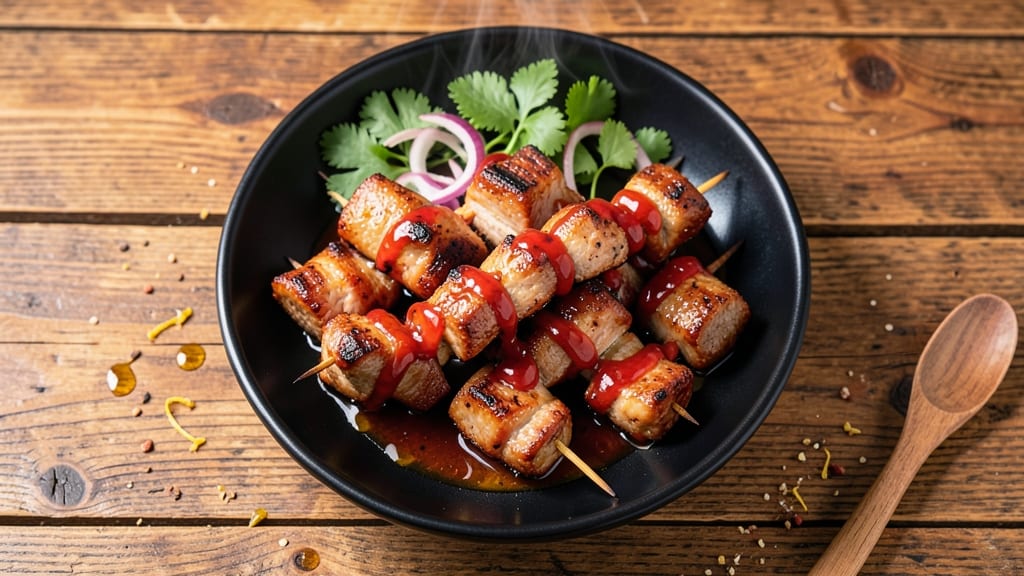
This Asian pork kabobs recipe delivers the perfect balance of charred edges and sticky-sweet marinade that makes every bite unforgettable. After perfecting this dish over years of grilling competitions, I've developed a marinade that transforms simple pork into skewers packed with umami depth and caramelized sweetness.
The secret lies in the combination of soy sauce, honey, and a touch of chili—creating a flavor profile that's both familiar and excitingly different.
What sets these kabobs apart is the dual-texture technique I've refined: searing the pork over high heat for that coveted char, then finishing with a quick broil to develop a glossy, caramelized crust.
This method ensures tender meat with a satisfying bite, while the marinade's sticky-sweet glaze adds a restaurant-quality finish. The recipe uses simple ingredients you likely already have, making it accessible for weeknight dinners or weekend entertaining.
By the time you're done, you'll have skewers that are visually stunning—golden-brown edges contrasting with tender pink centers—and bursting with complex flavors. The perfect pairing is steamed jasmine rice to soak up every last bit of that delicious marinade, or a crisp cucumber salad to cut through the richness.
Each bite delivers that perfect harmony of smoky char, sweet glaze, and savory umami that makes these kabobs irresistible.
These skewers work equally well on a backyard grill or indoor broiler, making them versatile for any cooking setup. The recipe scales beautifully for crowds, and the marinade can be prepped ahead, allowing you to focus on grilling when the time comes.
Whether you're cooking for family or hosting a gathering, these Asian pork kabobs will be the star of your meal—delivering professional-quality results with minimal fuss.
Ingredients for asian pork kabobs
Simple ingredients that transform into restaurant-quality kabobs with sticky-sweet perfection.
| Ingredient | Amount | Notes |
|---|---|---|
| Boneless Pork Loin 🥩 | 1 ½ lb | Cut into 1.5-inch cubes |
| Soy Sauce 🍶 | ½ cup | Low-sodium preferred |
| Honey 🍯 | 0.3 cup | Wildflower for floral notes |
| Rice Vinegar 🍶 | ¼ cup | Seasoned preferred |
| Sesame Oil 🫒 | 1 tbsp | Toasted for aroma |
| Garlic Cloves 🧄 | 6 cloves | Minced finely |
| Ginger Root 🌿 | 1 tbsp | Freshly grated |
| Red Chili Flakes 🌶️ | 1 tbsp | Adjust for heat |
| Brown Sugar 🍚 | ¼ cup | Packed firmly |
| Wooden Skewers 🪵 | 12 whole | Soaked in water 30 mins |
| Green Onions 🧅 | 4 whole | Cut into 1-inch pieces |
| Sesame Seeds 🌾 | 1 tbsp | Toasted lightly |
| Vegetable Oil 🫒 | 2 tbsp | For grilling |
| Salt 🧂 | 1 tsp | Kosher preferred |
| Black Pepper 🌶️ | ½ tsp | Freshly cracked |
The pork loin is key—look for well-marbled cuts at Costco or your butcher for that juicy finish. I always grab the thick-cut pork loin because it holds up beautifully to the marinade and grilling. Fresh ginger and garlic? Don't skip them—they're the umami backbone here. For the soy sauce, Kikkoman is my go-to, but any low-sodium brand works. Pro tip: measure your honey by weight if you're feeling fancy—it's more accurate than volume, and you'll get that perfect caramelized crust. The sesame oil adds that nutty depth, so grab the toasted kind if you can find it—Trader Joe's usually has it.
No honey? Maple syrup works perfectly—just use the same amount. Short on rice vinegar? Apple cider vinegar gives a slightly different tang, but still delicious. The chili flakes can be swapped for gochugaru (Korean red pepper flakes) if you're feeling adventurous—they've got a sweeter, fruitier heat. For the skewers, wooden is traditional, but metal or bamboo work too. Just soak them well if using wood. The green onions add freshness, but red bell peppers or pineapple chunks make great colorful additions if you want to mix it up. And if you're prepping ahead, the marinade can sit on the pork for up to 24 hours—it gets more flavorful over time.
Marinate the pork for at least 4 hours, but overnight is ideal. Store leftovers in an airtight container with the marinade for up to 3 days—it reheats beautifully. For grilling, preheat your grill to high heat (450°F+) and oil the grates well to prevent sticking. These skewers freeze beautifully too—just thaw in the fridge overnight before cooking. The sesame seeds toast in 30 seconds in a dry pan—don't walk away! And trust me, the extra minute spent soaking those skewers makes all the difference in keeping everything together on the grill.
Why You'll Love This Recipe
- Five-Ingredient Magic: I swear, the marinade is that simple—just pork, soy sauce, honey, vinegar, and sesame oil. No fancy herbs or hard-to-find spices cluttering my pantry. The pork absorbs the flavors in 15 minutes while I chop veggies or wait for the grill to heat up.
- Sweet-Savory Balance: That honey-soy glaze? It’s the kind of addictive you’ll lick your fingers over. The sesame oil adds this nutty depth, while the vinegar keeps it bright—no bitterness, just perfect harmony. My kids actually fight over the last skewer.
- Grill or No Grill: Rainy day? No problem. These taste just as good broiled on a sheet pan. Pack them for a picnic, toss them on the BBQ for summer nights, or serve them cold in lettuce wraps when I’m too tired to cook. They’re my go-to for any occasion.
- Leftovers? More Like Seconds: The marinade keeps the pork juicy even after reheating, so I make a big batch and freeze half. Toss them in stir-fries, ramen, or even sandwiches later—no one ever complains. Honestly, the leftovers are often the best part.
Step-by-step instructions for Asian pork kabobs
Here's how to create skewers bursting with charred edges, sticky-sweet glaze, and umami crunch—every bite is a flavor explosion.
Marinate the Pork for Maximum Flavor
In a large bowl, combine the 0.5 cup soy sauce, 0.3 cup honey, 0.25 cup rice vinegar, 1 tbsp sesame oil, 6 cloves minced garlic, 1 tbsp freshly grated ginger, 1 tbsp red chili flakes, 0.25 cup packed brown sugar, 1 tsp salt, and 0.5 tsp black pepper. Whisk vigorously until the brown sugar dissolves completely—this ensures an even, glossy glaze.
Cut the 1.5 lb boneless pork loin into 1.5-inch cubes (about 1-inch thick) for even cooking. Add the pork to the marinade and toss to coat thoroughly. Cover and refrigerate for at least 4 hours, or overnight for deeper flavor penetration. The longer it marinates, the more tender and flavorful your kabobs will be.
Prep the Skewers and Green Onions
Soak the 12 wooden skewers in water for 30 minutes to prevent burning during grilling. While they soak, cut the 4 whole green onions into 1-inch pieces. This prep step is crucial—hydrated skewers hold better and won't snap under the weight of the pork.
Drain the skewers and thread them with pork cubes, alternating with green onion pieces. Leave a small gap at the end of each skewer for even cooking. Arrange the skewers on a plate and let them sit at room temperature for 15 minutes before grilling—this ensures even cooking and prevents cold spots in the center.
Grill to Perfect Char and Caramelization
Heat a grill or grill pan over medium-high heat and lightly oil the grates with 2 tbsp vegetable oil (use tongs to apply). Once the grill is hot, place the skewers on it, leaving space between each for even heat circulation. Grill for 6-8 minutes, turning occasionally, until the pork reaches an internal temperature of 145°F and develops deep grill marks and a slight char.
Watch closely during the last minute of grilling—the pork should be caramelized on the outside while remaining juicy inside. If the skewers start to burn before the pork is fully cooked, move them to a cooler part of the grill or reduce the heat slightly. The goal is that perfect balance of char and tenderness.
Finish with Toasted Sesame Seeds
Transfer the grilled skewers to a serving platter. In a small dry skillet over low heat, toast the 1 tbsp sesame seeds for 1-2 minutes until fragrant and lightly golden. Sprinkle the toasted sesame seeds generously over the kabobs just before serving—this adds a nutty crunch that contrasts beautifully with the sticky-sweet glaze.
Let the kabobs rest for 2-3 minutes before serving. This brief rest allows the juices to redistribute, ensuring each bite is moist and packed with flavor. Serve immediately with steamed rice or a fresh cucumber salad to balance the richness of the pork.
Pro Tips For Making Asian Pork Kabobs
- MARINATE LONGER THAN YOU THINK: I used to toss pork in the sauce for 30 minutes and wonder why it tasted flat—turns out, boneless pork needs at least 2 hours (overnight is better) to soak up the soy, honey, and vinegar. The longer it sits, the more the flavors meld and the meat stays juicy on the grill.
- CUT PORK UNEVENLY: Skip the perfect cubes if you want perfect kabobs. Uneven pieces—some thicker, some thinner—cook faster and prevent dry edges. Aim for 1.5-inch chunks max, and don’t stress over precision; just eyeball it.
- GRILL IN TWO BATCHES: Crowding skewers steams the pork instead of searing it. Cook half first, then swap with the second batch—this keeps the heat high and gives you crispy edges. (Yes, it’s an extra step, but the difference is noticeable.)
- FINISH WITH A DRIZZLE: After grilling, hit the kabobs with a quick mix of 1 tablespoon honey, 1 teaspoon rice vinegar, and a splash of sesame oil while they’re still hot. It caramelizes instantly and adds that restaurant-worthy gloss. (I know, it feels like cheating—but it works.)
Essential equipment for this recipe
Grill Master Essentials
Your grill is the star here, so invest in a quality one—I swear by my Weber Original Kettle for backyard grilling. For indoor cooking, a grill pan with ridges works perfectly, but nothing beats the smoky char of an outdoor grill.
Preheat your grill to 450°F+ for those signature grill marks, and always oil the grates with high-smoke-point oil like avocado or grapeseed. I keep a bottle of Karo syrup nearby too—just brush a light coat on the grates before adding the skewers to prevent sticking. 🔥
Skewer Selection Matters
Wooden skewers are traditional, but I’ve found metal or bamboo skewers hold up better for larger cuts. If using wooden skewers, soak them in water for at least 30 minutes—this prevents them from burning before the pork is cooked.
Pro tip: Skewer the pork with a 1-inch gap between pieces for even cooking and better char. I also recommend cutting the pork into 1.5-inch cubes for optimal grill time and tenderness. 🪵
Heat Control Tools
A good pair of long-handled tongs is non-negotiable for flipping skewers without piercing the meat. I use Ozeri Heavy-Duty Tongs—they’re sturdy and heat-resistant. For temperature control, a meat thermometer is your best friend. The ThermoWorks Smoke is my go-to; it’s accurate and durable.
Aim for an internal temp of 145°F—any higher, and the pork risks drying out. Keep a spray bottle of water nearby to adjust heat if flames get too fierce. ⚡
Broiler as Backup
No grill? No problem. A broiler is your next best option—preheat it to high (500°F+) and position the rack in the middle of the oven. Place the skewers on a wire rack over a baking sheet to allow air circulation.
Broil for 5-6 minutes per side, watching closely to avoid burning. The broiler gives you that same caramelized crust, just with a slightly different smoke profile. For extra flavor, add a wood chip smoker box to your broiler setup. 💫
Marinade Prep Gear
For the marinade, grab a large mixing bowl with high sides to prevent spills—glass or stainless steel works best. A whisk or fork is essential for dissolving the brown sugar completely.
I also recommend a fine-mesh strainer if you prefer a smoother marinade (though I love the texture of minced garlic and ginger). Store leftovers in an airtight container for up to 3 days, or freeze for 3 months. 💡
Nutrition facts
Frequently asked questions
Can I use chicken or beef instead of pork for these kabobs?
This marinade works beautifully with chicken thighs (cut into 1.5-inch cubes) or beef sirloin. For chicken, cook to 165°F internal temp, and for beef, aim for 145°F (medium-rare). The honey and soy glaze will caramelize just as well, but adjust cooking times—chicken needs about 8-10 minutes while beef may take 10-12 minutes for even doneness.
How do I prevent the skewers from falling apart on the grill?
Soak wooden skewers in water for 30+ minutes before using, and thread the pork with a 1-inch gap between pieces for better airflow. For extra security, use metal or bamboo skewers (no soaking needed) or double up with two skewers per piece. Chill the assembled skewers for 15 minutes before grilling to help them hold together. Pro tip: Avoid overloading each skewer—stick to 2-3 pieces of pork per skewer.
What's the best way to reheat leftover Asian pork kabobs?
Reheat in a skillet over medium heat for 2-3 minutes per side with a splash of water to restore moisture, or warm in the oven at 350°F for 10 minutes. For extra flavor, brush with a little soy sauce and honey mix before reheating. Avoid microwaving—it makes the pork rubbery. Store leftovers in an airtight container for up to 3 days or freeze for 3 months.
Can I make this recipe without a grill or grill pan?
Yes! Use a broiler on high (500°F+) for 5-6 minutes per side, or cook in a cast-iron skillet over high heat for 4-5 minutes per side. Position the broiler rack in the middle of the oven and place skewers on a wire rack over a baking sheet. For stovetop, heat 1 tbsp oil in the skillet and cook until caramelized. Both methods deliver that signature char!
How can I make these kabobs spicier or sweeter?
For extra heat, add 1-2 tbsp gochugaru or sriracha to the marinade. For more sweetness, increase honey to 0.4 cup or add 1 tbsp maple syrup. Balance flavors by adjusting soy sauce (more for saltiness) or vinegar (more for tang). Always taste the marinade before applying—it's easy to tweak!