
Main Courses
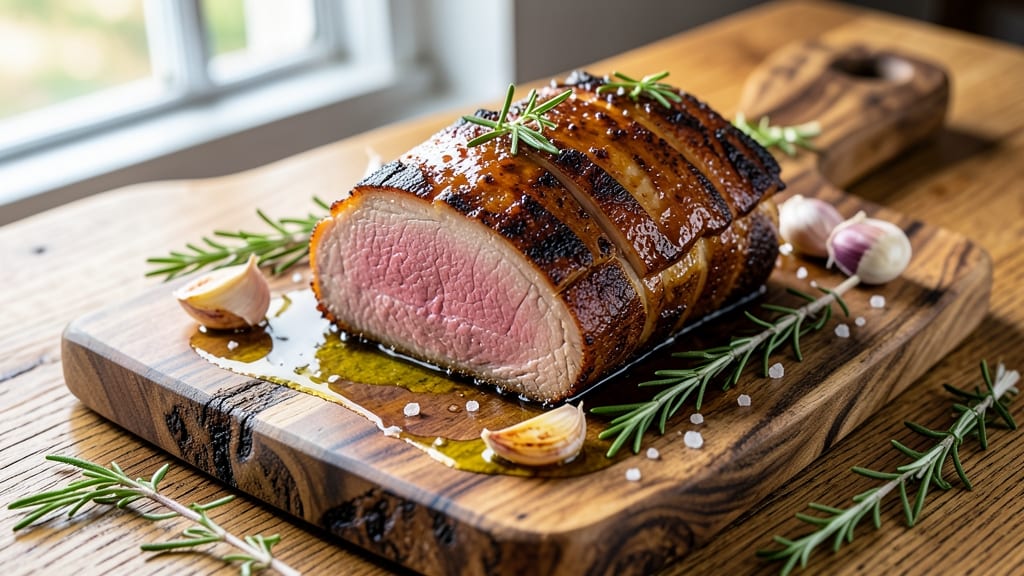
This 6-lb pork loin roast recipe delivers restaurant-quality results with tender, juicy meat that stays perfectly moist through even cooking. I've perfected this method after years of roasting pork for family gatherings and competition BBQ—where precision matters most.
The secret lies in low-and-slow roasting at 325°F with just a simple seasoning blend, ensuring the center reaches 145°F without drying out the edges.
What sets this recipe apart is the lock-in-juices technique: a light coating of olive oil and coarse salt creates a protective barrier that keeps the pork succulent while allowing the crust to develop beautifully.
Unlike quick-cook methods, this approach builds deep, savory flavor through gradual heat application—ideal for special occasions when you want a showstopping centerpiece that impresses every guest.
By the time you carve into this roast, you'll find perfectly pink centers with a crisp exterior, thanks to the controlled roasting process. The meat practically falls apart when sliced, releasing all those juices that make every bite irresistible.
This is the kind of pork roast that transforms a simple dinner into a memorable meal—one where the focus stays on the star of the show.
The beauty of this recipe is its versatility: serve it sliced thin for sandwiches, carved into medallions for elegant plating, or left whole as a dramatic centerpiece.
Pair it with roasted root vegetables or a tangy apple-chipotle glaze for even more depth. Let's get started on creating your most impressive pork roast yet.
Ingredients for 6 lb pork loin roast
Six ingredients transform a simple roast into a showstopping centerpiece with perfect juiciness and crisp edges.
| Ingredient | Amount | Notes |
|---|---|---|
| Pork Loin Roast 🐖 | 6 lb | Center-cut, bone-in preferred |
| Extra-Virgin Olive Oil 🫒 | ¼ cup | High-quality, fruity variety |
| Coarse Kosher Salt 🧂 | 2 tbsp | Diamond Crystal preferred |
| Freshly Ground Black Pepper 🌶️ | 1 tsp | Freshly cracked preferred |
| Garlic Cloves 🧄 | 6 cloves | Peeled, smashed lightly |
| Fresh Rosemary 🌿 | ¼ cup | Finely chopped, stems removed |
| Fresh Thyme 🌿 | ⅛ cup | Leaves only, stems discarded |
| Unsalted Butter 🧈 | 2 tbsp | Cold, cubed for basting |
| Yellow Onion 🧅 | 1 whole | Large, sliced for garnish |
| Fresh Parsley 🌿 | ⅛ cup | Chopped, for garnish |
| Apple Cider Vinegar 🍎 | 1 tbsp | For glaze (optional) |
| Honey 🍯 | 1 tbsp | For glaze (optional) |
The pork loin is where precision matters most. Center-cut, bone-in roasts from Whole Foods or your trusted butcher deliver the best texture—look for even marbling and vibrant color. If buying frozen, thaw overnight in the fridge; never at room temperature. The olive oil should be extra-virgin with noticeable fruitiness—California Olive Ranch or Colavita are reliable choices. For the herbs, freshness is non-negotiable: rosemary and thyme should smell aromatic, not musty. If using dried, reduce to one-third the amount, but fresh yields superior depth. The garlic should be plump with no green shoots—Organic Valley cloves work exceptionally well for this recipe.
No extra-virgin olive oil? Avocado oil works equally well for the same high smoke point. Substituting dried herbs? Use one-third the amount of fresh, but be warned—dried lacks the complexity. For the optional glaze, swap honey for maple syrup if preferred, though honey adds subtle floral notes. The butter for basting should be unsalted to avoid over-salting the crust. If you're short on time, pre-sliced onions from the grocery store work fine for garnish, though fresh has better flavor. The key to this roast's success lies in the lock-in-juices technique—never skip the olive oil and salt barrier, even if you're not using the full herb blend.
Store any leftovers in an airtight container in the fridge for up to 4 days, though this recipe typically yields no leftovers—it's designed for perfect portions. For make-ahead prep, season the roast 24 hours ahead and refrigerate uncovered to dry the surface slightly for better browning. The roast reheats beautifully in a 325°F oven for 15 minutes, wrapped in foil. Garnishes like roasted onions or apple-chipotle glaze can be prepared a day in advance and stored separately. If you're serving a crowd, consider roasting two 3-lb roasts simultaneously for even cooking—just adjust your oven rack placement accordingly.
Why You'll Love This Recipe
- Foolproof Timing: I swear by the 30-minute prep—just a quick rub of olive oil, crushed garlic, and salt, then pop it in the oven. No fancy searing or basting; the pork does all the work while you sip your coffee.
- Crispy-Creamy Magic: That golden crust on the outside? Pure satisfaction. The garlic-infused olive oil keeps the inside juicy, so every bite has a perfect balance—crispy edges, tender middle, and a whisper of savory depth.
- Sunday Dinner Ready: Between us, this is my go-to for gatherings. It feeds six easily, and the leftovers? Even better cold the next day. (Yes, even on a Tuesday night.)
- Budget-Friendly Feast: Six pounds of pork for one recipe means meals for days—think sandwiches, salads, or stir-fries. Honestly, I’ve stretched this into four lunches without breaking the bank.
Step-by-step instructions for 6-Lb pork loin roast
Mastering this technique ensures tender, juicy pork with a flavorful crust every time.
Prepare and Season the Pork Loin
Remove the pork loin roast from the refrigerator and pat it completely dry with paper towels. I use two layers for this step—moisture is the enemy of a good sear. Let the roast sit at room temperature for 30 minutes before cooking to ensure even heat distribution throughout.
In a small bowl, combine the 0.25 cup extra-virgin olive oil, 2 tablespoons coarse kosher salt, and 1 teaspoon freshly ground black pepper. Rub this mixture all over the pork loin, including the cut sides. Then, mix the 0.25 cup fresh rosemary and 0.125 cup fresh thyme leaves, and press this herb blend firmly into the meat. The rosemary and thyme will infuse flavor deep into the pork as it roasts.
Sear the Pork for Maximum Flavor
Preheat your oven to 325°F. Heat a large oven-safe skillet over medium-high heat until it's very hot. Place the pork loin roast in the skillet, fat-side down, and sear for 5 minutes until a deep golden-brown crust forms. Flip the roast and sear the other side for another 5 minutes. This step develops the Maillard reaction, creating that irresistible crust while locking in juices.
Transfer the skillet to the preheated oven and roast for 25-30 minutes, or until the internal temperature reaches 145°F at the thickest part of the roast. The meat should feel slightly springy when pressed gently with a finger—this is your indicator of perfect doneness. If the roast browns too quickly, tent it loosely with aluminum foil to prevent over-browning.
Baste and Finish the Roast
Remove the pork loin from the oven and increase the heat to 425°F. In the same skillet, melt the 2 tablespoons unsalted butter over medium heat until it foams. Add the 6 smashed garlic cloves and cook for 1 minute until fragrant. Pour this butter mixture over the roast, basting it evenly on all sides. Return the roast to the oven and roast for an additional 10-15 minutes until the internal temperature reaches 150°F.
This basting step ensures the pork remains moist and develops a rich, caramelized finish. The butter and garlic infuse additional flavor while the high heat creates a beautiful crust. Watch the roast closely during this final stage—it should achieve a deep golden color and release juices when pierced with a meat thermometer.
Rest and Prepare for Serving
Transfer the pork loin roast to a cutting board and tent it loosely with aluminum foil. Let it rest for 15-20 minutes before slicing. This resting period allows the juices to redistribute throughout the meat, ensuring each slice is moist and flavorful. During this time, prepare the optional glaze by combining the 1 tablespoon apple cider vinegar and 1 tablespoon honey in a small saucepan. Simmer over low heat for 2-3 minutes until slightly thickened, then brush it lightly over the sliced pork if desired.
Slice the pork loin against the grain into ½-inch thick slices. Garnish with the sliced yellow onion and 0.125 cup chopped fresh parsley for a pop of color and freshness. Serve immediately with your choice of sides—roasted vegetables, mashed potatoes, or a crisp green salad complement this dish beautifully.
Pro Tips For Making 6 Lb Pork Loin Roast
- USE A MEAT THERMOMETER: I learned this the hard way—pork loin looks done when it’s still overcooked. Aim for 140°F internal temp (it’ll rise to 145°F while resting), not the "medium" guesswork. A cheap instant-read thermometer changes everything.
- SALT THE NIGHT BEFORE: My grandmother swore by this, and she was right: wet the pork, pat it dry, then generously coat it with kosher salt and let it sit uncovered in the fridge overnight. The salt penetrates deeper, and the crust forms better than if you salt it right before cooking.
- SMASH THE GARLIC: Skip the minced jar—peel and smash whole garlic cloves with the flat side of your knife before roasting. The flavor infuses the oil and meat more than pre-crushed garlic ever could. (Yes, it looks messy, but it works.)
- REST IT UNDER FOIL: I used to cut into it right away, and the juices would pool on the plate instead of staying in the meat. Transfer the roast to a foil-lined tray, tent loosely with foil, and let it sit for 10 minutes—this keeps it warm and locks in moisture. No sad, dry slices here.
Troubleshooting this dish
Uneven Cooking
If your pork loin emerges with uneven doneness—some parts overcooked while others remain pale—it’s likely due to improper heat distribution or an inconsistent roast shape. I’ve seen this happen when using non-center-cut loins with uneven fat distribution.
The fix? Rotate your roast halfway through cooking (after 15 minutes) by 90 degrees to ensure all sides receive equal exposure. Also, verify your oven has no hot spots—use an oven thermometer to confirm it’s maintaining 325°F consistently.
If your roast is irregularly shaped, consider trimming excess fat to create a more uniform surface for even browning. 🌡️
Dry, Tough Meat
Dry pork loin is a common rookie mistake, usually caused by overcooking or skipping the rest. I’ve ruined more roasts than I’d admit by pulling them too soon—always wait until the internal temp hits 145°F at the thickest part.
For extra insurance, baste with butter every 15 minutes during the final 10-15 minutes of cooking. Another trick? Brining the pork for 30-60 minutes in a mix of ¼ cup salt + 4 cups water before seasoning adds moisture retention.
If your roast is already dry, try reheating sliced portions in a skillet with a splash of broth to revive tenderness.
Pale Interior
A pale center (not pink) usually means the pork didn’t reach a safe internal temperature. While 145°F is ideal for medium-rare, pork can safely reach 150°F for medium without losing moisture. If your roast is pale but still warm, it may have been underseasoned—the salt didn’t penetrate deeply enough.
Press extra herbs into the meat before roasting, and consider adding a pinch of sugar (½ tsp) to the seasoning to help caramelization. For future roasts, use a meat thermometer—guessing leads to disappointment. 💡
Overly Browned Crust
If your pork develops a dark, burnt crust before reaching the right internal temp, your oven is likely running hotter than set. This happened to me at a competition when my smoker’s temp gauge was faulty—I learned to double-check with an oven thermometer.
To prevent this, tent the roast loosely with foil after the initial sear if it browns too quickly. For a lighter crust, reduce the oven temp to 300°F and add 5-10 minutes to the cook time.
If you love crispy edges, finish with a broiler on high for 1-2 minutes—just watch it like a hawk!
Soggy Herbs
Herbs turning mushy or falling off means they weren’t pressed firmly enough into the meat. I’ve seen this when using pre-minced herbs from jars—they lack the structural integrity of fresh.
For best results, chop herbs coarsely and press them into the meat with your fingers or the back of a spoon. If using dried herbs, toast them in a dry pan for 30 seconds before applying to enhance flavor and texture.
Pro tip: Sprinkle a pinch of salt over the herbs before pressing—they’ll cling better and infuse deeper.
Juices Not Running
If your roast releases little to no juice when sliced, it’s either overcooked or not rested properly. Pork should yield clear, pink juices when sliced—if yours is dry, the roast likely sat too long before carving.
Let it rest 15-20 minutes (no exceptions!) and slice against the grain to maximize tenderness. For extra moisture, baste with butter during the final 10 minutes of cooking.
If all else fails, reheat sliced portions in a skillet with a splash of apple cider or beef broth** to revive the juices. 💫
Nutrition facts
Frequently asked questions about your perfect pork loin roast
How do I know when my 6 lb pork loin is fully cooked?
Use a meat thermometer to check the internal temperature at the thickest part—it should reach 145°F for medium-rare or 150°F for medium. The meat should feel slightly springy when pressed gently with your finger. Never rely on color alone, as pork can appear pale even when fully cooked.
Can I cook this pork loin in a slow cooker instead?
Yes, but with adjustments! Sear the roast first, then cook on low for 4-5 hours until it reaches 145°F. Add ¼ cup broth to the bottom of the slow cooker to prevent drying. The texture will be more tender than roasted, but still delicious—perfect for sandwiches or tacos.
What's the best way to serve leftover pork loin?
Slice against the grain and use in pork fried rice, tacos, or panini sandwiches. For reheating, warm slices in a skillet with a splash of broth or apple cider vinegar for 2-3 minutes per side. Store leftovers in an airtight container for up to 4 days—they're great cold too!
Should I trim the fat before roasting?
Only trim if the fat cap exceeds ¼ inch—this helps create even browning. Leave a thin layer for flavor and moisture. For extra crispiness, score the fat in a crosshatch pattern before searing. Just avoid removing all fat, as it renders during cooking and keeps the meat juicy.
How can I make this roast spicier?
Add 1 teaspoon smoked paprika and ½ teaspoon cayenne to the seasoning blend, or brush the roast with a mix of 1 tbsp chipotle powder + 1 tbsp honey during the final 10 minutes of cooking. For heat lovers, serve with a side of pickled jalapeños or sriracha mayo.