
Main Courses
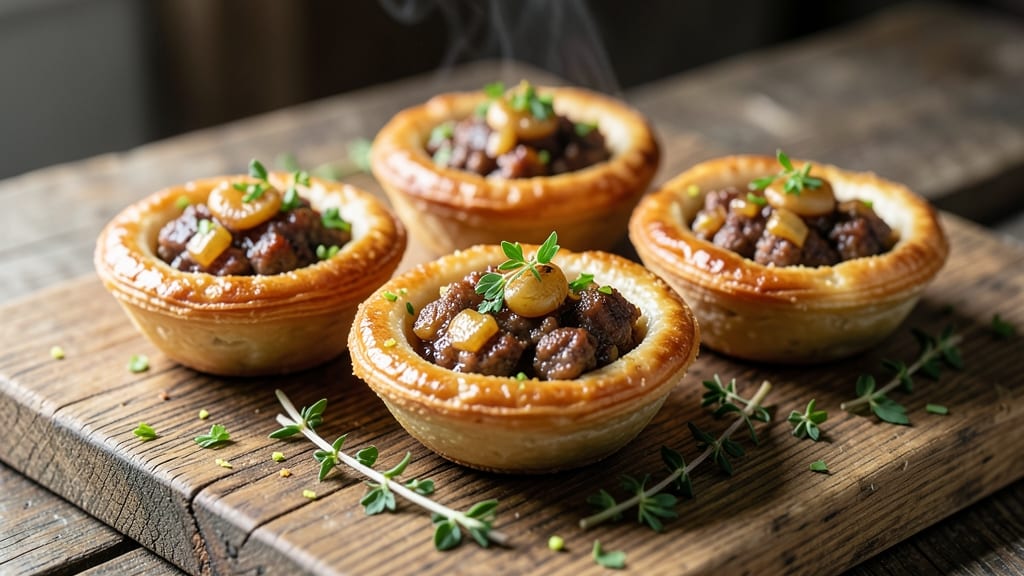
This mini pork pie recipe delivers the perfect balance of flaky pastry and savory meat filling that tastes like a classic British pub dish. 🌟 I've spent years perfecting the technique for achieving that signature crisp, golden crust while keeping the filling rich and tender—just like my grandmother used to make, but with a few modern shortcuts for home cooks.
The secret to success lies in the pastry—a suet-based dough that stays tender despite the high heat of baking. For the filling, I use a blend of ground pork and herbs that develop deep, savory flavors while staying moist.
The key is cooking the filling just until it's fully done, then letting it cool slightly before assembling to prevent soggy bottoms.
Once assembled, these little pies transform into bite-sized masterpieces with crisp edges and a tender, flavorful center. The filling pulls away from the crust perfectly, creating that satisfying contrast with every bite.
They're perfect for appetizers, game day, or even a cozy weeknight dinner when you want something special without the fuss.
With just a few simple tools—pie molds, a pastry brush, and a little patience—you'll have a batch of these delicious mini pork pies ready to impress. Here's everything you need to make them from scratch, including my foolproof techniques for handling the dough and ensuring that perfect seal.
Ingredients for mini pork pie
Twelve ingredients for twelve perfect mini pork pies—flaky crust, rich filling, and all the British pub charm.
| Ingredient | Amount | Notes |
|---|---|---|
| Ground Pork 🐖 | 1 ½ lb | Lean ground pork preferred |
| Suet Pastry Dough 🥧 | 2 sheets | Store-bought or homemade |
| Yellow Onion 🧅 | 1 medium | Finely chopped, about 1 cup |
| Garlic Cloves 🧄 | 3 cloves | Minced for filling flavor |
| Fresh Thyme Leaves 🌿 | ½ cup | Chopped, or 1 tbsp dried |
| Fresh Parsley Leaves 🌿 | ¼ cup | Chopped, for freshness |
| Beef Stock 🍲 | ½ cup | Low-sodium preferred |
| Whole Milk 🥛 | ¼ cup | For richness in filling |
| All-Purpose Flour 🌾 | 1 tbsp | For thickening filling |
| Salt 🧂 | 1 ½ tsp | Kosher or sea salt |
| Ground Black Pepper 🌶️ | ½ tsp | Freshly ground preferred |
| Mustard Powder 🍯 | ½ tsp | For subtle tang |
| Egg 🥚 | 1 whole | For egg wash |
| Mini Pie Molds 🍰 | 12 whole | 3-inch diameter preferred |
The suet pastry is non-negotiable for that iconic flaky texture. Dr. Oetker or Goodfellows are my go-tos for store-bought sheets—they're made with real suet, not that waxy shortcut stuff. If you're ambitious, homemade suet pastry (equal parts suet, flour, and cold water) gives you that restaurant-quality result. The ground pork should be lean but not too dry—butcher shops usually have the best quality. For the onion, yellow or white works best; red gets too bitter when cooked down. And trust me on the thyme—fresh is worth the extra minute of chopping.
No suet pastry? Shortcrust pastry with an extra tbsp of butter gets you close, though it won't be quite as tender. Short on thyme? Dried thyme at one-third the amount works, but add a pinch of savory for depth. The beef stock can be swapped for chicken stock, but pork bones make it richer. Mustard powder giving you trouble? Dijon mustard at half the amount adds tang without powder. And if you don't have mini molds, ramekins or muffin tins work in a pinch—just grease them well.
Pastry dough keeps 3 days wrapped in the fridge or 3 months frozen. Ground pork stays fresh 2 days in the fridge—use it up fast. Assembled pies can be baked ahead and reheated for 10 minutes at 350°F to restore crispness. I always make a double batch—they freeze beautifully for up to 2 months. Just thaw overnight in the fridge before reheating. Pro tip: brush the crust with milk before baking for that golden, glossy finish—worth the extra 30 seconds.
Why You'll Love This Recipe
- No-Rolling Required: I swear by this dough trick—just press the suet pastry into mini muffin tins, no fuss. The flaky layers form as they bake, and honestly? It’s the kind of shortcut that makes me feel like a pro without extra effort.
- Savory Umami Bomb: That ground pork, softened with onion and garlic until it’s almost melty, then kissed with thyme? It’s the kind of filling that makes you close your eyes mid-bite. The pastry soaks up just enough flavor to become part of the party, not just an afterthought.
- Picnic-Proof Portions: Between us, these are my go-to for potlucks, lunchboxes, or even a quick snack when my kid’s soccer practice runs late. They reheat beautifully—crispy outside, warm inside—and no one ever leaves one behind. (Yes, even the picky eaters.)
- Budget-Friendly Batch: A pound of ground pork and a block of suet dough stretch far—I’ve fed six people with what costs me less than a takeout order. Plus, leftovers? They freeze like a dream, so I’m always covered for lazy mornings or last-minute cravings.
Step-by-step instructions for mini pork pies
Here's how to create golden, flaky crusts with rich, savory filling!
👨🍳 Step 1: Prepare the Savory Filling
In a large skillet over medium heat, add the 1.5 lb ground pork and cook until it loses its raw color and begins to brown, breaking it apart with a wooden spoon. This should take about 5-7 minutes. You'll want to keep the heat steady—too high and it'll burn, too low and it'll steam instead of brown.
Once the pork is nicely browned, add the finely chopped yellow onion and cook for another 3-4 minutes until softened. Stir in the minced garlic cloves and cook for just 30 seconds—don't let it burn, or it'll turn bitter. Here's where the magic happens: add the 0.5 cup fresh thyme leaves, 0.25 cup fresh parsley leaves, 0.5 tsp mustard powder, 0.5 tsp ground black pepper, and 1.5 tsp salt. Stir everything together and cook for 1 minute to let the flavors meld.
Pour in the 0.5 cup beef stock and 0.25 cup whole milk, scraping up any browned bits from the bottom of the pan. These bits are packed with flavor! Bring the mixture to a gentle simmer, then sprinkle in the 1 tbsp all-purpose flour and stir constantly for 2-3 minutes until the filling thickens enough to coat the back of a spoon. Remove from heat and let it cool slightly—it'll thicken more as it rests.
🥘 Step 2: Assemble the Mini Pies
Preheat your oven to 425°F and grease the 12 mini pie molds lightly with butter or oil—this prevents sticking and ensures easy removal. Roll out one sheet of the suet pastry dough on a lightly floured surface until it's about 1/8-inch thick. Cut into 12 circles large enough to fit into your molds with a little overhang.
Press each dough circle into a mold, gently shaping it to conform to the edges. Spoon about 1 tablespoon of the cooled pork filling into each mold, pressing it down lightly but not packing it too tightly. The filling should come up to about 1/4-inch from the top edge. Here's the thing—don't overfill or the pies will burst when baking.
Roll out the second sheet of pastry dough and cut 12 more circles. Place one over each filled mold, pressing gently to seal the edges. Use a fork to crimp the edges decoratively, then use a sharp knife to trim off any excess dough. Poke a few small holes in the top of each pie with a fork to allow steam to escape—this prevents them from blowing up in the oven.
🔥 Step 3: Bake to Golden Perfection
Place the assembled mini pies on a baking sheet lined with parchment paper. Brush the tops generously with the beaten egg using the back of a spoon or pastry brush—this creates that beautiful golden finish. Bake in the preheated 425°F oven for 20-25 minutes until the crusts are deep golden brown and the filling is bubbling through the holes.
I know it's tempting to open the oven early to check, but resist! Every time you open the oven door, you lose heat and steam, which can cause the crusts to puff up unevenly. The pies are done when they're golden and the crusts sound hollow when tapped gently with a knuckle.
Remove the pies from the oven and let them cool on a wire rack for 10 minutes before carefully removing them from the molds. Serve warm or at room temperature—they're even better the next day when the flavors have had time to meld. These mini pork pies are perfect for appetizers, picnics, or a cozy snack with a cup of tea!
Pro Tips For Making Mini Pork Pie
- Crush That Onion: Don’t just chop the yellow onion—give it a rough pulse in the food processor first. This melts it down into a fine paste that blends seamlessly into the pork filling, so you won’t taste chunks later. (Yes, even if you’re one of those people who thinks food processors are for lazy cooks.)
- Salt the Pork Twice: Season the ground pork before cooking, then add another pinch after browning. The first layer seasons the meat, while the second balances any dryness from the suet dough. I learned this the hard way—underseasoned pork pie filling tastes like it’s hiding something.
- Chill the Dough Hard: Wrap the suet pastry in plastic and refrigerate it for at least 30 minutes before rolling. Cold dough handles better, seals tighter, and won’t shrink into sad little blobs when baking. (Trust me, I’ve seen it happen.)
- Bake Low and Slow: Mini pork pies need a gentle 375°F (190°C) oven, not the 425°F (220°C) blast you might crave. High heat makes the suet dough greasy and the filling rubbery—this temp guarantees a golden crust without sacrificing texture. (Patience, even if your stomach growls.)
Essential equipment for great mini pork pie
Pie Molds
You'll need 12 mini pie molds with a 3-inch diameter for perfect-sized pork pies. I use Wilton mini tart pans because they release cleanly and create consistent shapes.
If you can't find mini molds, ramekins or muffin tins work in a pinch—just grease them well with butter or oil before assembling. For a rustic look, try mini cast iron skillets preheated in the oven. 🍰
Pastry Tools
A rolling pin is essential for rolling out the suet pastry dough to an even 1/8-inch thickness. I prefer a French-style marble rolling pin—it's heavy enough to handle suet dough without sticking.
For shaping, keep a sharp chef's knife and pastry brush nearby. A fork helps create decorative crimped edges, and a small offset spatula makes egg wash application easier. 🥧
Cooking Utensils
Start with a large skillet (I use 10-inch cast iron) for browning the pork filling—its weight helps distribute heat evenly. A wooden spoon prevents sticking while breaking up the meat.
For assembly, a small ladle helps portion the filling precisely. A wire cooling rack is a must for cooling baked pies without soggy bottoms. 🔥
Specialty Items
For the golden finish, beat 1 egg with a fork for egg wash. A pastry bag with a small round tip makes filling the molds cleaner, though a spoon works fine.
Keep beef stock and whole milk on hand for the filling—low-sodium stock prevents over-salting. A measuring spoon set ensures accurate seasoning. 🥛
Optional Extras
Add a mustard glaze (mix 1 tbsp Dijon mustard with 1 tbsp honey) for a tangy finish. A mini muffin tin can double as a mold if needed. For presentation, fresh parsley adds color. I keep mini serving trays ready for appetizer displays. 🌿
Storage Solutions
Store baked pies in an airtight container at room temperature for 2 days or freeze for 2 months. Use parchment-lined freezer bags for freezing—squeeze out air to prevent freezer burn. A small baking dish helps reheat pies at 350°F for 10 minutes to restore crispness. 🧊
Nutrition facts
Frequently asked questions
Can I make these mini pork pies without suet pastry?
Yes, you can use shortcrust pastry with an extra 1 tbsp butter per 1 cup flour for a close substitute. For extra tenderness, add 2 tbsp cold grated onion to the dough. The texture won't be quite as flaky, but it'll still be delicious! The key is to keep everything cold while handling.
How do I prevent soggy bottoms in my mini pork pies?
There are two critical steps: cool the filling completely before assembling, and pre-bake the bottom crusts for 3-4 minutes at 375°F before adding filling. This creates a barrier that prevents moisture from seeping through. Also, avoid overfilling—the filling should come to 1/4-inch from the top edge.
Can I make the filling ahead of time?
The filling keeps well in the refrigerator for 3 days or can be frozen for 3 months. When reheating, warm it gently on the stove with 1 tbsp extra stock to restore moisture. For best results, let it cool completely before assembling the pies to maintain crisp crusts.
What's the best way to reheat leftover mini pork pies?
For crispy results, place pies on a baking sheet and reheat at 350°F for 10-12 minutes until golden. If you're short on time, the microwave works in 20-second bursts, but they'll be softer. To revive completely cooled pies, brush with a little milk before reheating for extra crispness.
Can I use ground chicken instead of pork?
While it's possible, the flavor will be noticeably different. Ground chicken has a milder taste, so you'll want to boost the seasoning with an extra 0.25 tsp each of thyme and mustard powder. For best results, use ground turkey with 5% fat—it holds together better and gives a closer texture to pork.