
Main Courses
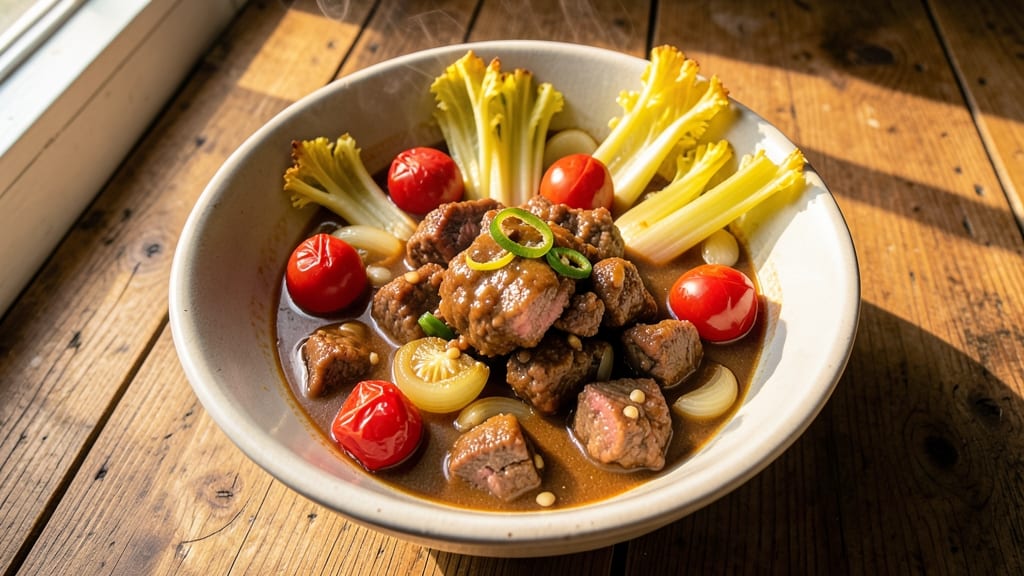
This Filipino-style minced pork recipe transforms simple ingredients into crispy celery crowns blanketed in a tangy soy-vinegar sauce that tastes like home. The secret lies in the marinade—garlic, vinegar, and soy sauce work together to tenderize the meat while building deep umami flavor.
My grandmother used to make this for family gatherings, and it always disappeared first.
The magic happens in two stages: first, the pork is seared until golden, then simmered in a rich sauce that caramelizes into a glossy finish. Traditional Filipino techniques like crisping the celery crowns separately add texture contrast that makes every bite exciting.
This isn't just a recipe—it's a taste of nostalgia wrapped in comforting flavors.
What you'll end up with is a dish that's restaurant-quality without requiring special skills. The pork stays tender and juicy, the sauce is perfectly balanced between sweet, sour, and savory, and those crispy celery crowns add a satisfying crunch.
Serve it with steamed rice and a side of garlic rice to soak up every last drop of that delicious sauce.
Perfect for weeknight dinners or special occasions, this recipe delivers authentic Filipino flavors that will have everyone asking for seconds. The best part? It comes together in under an hour with ingredients you likely already have on hand. Let's get cooking!
Ingredients for minced pork recipe filipino style
Authentic Filipino flavors start with these simple yet transformative ingredients.
| Ingredient | Amount | Notes |
|---|---|---|
| Ground Pork 🐷 | 1 ½ lb | Freshly ground for best texture |
| Celery Stems 🧅 | 4 whole | Cut into 3-inch crowns |
| Yellow Onion 🧅 | 1 whole | Medium, finely diced |
| Garlic Cloves 🧄 | 6 cloves | Minced, for marinade |
| Canned Tomatoes 🍅 | 1 can | 15 oz, crushed by hand |
| Cane Vinegar 🍶 | ½ cup | White or apple cider vinegar |
| Soy Sauce 🍜 | ½ cup | Light or all-purpose |
| Brown Sugar 🍚 | ¼ cup | Packed, for balance |
| Olive Oil 🫒 | 2 tbsp | Extra-virgin for frying |
| Salt 🧂 | 1 ½ tsp | Diamond Crystal preferred |
| Black Pepper 🌶️ | ½ tsp | Freshly ground for heat |
| Ground Black Peppercorns 🌶️ | ¼ tsp | For garnish |
| Green Onions 🧅 | 3 whole | Sliced, for garnish |
| Vegetable Oil 🫒 | ½ cup | For deep-frying celery |
The ground pork is the heart of this dish, so choose freshly ground pork from the butcher counter for maximum tenderness. Filipino markets often carry pre-minced pork, but you can also pulse pork shoulder in a food processor for that classic texture. The celery crowns need to be crisped perfectly—look for firm, pale green celery with no brown spots. For the vinegar, Filipino cane vinegar is ideal, but white or apple cider vinegar work well in a pinch. The soy sauce should be light and free of additives—Lee Kum Kee or Kikkoman are reliable brands. Brown sugar adds depth, so don't skip it; muscovado sugar would be even better if you can find it.
No cane vinegar? White vinegar or apple cider vinegar will work, though the flavor profile shifts slightly. Running short on soy sauce? Coconut aminos or even extra Worcestershire sauce can bridge the gap, though the umami won't be identical. The tomatoes can be fresh if you prefer, but canned San Marzano tomatoes are more consistent. For the celery crowns, if you can't find thick celery stems, substitute with leeks or fennel bulbs cut into similar lengths. The black peppercorns should be freshly ground—pre-ground loses its punch quickly. If you're making this ahead, prep the marinade first and let the pork soak for up to 30 minutes to maximize tenderness.
This dish reheats beautifully—simmer the pork and sauce on low heat for 5-10 minutes before serving. The crispy celery crowns are best eaten fresh, but you can reheat them in a 350°F oven for 3-5 minutes to restore some crunch. Store the pork mixture in an airtight container for up to 5 days in the fridge, and the sauce alone keeps for 1 week. For longer storage, freeze portions of the pork mixture for up to 3 months. The celery crowns lose crispness when reheated, so it's best to fry them fresh when serving. If you're prepping for a crowd, double the sauce—it's versatile for rice dishes or even as a dipping sauce.
Why You'll Love This Recipe
- One-Pot Magic: I swear by this recipe when I’m too tired to scrub pots—just brown the pork, toss in the onions, celery, and garlic, then let the canned tomatoes do their thing. That’s it. The celery softens into the sauce, so no chopping leftovers to hide.
- Garlic Bomb: Between us, the garlic here isn’t just background flavor—it’s the star. I double the cloves (yes, really) and let them sizzle until the edges turn golden. That crispy, toasty bite? It’s the secret that makes this dish dangerously good.
- Lunchbox Hero: This keeps like a champ in the fridge for days, and I pack it cold or reheated—both work. The pork stays juicy, the tomatoes thicken into a glossy sauce, and my kids actually eat their veggies (the celery, sneaky but effective).
- Budget Win: Ground pork is affordable, canned tomatoes last forever, and I stretch this into two meals by serving it over rice one night and stuffing it into tortillas the next. No waste, no guilt—just pure, satisfying food.
Step-by-step instructions for Filipino-style minced pork
Here's how to achieve that perfect balance of crispy celery crowns and rich, tangy pork sauce.
Prepare the Celery Crowns for Frying
Cut the 4 whole celery stems into 3-inch crowns, keeping the leafy tops intact. This preserves their natural structure for frying. In a medium bowl, whisk together 2 tbsp olive oil, 1.5 tsp salt, and 0.5 tsp black pepper. Toss the celery crowns in this mixture until evenly coated, ensuring they'll develop a golden crust.
Heat 0.5 cup vegetable oil in a deep skillet over medium-high heat until it reaches 350°F—test with a wooden chopstick, which should sizzle immediately when submerged. Fry the celery crowns in batches for 2-3 minutes per side until they're deep golden brown and crispy. Drain on paper towels and set aside. The oil temperature is critical—too low and they'll absorb oil; too high and they'll burn before browning.
Cook the Pork and Build the Sauce Base
In the same skillet (no need to clean it—the browned bits add flavor), heat 2 tbsp olive oil over medium-high heat. Add the 1.5 lb ground pork and cook, breaking it apart with a wooden spoon, until it loses its raw color and turns light brown—about 5-6 minutes. This ensures the pork is fully cooked and develops a rich, caramelized crust.
Add the 1 whole yellow onion, finely diced, and cook for 3-4 minutes until softened. Stir in the 6 cloves minced garlic and cook for 30 seconds until fragrant. This step forms the aromatic foundation of the dish—don't rush it, or the garlic will burn and turn bitter.
Simmer the Tangy Soy-Vinegar Sauce
Pour in the 1 can crushed tomatoes, 0.5 cup soy sauce, 0.5 cup cane vinegar, and 0.25 cup packed brown sugar. Stir well to combine, then bring the mixture to a gentle simmer over medium heat. Let it cook uncovered for 10-12 minutes, stirring occasionally, until the sauce thickens slightly and the liquid reduces by about one-third. The sauce should coat the back of a spoon and have a glossy sheen.
Taste and adjust seasoning—add more soy sauce for saltiness, vinegar for tang, or brown sugar for sweetness. The balance should be savory, slightly sweet, and tangy, with the acidity cutting through the richness of the pork. This is where the dish's signature flavor develops, so don't skip tasting.
Finish and Serve
Return the crispy celery crowns to the skillet and toss gently to coat them in the sauce. Let everything heat through for 2-3 minutes until the celery is warmed through and the sauce clings to it. The contrast of crispy celery and tender pork is what makes this dish special.
Transfer to a serving platter and garnish with 3 whole green onions, sliced, and sprinkle with 0.25 tsp ground black peppercorns. Serve immediately while the celery remains crispy and the sauce is at its peak flavor. The dish is best enjoyed fresh, as the celery will soften if left sitting.
Pro Tips For Making Minced Pork Recipe Filipino Style
- CRANK THE HEAT FIRST: Brown that ground pork fast and hard on medium-high heat—don’t let it steam. I learned this the hard way: slow cooking turns your meat into mush instead of crispy, flavor-packed bits. Once it’s golden, then lower the heat and add your onions and garlic.
- CHOP ONIONS SMALLER THAN YOU THINK: Filipinos don’t do big onion chunks here. Dice that yellow onion into tiny, almost rice-sized pieces—it cooks faster and blends into the sauce instead of sitting there like a textured afterthought. Same goes for celery: julienne it thin so it softens without turning to mush.
- DRAIN THOSE TOMATES WELL: Canned tomatoes? Drain and rinse them first—even the fancy ones. The excess liquid dilutes your sauce, and you’ll end up with a thin, watery mess instead of that rich, thick Filipino adobo-style consistency. Pat them dry with a paper towel if you’re feeling extra.
- SALT THE PORK TWICE: Season the ground pork before browning with a pinch of salt—it helps render fat and keeps it juicy. Then, after adding tomatoes and simmering, hit it with another good sprinkle. I skip this second step sometimes, and the dish just doesn’t taste as layered or satisfying.
Wine and beer pairings for these flavors
Filipino White Wine
For this dish, I always reach for a crisp Filipino white wine like Petron White or Lambrusco—both are easy to find in Asian grocery stores. The light acidity and subtle fruit notes complement the tangy soy-vinegar sauce beautifully.
If you can't find Filipino wine, a dry Riesling or Sauvignon Blanc works perfectly—just avoid anything too oaky or sweet. 🍷
Light Beer Pairings
A Filipino lager like San Miguel Light or Red Horse is my go-to because the light maltiness balances the dish's richness without overpowering it. For craft beer lovers, a Belgian witbier (like Stella Artois) adds a refreshing citrus note that mirrors the vinegar in the sauce.
Avoid heavy IPAs—they'll clash with the delicate flavors.
Non-Alcoholic Options
For a non-alcoholic pairing, I recommend ginger beer—its spicy kick enhances the dish's savory depth. Or try a Filipino calamansi soda (made with native lime) for a bright, citrusy contrast. Both options are easy to find in Asian markets or make at home with fresh ingredients. 🍋
Dessert Wine Finish
To end the meal, serve a Filipino dessert wine like Petron Red or a Moscatel—their sweet, fruity notes provide a perfect contrast to the savory pork. If you prefer something lighter, a sparkling cava with its crisp acidity cleanses the palate beautifully. 🍇
Regional Filipino Pairings
In the Philippines, this dish is often paired with steamed rice and garlic rice to soak up the sauce. For a more regional touch, serve with sinigang (a sour tamarind soup) or adobo on the side.
The acidity in sinigang cuts through the richness, while adobo adds another layer of umami depth. 🍚
Pro Tips for Pairing
Let your wine or beer breathe for 10-15 minutes before serving to enhance its flavors. For beer, serve slightly chilled (around 45°F) to preserve its crispness. And remember—Filipino cuisine thrives on balance, so choose pairings that complement the dish's sweet, sour, and savory harmony. 💡
Nutrition facts
Frequently asked questions
Can I substitute ground pork with another meat?
Yes, but texture and flavor will change. For best results, use ground chicken (cook through completely) or ground beef (80/20 blend). Avoid lean meats—they won't render enough fat for that rich Filipino sauce. If using beef, reduce cooking time by 2-3 minutes since it stays tender longer.
Why does my sauce turn out too thin or too thick?
Sauce consistency depends on simmering time. For a thicker sauce, simmer uncovered for 15-20 minutes to reduce liquid. Too thin? Mix 1 tbsp cornstarch with 2 tbsp water, stir into the sauce, and cook for 1-2 minutes until glossy. The ideal texture should coat the back of a spoon but remain pourable.
What's the secret to crispy celery crowns?
Three keys: 350°F oil, fresh celery, and quick frying. Use a thermometer to monitor oil temp—too low makes them greasy, too high burns them. Pat celery dry first and fry in batches (don't overcrowd). For extra crunch, sprinkle with 1 tsp cornstarch before frying.
Can I make this ahead of time?
Yes! Cook the pork and sauce completely, then refrigerate for up to 5 days. Reheat gently on low heat with 1-2 tbsp water to prevent drying. Fry celery crowns fresh before serving—they lose crispness when reheated. For leftovers, store sauce separately and toss with reheated pork.
What's the difference between this and regular ground pork dishes?
This recipe uses Filipino flavor principles: the vinegar-soy-sugar balance creates that signature tangy-sweet profile. The crispy celery crowns add texture contrast, while simmering builds depth. Regular pork dishes often rely on more garlic or heavy sauces—this version keeps it bright and balanced with acidity.