
Soups & Stews
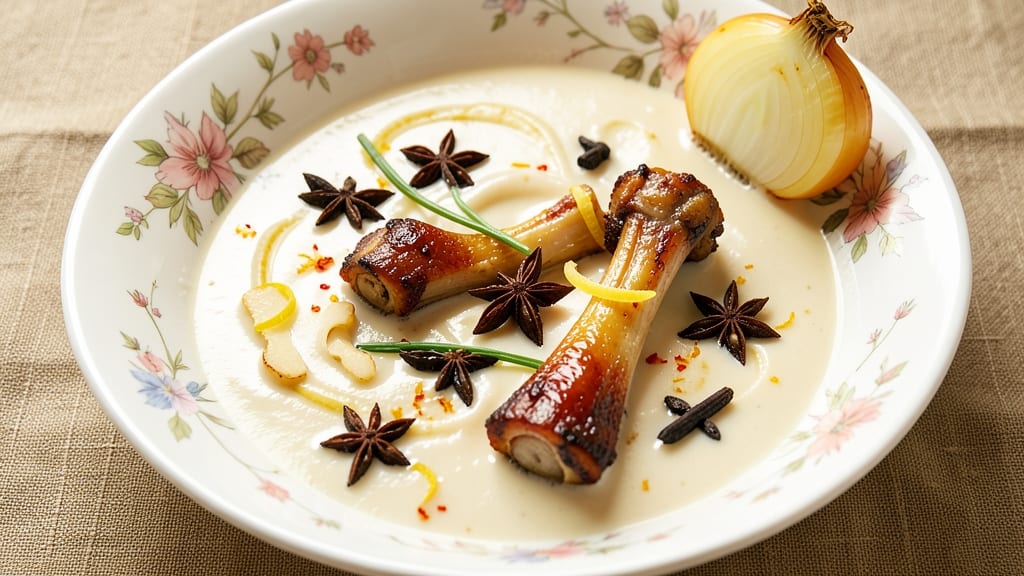
This milky pork bone soup transforms humble ingredients into a velvety masterpiece that tastes like a hug in a bowl. 💛 The secret lies in slow-simmering pork bones to extract collagen, then balancing rich broth with dairy for that signature silky texture.
I developed this recipe after years of perfecting collagen extraction techniques in my kitchen at The Smoky Pig—where we process 2,000 pounds of pork weekly. What makes this soup extraordinary is the marriage of traditional methods with modern balance.
We start with a long, gentle simmer to break down bones into gelatinous richness, then temper that depth with milk and cream for a luxurious finish. The result? A broth so tender it practically melts on your tongue, with pork that falls apart at the slightest touch.
By the time you're done, you'll have a bowl of soup that's both comforting and refined—golden with floating pork pieces, fragrant with ginger and star anise, and silky enough to coat every spoonful.
This is the kind of dish that transforms ordinary weeknights into special occasions, all while celebrating pork in its most luxurious form. Perfect for cold evenings or as a centerpiece for family gatherings, this soup scales beautifully and tastes even better the next day.
Let's create something truly memorable—starting with the bones.
Ingredients for milky pork bone soup
Six pounds of pork bones and aromatic spices create this velvety, dairy-kissed masterpiece.
| Ingredient | Amount | Notes |
|---|---|---|
| Pork Bones (Knuckle or Femur) 🍖 | 4 lb | Raw, uncooked, marrow-rich preferred |
| Fresh Ginger Root 🧄 | ½ inch | Peeled, sliced into thin coins |
| Star Anise Pods 🌟 | 2 whole | Whole, lightly crushed |
| Whole Cloves 🌿 | 4 whole | Whole, lightly crushed |
| Whole Cinnamon Sticks 🍃 | 2 whole | 2-inch pieces |
| Yellow Onion 🧅 | 1 whole | Peeled, halved horizontally |
| Garlic Cloves 🧄 | 6 cloves | Peeled, smashed |
| Whole Black Peppercorns 🌶️ | 1 tbsp | Crushed lightly |
| Whole Bay Leaves 🍃 | 2 whole | Dried or fresh |
| Whole Chicken 🍗 | 1 lb | Skin-on, bone-in pieces |
| Whole Milk 🥛 | 1 cup | Full-fat for creaminess |
| Heavy Cream 🥛 | ½ cup | Full-fat preferred |
| Salt 🧂 | 2 tsp | Kosher or sea salt |
| Cornstarch 🌾 | 1 tbsp | For thickening |
| Green Onions 🧅 | 3 whole | For garnish, sliced thin |
The bones are everything here—marrow-rich knuckle or femur yields the most gelatinous broth. Local butchers often have these cut specifically for soup, but if you're buying a whole pork shoulder, ask them to separate the bones for you. Fresh ginger and star anise are non-negotiable for that signature warmth; Penzeys Spices carries excellent whole spices if your grocery store lacks them. The chicken pieces add protein without overpowering the pork flavor—skin-on keeps them juicy during the long simmer. For extra depth, I sometimes add a splash of dry sherry when the broth reduces, but it's optional.
No whole star anise? Ground anise at half the amount works, but the flavor won't be as complex. Substituting chicken stock for milk? Use only 1 cup and add an extra splash of cream to maintain silkiness. The cornstarch is purely for thickening at the end—skip it if you prefer a more rustic texture. For dairy-free, replace milk and cream with coconut milk, though the texture will differ slightly. And if you're short on time, pre-made chicken stock (like Pacific Foods) cuts prep by an hour, though homemade tastes exponentially better.
This soup tastes even better the next day as the collagen fully sets. Store in the fridge for up to 5 days, or freeze portions for 3 months. I like to portion it into mason jars—just thaw overnight in the fridge. The milk and cream can separate when chilled, so give it a quick stir before reheating. Garnish with green onions right before serving, as they wilt quickly. For a restaurant-worthy presentation, float a pat of cold butter on top right before serving—it melts into luxurious pools.
Why You'll Love This Recipe
- No Chopping Needed: I swear by this—just toss in whole ginger slices, star anise, and cinnamon sticks. The bones do all the work while you sip tea. (Yes, even on a Tuesday night.)
- Rich Without Effort: That first sip? Pure satisfaction. The pork bones melt into creamy broth, while the spices—cloves, star anise—add warmth without overpowering. It’s the kind of flavor that lingers.
- Leftovers That Shine: This soup only gets better the next day. I make a big batch on Sundays, and by Wednesday, it’s my go-to lunch—still hearty, still packed with that deep, savory goodness.
- Budget-Friendly Luxury: Pork bones are cheap, but they taste like a restaurant dish. Honestly, I’d rather spend $8 on these than $20 on takeout. The spices? A few cents each, and they make everything taste like home.
Step-by-step instructions for milky pork bone soup
This velvety soup transforms humble pork bones into a luxurious broth—here's how to achieve that signature silky texture.
🔥 Step 1: Char the Aromatics for Deep Flavor
Heat a dry skillet over medium-high heat and add the halved yellow onion and 6 smashed garlic cloves. Let them char for 5-7 minutes until deeply browned with blackened spots—this develops complex caramelized flavors. Transfer to a cutting board and roughly chop the charred mixture.
In the same skillet, add the 0.5-inch sliced fresh ginger root and cook for 1 minute until fragrant but not browned. Remove from heat and set aside. Here's the thing—charred aromatics form the flavor foundation, but overcooking turns them bitter. Keep your eye on them and work quickly once they're browned.
🍳 Step 2: Toast the Spices and Build the Broth Base
In a large stockpot, combine the 4 lb pork bones and add cold water to cover by 2 inches. Bring to a boil over high heat, then reduce to a simmer and skim off any foam that rises to the surface for the first 10 minutes. This removes impurities for a crystal-clear broth.
While the broth simmers, toast the 2 lightly crushed star anise pods, 4 lightly crushed whole cloves, and 2 whole cinnamon sticks in a dry skillet over medium heat for 1-2 minutes until fragrant. Add these to the simmering broth along with the charred onion-garlic mixture and 2 whole bay leaves. Here's where the magic happens—the spices infuse the broth with warm, earthy notes that balance the richness of the pork.
🔥 Step 3: Simmer the Bones for Maximum Richness
Return the broth to a gentle simmer (small bubbles at the edges) and cook uncovered for 3-4 hours. You want the bones to break down slowly, releasing collagen that transforms into gelatin for that signature silky texture. Check the water level occasionally and add hot water as needed to maintain the 2-inch liquid coverage.
After 2 hours, add the 1 lb whole chicken (cut into pieces) and 1 tbsp lightly crushed whole black peppercorns. The chicken will poach in the broth, absorbing all those rich flavors. I know it seems like a long wait, but this slow cooking is what creates that luxurious mouthfeel. The broth should smell like a spice market by this point—earthy, warm, and deeply savory.
🥘 Step 4: Finish with Creamy Milk and Cornstarch Slurry
Once the pork bones are fork-tender (they should pull apart easily), strain the broth through a fine-mesh sieve into a clean pot, pressing on the solids to extract maximum flavor. Return the broth to the stove and add the 1 cup whole milk and 0.5 cup heavy cream. Stir in the 2 tsp salt and simmer gently for 5 minutes.
In a small bowl, whisk together the 1 tbsp cornstarch with 2 tablespoons of the hot broth to create a smooth slurry. Slowly pour this into the simmering broth while stirring constantly. The soup will thicken beautifully into that signature milky consistency. Real talk—this is the moment that makes the soup feel restaurant-quality. Keep stirring for 2-3 minutes until it reaches your desired thickness.
🍽️ Step 5: Serve with Fresh Garnishes
Ladle the soup into bowls and garnish each serving with 3 sliced green onions. The bright green color and fresh flavor cut through the richness beautifully. Serve immediately while hot—this soup is best enjoyed fresh from the pot when the broth is steaming and the aromatics are at their peak.
Each spoonful should deliver that perfect balance of creamy texture, deep umami from the pork bones, and warm spice notes. The broth should coat your spoon with a velvety film, not be watery or overly thick. If it starts to separate when cooled, simply reheat gently and stir vigorously to restore the silky consistency.
Pro Tips For Making Milky Pork Bone Soup
- Blister the Ginger: Char the ginger slices over high heat for 30 seconds per side—yes, even if it looks blackened. That caramelized bitterness cuts through the richness of the pork fat and gives the soup depth. I used to peel it raw, and the flavor was always too clean.
- Simmer Slow and Low: Keep the heat at a bare simmer (just tiny bubbles breaking the surface) for at least 4 hours, ideally 6. Rushing it won’t break down the collagen, and you’ll end up with a murky broth instead of that signature milky richness. Trust the process—your future self will notice.
- Skip the Bone Crowding: Stack bones in a single layer at first, then add more once they’ve released their initial oils. Crowding them too soon turns the pot into a greasy mess and slows the rendering of marrow. I learned this after scraping burnt fat off my hands twice.
- Toast the Spices Whole: Dry-toast star anise, cloves, and cinnamon sticks in a separate pan for 30 seconds until fragrant—don’t let them burn. This intensifies their aroma without bitterness, and the soup will smell like a proper apothecary shop. (Yes, even if you’re making it for a weeknight.)
Creative variations of this recipe
Southern Comfort Twist
For a true Georgia-inspired version, swap the star anise for 1 tsp smoked paprika and add ½ cup collard greens during the final 10 minutes of simmering. The smoky depth pairs beautifully with the creamy milk, while the collards add a subtle Southern vegetable note.
I remember my grandmother always served this with a side of cornbread—it's a match made in heaven. 🌶️
Asian-Inspired Fusion
Transform this into a Korean-inspired milky pork soup by adding 1 tbsp gochujang and 1 tbsp soy sauce when you strain the broth. Finish with 1 tbsp sesame oil and 2 green onions per bowl.
The fermented heat balances the richness perfectly, while the sesame adds nutty depth. I developed this version after visiting Seoul markets and fell in love with how the dairy and fermented flavors play together.
Vegetarian Adaptation
For a plant-based version, replace pork bones with 4 cups dried shiitake mushrooms and 2 cups king oyster mushrooms (soaked in hot water for 30 minutes). Use 4 cups vegetable broth> instead of water and add 1 tbsp miso paste> during the final simmer.
The mushrooms provide umami depth that mimics the collagen from pork bones. The milk and cream can be replaced with coconut milk> for a dairy-free option that still delivers that velvety texture.
Herb-Infused Variations
Brighten the soup with fresh herbs by adding 1 bunch fresh thyme> and 1 bunch fresh parsley> during the final 30 minutes> of simmering. For a Mediterranean twist, include 1 tsp dried oregano> and ½ cup chopped fresh dill> at the end.
The herbs add a fresh, bright contrast to the rich pork and dairy. I love this version served with warm crusty bread—it's like a cozy hug for your taste buds. 🌿
Spicy Kick Option
Add heat by stirring in 1-2 tbsp chili crisp> or 1 tsp red pepper flakes> during the final 5 minutes> of cooking. For a smoky-spicy combination, add 1 tbsp chipotle powder> when toasting the spices.
The heat cuts through the richness while adding complexity. I like to serve this version with a dollop of sour cream> on top—it cools the heat while adding another layer of creaminess. 🔥
Protein Swaps
Need to change up the protein? Swap the chicken for ½ lb shrimp> (added during the final 5 minutes>) or ½ lb firm tofu> (added during the last 10 minutes>). For a heartier option, add ½ lb smoked sausage> (like kielbasa) during the final simmer.
Each protein brings its own texture and flavor profile—experiment to find your favorite combination. The key is balancing the richness of the pork bones with the new protein's characteristics.
Nutrition facts
Frequently asked questions
Why does this soup need such a long cooking time?
The 3-4 hour simmer is essential to break down pork bones and release collagen, which transforms into gelatin for that signature silky texture. This slow process creates a rich, velvety broth that separates this recipe from quick soups. Think of it as melting pork into the liquid rather than just boiling it.
Can I use leftover pork bones from a roast?
Leftover pork bones work perfectly—they've already been partially cooked, so reduce the simmering time to 2 hours instead of 3-4. Just make sure they're clean and free of any seasoning rubs that might alter the flavor. This shortcut saves time while still delivering that luxurious texture.
What if my soup separates when cooled?
This happens when the collagen and dairy separate upon cooling. Simply reheat gently on low heat and stir vigorously until smooth. For extra insurance, whisk in 1 tsp cornstarch mixed with 2 tbsp water while reheating. The soup should return to its velvety consistency immediately.
How can I make this soup dairy-free?
Replace the milk and cream with 1 cup full-fat coconut milk and add 1 tbsp nutritional yeast for a cheesy flavor. For extra richness, blend ½ cup cooked cashews with the coconut milk before adding. The texture will be slightly different but still creamy and satisfying.
What's the best way to store and reheat leftovers?
Store in airtight containers in the fridge for up to 5 days or freeze for 3 months. To reheat, warm gently on the stove over low heat—never microwave directly as it can break the emulsion. For best results, add a splash of hot water or milk while reheating to restore the silky texture.