
Main Courses
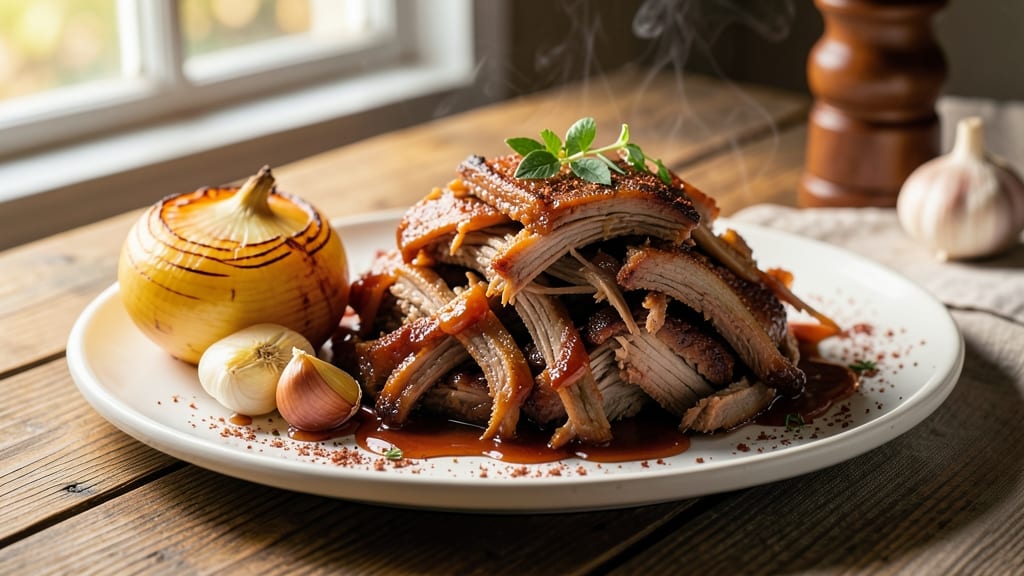
This famous pulled pork recipe is the one I've perfected after years of smoking pork shoulders in my Atlanta pit—juicy, tender, and packed with that deep, smoky flavor that makes every bite unforgettable. 🔥 The secret lies in the slow cook at 225°F for 8 hours, where the collagen breaks down into rich, melt-in-your-mouth goodness, and the dry rub creates that signature bark that turns heads at any BBQ joint.
What sets this recipe apart is the balance of technique and simplicity. You don’t need a fancy smoker—just patience and a good thermometer. I use a classic Carolina-style dry rub with brown sugar, paprika, and cayenne, but you can adjust the heat to your preference.
The key is letting the pork rest before shredding, which ensures every strand falls apart perfectly when you pull it apart.
By the time you serve it, you’ll have pulled pork so tender it practically dissolves on the tongue, with a sauce that clings to each bite—whether you prefer tangy vinegar-based or sweet and smoky BBQ.
This is the kind of dish that transforms a simple meal into a showstopper, perfect for feeding a crowd or saving leftovers for sandwiches all week.
Serve it on toasted buns with coleslaw and pickles for the full Carolina experience, or pair it with cornbread and roasted vegetables for a hearty family dinner. The magic is in the slow cook, but the reward is instant—smoky, juicy, and undeniably famous-worthy pulled pork.
Ingredients for famous pulled pork
Pantry staples meet smoky magic for pulled pork that melts in your mouth.
| Ingredient | Amount | Notes |
|---|---|---|
| Pork Shoulder (Boston Butt) 🥩 | 8 lb | Bone-in for best flavor |
| Yellow Onion 🧅 | 2 whole | Chopped into 1-inch pieces |
| Garlic Cloves 🧄 | 8 cloves | Minced for dry rub |
| Brown Sugar 🍚 | ½ cup | Light or dark variety |
| Smoked Paprika 🌶️ | 2 tbsp | For authentic smoky flavor |
| Ground Black Pepper 🌶️ | 1 tbsp | Freshly ground preferred |
| Kosher Salt 🧂 | 1 ½ tbsp | Diamond Crystal preferred |
| Ground Cayenne Pepper 🔥 | 1 tsp | Adjust for heat preference |
| Apple Cider Vinegar 🍏 | ½ cup | For tangy sauce base |
| Tomato Paste 🍅 | ¼ cup | For rich sauce depth |
| Water 💧 | 1 cup | For sauce consistency |
| Butter 🧈 | 2 tbsp | Unsalted, for sauce richness |
| Fresh Parsley 🌿 | ¼ cup | Chopped for garnish |
The pork shoulder is everything here—bone-in, well-marbled is key. Costco or Whole Foods carry the best cuts, but any grocery store with a butcher section will work. Look for a shoulder with good fat cap—at least 1/4-inch thick. If you're buying pre-cut, avoid the leanest options; you want that fat to render down into flavor. Trim off any hard rind or excess fat, but leave the rest—it's what makes this dish legendary. I like to buy mine 2-3 days ahead and let it sit in the fridge uncovered so it dries out slightly for better bark formation.
No smoked paprika? Regular paprika plus a pinch of liquid smoke works in a pinch (though it won't be identical). Running short on apple cider vinegar? Red wine vinegar or even lemon juice will do, though the flavor profile shifts slightly. The tomato paste can be swapped for 1/2 cup crushed tomatoes if you're out, but it'll be thinner. For the rub, Trader Joe's has a great pre-mixed BBQ spice blend that's a time-saver. If you're making a big batch, double the rub and store it in an airtight container—it keeps for 6 months in the pantry. The butter in the sauce? Don't skip it—it adds incredible richness that cuts through the smokiness.
Pork keeps beautifully—3-4 days in the fridge, 2 months frozen. For freezing, portion into meal-sized containers with a little sauce on top to prevent drying. The sauce reheats perfectly, so make extra for sandwiches or tacos later in the week. Leftovers actually taste better the next day as the flavors meld. Store the cooked pork in its own container with a splash of sauce to keep it moist. If you've got extra fat rendered from the pork, freeze it in ice cube trays—gold for roasting potatoes or cornbread later!
Why You'll Love This Recipe
- Sweet-Smoky Magic: That caramelized brown sugar and smoky paprika? It’s the secret weapon. The pork falls apart at the touch, but it’s not dry—it’s juicy with a deep, rich flavor that sticks with you long after the last bite.
- Budget That Punch: A pork shoulder is cheap, but it feels like a fancy meal. You’re getting a whole roast for not much, and the spices cost pennies. It’s my go-to for when I want restaurant-quality without the price tag.
Step-by-step instructions for slow-smoked pulled pork
Here's how to transform that pork shoulder into melt-in-your-mouth perfection.
🔥 Step 1: Build the Rub and Prep the Meat
Start by combining the 0.5 cup brown sugar, 2 tbsp smoked paprika, 1 tbsp ground black pepper, 1.5 tbsp kosher salt, and 1 tsp ground cayenne pepper in a bowl. Mix it all together until it's evenly distributed—this is your flavor bomb. I like to use my fingers to really work the spices into the sugar so every grain gets coated.
Pat the 8 lb pork shoulder completely dry with paper towels—this is crucial for that perfect bark later. Then generously coat the entire surface with the rub, pressing it into the meat so it sticks. Let the pork sit at room temperature for 1 hour before smoking. This lets the rub penetrate and gives you more even cooking.
🔥 Step 2: Smoke the Pork Low and Slow
Set your smoker to 225°F using hickory or apple wood chips. When the smoke is clean and flowing (you should see thin blue wisps, not thick white), place the pork shoulder fat-side up on the grill. The fat will render and baste the meat as it cooks, keeping it juicy.
Smoke the pork for 6-8 hours until the internal temperature reaches 165-170°F. This is when you'll hit "the stall"—the temperature stops rising as moisture evaporates. Don't panic; this is normal. Keep the smoker door closed as much as possible to maintain temperature. You'll know it's ready when the meat pulls apart easily with tongs.
🥘 Step 3: Wrap and Finish Cooking
When the pork hits 165-170°F, wrap it tightly in butcher paper (not foil—it breathes better). This technique, called the "Texas crutch," helps push through the stall while keeping that beautiful bark. Return it to the smoker and cook until the internal temperature reaches 200-205°F, which should take another 4-6 hours.
Here's the thing—don't rush this part. The low-and-slow method is what makes pulled pork so tender. You'll know it's done when the meat is fork-tender and the connective tissues have broken down completely. The final internal temperature should read 200-205°F on your meat thermometer.
🍳 Step 4: Make the Sauce
While the pork finishes cooking, make the sauce. In a saucepan, combine the 0.5 cup apple cider vinegar, 0.25 cup tomato paste, 1 cup water, and 2 tbsp butter. Bring to a simmer over medium heat and cook for 10-15 minutes until it thickens slightly. Stir occasionally to prevent burning.
Add the 2 whole yellow onion and 8 cloves garlic cloves (chopped) to the sauce and cook for another 5 minutes until the onion is tender. Taste and adjust the seasoning with more kosher salt or ground black pepper if needed. This sauce should be tangy, slightly sweet, and full of flavor—it's the perfect complement to the tender pork.
👨🍳 Step 5: Shred and Serve
Once the pork reaches 200-205°F, remove it from the smoker and let it rest for 15-20 minutes wrapped in the butcher paper. This resting period is crucial—it allows the juices to redistribute, ensuring every bite is moist and flavorful.
Unwrap the pork and transfer it to a cutting board. Using two forks or your hands, shred the meat against the grain. Mix the shredded pork with the sauce in a large bowl until everything is well-coated. Garnish with 0.25 cup chopped fresh parsley and serve immediately on buns with your favorite toppings. Each bite should be juicy, tender, and packed with smoky, tangy flavor—this is pulled pork magic at its finest.
Pro Tips For Making Famous Pulled Pork
- USE A MEAT THERMOMETER: Don’t guess—pork shoulder needs to hit 203°F (not 165°F) for that tender, pull-apart magic. I learned this the hard way after serving tough, chewy pork that still had a slight resistance when pulled. The stall around 160°F is real, but pushing to 203°F guarantees melt-in-your-mouth texture.
- TRIM THE FAT—BUT NOT ALL: Leave a thin layer of fat on the pork shoulder—it baste the meat as it cooks and keeps it juicy. I used to trim everything off, thinking it was healthier, but the results were dry. Just scrape off any thick chunks or excess, and let the rest work for you.
- CHAR THE ONIONS FIRST: Sauté the onions and garlic until deep golden brown—almost caramelized—before adding them to the rub or sauce. This adds a rich, sweet depth that cuts through the smokiness of the paprika. I skipped this once and the dish tasted flat; now I never skip it.
- WRAP IT IN FOIL AT 165°F: When the pork hits 165°F, wrap it tightly in foil and let it rest in the oven or on the grill. This traps steam and keeps it from drying out during the final push to 203°F. I used to leave it unwrapped, and the exterior would dry out before the center finished cooking—waste of a good shoulder.
Best sauces and condiments for this recipe
Classic Carolina Vinegar Sauce
This tangy, slightly sweet sauce is my go-to for pulled pork—it cuts through the richness while enhancing the smoky flavor. I use ½ cup apple cider vinegar, ¼ cup tomato paste, 1 cup water, and 2 tbsp unsalted butter to create a balanced base.
Simmer for 10-15 minutes until slightly thickened, then add 2 chopped yellow onions and 8 minced garlic cloves to deepen the flavor. The vinegar gives it that signature Carolina tang, while the butter adds richness. 🍏
Smoky Memphis-Style BBQ Sauce
For a sweeter, molasses-forward sauce, swap the vinegar for ½ cup molasses and add 2 tbsp brown sugar to the base. I like to include 1 tbsp smoked paprika and a pinch of ground cinnamon for warmth.
This sauce is perfect for those who prefer a sweeter profile—it's what makes Memphis BBQ so iconic. The key is balancing the sweetness with enough tang to keep it from becoming cloying.
Spicy Chipotle Lime Dressing
Looking for heat? Blend ½ cup sour cream, 2 tbsp chipotle in adobo, 1 minced lime, 1 tbsp honey, and salt to taste for a creamy, spicy topping. This works wonderfully as a post-cooking drizzle or mixed into the sauce.
The chipotle adds smoky depth, while the lime brightens everything up. It's my secret weapon for adding complexity without overwhelming the pork.
Buttermilk Ranch Dip
For a cool, creamy contrast, whip up a quick buttermilk ranch by mixing 1 cup buttermilk, ½ cup mayonnaise, 1 tbsp fresh dill, 1 tsp garlic powder, and salt and pepper to taste.
This is perfect for serving alongside pulled pork sandwiches or as a dip for pickles. The tanginess balances the richness of the pork beautifully, and it's a crowd-pleaser at any BBQ gathering.
Sweet and Tangy Pineapple Glaze
Add a tropical twist with a quick pineapple glaze: Simmer 1 cup crushed pineapple (with juice), 2 tbsp honey, and 1 tbsp apple cider vinegar until reduced by half. Strain out the chunks and drizzle over the pulled pork just before serving.
The acidity cuts through the fat, while the sweetness adds a delightful contrast. This is especially great for summer gatherings or when you want to surprise your guests with something unexpected. 🍍
Store-Bought Shortcuts
No time to make sauce from scratch? I keep Sweet Baby Ray's Original BBQ Sauce and Frank's RedHot Original on hand for quick flavor. Both work beautifully with pulled pork—just heat them gently before mixing with the meat.
For a vinegar-based option, Heinz 57 Varieties is a pantry staple that delivers consistent results. The key is always to taste and adjust seasoning before serving. 💡
Nutrition facts
Frequently asked questions
What's the best cut of pork for pulled pork?
Always use a bone-in pork shoulder (Boston butt)—it's the gold standard for pulled pork. The bone stays cooler during cooking, and the fat cap renders beautifully for self-basting. An 8 lb cut is perfect for 12 servings, but you can scale up or down as needed. Never use pork loin or tenderloin—they're too lean and won't develop that melt-in-your-mouth texture.
Can I make pulled pork without a smoker?
Use an oven at 275°F with a water pan for moisture, or a slow cooker on low for 8-10 hours. For extra smoke flavor, add wood chips soaked in water to the oven or slow cooker. The key is maintaining that low-and-slow approach—never rush the cooking time. Your pork will still turn out tender and delicious.
How do I know when pulled pork is done?
Use a meat thermometer—it's the only reliable method. The pork is done when it reaches 200-205°F internally. At this temperature, the collagen has fully broken down, and the meat should shred effortlessly. If you don't have a thermometer, check by inserting a fork—if it slides in like butter, it's ready. Never judge by time alone.
What's the best way to reheat leftover pulled pork?
Gently reheat in a skillet with a splash of sauce or broth over low heat—never microwave it dry. For best results, cover the pan and keep the temperature below 300°F to prevent drying. You can also reheat in the oven at 325°F wrapped in foil with a little extra sauce. Leftovers actually taste better the next day as flavors meld!
Why did my pulled pork turn out dry?
Most likely, you didn't cook it long enough or didn't rest it properly. Pulled pork needs to reach 200-205°F—any lower means tough, dry meat. Also, always let it rest 15-20 minutes after cooking before shredding. If you're in a hurry, try the Texas crutch (wrapping in butcher paper) to retain moisture. And remember: patience is key—rushing ruins the texture.