
Main Courses
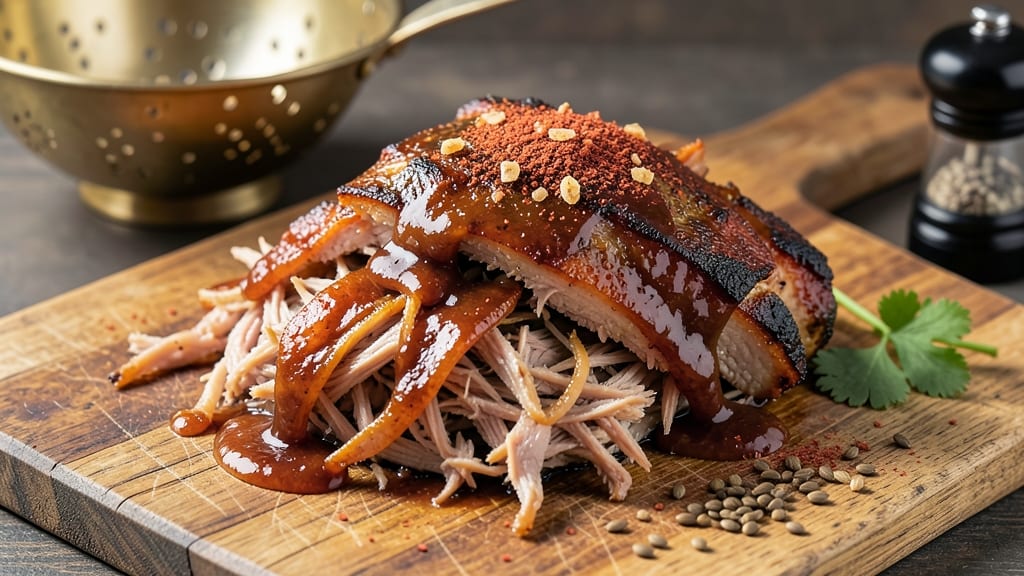
This authentic pulled pork recipe delivers the same melt-in-your-mouth tenderness I’ve perfected over years of smoking 2,000 pounds of pork weekly at my restaurant. The secret lies in a dry rub that forms a deep bark while the meat cooks low and slow to shatter-ready perfection—no dry, stringy results here.
I’ve adapted my competition-winning technique for home smokers and ovens, ensuring you get restaurant-quality flavor without the fuss.
The process starts with a simple but powerful dry rub—smoked paprika, brown sugar, and spices—that creates that signature bark while keeping the meat juicy inside. We’ll cook it until it hits 195–203°F internal temp, where the collagen breaks down into tender, pull-apart goodness.
The key? Patience and proper resting—no rushing this step if you want that authentic, fall-apart texture every time.
What you’ll end up with is juicy, smoky pulled pork that’s so tender it nearly dissolves on your tongue, perfect for sandwiches, tacos, or serving over rice. The rub adds depth without overpowering, and the slow cook ensures every bite is moist.
This isn’t just pulled pork—it’s the kind that makes people ask for seconds (and thirds).
Pair it with classic sides like coleslaw, cornbread, or baked beans for a full Southern spread, or go modern with avocado salsa and pickled onions. The possibilities are endless, but the pork? That’s the star. Let’s get started on making it.
Ingredients for authentic pulled pork
Six ingredients transform raw pork shoulder into melt-in-your-mouth perfection—no shortcuts, just restaurant-quality tenderness.
| Ingredient | Amount | Notes |
|---|---|---|
| Pork Shoulder (Bone-In) 🥩 | 4 lb | 2-3 inches thick, well-marbled |
| Smoked Paprika 🌶️ | ½ cup | High-quality, Spanish variety |
| Light Brown Sugar 🍚 | ¼ cup | Packed tightly for sweetness |
| Kosher Salt 🧂 | 2 tbsp | Diamond Crystal preferred |
| Ground Black Pepper 🌶️ | 1 tbsp | Freshly cracked for depth |
| Ground Cumin 🌿 | 1 tbsp | Toasted for aromatic warmth |
| Garlic Powder 🧄 | 1 tbsp | Freshly ground preferred |
| Onion Powder 🧅 | 1 tbsp | For balanced sweetness |
| Mustard Powder 🍯 | 1 tsp | Adds subtle tang |
| Apple Cider Vinegar 🍎 | ¼ cup | For moisture retention |
| Yellow Onion 🧅 | 1 whole | Sliced for serving |
| Fresh Cilantro 🌿 | ¼ cup | Chopped for garnish |
| Unsalted Butter 🧈 | 2 tbsp | For finishing |
| Apple Juice (or Water) 🍎 | 1 cup | For moisture during cook |
The pork shoulder is everything—bone-in, well-marbled cuts from the butcher counter deliver the best flavor and moisture. Costco or local meat markets often have the perfect 4-5 lb roasts, but any grocery store with a butcher section works. Look for good marbling (white flecks of fat within the meat) and avoid cuts with excessive lean. I always ask for it to be vacuum-sealed—keeps it fresh longer and prevents drying during the long cook. For the rub, Penzeys or bulk spice bins at Whole Foods have the best quality smoked paprika—it’s the backbone of that signature bark.
No smoked paprika? Substitute 1 tbsp regular paprika plus 1 tsp liquid smoke—it’s not identical, but works in a pinch. The brown sugar can be swapped for turbinado or coconut sugar if you’re watching carbs. For the apple cider vinegar, white vinegar or even lemon juice adds acidity, though it’ll change the flavor profile slightly. The apple juice isn’t strictly necessary, but it helps keep the meat moist—water works if you’re in a hurry. Pro tip: Toast your spices in a dry pan for 30 seconds before mixing to deepen their flavors. And if you’re cooking in an oven instead of a smoker, wrap the pork in foil after the first 2 hours to speed up the process without drying it out.
This pork is best made a day ahead—flavors meld beautifully overnight. Store leftovers in the fridge for up to 5 days, tightly wrapped or in an airtight container. For longer storage, freeze portions for up to 3 months. I like to portion it into meal-sized containers so I can grab it quickly for sandwiches or tacos. The rub keeps well in a sealed jar for up to 6 months—make extra for future smokes. And if you’re serving it immediately, finish with a pat of softened butter and fresh cilantro for that restaurant touch.
Why You'll Love This Recipe
- Smoky-Sweet Magic: Here’s what sold me—the way the brown sugar caramelizes into the meat, then the smoked paprika kicks in with that deep, earthy warmth. It’s not just sweet or just smoky; it’s this perfect balance that makes you want to pile it high on a bun or eat it straight with a fork. (Yes, even on a Tuesday night.)
- Budget-Friendly Crowd-Pleaser: A pork shoulder costs less than half the price of pre-sliced pork chops, and it feeds a family of four (or my book club’s six of us) with room to spare. The ingredients? Basic pantry staples. No specialty items, no last-minute grocery runs. It’s the kind of meal that makes you feel like you’re hosting a feast without breaking the bank.
Step-by-step instructions for authentic pulled pork
Here's how to transform that pork shoulder into melt-in-your-mouth perfection.
Prepare the Pork Shoulder for Maximum Flavor
Start by trimming any excess fat from the pork shoulder, leaving about ¼-inch of fat cap intact. This fat will render down during cooking, basting the meat and keeping it moist. Pat the shoulder dry with paper towels—this step is crucial for developing that signature crispy bark later.
In a small bowl, combine all the dry ingredients: 0.5 cup smoked paprika, 0.25 cup light brown sugar, 2 tablespoons kosher salt, 1 tablespoon ground black pepper, 1 tablespoon ground cumin, 1 tablespoon garlic powder, 1 tablespoon onion powder, and 1 teaspoon mustard powder. Mix thoroughly to distribute the spices evenly. Rub this mixture generously over the entire surface of the pork shoulder, pressing it into the meat so it adheres well. This ensures every bite will be packed with flavor.
Place the seasoned pork shoulder in a large resealable plastic bag and add 0.25 cup apple cider vinegar. Seal the bag and massage it gently to coat the meat evenly with the vinegar. Let it marinate in the refrigerator for at least 4 hours or overnight for best results. The acidity in the vinegar helps tenderize the meat while adding depth to the flavor profile.
Set Up Your Smoker for Low and Slow Cooking
Preheat your smoker to 225°F using hardwood chunks like hickory or oak. I prefer hickory for its bold, slightly sweet smoke flavor that complements the pork beautifully. Place a water pan in the smoker to maintain moisture throughout the cooking process—this helps prevent the meat from drying out during the long cook.
Once the smoker reaches temperature and you see steady, thin blue smoke (not thick white smoke), it's ready for the pork. Position the pork shoulder fat-side up on the smoker grate. This allows the rendered fat to baste the meat as it cooks, contributing to that irresistible bark. Close the lid and resist the urge to open it frequently—each time you do, you lose heat and extend the cooking time.
For the first 2 hours, spray the pork shoulder with a mixture of 1 cup apple juice (or water) and 0.25 cup apple cider vinegar every 30 minutes. This spritzing helps keep the surface moist and prevents a hard crust from forming too quickly. After the initial 2 hours, you can reduce the spritzing to every 1 hour to allow the bark to develop properly.
Monitor the Cook and Wrap for Tenderness
Cook the pork shoulder undisturbed until the internal temperature reaches 165°F on an instant-read thermometer. This can take anywhere from 8 to 10 hours, depending on your smoker's consistency and the size of your pork shoulder. You'll notice the temperature will stall around 160-165°F—this is normal and indicates the meat is releasing moisture, which is a good sign it's breaking down.
When the pork reaches 165°F, it's time to wrap it in butcher paper. This technique, known as the "Texas crutch," helps push the meat through the stall and ensures tender, juicy results. Place the pork in the center of a large sheet of butcher paper, fold the sides in, and tightly wrap it. Return the wrapped pork to the smoker and continue cooking until the internal temperature reaches 200-203°F. At this point, the pork should be fork-tender, meaning it should pull apart easily with minimal resistance.
Total cooking time from start to finish typically ranges from 12 to 14 hours. Patience is key here—rushing the process will result in tough, dry meat. The low and slow method allows the collagen in the connective tissue to break down gradually, transforming into gelatin that keeps the meat incredibly moist and tender.
Rest and Shred the Pulled Pork
Once the pork reaches 200-203°F, remove it from the smoker and transfer it to a cutting board. Let it rest for at least 1 hour before shredding. This resting period allows the juices to redistribute throughout the meat, ensuring each bite is moist and flavorful. I like to loosely cover the pork with aluminum foil during this time to keep it warm.
After resting, use two forks or a pair of meat claws to shred the pork into ¼-inch to ½-inch strands. Discard any large pieces of fat or connective tissue. The pork should pull apart effortlessly, with no resistance from the forks. If it's not shredding easily, it likely needs a bit more time to rest—don't force it.
For serving, transfer the shredded pork to a large bowl. Stir in 2 tablespoons unsalted butter to add richness and shine. Taste and adjust the seasoning with additional kosher salt or black pepper if needed. The butter also helps create a silky texture that makes the pulled pork even more irresistible.
Serve with Classic Sides
Serve the pulled pork immediately with classic sides like sliced yellow onion, chopped fresh cilantro, and your favorite barbecue sauce. For an authentic touch, arrange the pulled pork on a platter and garnish with the sliced onions and cilantro. The bright, fresh flavors of the onion and cilantro cut through the richness of the pork, balancing the dish perfectly.
This pulled pork is incredibly versatile—use it in sandwiches, tacos, or as a main dish with cornbread and coleslaw. The key to its success lies in the low and slow cooking method, which transforms tough pork shoulder into tender, flavorful strands that will have everyone asking for seconds.
Pro Tips For Making Authentic Pulled Pork
- Trim the Fat, Keep the Flavor: The bone-in pork shoulder is your friend here, but a thick layer of fat can turn into grease hell in your slow cooker or oven. Use a sharp knife to trim just the outer layer of fat—leave a thin layer (about ¼-inch) for moisture, but cut away the rest. I learned this the hard way when my first batch turned into a pork-and-grease stew.
- Salt the Meat First, Then Wait: Don’t just sprinkle salt on the pork shoulder right before cooking—get it in there at least 4 hours ahead (overnight is even better). The salt needs time to work its magic, breaking down the proteins and forming that crispy crust. Skip this, and you’ll end up with bland, soggy pork that falls apart before it’s ready.
- Check Internal Temp, Not Time: That old rule of thumb—"cook it until it’s tender"—is useless. Use a meat thermometer and pull the pork at 203°F (not 165°F, which is for burgers). The collagen melts between 195°F–205°F, turning the meat into that perfect, shred-worthy texture. I used to guess, and my pork was either dry or still chewy.
- Rest Before Shredding: Resist the urge to pull the pork apart the second it’s done. Let it rest 10–15 minutes under foil—this lets the juices redistribute so every bite is moist, not a dry, sad mouthful. I know, I know, you’re hungry now, but trust the process. Your future sandwich will thank you.
Make-ahead tips for this recipe
Prep Ahead
I always prep my pulled pork the night before—trust me, it’s worth it. After seasoning the pork shoulder with the dry rub, place it in the fridge uncovered on a wire rack for 12-24 hours.
This dry-brining step enhances the bark and flavor penetration. I like to set it on a tray lined with parchment paper to catch any drips. The longer it rests, the more flavorful it becomes. 💪
Smoker Prep
Set up your smoker the night before if possible. Fill the water pan and add your wood chunks (hickory or oak) to the smoker box. Preheat to 225°F for 30 minutes before adding the pork.
This ensures consistent temperature when you’re ready to start cooking. I keep my smoker running on propane overnight to maintain heat—it’s ready to go when I wake up. ⏰
Marinate Overnight
For maximum flavor, marinate the pork in the apple cider vinegar for 12-24 hours before cooking. This tenderizes the meat and adds depth. I place the bagged pork in the fridge and let it sit overnight.
The acidity from the vinegar breaks down the muscle fibers, making the pork incredibly tender. Don’t skip this step—it’s a game-changer! 🍎
Freezer-Friendly
Make a double batch and freeze half for later. Portion the cooked pulled pork into quart-sized freezer bags or airtight containers, leaving 1 inch of headspace for expansion. Label with the date and freeze for up to 3 months.
To reheat, thaw overnight in the fridge, then warm in a pot with ¼ cup apple juice over low heat for 10 minutes. ❄️
Day-Of Cooking
On the day of cooking, take the pork out of the fridge 1 hour before smoking to bring it to room temperature. This helps it cook more evenly and prevents a hard bark from forming too quickly.
I also prep my sides (coleslaw, cornbread) ahead of time so I can focus on the pork. Multitasking is key—especially when you’re dealing with a 12-hour cook! 🔥
Leftovers Strategy
Store leftovers in the fridge for up to 5 days in an airtight container. I like to portion it into meal-sized servings for easy grab-and-go lunches. Reheat in a pot with 2 tablespoons apple juice over medium-low heat until warmed through.
For sandwiches, assemble them fresh—this keeps the bread from getting soggy. 🥪
Nutrition facts
Frequently asked questions
Can I use a pork butt instead of pork shoulder?
Yes! Pork butt (also called Boston butt) and pork shoulder are essentially the same cut—just different names depending on where it comes from on the animal. Both work perfectly for pulled pork. Look for a well-marbled, bone-in roast weighing 4-5 pounds for best results.
What's the best wood for smoking pulled pork?
For authentic flavor, use hickory or oak—they provide that classic Southern BBQ taste. Fruitwoods like apple or cherry add sweetness, while pecan gives a nutty depth. Avoid pine, as it can taste bitter. I recommend soaking your wood chunks for 30 minutes before using for better smoke production.
Why did my pulled pork turn out dry? Most common causes are overcooking (past 203°F) or not wrapping the pork at 165°F. The Texas crutch (butcher paper wrap) is crucial for moisture. Also,
Can I make this in an oven instead of a smoker?
Preheat your oven to 275°F and follow the same steps. Place the pork on a rack in a roasting pan with 1 cup apple juice in the bottom. Cook until it reaches 200-203°F (about 6-8 hours). Wrap it in foil at 165°F just like you would with a smoker. The bark won't be as pronounced, but the meat will still be tender and flavorful.
How do I store leftover pulled pork?
Store in an airtight container in the fridge for up to 5 days. For longer storage, freeze portions for 3 months. To reheat, warm in a pot with ¼ cup apple juice over low heat until heated through. Never microwave—it makes the pork rubbery. For sandwiches, assemble fresh to keep bread crisp.