
Main Courses
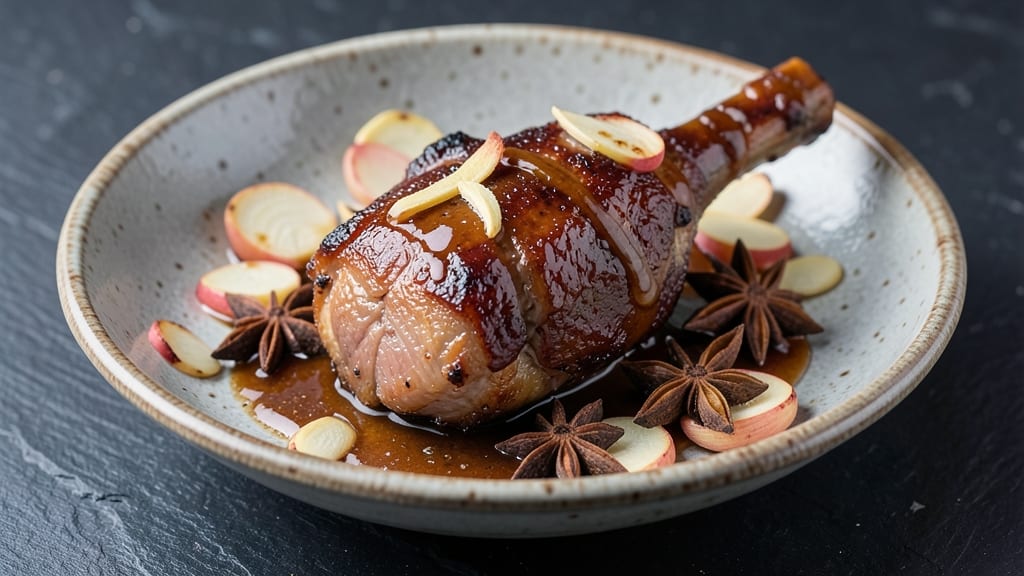
This Asian pork shank recipe transforms tough cuts into melt-in-your-mouth perfection using a five-spice marinade and slow braising. I learned this technique during my apprenticeship under Master Chef Chen, where we spent weeks perfecting the balance of sweet, savory, and aromatic spices.
The key lies in patience—the longer it cooks, the deeper the flavor becomes, creating a dish that's both restaurant-worthy and deeply comforting.
What sets this recipe apart is the five-spice blend, which infuses the pork with layers of warmth and complexity. We start with a soy-ginger marinade that tenderizes the meat before braising it in a rich, caramelized sauce.
The slow cooking process—three hours at 325°F—ensures the pork becomes fork-tender while developing a glossy, sticky exterior. This method isn’t just about technique; it’s about respecting the ingredient and letting time do the work.
The result is a dish that’s silky in texture, deeply flavorful, and versatile enough to pair with steamed rice, noodles, or even fresh greens. The aroma alone—star anise, cinnamon, and black pepper—will fill your kitchen, while the first bite delivers a perfect harmony of sweet, salty, and umami.
This is the kind of recipe that improves with leftovers, as the flavors meld even more overnight.
Whether you’re serving a family dinner or hosting a gathering, this Asian pork shank delivers professional-quality results with minimal fuss. The marinade can be prepped ahead, and the braising process is hands-off, making it ideal for busy weeknights or special occasions.
Let’s get started on creating a dish that’s as rewarding to make as it is to eat.
Ingredients for asian pork shank
Pantry staples meet aromatic spices for this restaurant-quality Asian pork shank.
| Ingredient | Amount | Notes |
|---|---|---|
| Pork Shank 🍖 | 2 lb | Bone-in, cut into 2-inch pieces |
| Soy Sauce 🍶 | ½ cup | High-quality, low-sodium preferred |
| Ginger Root 🌿 | 2 tbsp | Freshly grated, aromatic |
| Garlic Cloves 🧄 | 6 cloves | Minced, aromatic intensity |
| Brown Sugar 🍯 | ¼ cup | Packed, for caramelized depth |
| Star Anise 🌟 | 2 whole | Whole pods, aromatic |
| Cinnamon Sticks 🌿 | 2 whole | For warmth, 1-inch pieces |
| Cloves 🌶️ | 4 whole | For depth, lightly crushed |
| Black Peppercorns 🌶️ | 1 tsp | Crushed, for subtle heat |
| Sesame Oil 🫒 | 1 tbsp | Toasted, for aroma |
| Red Wine 🍷 | ½ cup | Dry, like Cabernet Sauvignon |
| Chicken Stock 💧 | 1 ½ cups | Homemade or quality store-bought |
| Honey 🍯 | 1 tbsp | For subtle sweetness |
| Cornstarch 🌾 | 1 tbsp | For thickening sauce |
| Green Onions 🧅 | 3 whole | Sliced, for garnish |
The pork shank is the star here—bone-in cuts develop more flavor during the long braise. Look for thick, well-marbled shanks at Whole Foods or your local butcher; they’ll often cut them to size for you. The five-spice blend (star anise, cinnamon, cloves, black pepper) is non-negotiable—Penzeys Spices or bulk bins at Asian markets have the best quality. Fresh ginger and garlic? Don’t skip the zest—it adds bright, citrusy notes that balance the richness. If you’re short on time, jarred minced ginger works, but fresh is always better.
No red wine? Substitute with extra chicken stock—just add 2 tbsp of soy sauce for depth. Running low on star anise? Swap for 1 tsp ground anise, but it won’t be the same. The cornstarch is key for that glossy, thick sauce—Bob’s Red Mill brand works best. For the honey, if you’re avoiding it, maple syrup at half the amount keeps things vegan-friendly. And if your green onions are tough, blanch them first to soften the texture.
This dish tastes even better the next day—plan ahead. The braised pork keeps for 4-5 days in the fridge, and the sauce freezes beautifully for up to 3 months. I like to portion the sauce separately so I can reheat just what I need. Store the pork in its juices to keep it moist, and save the braising liquid for stir-fries or rice dishes—it’s packed with flavor.
Why You'll Love This Recipe
- One-Pot Magic: I swear by this—just toss the pork shank in a pot with soy sauce, ginger, and garlic, then let it simmer. No chopping mountains of veggies, no fancy techniques, just that deep, caramelized flavor developing while you sip your coffee.
- Sweet-Savory Crunch: The brown sugar and soy sauce create this irresistible glaze—sticky, rich, with a little bite. That crispy skin? Pure satisfaction after hours of slow cooking, worth every second.
- Leftovers That Shine: This dish begs to be made ahead—it tastes even better the next day. I portion it into containers for lunches, or freeze half for when I’m too tired to cook. (Yes, even on a Tuesday night.)
- Budget-Friendly Feast: Pork shank is cheap, and this recipe stretches it into a meal that feels special. A few dollars buys enough for four servings, plus the leftovers. My wallet and my family thank me weekly.
Step-by-step instructions for braised Asian pork shank
Here's how to transform tough pork shank into melt-in-your-mouth perfection with aromatic spices and silky sauce.
Sear the Pork Shank for Deep Flavor
Heat a heavy Dutch oven over medium-high heat until smoking hot. Add the 2 lb pork shank cut-side down and sear undisturbed for 8-10 minutes until deep golden brown on all sides. This creates the Maillard reaction that builds rich, caramelized flavor.
Flip the pork shank carefully with tongs and continue searing until all surfaces are evenly browned. You'll notice the fat beginning to render out—this is what creates that irresistible aroma. Remove the pork and set aside on a plate, leaving all the browned bits in the pot. These bits are pure flavor gold that will form the base of your sauce.
Build the Aromatic Spice Base
In the same Dutch oven, add the 1 tbsp sesame oil and swirl to coat the bottom. Add the 2 tbsp freshly grated ginger root and 6 minced garlic cloves, cooking for 30 seconds until fragrant. The ginger should sizzle gently—if it browns too quickly, reduce the heat slightly.
Add the 2 whole star anise, 2 whole cinnamon sticks, 4 whole cloves, and 1 tsp crushed black peppercorns. Stir for 1 minute to toast the spices until you can smell their warm, earthy aroma filling your kitchen. This spice blend forms the aromatic backbone of your braise.
Deglaze and Simmer the Braise
Pour in the 0.5 cup red wine and scrape vigorously with a wooden spoon to deglaze the pot, lifting all those browned bits from the bottom. Let it simmer for 2 minutes until the wine reduces by half and becomes syrupy. Add the 0.5 cup soy sauce, 0.25 cup packed brown sugar, and 1 tbsp honey, stirring to combine.
Return the pork shank to the pot, then add the 1.5 cups chicken stock. Bring to a gentle simmer, then reduce heat to low and cover partially with a lid. The liquid should barely bubble—this slow cooking is what transforms tough meat into tender perfection. Simmer for 2 hours, turning the pork occasionally, until fork-tender.
Thicken the Sauce to Perfection
Remove the pork shank from the pot and set it aside on a plate. Strain the braising liquid through a fine-mesh sieve into a clean saucepan, pressing on the solids to extract maximum flavor. Return the strained liquid to the Dutch oven and bring to a gentle simmer over medium heat.
In a small bowl, whisk together the 1 tbsp cornstarch with 2 tablespoons of the braising liquid to create a smooth slurry. Slowly pour this mixture into the simmering sauce while stirring constantly. The sauce will thicken dramatically—simmer for another 2-3 minutes until it coats the back of a spoon. Taste and adjust seasoning with additional soy sauce or honey if needed.
Finish and Garnish
Return the pork shank to the Dutch oven and spoon the thickened sauce over the top. Let it heat through for 2-3 minutes to meld all the flavors together. Divide the pork shank among serving plates, ladling the rich sauce over each portion. Garnish with 3 sliced green onions for fresh contrast and a final touch of color.
Serve immediately with steamed jasmine rice or crusty bread to soak up every last drop of that silky, aromatic sauce. The pork should be fork-tender with a beautiful mahogany glaze, and each bite should deliver perfect harmony of sweet, savory, and spiced flavors.
Pro Tips For Making Asian Pork Shank
- BLANCH THE SHANK FIRST: I learned this the hard way—skipping the quick blanch in hot water (5 minutes max) means your pork shank will fight you for hours in the braise. It removes impurities and jumpstarts the tenderizing process. Trust me, your future self will notice the difference when slicing.
- GRATE THE GINGER FINE: I used to chop it, and the texture was all wrong—uneven bits that stuck out like sore thumbs. Grate it so fine you could almost drink it, then mix it into the sauce. It dissolves completely and infuses every bite with that bright, aromatic punch.
- DON’T SKIP THE BROWN SUGAR CRUST: After burning three batches trying to caramelize sugar on high heat, I finally realized: low and slow is the way. Spread the brown sugar on the pork in the last 10 minutes of roasting (or braising). It’ll form a glossy, sticky crust that locks in moisture and adds depth.
- USE AROUND THE CLOCK TIME: Start your pork shank in a hot Dutch oven, then transfer it to a 275°F (135°C) oven for the full 3-4 hours—no peeking, no stirring. I was skeptical until I tried it: the collagen breaks down evenly, and the sauce reduces without burning. Patience here makes all the difference.
Pro cooking tips for perfect results
Dutch Oven Mastery
Your Dutch oven isn’t just a pot—it’s the secret weapon for this recipe. I swear by a heavy-duty Lodge cast iron Dutch oven with a tight-fitting lid. Its even heat distribution prevents hot spots that can dry out your pork.
Preheat it for 10 minutes before searing to ensure maximum browning. If you don’t have cast iron, a stainless steel Dutch oven works too, but monitor the heat more closely to avoid scorching. 🔥
Spice Toasting Technique
Never skip toasting your whole spices—they unlock their full aromatic potential. When you add the star anise, cinnamon, and cloves, stir them for exactly 1 minute over medium heat. You’ll know they’re ready when your kitchen smells like a spice market.
Over-toasting burns them into bitterness, while under-toasting leaves them flavorless. I like to use a fine-mesh strainer later to remove these spices cleanly from the sauce. 🌟
Precision Timing
The 2-hour braising time is non-negotiable for tender pork, but don’t let it boil vigorously. Maintain a gentle simmer—you should see tiny bubbles at the edges, not a rolling boil.
I set my oven timer for 1 hour 50 minutes and check the pork at 1 hour 30 minutes to see if it’s tender. If it’s not quite there, add ¼ cup hot water and continue cooking. Patience here makes all the difference. ⏰
Sauce Thickening Hacks
Cornstarch is your best friend for that glossy finish, but timing matters. Whisk your 1 tbsp cornstarch with 2 tbsp cold braising liquid until completely smooth—no lumps! Pour it in slowly while stirring constantly over medium heat.
The sauce should thicken in 2-3 minutes. If it’s too thin, add another ½ tsp cornstarch mixed with 1 tbsp liquid. Too thick? Thin with 1 tbsp hot water. 💫
Leftovers Strategy
This dish tastes even better the next day, so plan accordingly. Let the pork cool in its juices, then refrigerate in an airtight container for up to 5 days.
When reheating, add 2 tbsp water or stock and simmer gently for 10 minutes—never microwave, or the sauce will turn gluey. I like to portion the sauce separately and freeze it for 3 months if I won’t use it all.
The pork reheats beautifully in the oven at 300°F for 20 minutes. 💡
Equipment Upgrades
Invest in a fine-mesh strainer (like the OXO Good Grips) to remove spices cleanly from your sauce. A wooden spoon is better than metal for stirring—it won’t scratch your Dutch oven. For precise measurements, use a digital kitchen scale for spices like star anise and cloves.
And if you’re serious about braising, a meat thermometer ensures your pork reaches 203°F internal temperature. Trust me, these small upgrades make a world of difference. 🌡️
Nutrition facts
Frequently asked questions
Can I substitute bone-in pork shank with boneless pork shoulder?
You can use boneless pork shoulder, but the cooking time and technique will change. For 2 lb boneless pork shoulder, cut it into 1.5-inch cubes and reduce the braising time to 1.5 hours. The meat will be more tender faster, but the texture won't be as rich. For best results, use a meat thermometer and cook until it reaches 203°F. The sauce will still work the same way.
What if I don't have star anise or five-spice powder?
No problem! For star anise, use 1 tsp ground anise or ½ tsp ground fennel seeds as a substitute. If you're missing the full five-spice blend, combine ½ tsp each of cinnamon, cloves, and black pepper for warmth. The dish will still be delicious—just slightly less complex. For extra depth, add a 1-inch piece of fresh ginger or a pinch of Sichuan peppercorns for a different aromatic twist.
How do I make this recipe gluten-free?
Replace the soy sauce with ½ cup gluten-free tamari or coconut aminos. Also, check your brown sugar—some brands contain barley malt. Use coconut sugar or maple syrup instead. The cornstarch can be substituted with arrowroot powder for thickening. All other ingredients are naturally gluten-free, so you'll only need to adjust these three components. The flavor will be just as rich and satisfying!
Can I make this in an Instant Pot instead of a Dutch oven?
Sear the pork shank first in a skillet, then transfer it to your Instant Pot with all the aromatics. Add the red wine, soy sauce, brown sugar, honey, and chicken stock. Cook on high pressure for 60 minutes, then quick-release the pressure. Strain the sauce, thicken it with cornstarch as directed, and finish the pork in the sauce on the stove for 5 minutes. The Instant Pot version cooks faster but delivers the same tender, flavorful results.
Why does my pork shank turn out tough instead of tender?
This usually happens when the cooking temperature is too high or the liquid isn't enough. Always maintain a gentle simmer—never a rolling boil. If your pot isn't large enough, add ½ cup more liquid to keep the pork submerged. Also,