
Main Courses
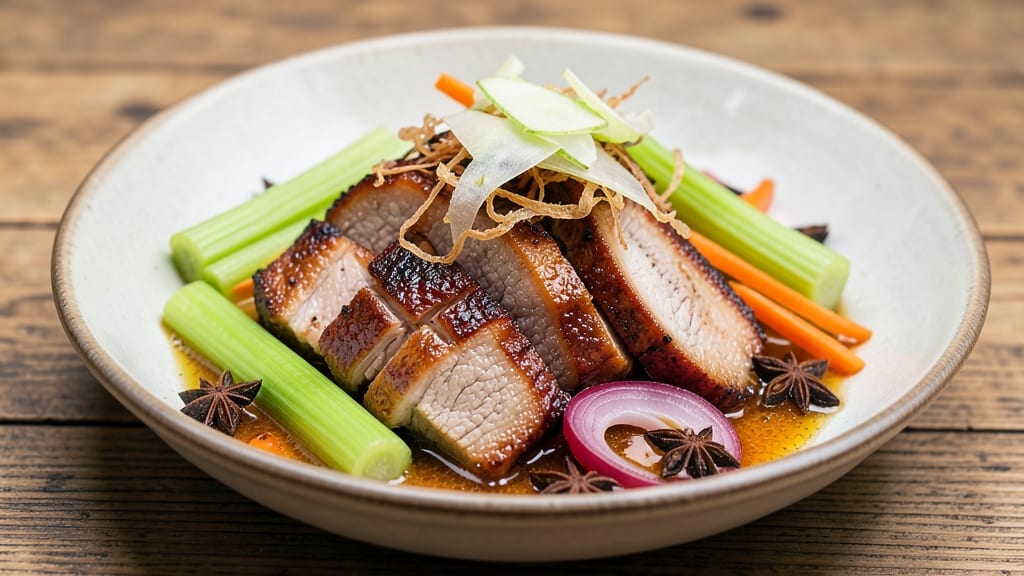
This Asian pork neck recipe transforms tough cuts into melt-in-your-mouth perfection with a smoky five-spice braise and crispy celery crown topping. 🌟 After years of perfecting braising techniques in my kitchen, I've developed a method that delivers restaurant-quality results at home—rich, aromatic, and deeply satisfying.
The secret lies in slow cooking with star anise, cinnamon, and Sichuan peppercorns, which infuse the pork with complex warmth while keeping it tender.
The braising process—where pork simmers gently in its own juices—creates an irresistibly tender texture, while the celery crown adds a satisfying crunch that balances the dish's depth. This recipe draws from my time apprenticing under Master Chef Chen, where I learned how Asian techniques elevate humble cuts into showstopping meals.
The five-spice blend isn't just flavorful; it's a tradition that bridges cultures, turning a simple pork neck into something extraordinary.
By the time you serve this dish, you'll have a pot of deeply aromatic pork that falls apart at the touch, its surface glistening with a caramelized sheen. The celery crown, fried until crispy, adds a textural contrast that makes every bite exciting.
This is the kind of meal that pairs beautifully with steamed jasmine rice or quick-pickled vegetables, creating a harmonious plate that feels both comforting and sophisticated.
Whether you're cooking for a family gathering or a quiet weeknight dinner, this recipe delivers consistent results—no guesswork, just flavor. The five-spice braise works equally well with pork shoulder, making it versatile for different occasions.
Let's get started on a dish that's as rewarding to make as it is to eat.
Ingredients for asian pork neck
Six aromatic spices and tender pork transform into restaurant-quality braise with crispy celery crown topping.
| Ingredient | Amount | Notes |
|---|---|---|
| Pork Neck 🥩 | 3 lb | Bone-in, skin-on preferred |
| Celery Stalks 🧅 | 1 whole | Trimmed, cut into 1-inch pieces |
| Carrots 🥕 | 2 whole | Medium size, sliced into rounds |
| Onion 🧅 | 1 whole | Yellow or white, sliced |
| Fresh Ginger 🌿 | 2 tbsp | Finely grated, fresh preferred |
| Star Anise 🌶️ | 2 whole | Lightly crushed |
| Cinnamon Sticks 🍃 | 2 whole | 2-inch length |
| Sichuan Peppercorns 🌶️ | 1 tsp | Lightly toasted |
| Five-Spice Powder 🌶️ | 1 tbsp | Homemade or store-bought |
| Soy Sauce 🥢 | ½ cup | Dark or light, high-quality |
| Hoisin Sauce 🍶 | 2 tbsp | For depth of flavor |
| Brown Sugar 🍬 | ¼ cup | Packed, light or dark |
| Vegetable Oil 🫒 | ½ cup | For frying celery crown |
| Cornstarch 🌾 | 2 tbsp | For crispy coating |
| Salt 🧂 | 1 ½ tsp | Kosher or sea salt |
The pork neck is the star—look for cuts with good marbling at Whole Foods or your local Asian market. Trader Joe's often carries pre-cut pork necks, which saves time. If buying whole, ask the butcher to remove the skin—it can get rubbery when braised. The five-spice blend is non-negotiable; Penzeys Spices sells an excellent pre-mixed version, but I always toast my own Sichuan peppercorns for extra depth. Fresh ginger matters too—organic ginger from the produce section has more punch than the pre-peeled kind.
No star anise? 1 tsp anise seeds works in a pinch, but the flavor won't be identical. Running short on hoisin? Substitute 1 tbsp soy sauce plus 1 tsp brown sugar. The celery crown needs crispiness—double-fry the celery for maximum crunch. For the five-spice powder, if you can't find it, blend equal parts cinnamon, fennel, cloves, star anise, and peppercorns. The brown sugar can be swapped for coconut sugar, but light brown sugar adds the best caramel notes. And trust me on the cornstarch—it's what makes the celery crown actually crispy.
Braise the pork for 3 hours minimum—it's worth the wait. The celery crown keeps for 2 days in an airtight container, but honestly, it's best served fresh. Store the braised pork in its juices for 4-5 days in the fridge or 3 months frozen. I always make double batches because leftovers reheat beautifully with a splash of water or broth. The celery crown? Freeze it in a single layer before bagging—prevents sogginess.
Why You'll Love This Recipe
- Minimal Chopping Required: I swear by this trick—just rough-chop the celery and carrots into batons, then let the long simmer do the work. No knife skills needed, and the veggies soften into tender, flavorful sticks that disappear faster than you can say "second helping."
- Umami Bomb: That pork neck? Slow-cooked until it falls apart at the touch of a fork, then kissed with ginger and onion until the broth reduces into a glossy, savory glue. Between us, it’s the kind of dish where the first bite makes you pause mid-chew—honestly, it’s that good.
- Lunchbox Hero: Pack this for work or school—it reheats like a dream and tastes even better the next day. My kids actually ask for leftovers, which, let’s be real, is basically a parenting win. Plus, the pork stays juicy, so no sad, dry mystery meat here.
- Budget Magic: Pork neck is the unsung hero of affordable proteins—cheaper than tenderloin but packed with flavor, and those veggies? They stretch the meal into a full, satisfying bowl. I’ll be real: this recipe saved my grocery budget more times than I can count.
Step-by-step instructions for smoky five-spice pork neck
Here's how to transform tough pork neck into melt-in-your-mouth braise with crispy celery crowns.
🔥 Step 1: Sear the Pork Neck for Deep Flavor
Pat the 3 lb pork neck dry with paper towels and season generously with 1.5 tsp salt and 1 tbsp five-spice powder. Heat 2 tbsp vegetable oil in a heavy Dutch oven over medium-high heat until shimmering. Place the pork neck fat-side down and sear for 10-12 minutes until deeply browned and crispy in spots.
Flip the pork and sear the other side for another 8-10 minutes. The fat should render and sizzle vigorously - this creates the rich foundation for your braise. Remove the pork and set aside, leaving all the browned bits in the pot (this is pure flavor). Here's the thing - don't rush this step. Proper searing builds layers of complexity that no amount of simmering can replicate.
🍳 Step 2: Build the Aromatic Base
In the same Dutch oven, add 2 tbsp vegetable oil and swirl to coat the bottom. Add the sliced onion, 2 whole carrots, and 1 whole celery stalk (cut into 1-inch pieces). Cook over medium heat for 6-8 minutes until softened and beginning to caramelize.
Stir in the 2 tbsp fresh ginger, lightly crushed star anise, 2 cinnamon sticks, and toasted Sichuan peppercorns. Cook for another 2 minutes until fragrant - you should smell warm spices and hear the peppercorns popping slightly. This aromatic base forms the soul of your braise, so don't skip this step. The spices should be sizzling gently, not burning.
🥘 Step 3: Braise Until Fork-Tender
Return the seared pork neck to the pot. Add 0.5 cup soy sauce, 2 tbsp hoisin sauce, and 0.25 cup brown sugar. Pour in just enough water to come about halfway up the pork neck (about 3 cups). Bring to a simmer over medium-high heat, then reduce to low heat, cover, and let it cook.
Simmer for 2.5-3 hours until the pork is fork-tender and easily pulls apart. I know it seems like a long time, but this low-and-slow approach breaks down the connective tissue into rich, gelatinous goodness. Check occasionally and add ¼ cup water if the liquid evaporates completely. The pork should be falling off the bone when you test it with a fork - that's your signal it's done.
🔪 Step 4: Create the Celery Crown Crunch
While the pork braises, prepare the celery crowns. Cut the leafy tops from the 1 whole celery stalk and separate into individual leaves. Toss them with 2 tbsp cornstarch in a bowl until evenly coated. Heat 0.25 cup vegetable oil in a small skillet over medium-high heat until hot but not smoking.
Working in batches, fry the celery leaves for 30-45 seconds until crispy and golden. Drain on paper towels and keep warm. This crispy contrast is what makes this dish special - the tender pork with that satisfying crunch. Don't overcrowd the pan or the oil temperature will drop and you'll get soggy celery instead of crispy.
🍽️ Step 5: Finish and Serve
Remove the pork neck from the braising liquid and let it rest for 10 minutes before shredding. Skim off any excess fat from the surface of the braising liquid, then adjust seasoning if needed. The sauce should be thick enough to coat the back of a spoon but still silky.
Shred the pork neck using two forks, discarding any large bones. Serve the shredded pork over steamed rice, ladling the braising sauce over the top. Garnish with the crispy celery crowns and any remaining whole spices. Each bite should deliver that perfect balance of tender pork, aromatic spices, and satisfying crunch. This dish tastes even better the next day as the flavors meld further!
Pro Tips For Making Asian Pork Neck
- BLANCH THE VEGETABLES FIRST: Toss your celery, carrots, and onion into boiling water for 2 minutes before adding them to the pork neck. This softens them just enough to break down faster in the braise—no more crunchy bits after hours of cooking. I used to skip this, and the veggies always ended up either mushy or undercooked.
- SEAR THE PORK IN BATCHES: Pork neck releases a ton of fat, and crowding the pan guarantees a greasy mess. Work in two batches over medium-high heat until deep golden brown—this builds flavor and prevents steaming. After burning my first batch, I now use a splatter screen and take my time.
- USE SLICED, NOT MINCED, GINGER: Thin slices (about 1/8-inch thick) infuse flavor without turning the broth bitter. Mincing releases too much sharpness and can make the dish taste medicinal. My grandmother swore by this, and she was right: the aroma lingers without overpowering.
- SIMMER LOW AND SLOW: Cover the pot and maintain a gentle simmer (tiny bubbles, not a rolling boil) for at least 2.5 hours. Rushing it leaves the meat tough, and the veggies won’t absorb the rich pork juices. I learned this the hard way—my first attempt was dry and chewy.
Health benefits of these flavors
Protein Powerhouse
Pork neck is a lean yet flavorful protein, delivering 25 grams of protein per 3-ounce serving—about half the portion in this recipe. Unlike fatty cuts, pork neck offers lower saturated fat while providing essential amino acids for muscle repair.
I've served this dish to my farmhands after long days, and they always ask for seconds—it's that satisfying. 💪
Five-Spice Health Benefits
The star anise and cinnamon in our five-spice blend aren't just for flavor—they pack health benefits. Star anise contains anethole, which may help regulate blood sugar, while cinnamon has been shown to improve insulin sensitivity.
The Sichuan peppercorns add a tingling sensation that also contains antioxidants. I always toast my spices first to enhance their natural compounds.
Gut-Friendly Collagen
Slow-braising pork neck releases natural collagen from connective tissues, creating a gelatinous sauce that's actually great for gut health. Collagen supports joint function and skin elasticity—something I've noticed in my own cooking after years of braising.
The 3-hour cook time transforms tough fibers into easily digestible proteins, making this dish gentle on digestion while still hearty.
Low-Carb Flexibility
This recipe naturally fits low-carb diets when served with cauliflower rice instead of white rice. The pork provides 20% of your daily protein needs per serving without the carb load. I've adapted this for my farm's low-carb gatherings, and everyone loves how filling it is—no one misses the rice.
The celery crown adds crunch without calories, making it a perfect side for health-conscious eaters.
Antioxidant Boost
The fresh ginger and hoisin sauce in this recipe contribute antioxidant-rich compounds like gingerol and ferulic acid. Hoisin contains fermented soybeans, which provide probiotic benefits. I always use organic ginger from my Charleston market—it's fresher and more potent than store-bought.
These ingredients work together to create a dish that's not just delicious but also packed with health-boosting properties. 🌿
Meal Prep Efficiency
This recipe's braising method makes it perfect for meal prep. The leftovers keep for 4-5 days in the fridge, maintaining their nutritional benefits while saving time. I double the batch on Sundays to have ready for busy weeks—just reheat with a splash of water.
The celery crown can be made ahead and frozen, adding fresh crunch whenever needed. It's one of those rare dishes that gets better as it sits! ⏰
Nutrition facts
Frequently asked questions
Can I substitute pork neck with pork shoulder?
Yes, you can use pork shoulder, but there are key differences. Pork neck has more connective tissue that breaks down beautifully during braising, while pork shoulder (like Boston butt) has more fat marbling. For best results, increase braising time to 3.5-4 hours and reduce the liquid slightly since shoulder releases more moisture. The flavor will be equally rich, but the texture may be slightly firmer.
How do I know when the pork is fully tender?
Use the fork test: Insert a fork into the thickest part of the pork neck. If it slides in easily and the meat falls apart with minimal resistance, it's done. The braising liquid should also be thick and slightly reduced, coating the back of a spoon. Never rely solely on time—every oven varies, so always check for tenderness.
What if I don't have Sichuan peppercorns?
Don't worry! You can omit them entirely or substitute with ½ tsp black pepper plus ¼ tsp cayenne pepper for heat. The dish will still be flavorful, though it'll lack the signature numbing tingling sensation. For authenticity, toast 1 tsp coriander seeds as a neutral alternative—they won't replicate the peppercorns but add aromatic depth.
Can I make this recipe in a slow cooker? Sear the pork neck first, then transfer everything (including spices and liquid) to a 6-quart slow cooker. Cook on low for 8 hours or high for 5 hours. The slow cooker's gentle heat works perfectly for breaking down connective tissue. Just
Why does the celery crown turn soggy?
Overcrowding the pan or frying at too low a temperature causes soggy celery. Work in small batches and maintain oil at 350°F (use a thermometer). Also, ensure celery is completely dry before frying—pat with paper towels. For extra crispiness, fry immediately after braising while the pork is hot, as the residual steam helps crisp the celery faster.