
Main Courses
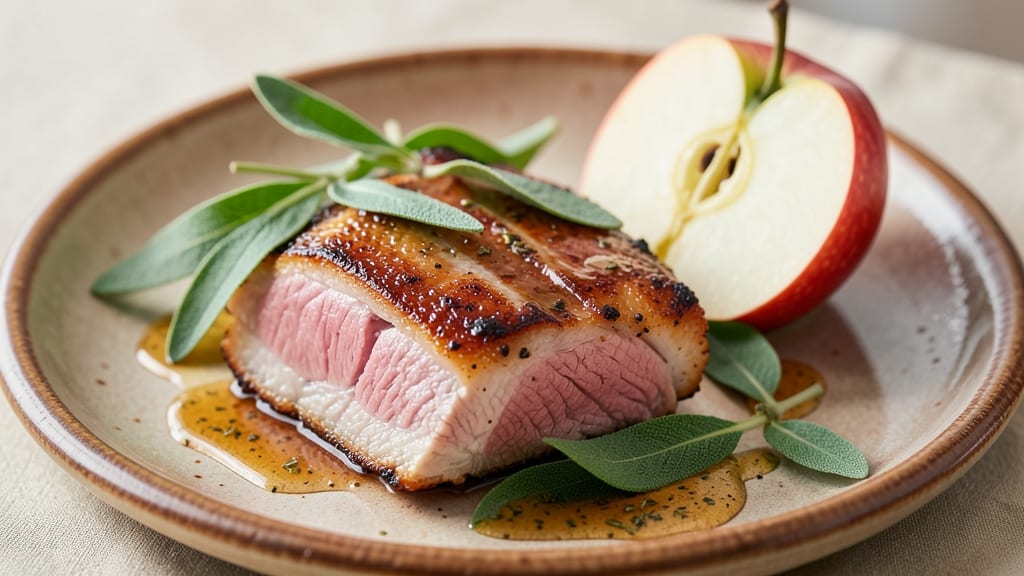
This apple sage pork chop recipe transforms a simple weeknight meal into a restaurant-worthy centerpiece—crispy caramelized apples clinging to perfectly seared chops, basted with herbed butter that melts into every bite. 🍏✨ I developed this while working with heritage pigs at my farm, where the rich marbling of the meat pairs perfectly with the sweet-tart balance of apples and earthy sage.
The secret lies in the crust: thinly sliced apples caramelize directly on the chops while pan-searing, creating a sticky, flavorful bark that locks in juices.
The technique is straightforward but delivers restaurant-quality results—bone-in chops sear in a cast iron skillet until golden, then apples are layered on top to caramelize while the pork rests.
Herbed butter basting ensures tender, juicy meat with a crisp exterior, while the apples add natural sweetness that cuts through the richness. This method works with any pork chop cut, from tender loin chops to more affordable rib chops, making it versatile for both special occasions and weeknight dinners.
What you'll end up with is a dish that looks as impressive as it tastes: golden-brown chops with a glossy apple glaze, flecked with crisp sage leaves.
The aroma alone will have your guests anticipating dinner, and the first bite delivers that perfect harmony of savory pork, sweet apples, and herbal notes. This recipe scales beautifully for gatherings, and the leftovers reheat wonderfully—just a few minutes in the oven to restore that caramelized crust.
Pair with a crisp apple cider sangria or a sage-infused gin cocktail to elevate the experience further. The acidity in the drink cuts through the richness of the pork, while the herbal notes complement the sage in the dish.
Serve with roasted root vegetables or a simple arugula salad to round out the meal. Let's get cooking—this is one recipe that will have everyone asking for seconds.
Ingredients for apple sage pork chop
Four pork chops, crisp apples, and herbed butter—simple ingredients for restaurant-worthy weeknight dinners.
| Ingredient | Amount | Notes |
|---|---|---|
| Bone-In Pork Chops 🍖 | 4 whole | 1-inch thick, rib or loin cut |
| Honeycrisp Apples 🍏 | 2 medium | Thinly sliced, skin on |
| Fresh Sage Leaves 🌿 | ½ cup | Chopped, stems removed |
| Unsalted Butter 🧈 | ½ cup | Cold, cubed for basting |
| Garlic Cloves 🧄 | 4 cloves | Minced, for herbed butter |
| Extra-Virgin Olive Oil 🫒 | 2 tbsp | For searing chops |
| Kosher Salt 🧂 | 1 ½ tsp | Coarse grain preferred |
| Freshly Ground Black Pepper 🌶️ | ½ tsp | For seasoning |
| Brown Sugar 🍚 | 1 tbsp | Enhances caramelization |
| Fresh Thyme Leaves 🌿 | 1 tsp | Optional, for butter blend |
| Apple Cider Vinegar 🍶 | 1 tbsp | For basting liquid |
The pork chops are the foundation. Rib chops offer great marbling for flavor, while loin chops stay more tender—both work beautifully. I source mine from local butchers when possible, but grocery store bone-in cuts (like Costco or Whole Foods) are perfect for this recipe. Look for chops with a good layer of fat—it renders during cooking and keeps the meat juicy. The apples should be firm and crisp; Honeycrisp or Fuji are ideal, but any sweet-tart variety works. Thinly slice them—about 1/8-inch thick—so they caramelize quickly without turning to mush.
No Honeycrisp apples? Gala or Granny Smith hold up well too—just adjust the cooking time slightly if they're tart. Running short on fresh sage? Dried sage at one-third the amount works, but fresh is ideal for that bright herbal note. The herbed butter is where the magic happens—cold cubed butter bastes beautifully, creating a golden crust. No thyme? Skip it, but don't skip the garlic—it's essential for depth. For a quicker prep, use pre-minced garlic from a jar, though fresh always tastes better. The apple cider vinegar adds a subtle tang that balances the sweetness—substitute with lemon juice if needed, but reduce to 1 teaspoon since it's more acidic.
Store pork chops in the fridge for up to 2 days before cooking—they develop better flavor if rested. Apples can be prepped a day ahead and kept in the fridge, but toss them with a teaspoon of lemon juice to prevent browning. The herbed butter can be made 3 days in advance and stored wrapped in parchment. Leftovers reheat beautifully in a 350°F oven for 10-12 minutes, covered loosely with foil to restore that caramelized crust. For gatherings, double the recipe—this scales perfectly, and the technique remains the same.
Why You'll Love This Recipe
- One-Pan Magic: I swear by this trick—just toss everything on a sheet pan, and you’re done. No fancy dishes, no stress. The apples caramelize right alongside the pork while you sip your wine (or coffee, no judgment).
- Crispy-Creamy Balance: That golden crust on the pork chop? The tender center? And the apples—oh, the apples—so sweet and juicy they practically melt. Honestly, the first time I bit into it, I nearly dropped the fork.
- Weeknight or Weekend: Make it for a lazy Tuesday supper or impress guests on Saturday. The sage and honeycrisp apples feel fancy, but it’s really just a 30-minute meal. My roommates still ask for seconds, even after I’ve made it six times.
- Leftovers That Don’t Suck: Unlike other pork dishes that turn dry, these stay juicy for days. I’ll pack them for lunch or reheat them with a splash of apple cider—tastes like a hug in sandwich form. Budget win, too: pork chops stretch further than you’d think.
Step-by-step instructions for apple sage pork chops
Here's how to create perfectly seared chops with caramelized apple topping and herbed butter basting.
🔥 Step 1: Sear the Pork Chops Until Golden
Heat a large skillet over medium-high heat until hot. Add the 2 tablespoons extra-virgin olive oil and swirl to coat the pan. Place the 4 whole bone-in pork chops in the skillet, bone-side down first. Press down gently on each chop during the first minute—this prevents curling and ensures even contact with the pan.
Sear for 3-4 minutes per side until the chops develop a deep golden brown crust. You'll know they're ready when they release easily from the pan. Remove the chops and set them aside on a plate, leaving the rendered juices in the pan. These juices will form the base for our apple topping.
🍳 Step 2: Create the Caramelized Apple Topping
In the same skillet (no need to clean it), add the 2 medium Honeycrisp apples sliced thinly and the 1 tablespoon brown sugar. Cook for 4-5 minutes over medium heat, stirring occasionally, until the apples soften and begin to caramelize. The sugar will create a beautiful glossy sheen on the apples.
Add the 1 tablespoon apple cider vinegar and cook for another 1-2 minutes until the liquid reduces slightly. The vinegar adds brightness that cuts through the richness of the pork and butter. Remove the apple mixture from the skillet and set it aside, keeping it warm.
👨🍳 Step 3: Prepare the Herbed Butter Baste
In a small bowl, combine the ½ cup unsalted butter, 4 cloves minced garlic, ½ cup chopped fresh sage leaves, 1 teaspoon fresh thyme leaves, 1.5 teaspoons kosher salt, and ½ teaspoon freshly ground black pepper. Mix well until the butter is evenly coated with the herbs and seasonings.
This herbed butter is what will transform your pork chops from good to extraordinary. The butter should be cold and cubed when you add it back to the skillet—this ensures it melts slowly and bastes the chops beautifully. Keep the mixture at room temperature until ready to use.
🥘 Step 4: Assemble and Baste the Pork Chops
Return the pork chops to the skillet, bone-side up. Add the herbed butter mixture and spoon it generously over the chops. Place the caramelized apple slices on top of each chop, creating a beautiful presentation. Cover the skillet with a lid and cook for 4-5 minutes over medium-low heat.
During this time, baste the chops every 1-2 minutes with the melted butter and apple juices. The butter will create a rich, golden sauce that coats the chops perfectly. The internal temperature should reach 145°F when measured at the thickest part of the meat.
⏰ Step 5: Rest and Serve
Transfer the pork chops to a serving platter and let them rest for 5-7 minutes before serving. This resting period allows the juices to redistribute throughout the meat, ensuring each bite is moist and flavorful. The apples should be tender with a beautiful caramelized sheen, and the chops should have a rich, herbed butter glaze.
Serve immediately with any pan juices spooned over the top. The combination of sweet caramelized apples, herbed butter, and perfectly seared pork creates a harmonious balance of flavors and textures that will impress anyone at your table.
Pro Tips For Making Apple Sage Pork Chop
- CRISP THE APPLES FIRST: Slice those Honeycrisp apples and toss them in cold water for 10 minutes before cooking—this stops them from turning brown and keeps them crisp. I used to skip this and ended up with mushy apples that turned the pan into soup. Trust me, the texture difference is night and day.
- SEAR THE CHOPS HOT: Get your pan screaming hot before adding the pork chops—bone-side down first, fat-side up. I learned this after flipping lukewarm chops and ending up with gray, sad meat. A 3-4 minute sear on high heat builds flavor and keeps the meat juicy.
- STACK THE SAGE: Instead of scattering sage leaves, make little bundles by wrapping 3-4 leaves around a garlic clove. Tuck them into the meat or apples while cooking—they’ll infuse flavor without burning and look way more impressive. (Yes, it’s a little fussy, but the aroma is worth it.)
- REST THE CHOPS UNDER FOIL: After cooking, tent the chops with foil and let them sit for 5-10 minutes. I know, you want to eat them now, but skipping this step means dry, tough meat. The residual heat finishes cooking them gently while keeping all that juicy goodness inside.
Essential equipment for great apple sage pork chop
Cast Iron Skillet
This is my non-negotiable tool for this recipe—a well-seasoned 10-inch Lodge cast iron skillet handles the high heat needed for searing while distributing it evenly. I’ve got a collection of vintage cast iron pieces, but even a budget-friendly 12-inch Lodge works perfectly for larger chops.
The skillet’s natural non-stick properties improve with use, and the weight helps create that perfect crust. 🔥
Meat Thermometer
Never guess the doneness of pork chops again. A ThermoWorks Smoke or Meater thermometer gives you instant, accurate readings at the thickest part of the meat. I aim for 145°F internal temperature—any lower risks dryness, and higher temperatures can turn the apples to mush.
The instant-read probe lets me monitor without opening the lid, preserving heat and moisture.
Sharp Chef's Knife
A Wüsthof Ikon 8-inch is my go-to for slicing those Honeycrisp apples into 1/8-inch thick slices—thin enough to caramelize quickly but thick enough to hold shape. For the pork chops, I use the same knife to trim excess fat if needed.
A dull knife crushes apples and makes uneven cuts. Keep your knife sharp—it’s the difference between a restaurant-quality presentation and a home cook’s struggle. 💡
Tongs for Handling
Stainless steel tongs (like OXO Good Grips) are essential for flipping those chops without piercing the meat. I use them to press the chops down during the first minute of searing to prevent curling. The ergonomic grip lets me handle hot pans safely, and the serrated edges give me better control when arranging apple slices on top.
Mixing Bowl for Herbed Butter
A stainless steel mixing bowl (I use a 2-cup Pyrex) is perfect for combining the herbed butter ingredients. The metal conducts heat evenly when I prep the butter ahead of time, and the clear sides let me see when the herbs are fully coated.
For extra convenience, I keep a small ramikin nearby to portion out the butter for basting.
Apple Slicer (Optional)
If you’re prepping apples for a crowd, a mandoline slicer (like Benedict) saves time and ensures consistent 1/8-inch slices. I use it for batch cooking, but for home meals, my sharp knife does the job just fine.
The mandoline’s safety guard prevents accidents, and the adjustable thickness settings let me customize for different apple varieties. 🍏
Nutrition facts
Frequently asked questions
Can I use boneless pork chops instead of bone-in?
Yes, but the cooking time will differ slightly. Boneless chops cook faster—about 2-3 minutes per side—since they're thinner. The key is to sear them until golden brown and use a meat thermometer to check for 145°F internal temperature. The caramelized apple topping works the same way, but you'll need to adjust the pan size to fit the thinner chops.
What's the best way to store leftovers?
Store leftovers in an airtight container in the fridge for up to 3 days. Reheat in a 350°F oven for 10-12 minutes, covered loosely with foil to restore that caramelized crust. For longer storage, freeze for up to 2 months—just thaw overnight in the fridge before reheating. The apples may soften slightly when reheated, but the flavors remain delicious.
Can I substitute dried sage for fresh?
Yes, but use one-third the amount—so 1 tablespoon dried sage instead of ½ cup fresh. The flavor will be more concentrated, so start with less and adjust to taste. For best results, crush the dried sage leaves between your fingers before adding to release the aromatic oils. Fresh sage always tastes better, but dried works in a pinch.
Why did my apples turn mushy instead of caramelized?
This usually happens from overcooking or using thick apple slices. Stick to 1/8-inch thick slices and cook them for only 4-5 minutes over medium heat. If your apples are soft when raw (like Granny Smith), they'll caramelize faster—reduce the cooking time by 1 minute. Also, avoid covering the pan while cooking the apples to prevent steaming.
What's the best side dish to serve with this?
Roasted root vegetables like carrots, parsnips, or sweet potatoes pair beautifully with the sweet-savory flavors. For a lighter option, try a crisp arugula salad with a balsamic vinaigrette. The acidity cuts through the richness of the pork and butter. My favorite drink pairing is an apple cider sangria—the spices complement the sage perfectly.