
Main Courses
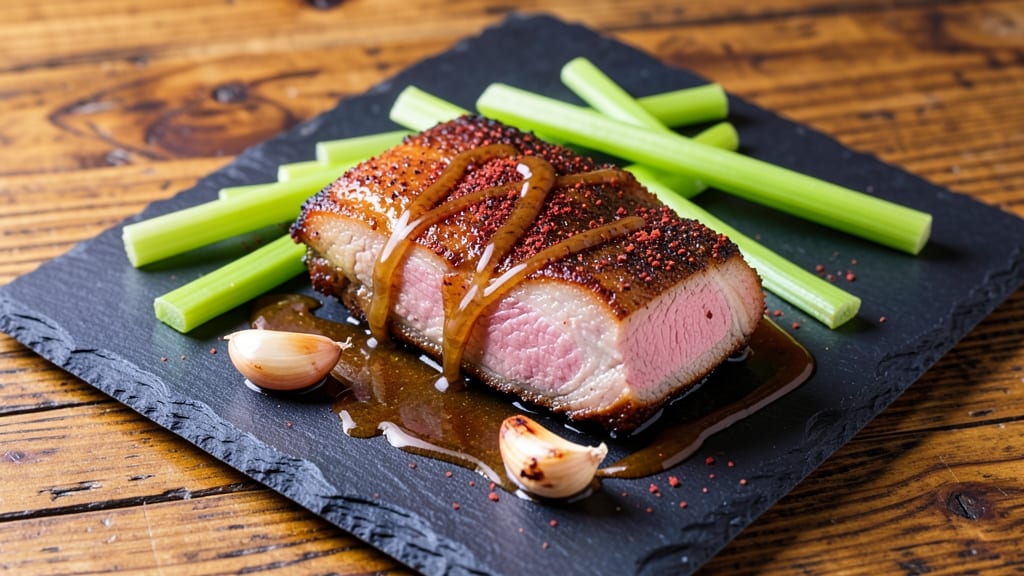
This American pork belly recipe delivers the perfect balance of crispy celery crowns and smoky-sweet maple glaze that’ll make your taste buds sing. 🔥 After years of perfecting the technique at my Atlanta smokehouse, I’ve cracked the code for achieving that restaurant-quality texture and flavor at home.
The secret lies in slow-rendering the fat and crisping the edges just right—no shortcuts, just pure, smoky satisfaction.
What sets this recipe apart is the two-stage cooking process: first, a low-and-slow braise to tenderize the pork belly, then a high-heat finish to create those coveted crispy celery crowns.
The smoky maple glaze ties everything together with a perfect balance of sweetness and depth, while the crispy edges add a satisfying crunch. This isn’t just pork belly—it’s a showstopper that’ll have everyone asking for seconds.
The result is a dish that’s rich, tender, and impossibly crispy—exactly what you’d expect from a high-end BBQ joint, but made in your own kitchen.
The celery crowns stay crisp even after slicing, and the maple glaze clings to every bite, delivering a harmonious blend of smoky, sweet, and savory flavors. This is the kind of pork belly recipe that turns a simple meal into an unforgettable experience.
Serve it with a simple arugula salad or pickled vegetables to cut through the richness, and you’ve got a complete meal that’s sure to impress. Let’s get cooking—your taste buds are in for a treat.
Ingredients for american pork belly
Six ingredients for the pork belly, plus celery crowns and glaze that’ll impress anyone.
| Ingredient | Amount | Notes |
|---|---|---|
| Pork Belly 🥓 | 4 lb | Thick-cut, skin-on preferred |
| Celery Stalks 🧅 | 1 bunch | Thick, trimmed into crowns |
| Pure Maple Syrup 🍯 | ½ cup | Grade B for smoky flavor |
| Apple Cider Vinegar 🍏 | 2 tbsp | For tangy depth |
| Smoked Paprika 🌶️ | 1 tbsp | For authentic smoky flavor |
| Garlic Cloves 🧄 | 6 cloves | Minced for glaze |
| Fresh Thyme 🌿 | ¼ cup | Leaves only, chopped |
| Kosher Salt 🧂 | 1 ½ tbsp | Diamond Crystal preferred |
| Black Peppercorns 🌶️ | 1 tsp | Freshly cracked |
| Olive Oil 🫒 | 2 tbsp | For crisping celery crowns |
| Brown Sugar 🍚 | 2 tbsp | Light or dark works |
| Honey 🍯 | 1 tbsp | For glaze balance |
| Arugula 🌱 | 4 cups | Baby variety preferred |
| Lemon Juice 🍋 | 1 tbsp | Freshly squeezed |
The pork belly is non-negotiable here—thick-cut, skin-on delivers the best fat cap for crisping. Costco or your local butcher are the best spots for quality cuts. Look for good marbling and a thick fat layer—at least 1-inch thick. If you can't find thick-cut, ask the butcher to trim it for you. Celery crowns? Grab the thickest stalks you can find—the bigger the crown, the better the crunch. Fresh thyme from the grocery store's produce section works, but if you've got a garden, even better. The Grade B maple syrup is key for that smoky depth—avoid the clear Grade A unless you're okay with a sweeter, less complex glaze.
No Grade B maple syrup? Mix 3 parts Grade A with 1 part molasses for a similar effect. Running out of apple cider vinegar? Substitute white vinegar or lemon juice—just add a pinch of salt to balance. The celery crowns can be prepped ahead—store in a sealed container with a damp paper towel to keep them crisp for up to 2 days. If you're feeling fancy, swap the arugula for shaved fennel or radicchio—both add a nice bite. The brown sugar and honey combo in the glaze is what ties everything together—don't skip the honey, it's what makes the glaze cling to the pork.
Pork belly keeps for 3-4 days in the fridge once cooked, but honestly, it's even better the next day. The celery crowns? Crisp for 24 hours max—after that, they get sad. Store them in an airtight container if you must, but I recommend eating them fresh. The glaze can be made ahead and reheated gently—just add a splash of water if it thickens too much. Leftovers? Slice the pork thinly and serve on toasted sourdough or brioche for a killer breakfast sandwich. Trust me, it's worth the extra effort.
Why You'll Love This Recipe
- One-Pan Magic: I swear by this—just toss the pork belly, celery, and spices on a sheet pan, then let the oven do the work. No chopping, no fuss, and honestly? The maple syrup caramelizes into this sticky, smoky blanket that makes cleanup a joke.
- Sweet-Savory Balance: That combo of maple syrup and apple cider vinegar? It’s like a hug for your taste buds—rich, tangy, and just enough smokiness from the paprika to keep it interesting. My husband licks the plate, no lie.
- Weeknight Hero: Between us, this is my go-to when I’m too tired to think. The pork belly stays tender but gets that crispy edge, and the celery adds a fresh crunch that cuts through the richness. Serve it over rice, in a sandwich, or straight from the pan—it’s always a win.
- Budget-Friendly Luxury: Pork belly might sound fancy, but a slab goes a long way. I buy it on sale, cut it into smaller pieces, and roast it all at once. The leftovers? Even better the next day—cold slices in a sandwich or reheated with a splash of vinegar to wake it up.
Step-by-step instructions for crispy maple-glazed pork belly
Here's how to transform thick-cut pork belly into irresistible, crackling perfection with a smoky-sweet glaze.
🔥 Step 1: Score and Season the Pork Belly
Pat the 4 lb pork belly completely dry with paper towels—this is non-negotiable for crispy skin. Place it skin-side down on a cutting board and use a sharp knife to score the fat in a diamond pattern, cutting about ½-inch deep. This creates crispy "windows" while keeping the meat tender.
In a small bowl, mix 1.5 tbsp kosher salt, 1 tbsp smoked paprika, 1 tsp cracked black peppercorns, and 0.25 cup chopped fresh thyme. Rub this generously all over the pork belly, pressing the seasoning into the cuts. Let it sit at room temperature for 30 minutes—this helps the seasoning penetrate and the meat cook more evenly.
🔥 Step 2: Render the Fat and Cook Low and Slow
Preheat your oven to 275°F. Place the pork belly skin-side down in a roasting pan and transfer to the oven. Cook for 3 hours, checking occasionally. You're looking for the fat to render out and the skin to start developing a light golden crust.
Here's the thing—don't rush this step. The slow cook ensures the meat stays juicy while the fat renders out. If the skin starts browning too quickly, tent it loosely with foil to prevent burning. After 3 hours, remove the pork belly and increase the oven temperature to 375°F.
🍳 Step 3: Build the Smoky Maple Glaze
While the pork belly rests, make the glaze. In a small saucepan, combine 0.5 cup pure maple syrup, 2 tbsp apple cider vinegar, 2 tbsp brown sugar, 1 tbsp honey, and 6 minced garlic cloves. Bring to a gentle simmer over medium heat and cook for 5-7 minutes until slightly thickened.
Remove from heat and stir in 1 tbsp lemon juice. The glaze should coat the back of a spoon but still be pourable. Taste and adjust seasoning with more salt or vinegar if needed. This glaze is the star—it balances sweet, smoky, and tangy flavors perfectly.
🔥 Step 4: Crisp the Skin and Glaze
Return the pork belly to the oven at 375°F and cook for an additional 1-1.5 hours, or until the internal temperature reaches 195-203°F and the skin is deep golden brown and crackling. If the glaze starts to caramelize too quickly, tent it with foil to prevent burning.
About 20 minutes before the pork belly is done, brush it generously with the glaze, making sure to get it all over the skin. The glaze will bubble and caramelize, creating a sticky, glossy finish. You'll know it's ready when the skin is crispy enough to crackle when you tap it gently.
👨🍳 Step 5: Crisp the Celery Crowns and Assemble
While the pork belly rests, prepare the celery crowns. Cut the 1 bunch celery stalks into 1-inch thick rounds, leaving the base intact. Heat 2 tbsp olive oil in a large skillet over medium-high heat until shimmering. Add the celery crowns in a single layer and cook for 8-10 minutes, turning occasionally, until golden brown and crispy.
Transfer the crispy celery crowns to a paper towel-lined plate to drain excess oil. Let the pork belly rest for 15-20 minutes before slicing. Slice the pork belly into ½-inch thick slices and arrange on a platter. Top with the crispy celery crowns and serve immediately over 4 cups baby arugula for a refreshing contrast.
Pro Tips For Making American Pork Belly
- CRANK THE HEAT FIRST: Start your pork belly in a screaming-hot pan—no gentle warming here. The first 3-4 minutes at medium-high will render fat fast and lock in flavor before the vinegar and syrup come in to play. I used to low-and-slow it from the start, and the meat always tasted dull by comparison.
- SALT THE BELLY 24 HOURS EARLY: Generously coat the belly with kosher salt (about 1.5 teaspoons per pound) and let it sit uncovered in the fridge. This cures the surface, keeps it moist during cooking, and makes the crust crispier than if you salt it last-minute. Yes, it’s easy to forget—but trust me, it’s worth the wait.
- DON’T SKIP THE CELERY MASH: Roughly chop the celery stalks and smash them with the flat of your knife before adding them to the pan. This releases their juices and aromatics into the fat, giving the glaze a deeper, more complex flavor. I learned this the hard way—whole celery just sits there looking pretty while the pork belly steals the show.
- USE THICK MAPLE SYRUP: Grab the grade B or "dark" maple syrup from the back of the shelf—it’s cheaper, richer, and won’t burn as quickly as the lighter grades. Thin syrup turns to sugar water fast, and you’ll end up chasing a glaze that never quite sets. (Pro tip: If you only have grade A, reduce it by half first.)
Wine and beer pairings for these flavors
Red Wine Pairings
For this rich, smoky-sweet pork belly, I reach for a bold red wine that can stand up to the maple glaze without getting lost. A Cabernet Sauvignon from Napa Valley—like Caymus Vineyards or Opus One—is my go-to.
The wine’s dark fruit notes and firm tannins cut through the fat while complementing the smoky undertones. 🍷
If you prefer something slightly lighter but still robust, try a Syrah from Washington State, like Chateau Ste. Michelle. The peppery finish and blackberry flavors create a perfect balance with the caramelized edges of the pork belly. Both wines elevate the dish without overpowering it.
Beer Pairings
A smoked porter is my top beer recommendation—it mirrors the smoky depth of the glaze while adding a malty backbone. Look for Deschutes Brewery’s Mirror Pond Smoked Porter or Goose Island’s Bourbon County Stout (though it’s a stout, its caramel notes work beautifully).
The beer’s roasted maltiness enhances the pork’s richness. 🍺
For a lighter option, a Belgian-style witbier like Stella Artois or Hoegaarden provides a crisp, citrusy contrast. The effervescence cleanses your palate between bites of the fatty pork belly, making it a refreshing match.
If you’re feeling adventurous, try a barleywine—its sweetness and complexity stand up to the maple glaze like a champ.
Regional Adaptations
In Charleston, where I honed my pork belly skills, we often pair this dish with a local Coastal Carolina red blend—think Sandy Creek Vineyards.
The wine’s balance of Merlot and Cabernet Sauvignon adds a touch of elegance without overwhelming the smoky-sweet flavors. It’s a crowd-pleaser at any gathering. 🗺️
For a Southeast BBQ circuit twist, swap the wine for a local craft beer like Atlanta’s SweetWater 420 IPA. The hoppy bitterness cuts through the fat, while the malt sweetness complements the maple glaze. It’s a match made in BBQ heaven—just don’t tell the wine snobs.
Non-Alcoholic Options
If you’re skipping the booze, a sparkling apple cider like Martinelli’s adds a festive touch. The acidity balances the richness, and the bubbles keep your palate fresh.
For something more savory, try a smoky ginger beer—mix 2 tbsp ginger syrup with 1 cup soda water and a squeeze of lime. The ginger’s heat echoes the smoky paprika in the pork belly. 🍏
Or go for a cold-brew coffee with a splash of heavy cream—the bitterness and creaminess mirror the glaze’s depth. It’s a surprising but delicious pairing that’ll fool even the most skeptical guests.
Nutrition facts
Frequently asked questions
Can I make this recipe with thinner-cut pork belly?
Thinner cuts (½-inch fat cap) won't crisp properly—you need at least 1-inch thick fat for those coveted crackling edges. If your butcher can't provide thick-cut, ask them to trim a standard cut to 1-inch thickness before you score it. Thin cuts will render fat too quickly and won't develop that restaurant-quality crunch.
How do I know when the pork belly is fully cooked?
Use a meat thermometer! The internal temperature should reach 195-203°F—this ensures the meat is tender and the fat is fully rendered. The skin should also be deep golden brown and crackle when tapped gently. If it's not crispy enough, return it to 375°F for 10-15 more minutes.
What's the best way to reheat leftover pork belly?
Slice the pork belly into ½-inch thick pieces and reheat in a 275°F oven for 10-15 minutes until warmed through. For extra crispiness, broil for 2-3 minutes at the end. Avoid microwaving—it makes the skin soggy. The celery crowns? Best eaten fresh, but you can reheat them in a 350°F oven for 5 minutes if needed.
Can I substitute the celery crowns with something else?
Swap them for crispy Brussels sprouts halves (tossed in olive oil and roasted) or thin apple slices (pan-fried until caramelized). For a Southern twist, try crispy fried onions or pickled jalapeños—both add texture and balance the richness. Just ensure whatever you choose can handle the high heat without getting mushy.
Why did my pork belly turn out greasy instead of crispy?
Greasy pork belly usually means the fat rendered too quickly or the oven wasn't hot enough. Start with a completely dry cut and score the fat in a diamond pattern to create crispy "windows." Cook at 275°F for 3 hours first to render fat slowly, then crank the heat to 375°F for the final crisp. If your oven runs hot, tent the pork with foil during the low-and-slow phase.