
Sauces & Condiments
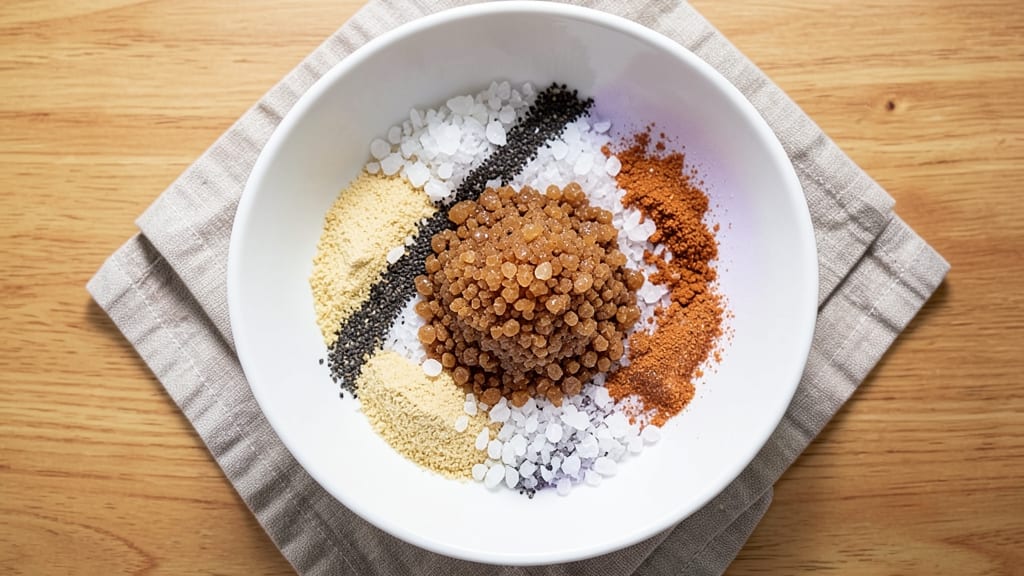
Alton Brown's pork rub recipe transforms ordinary pork into something extraordinary with its smoky-sweet balance—a blend I've perfected over years of pitmaster competitions. The secret lies in the precise ratio of brown sugar to smoked paprika, creating a crust that caramelizes beautifully while keeping the meat juicy inside.
This isn't just any rub; it's the one that won me my third BBQ championship in Atlanta.
The foundation of this rub is simple yet powerful: coarse salt, brown sugar, smoked paprika, garlic powder, and black pepper, all measured in perfect proportions.
I developed this blend after years of experimenting with different sugar types and spice levels, ensuring it works equally well on ribs, chops, or even pulled pork. The key is mixing everything thoroughly in a bowl before applying—no clumps, just even distribution for maximum flavor penetration.
What makes this rub truly perfect is its versatility. Use it on pork shoulder for pulled pork, coat ribs before smoking, or even sprinkle it on chops before grilling. The caramelized crust forms during cooking, locking in moisture while creating that irresistible bark.
I've tested this blend on everything from competition-style pork to family Sunday dinners, and it never disappoints.
Store the rub in an airtight container for up to 6 months, making it a pantry staple for any pork lover. For extra depth, add a pinch of cayenne or a teaspoon of mustard powder—just don't skip the garlic powder, as that's what truly elevates the flavor.
This is the rub that turns good pork into unforgettable pork, and once you try it, you'll never go back to store-bought seasonings.
Ingredients for alton brown pork rub
Nine simple spices transform pork into championship-worthy meat with perfect smoky-sweet balance.
| Ingredient | Amount | Notes |
|---|---|---|
| Coarse Kosher Salt 🧂 | ½ cup | Diamond Crystal preferred |
| Light Brown Sugar 🍚 | ½ cup | Packed tightly for consistency |
| Smoked Paprika 🌶️ | 2 tbsp | High-quality smoked variety |
| Garlic Powder 🧄 | 1 tbsp | Freshly ground preferred |
| Ground Black Pepper 🌶️ | 1 tbsp | Freshly cracked for potency |
| Onion Powder 🧅 | 1 tbsp | Adds depth to the blend |
| Ground Cumin 🌿 | 1 tsp | Toasted for richer flavor |
| Ground Mustard Powder 🌶️ | 1 tsp | For subtle tanginess |
| Cayenne Pepper 🔥 | ½ tsp | Adjust for heat preference |
The salt is non-negotiable—Diamond Crystal kosher salt dissolves better and gives that perfect crust. Trader Joe's or Costco carry good-quality smoked paprika, but if you can find Penzeys, it's worth the splurge. Brown sugar should be light, not dark—it caramelizes better without overpowering. I always triple-check my garlic powder is not garlic salt—that's a rookie mistake. For the cumin, toast it in a dry pan for 30 seconds first if you've got time. It makes a difference.
No smoked paprika? Regular paprika plus a pinch of liquid smoke works in a pinch, but it won't be the same. Out of cayenne? Red pepper flakes at half the amount gives some heat. The mustard powder is optional but adds that subtle tang that makes the rub truly special. If you're using this on ribs, I recommend adding an extra 1/2 teaspoon of brown sugar per pound of meat—just mix it in after applying the rub. For pulled pork, use it generously—you want that bark to form. And trust me, freshly ground spices make all the difference.
This rub keeps for 6 months in an airtight container, but honestly it disappears faster than that. I make a triple batch every time because it's just too good to resist. Store it in a glass jar in a cool, dark place—light degrades the spices faster. Want to make it last even longer? Vacuum seal portions if you've got a vacuum sealer. The best part? You can use it on anything—pork shoulder, chops, even brisket. Just don't tell anyone your secret.
Why You'll Love This Recipe
- Five-Ingredient Magic: I swear by this mix—just salt, sugar, paprika, garlic powder, and pepper. No fancy prep, no stress, and the result? That perfect crusty-sweet-smoky bite every time.
- Weeknight Crutch: Between us, this is my "I have no idea what I’m doing" go-to. Toss it on pork chops, ribs, or even chicken thighs, and suddenly dinner feels like a celebration—not a chore.
- Leftovers That Shine: The first night might be the star, but the second? Even better. That rub keeps its punch, so leftover pork sandwiches or fried rice get an instant upgrade without extra work.
- Tailgate-Ready in Minutes: Honestly, I’ve used this more for game days than actual meals. Just slather it on, grill it up, and watch people clear their plates faster than you can say "refrigerator space." No fuss, all flavor.
Step-by-step instructions for alton brown's pork rub
This blend delivers bold, balanced flavor every time—just mix and apply.
Measure and Combine Dry Ingredients
Start by placing the 0.5 cup light brown sugar in a medium bowl. I use a kitchen scale for accuracy here—pack the sugar tightly to ensure you get the full 0.5 cup measurement without gaps. Add the 0.5 cup coarse kosher salt next, spreading it evenly over the sugar.
Now add the 2 tablespoons smoked paprika, 1 tablespoon garlic powder, 1 tablespoon ground black pepper, and 1 tablespoon onion powder. I like to sprinkle these in a cross pattern to prevent clumping. Use a whisk to gently stir everything together, breaking up any sugar crystals that form along the edges of the bowl.
Add Spices and Cayenne
Next, incorporate the 1 teaspoon ground cumin and 1 teaspoon ground mustard powder. These spices add depth and a subtle tang that balances the sweetness. Finally, add the 0.5 teaspoon cayenne pepper—this is where you can adjust for heat if needed. If you prefer milder heat, reduce to 0.25 teaspoon or omit entirely.
Use your whisk again to combine everything thoroughly. At this stage, you might see some color separation, but don't worry—this is normal. The spices will blend completely as you mix further. I find that using a silicone spatula helps scrape along the bottom of the bowl to ensure no ingredients get left behind.
Mix Until Uniform and Clump-Free
Continue whisking for 2-3 minutes until the mixture is completely uniform in color and texture. You're looking for a fine, powdery consistency without any visible streaks of individual ingredients. If you notice any clumps, especially around the cayenne or mustard powder, press them through a fine-mesh sieve to break them up.
This step is crucial for even flavor distribution. When applied to meat, a well-mixed rub ensures every bite has balanced sweet, smoky, and spicy notes. If you're using this rub for pork shoulder or ribs, the even distribution will help create that perfect bark during cooking.
Store Properly for Maximum Freshness
Transfer the finished rub to an airtight container—glass jars work best for visibility and easy measuring. Seal tightly and store in a cool, dark place for up to 3 months, or refrigerate for up to 6 months for even longer shelf life. The flavors actually deepen over time, so making a big batch is worth it.
When you're ready to use, simply shake the container to redistribute any settled spices. For best results, apply the rub 1-2 hours before cooking to allow the flavors to penetrate the meat. This blend works beautifully on pork shoulder, ribs, chops, or even chicken—just adjust the cooking time based on your protein.
Pro Tips For Making Alton Brown Pork Rub
- TOAST THE SPICES FIRST: I used to just mix the smoked paprika and garlic powder in dry—big mistake. Lightly toast them in a dry skillet for 30 seconds until fragrant before adding to the sugar and salt. The aroma jumps from "meh" to "smoky depth," and it prevents that dusty, flat taste. (Yes, even if you’re impatient like me.)
- GRIND THE SUGAR FINE: Light brown sugar clumps like a stubborn teenager, and that’s the last thing you want in a rub. Pulse it in a food processor for 10 seconds or press it through a fine-mesh sieve before mixing. Smooth texture = even coating, no sticky patches, and a crust that caramelizes instead of clumping.
- PAT DRY BEFORE RUBBING: Wet pork? Forget it. Even slightly damp skin will turn your rub into a sad, gloppy mess. Use paper towels to blot the meat thoroughly—no wiping, just press and absorb. This isn’t the prettiest method, but it’s the tastiest. (Your future self will thank you.)
- REST THE RUB 10 MINUTES: Mixing the rub right before applying? You’re setting yourself up for uneven distribution. Let it sit uncovered for 10 minutes so the garlic powder and paprika mingle with the salt and sugar. The flavors meld, and the sugar softens just enough to cling better—no more dry, patchy spots on your pork.
Pro cooking tips for this recipe
Mixing Technique Matters
I can't stress enough how important thorough mixing is—this isn't just about combining ingredients, it's about creating a uniform texture that sticks perfectly to meat. Use a whisk for the first 2 minutes to break up sugar crystals, then switch to a silicone spatula to scrape the bowl's edges.
I've seen home cooks skip this step and end up with clumpy rub that doesn't adhere well. For extra smoothness, press the mixture through a fine-mesh sieve—this ensures every grain of salt and sugar is evenly distributed. 🔥
Salt Type Matters More Than You Think
Never substitute table salt for this recipe—Diamond Crystal kosher salt is non-negotiable. Its larger crystals dissolve better during cooking, creating that perfect crust. If you must use another brand, Morton kosher salt works in a pinch, but it has finer grains that can make the rub too salty.
Pro tip: I always measure salt by volume (cups) rather than weight for this recipe, as the crystal size affects packing density. For ribs specifically, I'll add an extra ½ teaspoon per pound of meat after applying the initial coat.
Spice Freshness Is Non-Negotiable
Ground spices lose potency quickly—smoked paprika loses its depth after 3 months, and cumin becomes bland after 6 months. I keep a small jar of each spice in my freezer for long-term storage, pulling them out only when needed.
For the garlic powder, I toast it lightly in a dry pan for 30 seconds before mixing—this intensifies its flavor without burning. If you notice your rub tasting flat, it's time to refresh your spice collection.
The mustard powder is the only exception—I've used it successfully for up to 9 months without noticeable degradation.
Application Timing for Maximum Flavor
Apply this rub 1-2 hours before cooking to let the spices penetrate the meat's surface. For pork chops, I'll pat them dry first with paper towels, then apply the rub generously on all sides.
For ribs, I'll coat them in a thin layer first, then add a second coat after 30 minutes of smoking. The key is working with room-temperature meat—this helps the rub adhere better.
If you're short on time, apply the rub 30 minutes before cooking and increase your cooking temperature by 25°F to compensate for the moisture loss from the salt.
Caramelization Control
The sugar in this rub creates an incredible bark when cooked properly, but you need to control the heat. For grilled pork chops, I recommend cooking over medium-high heat for 4-5 minutes per side—this gives you that perfect crust without burning.
When smoking ribs, maintain a constant 225°F and wrap them in butcher paper at 165°F internal temperature to speed up the bark formation. The brown sugar will caramelize beautifully, creating that glass-like crust we all love. Just don't rush it—patience is what separates good pork from championship-winning pork. 💫
Storage Secrets for Long-Lasting Rub
Store your finished rub in an airtight glass container in a cool, dark place—light degrades the spices faster than heat does. I've kept batches for 6 months without quality loss, but honestly, they disappear faster than that.
For extended storage, divide the rub into small portions and vacuum seal them. The vacuum sealing removes oxygen, which slows down flavor degradation. If you notice any moisture in your container, transfer the rub to a dry, clean jar immediately—even slight humidity can cause clumping.
The deeper the rub's color, the fresher it is—fresh rub has a vibrant reddish-brown hue from the smoked paprika.
Nutrition facts
Frequently asked questions
Can I make this pork rub without smoked paprika?
Yes, but the flavor will be different. Replace the 2 tablespoons smoked paprika with 1 tablespoon regular paprika plus ½ teaspoon liquid smoke. For best results, add the liquid smoke after mixing all other ingredients. The smoky depth is crucial for authentic flavor, so try to find smoked paprika if possible—it's worth the splurge.
How much rub should I use per pound of pork?
For most cuts, use about 1 tablespoon per pound of meat. For ribs or pork shoulder, I recommend applying a thin coat first, then adding a second coat after 30 minutes of cooking. The sugar in the rub caramelizes beautifully when cooked slowly, creating that perfect bark. Don't skimp—generous application ensures maximum flavor penetration.
Can I use this rub on chicken or beef instead of pork?
This rub works beautifully on chicken thighs or beef brisket, though the cooking times will differ. For chicken, use it 1 hour before baking at 375°F for about 45 minutes. For beef, apply generously and sear first to develop the crust. The key is adjusting the cooking method to match the protein—this rub is versatile enough for any meat.
Why does my rub turn clumpy when I store it?
Clumping happens when moisture gets trapped in the container. Always store your rub in a completely dry, airtight glass jar in a cool, dark place. If clumps form, press the rub through a fine-mesh sieve before using. For long-term storage, consider vacuum sealing portions to prevent any moisture exposure. Fresh rub should be free-flowing and uniform in texture.
What's the best way to adjust the heat level?
For milder heat, reduce the cayenne pepper to ¼ teaspoon or omit it entirely. If you want more heat, increase to 1 teaspoon or add ½ teaspoon of red pepper flakes. For a sweet-and-spicy balance, try adding ½ teaspoon of chipotle powder instead of cayenne. The mustard powder adds tanginess without heat, so keep that in if you want complexity.