
Main Courses
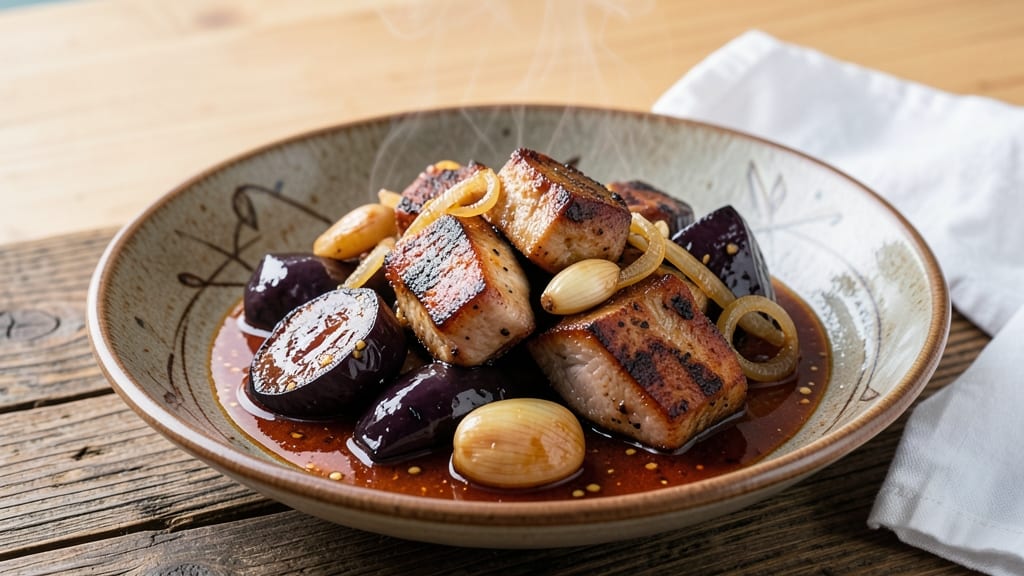
This adobong talong with pork recipe brings the rich, smoky-sweet flavors of Filipino home cooking to your table. 🔥 I remember my first taste of this dish in Manila—how the tender eggplant absorbed the tangy-savory adobo while the pork developed deep, caramelized edges.
The secret lies in balancing soy sauce, vinegar, and garlic for that signature umami kick without overpowering the natural sweetness of the eggplant.
What makes this recipe special is the braising technique that transforms tough pork bites into melt-in-your-mouth morsels while keeping the eggplant tender yet textured. We'll start with a quick marinade for the pork, then let everything simmer slowly until the flavors meld into a cohesive, aromatic sauce.
The dish is traditionally served with steamed rice to soak up every last bit of that flavorful liquid.
By the time you serve this dish, your kitchen will smell like a Filipino comfort food restaurant, and your guests will be reaching for seconds. The pork will be perfectly tender with just enough bite, while the eggplant soaks up all that complex adobo flavor.
This is the kind of meal that feels like a warm embrace—familiar yet always exciting.
The best part? This recipe scales beautifully for gatherings, and the leftovers actually taste better the next day as the flavors continue to develop. Let's get cooking—your taste buds are about to go on a journey to the Philippines.
Ingredients for adobong talong with pork
Pork, eggplant, and soy sauce—Filipino comfort food at its most flavorful and tender.
| Ingredient | Amount | Notes |
|---|---|---|
| Pork Shoulder 🥩 | 1 ½ lb | Cut into 1.5-inch cubes |
| Eggplant 🍆 | 2 medium | Whole, unpeeled |
| Soy Sauce 🍶 | ½ cup | High-quality Filipino preferred |
| White Vinegar 🍶 | ¼ cup | White or cane vinegar |
| Garlic Cloves 🧄 | 8 cloves | Minced or finely chopped |
| Onion 🧅 | 1 whole | Medium, sliced |
| Sugar 🍚 | ¼ cup | White granulated |
| Bay Leaves 🌿 | 2 whole | Dried, crumbled |
| Black Peppercorns 🌶️ | ½ tsp | Crushed |
| Olive Oil 🫒 | 2 tbsp | For searing pork |
| Salt 🧂 | 1 ½ tsp | Adjust to taste |
| Green Onions 🧅 | 3 whole | Sliced, for garnish |
The pork shoulder is non-negotiable here—it's what gives you that melt-in-your-mouth texture after hours of braising. Ask your butcher for bone-in, skin-on cuts if you want extra flavor, but boneless works too. I usually grab mine from Filipino markets or the meat department at Trader Joe's—they often carry pork shoulder pre-cut for braising. For the eggplant, long, dark purple varieties hold up best during cooking. If you can't find those, regular eggplant works but might get a little mushy. The key is to slice them into even pieces so they cook at the same rate.
No soy sauce with a Filipino label? Japanese or Korean soy sauce works in a pinch, but it'll taste slightly different. Vinegar substitutes? Apple cider vinegar or rice vinegar both work, but white vinegar is traditional. The garlic can be pre-minced from a jar if you're in a rush, but freshly minced has way more flavor. Sugar can be swapped for brown sugar if you want a deeper caramel note. And if you're missing bay leaves, dried thyme at half the amount gets you close. The green onions are just for garnish—skip them if you're not a fan, but they add that fresh pop of color.
This dish tastes even better the next day, so make extra. Store leftovers in an airtight container in the fridge for up to 5 days, or freeze for 3 months. I like to portion it into individual containers so I can reheat just what I need. For serving, keep the eggplant and pork together with the sauce—don't drain it. That's where all the magic happens. And trust me, steamed jasmine rice is the only way to eat this.
Why You'll Love This Recipe
- One-Pot Magic: I swear by this recipe when I’m too tired to wash extra dishes—just brown the pork, toss in chopped eggplant, and let the vinegar and soy sauce work their sauce sorcery in one pan. No straining, no fuss, just clean-up simplicity.
- Garlic-Vinegar Bomb: That tangy-sweet punch from the white vinegar and soy sauce? It’s what turns this into a flavor memory. The eggplant soaks it up perfectly, and the pork stays juicy while the garlic cloves caramelize into little flavor bombs.
- Weeknight Workhorse: I make this when I’m feeding a crowd or just myself—it’s the same recipe, just scaled. Leftovers? Even better cold the next day, packed in lunches, or reheated for a lazy night. Honestly, it’s my go-to for any day of the week.
- Budget Stretch: Pork shoulder is affordable, eggplant lasts forever, and a little soy sauce goes a long way. This recipe feeds four for under $10, and the leftovers keep me from ordering takeout. Plus, it’s one of those dishes that tastes more expensive than it is.
Step-by-step instructions for adobong talong with pork
Here's how to create this rich, smoky Filipino classic with tender pork and caramelized eggplant.
🔥 Step 1: Sear the Pork Shoulder Cubes
Heat the 2 tbsp olive oil in a large Dutch oven over medium-high heat until shimmering. Add the 1.5 lb pork shoulder cut into 1.5-inch cubes in a single layer, leaving space between each piece. Let them sear undisturbed for 3-4 minutes until deep golden brown on all sides.
Here's the thing—don't move them around too soon. You want that beautiful crust to form, which adds so much flavor. Once browned, remove the pork with tongs and set aside on a plate. You'll notice the oil will look darker now, and that's perfect—it's packed with flavor from the pork.
🍳 Step 2: Sauté Aromatics Until Fragrant
In the same Dutch oven, add the 1 whole sliced onion and 8 cloves minced garlic cloves to the rendered pork fat. Cook over medium heat for 4-5 minutes until the onions soften and turn translucent, and the garlic releases its signature aroma.
You'll know it's ready when the garlic stops sizzling and starts to smell sweet and nutty. This step builds the flavor foundation for your adobo. I like to stir occasionally, but not constantly—you want those aromatics to caramelize slightly for deeper flavor.
🥘 Step 3: Combine Wet Ingredients and Simmer
Pour in the 0.5 cup soy sauce, 0.25 cup white vinegar, and 0.25 cup sugar. Add the 2 whole crumbled bay leaves and 0.5 tsp crushed black peppercorns, then stir well to combine. Return the pork to the pot, making sure it's submerged in the sauce.
Bring everything to a gentle simmer over medium-low heat. Here's where it gets interesting—the sauce will bubble vigorously at first, but you want it to reduce gradually. Let it cook uncovered for 20-25 minutes until the pork is tender and the sauce has thickened slightly.
🥘 Step 4: Add Eggplant and Braise
While the pork simmers, cut the 2 medium eggplant into 1.5-inch chunks (no need to peel). Add them to the Dutch oven along with the 1.5 tsp salt. Stir gently to distribute the sauce evenly. The eggplant will absorb some of the rich flavors as it cooks.
Continue simmering for another 15-20 minutes until the eggplant is tender when pierced with a fork but still holds its shape. The sauce should coat the back of a spoon and have a glossy appearance. If it's too thin, let it reduce a bit longer—this is where the magic happens.
🍽️ Step 5: Finish and Garnish
Once everything is tender, give the adobo a final taste and adjust the seasoning if needed. The eggplant should be soft but not mushy, and the pork should pull apart easily. Remove the 2 bay leaves before serving.
Ladle the adobo into serving bowls and garnish with the 3 sliced green onions. Serve immediately with steamed rice to soak up all that delicious sauce. The combination of tender pork, caramelized eggplant, and that perfect balance of sweet, sour, and smoky flavors makes this dish truly special.
Pro Tips For Making Adobong Talong With Pork
- Brown the Pork First: The richest adobo flavor starts with a deep, caramelized crust on the pork—don’t skip this. Sear the shoulder in batches over medium-high heat until it’s golden in spots (about 5-7 minutes per side), then deglaze with vinegar right away. I used to rush this step, and the sauce always tasted flat until I realized how much difference that browning makes.
- Salt the Eggplant: Toss sliced eggplant with ½ teaspoon salt per pound and let it sit for 10 minutes before cooking. This draws out bitterness and excess water, so it absorbs the adobo sauce instead of turning mushy. I learned this the hard way after serving a batch where the eggplant tasted watery—now I never skip it.
- Simmer Slowly: Once everything’s in the pot, keep the heat low and let the adobo simmer uncovered for at least 45 minutes. The sauce needs time to reduce and meld, not boil furiously or it’ll turn thin and sour. I was skeptical until I tried it—now I resist the urge to rush, even when I’m hungry.
- Balance the Vinegar: Start with ¼ cup white vinegar, taste the sauce, then adjust—you can always add more later. Too much upfront makes the dish harsh, but a splash at the end brightens the flavor. I used to dump in the whole ½ cup at once and wondered why my adobo tasted like a pickle. Now I taste as I go.
Troubleshooting your adobong talong with pork
Pork Too Tough
If your pork bites turn out chewy or rubbery, it likely didn't braise long enough. I've found that bone-in cuts need at least 1.5 hours of simmering at medium-low heat to become fork-tender.
For boneless pork shoulder, 1 hour is usually sufficient, but check for an internal temperature of 195°F—that's when collagen breaks down into gelatin. If you're short on time, try pressure cooking at 15 psi for 25 minutes before finishing with the adobo sauce. 🔥
Eggplant Too Mushy
Overcooked eggplant loses its texture and turns into a watery mess. To prevent this, cut eggplant into even 1.5-inch chunks and add them only after the pork has already simmered for 20 minutes. This way, they absorb flavors without overcooking.
For extra structure, blanch eggplant in boiling water for 2 minutes before adding to the adobo. Also, reduce heat to low once eggplant is added to prevent breakdown. ✨
Sauce Too Thin
A watery sauce happens when the adobo doesn't reduce enough. To fix this, simmer uncovered and stir occasionally to evaporate excess liquid. If the sauce is still too thin after 30 minutes, remove the lid and let it reduce on medium-high heat for an additional 5-10 minutes.
For a quicker fix, mix 1 tbsp cornstarch with 2 tbsp water and stir into the sauce until it thickens. I keep a small bowl of this slurry on hand when making adobo—it's a game-changer. 💫
Vinegar Overpowering
Too much acidity can make the dish taste harsh. If your adobo is too tangy, balance it with a pinch of sugar (about ½ tsp) or a splash of soy sauce (about 1 tbsp).
For a smoother flavor, simmer uncovered for 5 extra minutes to let the vinegar mellow. I also like to add a small piece of ginger (½ inch) while simmering—it rounds out the acidity beautifully. 🌶️
Burnt Aromatics
Garlic and onions can burn quickly, especially if you're distracted. To avoid this, keep heat at medium and stir every 2-3 minutes until onions soften. If they start to brown too quickly, lower heat slightly and add a splash of water to deglaze the pot.
For extra flavor, char the aromatics lightly—just don't let them burn. I often toast the garlic until it's golden but not crispy for that perfect balance. 💡
Eggplant Not Absorbing Flavor
If your eggplant stays bland, it likely wasn't cooked long enough in the sauce. To fix this, simmer eggplant for an extra 10 minutes after adding it to the adobo.
For deeper flavor, marinate the eggplant chunks in soy sauce and vinegar for 15 minutes before adding them to the pot. I also like to sprinkle ½ tsp smoked paprika over the eggplant while it cooks—it adds a subtle smokiness that pairs perfectly with the adobo. 🍆
Nutrition facts
Frequently asked questions
Can I use chicken instead of pork in this recipe?
You can absolutely substitute chicken, but the cooking time and texture will differ. Use bone-in, skin-on chicken thighs (about 1.5 lbs) and braise for 25-30 minutes instead of pork. Chicken absorbs adobo flavors quickly, but avoid using breast meat—it tends to dry out. The eggplant will still cook the same way, so adjust accordingly.
How do I know when the eggplant is perfectly cooked?
The eggplant should be tender when pierced with a fork but still hold its shape—like a ripe avocado. It should yield slightly to pressure but not fall apart. If it's still firm after 15-20 minutes of simmering, cover the pot and cook for another 5 minutes. Overcooked eggplant turns mushy and watery, so keep an eye on it.
What's the best rice to serve with this dish?
Steamed jasmine rice is the traditional choice—it's fragrant and absorbs the rich adobo sauce beautifully. For extra authenticity, try Filipino sinangag (garlic fried rice) as a side. If you prefer a lighter option, brown rice works too, but it may need 10 extra minutes of cooking time to fully absorb the flavors.
Can I make this recipe in a slow cooker?
Yes! Sear the pork first, then transfer everything to the slow cooker and cook on low for 6-7 hours or high for 3-4 hours. The eggplant should be added during the last 30 minutes of cooking to prevent mushiness. The slow cooker method actually enhances the tenderness of the pork and deepens the sauce's flavor. Just stir occasionally to prevent sticking.
Why does my adobo sauce sometimes separate?
Sauce separation usually happens when the vinegar and oil aren't properly emulsified. To fix this, whisk in 1 tbsp cornstarch mixed with 2 tbsp water while simmering. For prevention, stir the sauce frequently during the last 10 minutes of cooking. If it's already separated, blend the sauce briefly (without the eggplant) to re-emulsify before serving.