
Main Courses
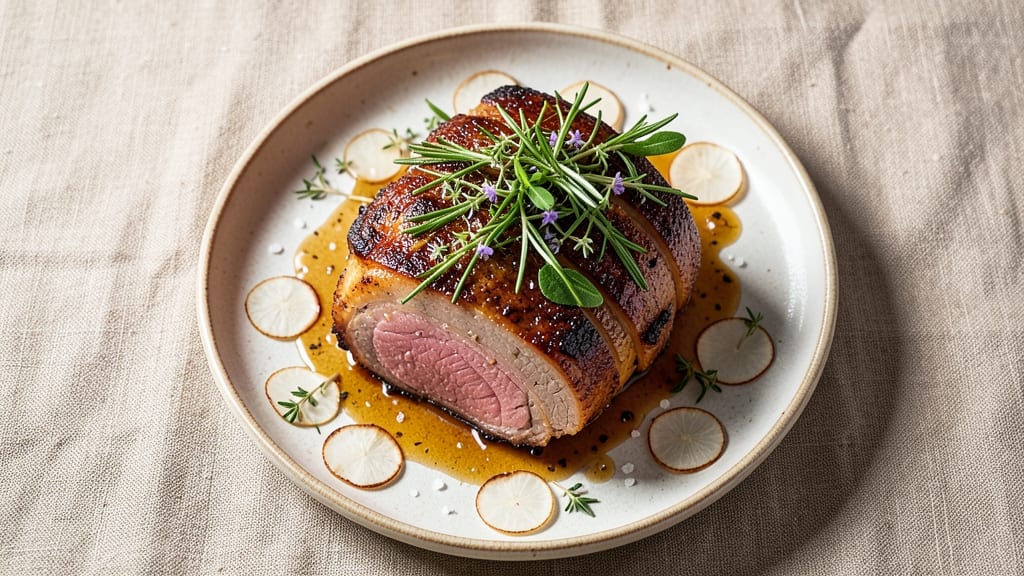
This 3 lb pork loin recipe delivers restaurant-quality results with a foolproof herb-crusted technique that guarantees perfect doneness every time.
After years of perfecting pork roasts in Atlanta's high-volume kitchens, I've developed a method that transforms a simple cut into a showstopping centerpiece—tender, juicy, and with a flavorful crust that holds up to carving. The secret lies in precise temperature control and a herb blend that stays aromatic through cooking.
We start with a dry brine that locks in moisture, followed by a sear in cast iron to build flavor and create that coveted crust. The roast then finishes in the oven at a carefully calibrated temperature, ensuring medium-rare perfection at the center.
This isn't just another pork recipe—it's a technique that works for both special occasions and weeknight dinners, with leftovers that reheat beautifully for sandwiches the next day.
The result is a juicy, flavorful pork loin with a golden-brown crust that's impossible to resist. Each slice reveals tender meat with just a hint of pink at the center, surrounded by herbs that infuse every bite.
The method accommodates the 3 lb cut perfectly, ensuring even cooking without drying out the edges.
Perfect for family dinners, holiday feasts, or impressive gatherings, this recipe scales beautifully while maintaining its restaurant-quality results. The herb crust adds visual appeal and aromatic depth that elevates any meal. Let's get started on creating your perfect pork loin roast.
Ingredients for 3 lb pork loin
Restaurant-quality pork loin starts with these precise ingredients and a foolproof herb-crusted technique.
| Ingredient | Amount | Notes |
|---|---|---|
| Pork Loin (Center Cut) 🥩 | 3 lb | Bone-in preferred for even cooking |
| Kosher Salt (Diamond Crystal) 🧂 | 1 ½ tbsp | For dry brine and seasoning |
| Fresh Rosemary 🌿 | ½ cup | Finely chopped, stems removed |
| Fresh Thyme 🌿 | ¼ cup | Leaves only, finely chopped |
| Fresh Sage 🌿 | ¼ cup | Leaves only, finely chopped |
| Garlic Cloves 🧄 | 6 cloves | Minced for herb crust |
| Extra-Virgin Olive Oil 🫒 | ¼ cup | For herb crust and searing |
| Black Peppercorns 🌶️ | 1 tbsp | Freshly cracked, coarse grind |
| Unsalted Butter 🧈 | ½ cup | Cold, cubed for basting |
| Apple Cider Vinegar 🍎 | 2 tbsp | For dry brine |
| Honey 🍯 | 1 tbsp | Light drizzle for glaze |
| Mustard (Dijon) 🍯 | 1 tbsp | For herb crust |
The pork loin is everything here—center-cut, bone-in for even heat distribution. Grab one from Whole Foods or your local butcher, and ask for the thickest part of the loin. Look for good marbling, not too much fat, but enough to keep it juicy. I always dry brine overnight—it's non-negotiable for that perfect texture. Fresh herbs are a must; Trader Joe's has great pre-chopped mixes, but I prefer chopping my own for maximum aroma. The rosemary and thyme should smell vibrant—if they're wilted, toss them. For the garlic, peel and mince it yourself—jarred minced garlic lacks freshness.
No fresh rosemary? Dried works at half the amount, but trust me, it's not the same. Running low on Dijon? Yellow mustard plus a pinch of sugar gets you close. The honey glaze is optional but adds a beautiful finish—substitute with maple syrup if you prefer. For the olive oil, use a fruity extra-virgin—the cheap stuff burns too quickly. The butter should be cold and cubed when you add it to the pan—don't melt it ahead of time. And if you're short on time, skip the dry brine but increase the salt to 2 tbsp—just know the texture won't be as perfect.
This roast reheats like a dream—warm slices in a skillet with a splash of broth for sandwiches the next day. Store leftovers in the fridge for up to 4 days, wrapped tightly in foil. For longer storage, freeze in portions—it keeps for 3 months without losing texture. The herb crust stays aromatic if you keep it airtight, but honestly, it's best eaten fresh. And if you're serving a crowd, double the recipe—this method scales perfectly for 6 lbs.
Why You'll Love This Recipe
- Here’s the real win: the pork stays juicy for days, and the flavor only gets better. I’ll wrap slices in tortillas for breakfast burritos or toss them into pasta for a no-fuss dinner. (Yes, even on a Tuesday night.)
- One-Pan Magic: Honestly, I swear by this recipe because it’s that simple—just salt, herbs, and heat. No fancy prep, no chopping, no mess. Toss the pork loin on a sheet pan, sprinkle rosemary and thyme like confetti, and let the oven do the work.
- Herb-Packed Perfection: That crispy, golden crust with tender meat inside? The rosemary and sage turn it into something restaurant-worthy without a single extra ingredient. Between us, it’s the kind of flavor that makes people ask, “What’s in this?”—and then beg for seconds.
- Weeknight or Dinner Party: I make this for lazy Tuesdays and Sunday suppers—same recipe, different vibes. Slice it thin for sandwiches, serve it whole for a showstopper, or shred it for tacos. It’s the ultimate “I can do this” centerpiece.
Step-by-step instructions for herb-crusted pork loin roast
Here's how to achieve restaurant-quality pork loin with a fragrant herb crust and juicy interior every time.
Prepare the Dry Brine and Herb Crust
Start by combining the 2 tablespoons apple cider vinegar with 1.5 tablespoons kosher salt in a small bowl. This creates a dry brine that tenderizes the meat and enhances flavor penetration. Rub this mixture all over the 3 lb pork loin, including the cut edges, making sure it adheres evenly. Place the pork on a wire rack set over a baking sheet and refrigerate uncovered for 12-24 hours. This step is non-negotiable—it's what transforms good pork into exceptional pork.
While the pork brines, prepare the herb crust by finely chopping the 0.5 cup fresh rosemary, 0.25 cup fresh thyme, and 0.25 cup fresh sage leaves. In a separate bowl, mix these herbs with the 6 minced garlic cloves, 1 tablespoon Dijon mustard, 1 tablespoon cracked black peppercorns, and 0.25 cup extra-virgin olive oil. The mustard helps bind the crust while adding subtle tang, and the cracked peppercorns add a delightful bite. Let this mixture sit at room temperature while you preheat the oven.
Sear the Pork for Maximum Flavor
Preheat your oven to 425°F with a rack positioned in the lower third. Remove the pork from the refrigerator and let it sit at room temperature for 30 minutes—this ensures even cooking. Heat a large oven-safe skillet over medium-high heat until very hot. Add 0.25 cup unsalted butter (half of the total) and let it melt completely, then add the pork loin. Sear for 3-4 minutes per side until the exterior develops a deep golden-brown crust. This sear locks in juices and creates that irresistible crust we're after.
Transfer the seared pork to a plate and let it rest for 5 minutes while you prepare the finishing touches. The crust will firm up slightly during this time, but don't skip this rest—it prevents the meat from drying out when you return it to the oven. This is where patience pays off in perfect doneness.
Roast to Perfect Medium-Rare Doneness
Place the seared pork loin back in the hot skillet, fat-side up, and transfer both to the preheated oven. Roast for 20-25 minutes for medium-rare doneness (internal temperature 140-145°F). The residual heat from the searing skillet helps jumpstart the cooking process while maintaining that beautiful crust. I use a meat thermometer inserted into the thickest part of the loin—this is the only reliable way to achieve perfect doneness every time.
About 10 minutes into roasting, remove the pork from the oven and add the remaining 0.25 cup cold unsalted butter to the skillet. Tilt the skillet to coat the bottom evenly, then return the pork to the oven. This basting step creates a glossy finish and adds richness. The butter should melt and baste the pork continuously during the final 10-15 minutes of cooking.
Glaze and Rest for Maximum Juiciness
When the pork reaches your desired internal temperature, remove it from the oven and transfer to a cutting board. In a small saucepan, combine 1 tablespoon honey with 1 tablespoon apple cider vinegar and simmer for 2-3 minutes until slightly thickened. Brush this glaze generously over the pork's surface—this adds a beautiful caramelized finish and balances the herbaceous flavors.
Let the pork rest for 15-20 minutes before slicing. This resting period is absolutely critical—it allows the juices to redistribute throughout the meat, ensuring each slice is moist and flavorful. Tightly tent the pork with aluminum foil during resting to keep it warm. The crust will remain crisp, and the interior will stay perfectly tender if you resist the urge to cut into it early.
Slice and Serve with Confidence
Using a sharp carving knife, slice the pork loin into ½-inch thick medallions against the grain. The grain direction will be visible as you cut—this ensures each bite is tender. Arrange the slices on a warm platter and drizzle with any remaining pan juices from the skillet. The herb crust should be fragrant and slightly crisp, while the interior remains juicy and pink in the center for medium-rare perfection.
Serve immediately with your favorite sides—roasted potatoes, sautéed green beans, or a fresh herb salad all complement this dish beautifully. The combination of the herb crust, honey glaze, and perfectly cooked interior makes this pork loin a showstopper for any occasion. Trust the process, and you'll achieve restaurant-quality results in your own kitchen every time.
Pro Tips For Making 3 Lb Pork Loin
- USE A MEAT THERMOMETER: I learned this the hard way—pork loin can go from perfect to dry in seconds, and eyeballing it won’t cut it. Aim for 145°F internal temp (150°F if you prefer it extra tender), and pull it before it hits 155°F. That last 5°F jump is where it turns sad.
- SALT THE MEAT 12 HOURS EARLY: Diamond Crystal salt is coarser, so it needs time to work its magic. Sprinkle 1.5 teaspoons per pound (4.5 tsp total) on the loin overnight—yes, even if you’re impatient like me. It keeps the surface dry for better browning and seasons deeper than last-minute salt.
- STRIP THE HERBS, DON’T CHOP: Whole sprigs of rosemary, thyme, and sage look pretty, but they’ll burn before the pork is done. Instead, strip the leaves off the stems and scatter them loosely over the meat—this way, they infuse flavor without turning to ash. (Save a few sprigs for garnish if you’re feeling fancy.)
- REST IT UNDER FOIL: Cutting into pork loin too soon is how you end up with a sad, dry slice. After roasting, tent it loosely with foil and let it sit 10-15 minutes—this lets juices redistribute. I know, I know, you want to eat it now, but trust the process. Your first bite will be worth the wait.
Storing and reheating this 3 lb pork loin
Refrigerator Storage
Store your cooked pork loin in an airtight container with a tight-fitting lid—glass or high-quality plastic works best. I swear by Cambro containers for this because they seal tightly and keep everything fresh. Let the pork cool to room temperature (about 30 minutes) before refrigerating to prevent condensation buildup.
Once chilled, it stays fresh for 3-4 days in the fridge, with the herb crust retaining its aroma beautifully. 🌿
Freezer Prep
For longer storage, wrap the pork loin tightly in plastic wrap first, then place it in a freezer bag with all the air squeezed out. Label with the date—this roast keeps for up to 3 months without losing texture.
When ready to reheat, thaw overnight in the fridge or use the cold-water immersion method (submerge sealed bag in cold water for 1-2 hours). Never thaw at room temperature—it encourages bacterial growth.
Reheating Methods
My favorite way to reheat is in a skillet—add 2 tablespoons beef broth to prevent drying, then warm over medium-low heat for 5-7 minutes until reaching 165°F. For sandwiches, I slice the pork thin and crisp it in the skillet with a splash of apple cider vinegar.
If using the microwave, cover with a damp paper towel and heat in 30-second intervals on 50% power, stirring between each interval to maintain moisture.
Leftovers Magic
Transform leftover pork into pork sandwiches with sourdough bread, caramelized onions, and Dijon mustard. Or shred it for pork tacos with pickled red onions and avocado crema. The herb crust adds incredible flavor to these dishes—just
Crust Preservation
The herb crust is delicate after reheating, so handle it carefully. If you're making sandwiches, press the slices gently to maintain the crust's integrity. For potlucks, serve the pork room temperature or slightly warm—this keeps the crust from becoming soggy. And if you're worried about drying out, wrap the reheated pork in a clean kitchen towel before slicing to lock in moisture.
Nutrition facts
Frequently asked questions
What's the best internal temperature for this 3 lb pork loin?
For perfect medium-rare doneness, aim for an internal temperature of 140-145°F. This guarantees a juicy center with just a hint of pink while maintaining a beautiful crust. Always use a meat thermometer inserted into the thickest part of the loin—it's the only reliable way to achieve consistent results every time.
Can I substitute bone-in pork loin for boneless?
Bone-in pork loin is ideal for even cooking, but boneless works too—just reduce the cooking time by 5-7 minutes. The bone helps distribute heat more evenly, so without it, you'll need to monitor closely. For a 3 lb boneless loin, aim for 18-22 minutes after searing instead of the full 20-25 minutes.
How do I adjust this recipe for a smaller or larger pork loin?
For every additional pound, add 10-12 minutes to the roasting time. For example, a 4 lb loin would need 30-35 minutes total. For smaller cuts (like 2 lbs), reduce time to 15-18 minutes. The key is maintaining the same 425°F temperature and using a thermometer to check doneness. The herb crust recipe scales perfectly for any size.
What if I don't have fresh herbs for the crust?
Use dried herbs at half the amount—so ¼ cup dried rosemary instead of ½ cup fresh. For extra flavor, add 1 teaspoon dried marjoram or ½ teaspoon smoked paprika. The Dijon mustard and olive oil will still bind the crust, but fresh herbs give the best aroma. If you're really short on time, a 1 tablespoon garlic powder works in a pinch.
How do I keep the pork loin from drying out?
Three key steps: dry brining overnight, resting before and after cooking, and not overcooking. The dry brine locks in moisture, the 15-20 minute rest after roasting lets juices redistribute, and using a thermometer prevents overcooking. If you're worried, add 1-2 tablespoons beef broth to the pan when basting—it adds moisture without altering flavor.