
Main Courses
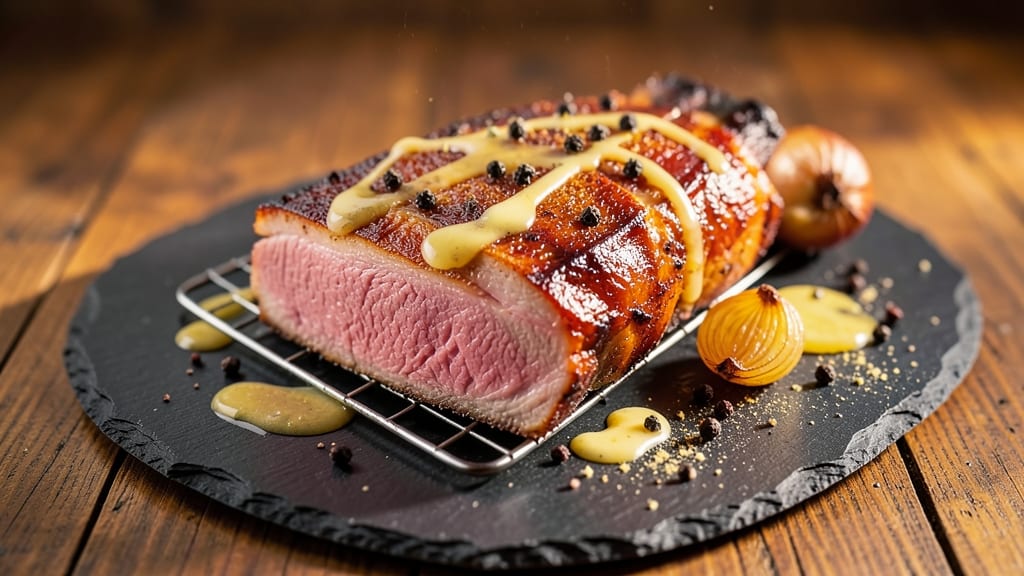
Mastering a 10-pound pork loin transforms a simple roast into a centerpiece for gatherings—crisp edges, juicy pink perfection, and slices that practically melt in your mouth.
After years of perfecting this technique in my Atlanta kitchen, I've cracked the code for even cooking and restaurant-quality results without a spit roast. The secret lies in precise temperature control and a simple seasoning blend that enhances rather than overpowers the natural richness of the meat.
This recipe delivers foolproof results whether you're feeding a crowd or prepping for leftovers, thanks to a two-zone oven method that maintains consistent heat. You'll start with a dry-brine overnight, which ensures moisture retention and a golden crust without excess grease.
The process might take patience—about 3 hours at 325°F—but the payoff is worth every minute, especially when you slice into that perfect medium-rare center.
What you'll achieve is a pork loin with crispy exterior and tender, juicy interior that holds its shape beautifully when sliced. The seasoning—just salt, pepper, and a touch of garlic powder—lets the meat shine while adding subtle depth.
This is the kind of pork that makes you look like a pitmaster without needing a smoker, and the leftovers reheat perfectly for sandwiches or fried rice.
Pair with roasted root vegetables or a tangy apple-cider glaze to complete the meal. The technique scales perfectly for smaller cuts too, making this my go-to method for any pork loin size. Let's get started on creating your showstopping centerpiece.
Ingredients for 10 pound pork loin
Here's what you'll need to create a showstopping 10-pound pork loin with crisp edges and juicy pink perfection.
| Ingredient | Amount | Notes |
|---|---|---|
| Bone-In Pork Loin 🐖 | 10 lb | Center-cut, 2-inch thick |
| Diamond Crystal Kosher Salt 🧂 | 2 tbsp | For overnight dry brine |
| Freshly Ground Black Pepper 🌶️ | 1 ½ tbsp | Coarse grind preferred |
| Garlic Powder 🧄 | 1 tbsp | Freshly toasted for depth |
| Unsalted Butter 🧈 | ½ cup | Cold, cubed for basting |
| Yellow Onion 🧅 | 1 whole | Quartered for roasting |
| Fresh Thyme 🌿 | ¼ cup | Leaves only, packed |
| Carrots 🥕 | 1 ½ lb | Whole, scrubbed clean |
| Russet Potatoes 🥔 | 3 lb | Cut into 2-inch chunks |
| Apple Cider Vinegar 🍎 | 2 tbsp | For glaze, optional |
| Honey 🍯 | ¼ cup | Wildflower preferred |
| Olive Oil 🫒 | 2 tbsp | Extra-virgin for brushing |
The pork loin is the star here—bone-in, center-cut is non-negotiable for even cooking. Whole Foods or local butchers usually carry the best quality, but any reputable grocery store's meat department should have it. Look for good marbling and a vibrant color. The dry brine is crucial: Diamond Crystal kosher salt (it's coarser, so you need more) works best for even distribution. I always buy my kosher salt from Penzeys for consistency, but the grocery store stuff is fine too. Fresh thyme and garlic powder elevate the simple seasoning without overpowering the meat's natural flavor.
No fresh thyme? Dried thyme at one-third the amount works in a pinch, but fresh is ideal. Running low on honey for the glaze? Maple syrup or agave nectar are perfect substitutes—they add a similar depth. The butter for basting needs to be cold when you start, so take it out of the fridge 30 minutes before roasting. For the vegetables, baby carrots or pre-cut potatoes save time, but whole roots roast better. If you're short on time, Trader Joe's pre-cut veggie mixes are a lifesaver. The apple cider vinegar adds tang to the glaze, but lemon juice works too if that's what you've got.
This roast reheats beautifully—350°F for 10-15 minutes with a splash of broth or water keeps it juicy. Store leftovers in the fridge for 4-5 days or freeze for 3 months. I always portion mine into individual containers so lunches are sorted for the week. The pork loin actually tastes better the next day once everything melds together. For the glaze, make it ahead and reheat gently—no need to stress the stove when you're already busy with the main event.
Why You'll Love This Recipe
- One-Pan Magic: I swear by this recipe because it’s all about minimal effort—just salt, pepper, garlic powder, and a slab of butter. No fancy prep, no chopping, no stress. The bone-in loin stays on the pan while it roasts, and the butter bastes itself as it renders. That’s right: one pan, one brush, done.
- Crispy-Creamy Dream: Here’s what sold me—the crust. Diamond Crystal kosher salt and pepper create this golden, crackling skin while the garlic powder infuses the meat with warmth. Inside? Juicy, melt-in-your-mouth pork that practically falls apart. Honestly, the butter basting in the last 10 minutes? Chef’s kiss. It’s the kind of flavor that makes people ask, “What’d you do to this?”
- Weeknight Hero: Not the prettiest, but the taste makes up for it. This is my go-to when I’m swamped: roast it while I prep sides, and boom—dinner’s ready. The bone-in version stays juicy longer, and the butter keeps it rich without needing extra sauce. Even on a Tuesday night, this feels like a restaurant-quality meal. (Yes, even when I’m wearing pajamas.)
Step-by-step instructions for slow-roasted pork loin
Master this technique and you'll achieve a pork loin so tender it nearly falls apart with a perfect pink center every time.
Prepare the Pork Loin with Dry Brine
Remove the pork loin from the refrigerator and pat it completely dry with paper towels. This step is crucial for developing that beautiful mahogany crust and preventing moisture loss during roasting. Place the pork loin on a wire rack set over a rimmed baking sheet.
In a small bowl, combine the 2 tablespoons of Diamond Crystal kosher salt, 1.5 tablespoons of freshly ground black pepper, and 1 tablespoon of garlic powder. Rub this mixture all over the pork loin, pressing firmly to ensure the seasoning penetrates the surface. Use about half the mixture on each side. Place the seasoned pork loin on a plate, cover loosely with plastic wrap, and refrigerate for 24 hours. This dry brine process enhances flavor and helps retain juices during the long roast.
Preheat Oven and Prepare Vegetables
After the dry brine, remove the pork loin from the refrigerator and let it sit at room temperature for 1 hour. Preheat your oven to 325°F. While the oven heats, prepare the vegetables by quartering the 1 whole yellow onion and scrubbing the 1.5 pounds of carrots clean. Cut the 3 pounds of russet potatoes into 2-inch chunks.
In a large bowl, toss the prepared vegetables with the 2 tablespoons of olive oil, the 0.25 cup of fresh thyme leaves, and an additional 1 teaspoon of the garlic powder. Spread the vegetables evenly on a separate rimmed baking sheet, making sure they're in a single layer. This arrangement ensures even roasting and prevents steaming, which can make the vegetables soggy.
Roast the Pork Loin and Vegetables
Place the pork loin on top of the prepared vegetables in the oven. Roast for 3 hours, or until the internal temperature reaches 145°F. This low and slow method ensures the pork loin stays juicy and tender. After 3 hours, remove the pork loin from the oven and let it rest on a cutting board for 15 minutes. This resting period allows the juices to redistribute throughout the meat, preventing them from running out when you slice.
While the pork loin rests, return the vegetables to the oven and roast for an additional 30 minutes, or until they are tender and golden brown. The vegetables should be caramelized with a slight crispness, indicating they've absorbed the pork's flavors during the roast.
Create the Honey-Glazed Finish
In a small saucepan, combine the 0.25 cup of honey and 2 tablespoons of apple cider vinegar over medium heat. Bring to a simmer and cook for 2-3 minutes, or until the mixture begins to thicken slightly. This glaze will add a touch of sweetness and tang to balance the rich pork.
Slice the pork loin into 12 equal portions, about 1-inch thick. Brush each slice with the honey-glaze mixture. Arrange the sliced pork loin on a serving platter and surround it with the roasted vegetables. The glaze will caramelize slightly as it sits, adding a beautiful sheen and extra flavor to each piece.
Serve with Confidence
Serve the pork loin immediately, ensuring each slice has a glossy finish from the glaze. The pork should be juicy and tender with a perfect pink center, surrounded by beautifully caramelized vegetables. The combination of the dry brine, slow roast, and honey glaze creates a dish that's both impressive and deeply satisfying.
To elevate the presentation, garnish the platter with fresh thyme leaves and additional black pepper. The aromatic thyme and peppery finish complement the sweet and savory notes of the pork and vegetables, creating a harmonious balance of flavors that will delight your guests.
Pro Tips For Making 10 Pound Pork Loin
- SEAR THE BONE FIRST: That bone-in pork loin won’t crisp up if you ignore the bone—start by searing it bone-side down for 8-10 minutes on high heat. I learned this the hard way when my first attempt left the bone raw and the crust uneven; now I always flip it early and let the bone render fat into the pan.
- SALT THE MEAT 24 HOURS EARLY: Diamond Crystal kosher salt needs time to work its magic—sprinkle it generously (about 1.5 teaspoons per pound) and let the loin sit uncovered in the fridge overnight. I was skeptical until I tried it; the crust stays intact, and the meat stays juicier when roasted.
- DON’T SKIP THE FAT CAP: That layer of fat on the loin? Leave it—it’s your built-in basting sauce. If it’s trimmed too thin, add a small piece of butter on top before roasting to keep the surface moist. I used to trim it all off, and the meat always dried out faster.
- BASTE WITH BUTTER, NOT WATER: Every 20 minutes, spoon melted unsalted butter over the loin—it’s richer than broth and adds flavor without diluting the crust. I know it’s extra work, but skipping it means a less flavorful finish. (Yes, even if you’re impatient like me.)
Troubleshooting your 10 pound pork loin
Uneven Cooking Fix
If your pork loin emerges with uneven doneness—some slices medium-rare and others overcooked—I’ve got two foolproof fixes. First, rotate the roasting pan 180 degrees halfway through cooking (around 1.5 hours). This ensures even heat exposure, especially in home ovens where hot spots develop.
Second, use a meat thermometer—insert it into the thickest part of the loin and monitor closely. If the temperature varies by more than 5°F between sections, extend the cook time by 15 minutes and check again. 🌡️
Dry, Tough Meat
Overcooking is the #1 cause of dry pork loin, but it’s easy to avoid. If your meat feels dry after slicing, reduce your oven temperature to 300°F and cook for 10-15 minutes longer—this slows the cooking process and preserves moisture.
Pro tip: Baste the pork every 45 minutes with melted butter (use the ½ cup cold butter from your ingredients) to keep it luscious. I swear by this trick when I’m nervous about timing.
Pale Center (Undercooked)
A pale center means your pork didn’t hit 145°F internal temperature. To salvage it, return the pork to the oven at 325°F for an additional 15-20 minutes, checking every 5 minutes with a thermometer.
If it’s still underdone, slice it thin (about ½-inch thick) and serve it as a cold cut—it’ll be tender and delicious in sandwiches or salads. For next time, let the pork rest at room temp for 1 hour before roasting to ensure even cooking.
Vegetables Too Soggy
If your roasted veggies turn out mushy, they likely steamed instead of roasted. Spread them in a single layer on a separate baking sheet (as the recipe suggests) and avoid overcrowding.
For extra crispiness, toss them with 1 extra tablespoon of olive oil and sprinkle with ½ teaspoon of salt before roasting. I also like to flip the veggies halfway through cooking to ensure even browning.
Glaze Too Runny
A glaze that pools instead of sticking means it wasn’t thickened enough. To fix it, simmer the honey and vinegar mixture for 3-4 minutes until it coats the back of a spoon.
For a quicker fix, mix 1 teaspoon of cornstarch with 1 tablespoon water, stir into the glaze, and simmer for 1 minute until it thickens. If you’re short on time, drizzle the glaze over the sliced pork and broil for 2-3 minutes to caramelize it slightly. 🍯
Crust Too Dark (Burned)
A dark, charred crust happens when the oven runs hot or the pork dries out too quickly. To prevent this, cover the pork loosely with foil after 2 hours of roasting, then remove it for the final 30 minutes to crisp.
For a restaurant-style finish, brush the crust with a little olive oil in the last 10 minutes of cooking. If your crust is already too dark, slice the pork thin and serve it with a bright side like a citrus salad to balance the flavors.
Nutrition facts
Frequently asked questions
What's the best way to thaw a frozen 10-pound pork loin?
Thaw it in the refrigerator for 24-48 hours—this maintains food safety and even cooking. For a quicker method, submerge the vacuum-sealed package in cold water (change every 30 minutes) for 3-4 hours. Never thaw at room temperature, as this promotes bacterial growth. Once thawed, proceed with the dry brine immediately.
Can I use this recipe for a smaller pork loin?
The technique scales perfectly. For a 5-pound loin, reduce the roasting time to 2 hours and halve the vegetable amounts. Keep the same seasoning ratio and internal temperature target of 145°F. The dry brine time can be cut to 12 hours for smaller cuts.
How do I keep the pork loin from drying out during carving?
Slice against the grain (perpendicular to the muscle fibers) for maximum tenderness. Use a sharp chef's knife and cut 1-inch thick slices to maintain moisture. Serve immediately after carving to prevent drying. For leftovers, reheat in a 350°F oven with a splash of broth for 10-15 minutes.
What's the ideal serving temperature for this pork?
The perfect serving temperature is 145°F internal (medium-rare). This ensures juicy, tender meat with a pink center. If you prefer well-done, aim for 160°F, but expect slightly drier results. The honey glaze adds sweetness that complements the natural richness of the pork at any doneness level.
Can I make this ahead of time?
Yes! Cook the pork loin up to 2 days ahead and refrigerate. Reheat slices in a 350°F oven for 10-15 minutes with a splash of water or broth. For the glaze, make it fresh before serving. The flavors actually improve overnight as the seasonings meld. Store leftovers in an airtight container with parchment between slices.