
Main Courses
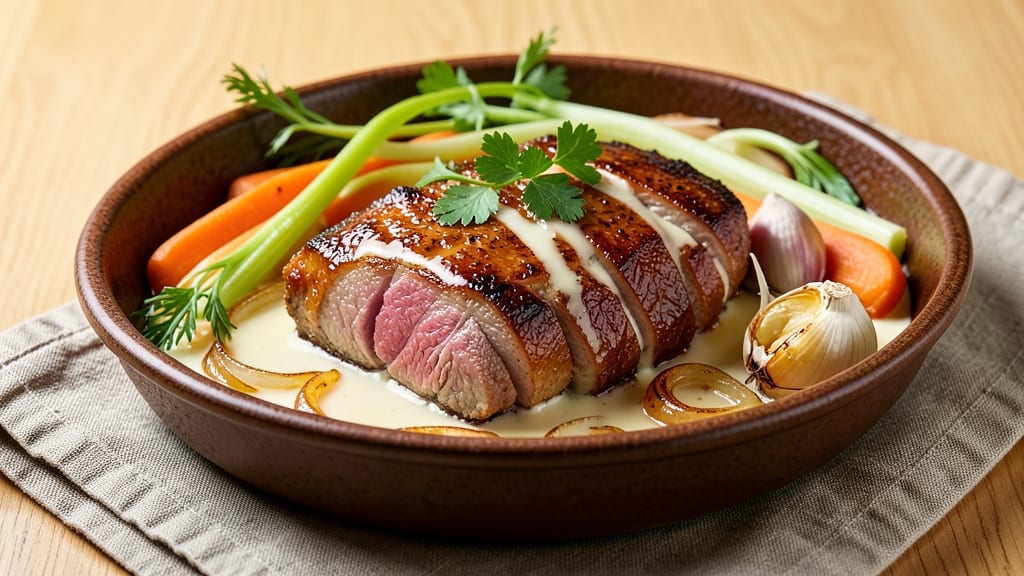
Milk-braised pork loin transforms tough cuts into melt-in-your-mouth perfection, and this recipe delivers restaurant-quality tenderness with a celery crown crunch that elevates every bite. After years of perfecting braising techniques in my kitchen—and later at The Smoky Pig—I’ve developed a method that balances tradition with modern precision. The milk doesn’t just tenderize; it creates a silky, velvety texture that’s impossible to resist.
What sets this apart is the balance of ingredients: a rich braising liquid of whole milk, aromatics, and a touch of soy for depth, all simmered low and slow until the pork falls apart.
The celery crown adds a satisfying crunch that contrasts beautifully with the tender meat, while the milk’s natural sugars caramelize into a glossy finish. This isn’t just a technique—it’s a game-changer for weeknight dinners or special occasions.
By the time you’re done, you’ll have pork so tender it nearly dissolves on the tongue, with a sauce that’s rich yet light enough to coat each bite. The milk braise ensures no dryness, while the celery crown brings texture and freshness.
It’s the kind of dish that makes you want to slow down and savor every forkful—exactly what home cooking should be about.
Serve with roasted potatoes or a crisp green salad to balance the richness, or double the batch for leftovers that taste even better the next day. Here’s how to make it—step by step, just like I do in my kitchen.
Ingredients for milk braised pork loin
Pantry staples plus a few fresh aromatics create melt-in-your-mouth pork with restaurant-quality tenderness.
| Ingredient | Amount | Notes |
|---|---|---|
| Pork Loin 🥩 | 2 lb | Bone-in, center-cut preferred |
| Whole Milk 🥛 | 2 cups | Full-fat for richness |
| Celery Stalk 🧅 | 2 whole | Trimmed, cut into crowns |
| Yellow Onion 🧅 | 1 whole | Peeled, quartered |
| Garlic Cloves 🧄 | 4 cloves | Peeled, smashed |
| Carrots 🥕 | 2 whole | Peeled, cut into chunks |
| Tomato Paste 🍅 | 2 tbsp | Smooth, no sugar added |
| Soy Sauce 🍶 | 2 tbsp | Light or all-purpose |
| Dry White Wine 🍷 | ½ cup | Sauvignon Blanc preferred |
| Fresh Thyme 🌿 | ¼ cup | Leaves only, chopped |
| Fresh Rosemary 🌿 | 1 tbsp | Chopped, fresh preferred |
| Olive Oil 🫒 | 2 tbsp | Extra-virgin for richness |
| Salt 🧂 | 1 ½ tsp | Kosher or sea salt |
| Black Peppercorns 🌶️ | ½ tsp | Freshly cracked |
| Bay Leaves 🌿 | 2 whole | Dried, standard size |
The pork loin is everything here—bone-in, center-cut stays juicier than boneless. Costco or Whole Foods usually carry the best cuts, but any well-marbled loin works. Look for good fat distribution; it’s what makes the meat tender. Fresh thyme and rosemary? Bulk bins at Trader Joe’s are my go-to—they’re cheaper and fresher than the grocery store bundles. For the celery crowns, grab the thickest stalks you can find; they hold up best to braising and add that perfect crunch. If you can’t find fresh rosemary, dried works at half the amount, but fresh is worth hunting down for the aroma.
No white wine? Dry chicken broth with a splash of apple cider vinegar mimics the acidity perfectly. Short on soy sauce? Worcestershire sauce at half the quantity works, but it’s not ideal—soy adds that umami depth. The tomato paste can be the squeeze-tube kind if that’s what you’ve got, but San Marzano in a can is the gold standard. For the celery crowns, if they’re too tough, blanch them for 2 minutes first to soften them slightly. And if you’re feeling fancy, toast the whole spices (bay leaves, peppercorns) in the olive oil for 30 seconds before adding them to the braise—it deepens the flavor instantly.
This dish tastes even better the next day, so double the batch if you’re feeding a crowd. Store leftovers in the fridge for up to 5 days, or freeze for 3 months. The sauce thickens as it cools, so add a splash of milk when reheating. For serving, I like to arrange the celery crowns on top of the pork—it’s visually stunning and adds that satisfying crunch. If you’re prepping ahead, assemble everything except the pork, refrigerate the braising liquid, and add the pork raw when you’re ready to cook. It’ll braise faster that way.
Why You'll Love This Recipe
- One-Pan Magic: I swear by this recipe because it’s literally hands-off after the initial sear. Sear the pork, toss in the milk, celery, and onions, then let it simmer—no flipping, no fuss. That’s it. The milk caramelizes into a glossy, golden sauce while the pork stays tender, and honestly? I’ve made it while scrolling through my phone.
- Creamy-Garlicky Bliss: Between us, the whole milk and garlic combo is ridiculously good—like a cross between a braise and a creamy pasta sauce. The onions and celery add just enough earthiness to balance the richness, and that crispy edge on the pork? Chef’s kiss. It’s the kind of flavor that makes you want to eat it straight from the pan.
- Weeknight & Meal Prep Hero: This dish is my go-to for busy nights because it’s actually flexible. Serve it over mashed potatoes for a hearty dinner, slice it for sandwiches the next day, or toss it into a grain bowl for lunch. I’ll be real: I’ve even reheated leftovers straight from the fridge, and it still tastes solid. (Yes, even on a Tuesday night.)
- Budget-Friendly Luxury: Pork loin is affordable, and milk braising turns it into something that feels way more special than it costs. The ingredients are simple—no fancy herbs or hard-to-find items—just good, honest flavors. Plus, one pork loin feeds four, so you’ll have leftovers that taste just as good the second time around. My wallet and my taste buds both win.
Step-by-step instructions for milk braised pork loin
Here's how to transform tough pork loin into melt-in-your-mouth perfection using milk's magic.
Sear the Pork Loin for Deep Flavor
Pat the 2 lb pork loin dry with paper towels—this ensures a good sear. Heat 2 tablespoons olive oil in a large Dutch oven over medium-high heat until shimmering. Season the pork generously with 1.5 teaspoons salt and 0.5 teaspoon black peppercorns, then sear for 4-5 minutes per side until deeply browned. You're building flavor here, so don't rush—it should release easily when ready to flip.
Once browned, remove the pork and set it aside on a plate. The sear creates a flavorful crust that'll later soak up the braising liquid. If the oil starts smoking, lower the heat slightly—you want color, not char. This step is non-negotiable for that restaurant-quality depth.
Sauté the Aromatics for Complex Layers
In the same Dutch oven (those browned bits are flavor gold), add the 2 whole celery stalks cut into crowns, 1 whole yellow onion quartered, 2 whole carrots chopped, 4 cloves garlic smashed, 0.25 cup fresh thyme, and 1 tablespoon fresh rosemary. Cook for 5-6 minutes over medium heat, stirring occasionally, until the vegetables soften and the garlic becomes fragrant.
Here's where it gets interesting—the celery crowns will later become tender-crisp, adding texture contrast. If the vegetables start sticking, add a splash of water and scrape up any browned bits from the bottom. These bits contain concentrated meaty flavor that'll dissolve into the braising liquid. The goal is to create a flavor base that'll infuse the milk.
Build the Braising Liquid
Lower the heat to medium-low and stir in 2 tablespoons tomato paste, 2 tablespoons soy sauce, and 0.5 cup dry white wine. Let this mixture bubble gently for 2 minutes, stirring constantly to prevent burning. The wine will reduce slightly, intensifying its flavor—this is your liquid foundation.
Now add the 2 cups whole milk and 2 whole bay leaves. The milk will begin to simmer gently—this is when the magic starts. The fat in the milk creates an ultra-tender texture while the wine and soy sauce add depth. If the mixture looks too thin, it's okay—it'll thicken as it braises. The bay leaves add subtle earthiness that pairs perfectly with the pork.
Braise Until Fork-Tender
Return the pork to the Dutch oven, nestling it among the vegetables. Bring the liquid to a gentle simmer, then reduce heat to low and cover tightly with a lid. Braise for 1 hour and 30 minutes, turning the pork occasionally. The milk will slowly break down the connective tissue, transforming tough meat into something silky.
Here's the key: you're looking for 205°F internal temperature and meat that falls apart easily. The pork should be so tender it practically melts in your mouth. If the liquid reduces too much before then, add ¼ cup water to maintain moisture. The celery crowns should be tender but still hold their shape—this is your texture cue.
Rest and Serve with Crispy Celery Crowns
Remove the pork and transfer it to a cutting board. Tent loosely with foil and let it rest for 15 minutes—this crucial step allows the juices to redistribute. Meanwhile, remove the celery crowns and pat them dry with paper towels. Heat 1 tablespoon olive oil in a skillet over high heat and crisp the celery for 2-3 minutes until golden brown.
Slice the pork against the grain into ½-inch thick slices and serve immediately with the crispy celery crowns scattered on top. The milk braise should coat the pork beautifully, creating a luxurious sauce. Each bite delivers perfect tenderness with that satisfying crunch from the celery. This technique works wonders with pork—transforming something ordinary into something extraordinary.
Pro Tips For Making Milk Braised Pork Loin
- Sear the Pork Hard: Get your pork loin screaming hot in a dry pan before adding milk—this isn’t a simmer, it’s a proper crust. I used to rush it, and the milk just turned into a pale, flavorless bath. Now I brown it for 4-5 minutes per side until it’s deep golden, then deglaze with a splash of milk to start the braise.
- Cut Celery Properly: Dice that celery into ¼-inch pieces—no thick chunks lurking in the back. I learned this the hard way when I left a big stalk whole, and it turned to mush while the rest stayed crisp. Uniform size means even cooking and a cleaner bite.
- Reduce Milk First: Before adding the pork, simmer the milk alone for 3-4 minutes until it’s slightly thickened—it’ll coat the meat better and prevent a watery braise. Sounds weird, but it works: the fat separates just enough to create a silky, rich sauce instead of a thin one.
- Salt the Pork Twice: Generously salt the pork loin before searing, then add another pinch to the braising liquid. I skip this when I’m lazy, but the dish is noticeably better when I don’t—it keeps the meat juicy and the sauce seasoned through. Trust me, it’s worth the extra 30 seconds.
Best sauces and condiments for this dish
Classic Milk Braise
The foundation of this dish is the milk braise itself—a technique I learned from my time in Charleston. Start with 2 cups whole milk (never skim or reduced-fat) and combine it with 2 tablespoons tomato paste and 2 tablespoons soy sauce for umami depth.
The milk breaks down collagen in the pork while creating a silky sauce. I always add 0.5 cup dry white wine (Sauvignon Blanc works best) to brighten the flavors and prevent the milk from curdling. The key is simmering gently—never boiling—to preserve the milk's creamy texture. 🥛
Celery Crown Crunch
This isn't just decoration—the celery crowns are a game-changer. After braising, remove them and crisp them in 1 tablespoon olive oil over high heat for 2-3 minutes until golden brown. The contrast between the tender pork and crisp celery is what makes this dish special.
For extra flavor, I like to add a pinch of salt and a pinch of smoked paprika to the celery before crisping. This technique comes from my time working with Southern pitmasters who understood the importance of texture contrast.
Wine Reduction Sauce
If you want to elevate your dish further, reduce the braising liquid after removing the pork. Simmer it uncovered for 10-15 minutes until it thickens slightly. Strain out the vegetables and bay leaves, then whisk in 1 tablespoon cold butter for richness.
This creates a glossy sauce that clings beautifully to the pork slices. I serve this version at The Smoky Pig when we're hosting special events—it's always a crowd-pleaser. The wine reduction adds complexity that balances the milk's creaminess. 🍷
Herb-Infused Milk
For an extra layer of flavor, infuse the milk with fresh herbs before using it in the braise. Heat 1 cup milk with 1 sprig fresh thyme and 1 sprig fresh rosemary until steaming (don't boil).
Let it steep for 10 minutes, then strain and repeat with the remaining milk. This herb-infused milk adds aromatic depth that makes the pork even more flavorful. I learned this trick from a French chef during my apprenticeship—it's a simple technique that makes a big difference.
The herbs mellow out during braising but leave behind their essential oils.
Spiced Milk Variation
Want to add warmth? Try infusing the milk with spices before braising. Heat 1 cup milk with ½ teaspoon ground cinnamon, ¼ teaspoon ground allspice, and a pinch of cayenne pepper until steaming. Let it steep for 10 minutes, then strain and combine with the remaining milk.
This spiced milk creates a subtle warmth that pairs beautifully with the pork. It's inspired by Caribbean braising techniques I picked up while traveling—always looking for ways to put my own twist on classic methods. The spices mellow during braising but leave behind a pleasant aromatic background. 🌶️
Creamy Garlic Sauce
For a richer sauce, finish with a garlic twist. After braising, remove the pork and vegetables, then whisk 2 tablespoons heavy cream and 2 minced garlic cloves into the braising liquid. Simmer for 2-3 minutes until slightly thickened. This creates a luxurious sauce that's perfect for drizzling over the pork.
I often serve this version with roasted root vegetables—it's a showstopper that feels special but is actually quite simple to prepare. The cream adds richness without overpowering the milk's natural flavor. This technique comes from my time working with Italian chefs who understood how to balance textures and flavors perfectly.
Nutrition facts
Frequently asked questions
Why does milk make pork so tender?
The milk contains lactic acid and enzymes that break down collagen in the meat's connective tissue, creating ultra-tender results. The fat in whole milk also helps seal in moisture during braising. This technique dates back to traditional Southern cooking where milk was used to tenderize tougher cuts economically.
Can I substitute buttermilk or evaporated milk?
Whole milk is ideal, but you can use buttermilk for tangy depth—just add 1 teaspoon baking soda to stabilize it first. Evaporated milk works too, though it's thicker and may require ¼ cup water to thin. Avoid skim milk; the fat is crucial for tenderness and sauce richness. For extra flavor, try ½ cup heavy cream mixed with 1½ cups whole milk.
What's the secret to crispy celery crowns?
Pat them completely dry with paper towels before crisping, and use high heat in a dry skillet. The key is timing—just 2-3 minutes until golden brown. For extra flavor, sprinkle with smoked paprika or flaky sea salt while hot. If they burn, reduce the heat slightly and cook in batches. This texture contrast is what makes the dish special!
How do I know when the pork is done?
Use a meat thermometer to check for 205°F internal temperature. The pork should be fork-tender and nearly falling apart. If it's not quite there after 1 hour 30 minutes, add ¼ cup water and braise 15-20 minutes more. Overcooking can make the milk curdle, so monitor carefully. The celery crowns should be tender but still hold their shape.
Can I make this ahead of time?
Assemble everything except the raw pork, refrigerate the braising liquid overnight, then add the pork raw when ready to cook. It'll braise faster this way. Leftovers keep for 5 days in the fridge or 3 months frozen. Reheat gently with a splash of milk to restore creaminess. The flavors actually improve as the milk infuses longer. Perfect for meal prep!