
Main Courses
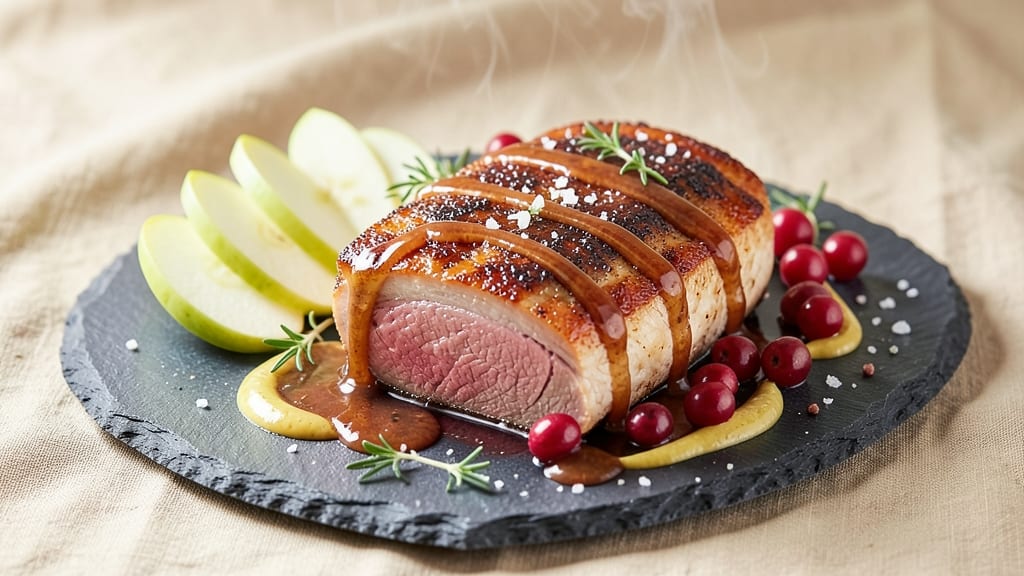
This apple cranberry pork loin recipe transforms a simple roast into a showstopper with a caramelized glaze that balances sweet-tart perfection. 🍏✨ After years of perfecting the balance between tender pork and fruit-forward flavors, I’ve developed a method that delivers crispy edges and juicy centers—every time.
The secret lies in reducing the glaze just enough to intensify its depth without overwhelming the natural savoriness of the meat.
The recipe begins with a foolproof sear that locks in moisture, followed by a slow roast that allows the pork to cook evenly while the apple and cranberry glaze develops its signature caramelized richness.
I use fresh cranberries and tart apples (like Granny Smith) to cut through the pork’s richness, creating a harmonious sweet-savory profile that’s both elegant and approachable. This isn’t just a holiday dish—it’s a weeknight game-changer that pairs beautifully with roasted root vegetables or creamy mashed potatoes.
What you’ll end up with is a golden, glistening pork loin with edges that crackle under the knife, revealing tender meat infused with the bright acidity of cranberries and the subtle sweetness of caramelized apples.
The glaze clings to every bite, offering a perfect balance of textures—crispy, juicy, and velvety all at once. It’s the kind of dish that makes guests ask for seconds and leaves your kitchen smelling like autumn in the South.
Serve this pork loin as the centerpiece of your table, surrounded by seasonal sides like honey-glazed carrots or a crisp green salad to complement its rich flavors. The recipe scales effortlessly, making it ideal for gatherings or meal prep. Here’s how to bring it to life—step by step.
Ingredients for apple cranberry pork loin
Sweet-tart glaze meets crispy pork perfection—just these 13 ingredients transform simple pork loin into a showstopper.
| Ingredient | Amount | Notes |
|---|---|---|
| Boneless Pork Loin 🥩 | 1 ½ lb | Center-cut, 1-inch thick |
| Granny Smith Apples 🍏 | 2 medium | Peeled, cored, diced small |
| Fresh Cranberries 🍇 | ½ cup | Fresh or frozen, no sugar added |
| Orange Juice 🍊 | ¼ cup | Freshly squeezed preferred |
| Brown Sugar 🍚 | ¼ cup | Packed, light brown preferred |
| Dijon Mustard 🍯 | 1 tbsp | Mild or classic variety |
| Apple Cider Vinegar 🍶 | 1 tbsp | For tangy depth |
| Honey 🍯 | 1 tbsp | Wildflower or clover |
| Olive Oil 🫒 | 2 tbsp | Extra-virgin for searing |
| Kosher Salt 🧂 | 1 ½ tsp | Diamond Crystal preferred |
| Freshly Ground Black Pepper 🌶️ | ½ tsp | Coarsely ground |
| Fresh Rosemary 🌿 | ¼ cup | Chopped, stems removed |
| Fresh Thyme 🌿 | ¼ cup | Leaves only, chopped |
The pork loin is your star here—center-cut and 1-inch thick for even cooking. Costco or Whole Foods usually carry excellent quality, but any butcher will cut it to spec. Look for good marbling, not too lean. For the apples, Granny Smiths are non-negotiable—their tartness balances the sweetness perfectly. Fresh cranberries add that bright acidity, but frozen unsweetened cranberries work in a pinch. Just don't use the canned sweetened kind. The orange juice brings that citrus punch that cuts through the richness—freshly squeezed is ideal, but bottled works if you're in a hurry.
No Granny Smiths? Fuji or Honeycrisp apples will work, but they're sweeter so you might want to add an extra tablespoon of vinegar to the glaze. Out of cranberries? Dried cranberries soaked in warm water for 10 minutes get you close, though they won't have the same snap. The brown sugar should be light, not dark—it caramelizes better. For the herbs, dried thyme at half the amount works if you're fresh out, but fresh is always better. The Dijon mustard adds depth, but yellow mustard in a pinch won't ruin the party. And if you're missing the apple cider vinegar, white vinegar or lemon juice will do the trick for acidity.
Pork loin keeps best 2-3 days in the fridge if you're prepping ahead—just wrap it tightly in plastic and store it on the bottom shelf where it's coldest. The glaze ingredients can be mixed up to 3 days ahead and refrigerated, but add a splash of water when reheating to loosen it up. Fresh herbs? Wrap them in damp paper towels and store in a bag—they'll stay fresh for 5-6 days. This dish reheats beautifully—just warm it gently in the oven with a splash of water to keep it moist. Leftovers taste even better the next day as the flavors meld.
Why You'll Love This Recipe
- I’ll be real: most pork roasts turn dry the second day. Not this one. The apples and cranberries keep it moist, and the glaze? Even better reheated. Pack it for lunches or freeze portions—it’s the kind of meal that tastes just as good cold as it does hot.
- One-Pan Magic: I swear by this recipe when I’m too tired to scrub a million dishes. Toss everything—pork, apples, cranberries—onto one sheet pan, roast until caramelized, and boom. Done. The apples and cranberries release their juices right onto the pork, basting it like a lazy Sunday brunch.
- Sweet-Savory Balance: Honestly, the combo of tart Granny Smiths and bright cranberries with that deep pork flavor? It’s like fall in a skillet. The orange juice keeps it from being too heavy, and the brown sugar just ties everything together—sticky, glossy, and impossible to resist.
- Weeknight or Holiday: Between us, this is my go-to for both Taco Tuesday (yes, really) and Thanksgiving leftovers. Slice the pork thin for tacos or serve it whole with crusty bread for a fancy-feeling dinner. The cranberries add a pop of color and acidity that makes it feel special without the fuss.
Step-by-step instructions for sweet-tart apple cranberry pork loin
Here's how to create a showstopping glaze that caramelizes edges while keeping the pork juicy and tender.
👨🍳 Step 1: Prep the Pork and Make the Glaze Base
Pat the 1.5 lb boneless pork loin dry with paper towels—this is non-negotiable for crispy edges. Season both sides generously with 1.5 teaspoons kosher salt and 0.5 teaspoon freshly ground black pepper, pressing the seasoning into the meat so it adheres. Let it sit at room temperature for 15 minutes while you prep everything else.
In a medium bowl, combine the diced 2 medium Granny Smith apples, 0.5 cup fresh cranberries, 0.25 cup orange juice, 0.25 cup packed brown sugar, 1 tablespoon Dijon mustard, 1 tablespoon apple cider vinegar, and 1 tablespoon honey. Stir well—this is your glaze foundation. The apples and cranberries should be finely diced (about ¼-inch pieces) so they dissolve into the sauce rather than stay chunky. Taste and adjust sweetness if needed; you want a balance between tart and sweet.
🔥 Step 2: Sear the Pork for Maximum Flavor
Heat a large oven-safe skillet over medium-high heat until it's screaming hot. Add 2 tablespoons olive oil and swirl to coat the pan. Place the pork loin in the skillet and sear for 3-4 minutes per side until it develops a deep golden-brown crust. Here's the thing—don't move the pork around too much. Let it sit undisturbed for the first 2 minutes on each side so it develops that beautiful caramelized crust.
While the pork sears, sprinkle 0.25 cup chopped fresh rosemary and 0.25 cup chopped fresh thyme evenly over the top. These herbs will infuse the pork with aromatic depth as it roasts. Once both sides are golden, transfer the skillet to a 425°F preheated oven (leave the glaze mixture on the stovetop for now).
🍳 Step 3: Simmer the Glaze and Roast the Pork
Return to the stovetop and pour the glaze mixture into the same skillet (don't scrape out the browned bits—they're pure flavor). Bring to a boil over medium-high heat, then reduce to medium-low and let it simmer for 5-7 minutes, stirring occasionally, until it thickens into a syrupy consistency. You're looking for a glaze that coats the back of a spoon—it should be thick enough to cling to the pork but still glossy.
Carefully transfer the skillet to the oven (use oven mitts—it's hot!). Roast the pork for 20-25 minutes until its internal temperature reaches 145°F (use a meat thermometer). The edges should be caramelized and the glaze bubbling around the pork. If the glaze starts to burn, tent the skillet with foil and continue roasting.
⏰ Step 4: Rest and Glaze for Maximum Impact
Remove the pork from the oven and let it rest on a cutting board for 10 minutes (this is crucial—it allows the juices to redistribute). While it rests, spoon the glaze from the skillet over the top of the pork, basting it generously. The residual heat will help the glaze set slightly, creating that sticky, caramelized finish.
Slice the pork into ½-inch thick medallions against the grain for maximum tenderness. Serve immediately with the remaining glaze spooned over the top. Each bite should deliver juicy pork with a perfect balance of sweet-tart glaze and herby depth. The edges should be caramelized to perfection, while the center remains tender and moist.
Pro Tips For Making Apple Cranberry Pork Loin
- Trim the Fat First: Pork loin can be sneaky—those little fat pockets hide in the edges like thieves. Trim them away before seasoning so the apples and cranberries caramelize evenly instead of turning into a greasy mess. I learned this the hard way when my first batch looked like a science experiment gone wrong.
- Slice Apples Thin: Granny Smiths are tough, and thick slices won’t soften properly while the pork cooks. Cut them into ¼-inch slices—almost paper-thin—and they’ll break down just enough to release that bright, tangy sweetness without turning mushy. (Yes, even if you’re impatient like me.)
- Deglaze Like a Pro: After searing the pork, don’t just dump the sauce in. Scrape up those browned bits on the pan with a wooden spoon—all of them—then add the orange juice and brown sugar. Those bits are flavor bombs, and skipping this step means your sauce will taste like it’s missing something. (Your future self will notice.)
- Simmer, Don’t Boil: Once everything’s in the pan, keep the heat low. A gentle simmer (barely any bubbles) lets the cranberries soften and the apples release their juice without turning the sauce into a watery glaze. I used to crank the heat, and the cranberries would just turn into sad, mushy bits. Low and slow wins.
Essential equipment for this dish
Oven-Safe Skillet
This is my non-negotiable tool for this recipe—a 12-inch cast iron skillet from Lodge handles the sear and roast perfectly. The heavy gauge retains heat evenly while creating that coveted caramelized crust. I’ve tried stainless steel, but cast iron’s ability to hold and distribute heat makes all the difference.
If you don’t own one, a stainless steel Dutch oven works too—just avoid nonstick, which can’t handle the high heat needed for proper searing. 🔥
Meat Thermometer
Never guess when cooking pork—instant-read thermometers are essential. I use a ThermoWorks Smoke because it’s fast and accurate, but even a basic Oakton digital thermometer will do. Pork reaches 145°F safely, and hitting that temp precisely ensures juicy, not dry, meat.
Pro tip: Check the thickest part of the loin, avoiding fat or bone. The thermometer should slide in easily—no forcing!
Sharp Knife Set
A Wüsthof Ikon or Victorinox Fibrox chef’s knife is perfect for dicing apples and cranberries to ¼-inch pieces—they dissolve beautifully into the glaze. For slicing the pork, a sharp boning knife ensures clean cuts.
Dull knives crush meat, leading to uneven cooking. I keep my knives honed with a Sharpening Stone—never skip this step. The right knife makes prep faster and safer. ✨
Mixing Bowls
Use a stainless steel mixing bowl (like OXO Good Grips) for the glaze—it won’t absorb flavors like plastic. The bowl should be medium-sized to hold all ingredients without spilling.
For the herbs, a smaller ceramic bowl works well to keep them fresh while chopping. Avoid glass if you’re nervous about drops—it’s unforgiving on countertops!
Tongs for Basting
Tongs with silicone tips (I love Merco Forged) are perfect for basting the pork with glaze during roasting. They grip securely without piercing the meat, and the silicone protects your skillet. Avoid metal tongs—they can scratch your cookware. A basting brush also works, but tongs let you control the glaze better. Trust me, this step makes the difference between good and showstopping. 💫
Cutting Board
A large bamboo or plastic cutting board (like John Boos) gives you space to prep all ingredients at once. Bamboo is gentle on knives, while plastic won’t stain or absorb odors. For resting the pork, a wooden board (like Teak) adds rustic charm to your presentation.
Just avoid glass—it’s slippery and can crack under hot pans. Keep your board clean to prevent cross-contamination.
Nutrition facts
Frequently asked questions
Can I substitute dried cranberries in this recipe?
You can use dried cranberries, but they won’t dissolve as smoothly into the glaze. Soak ¼ cup dried cranberries in ¼ cup warm water for 10 minutes first, then drain and chop finely. Reduce the brown sugar by 1 tablespoon since dried cranberries are sweeter. For best results, fresh cranberries create that signature bright acidity.
How do I adjust this recipe for a larger crowd?
Double all ingredients for 8 servings, but use a 14-inch cast iron skillet or Dutch oven to maintain even cooking. Increase oven temperature to 400°F and roast for 30-35 minutes to prevent drying. For 12 servings, use 3 lbs pork loin and triple the glaze ingredients. Always check internal temp with a meat thermometer.
What’s the best way to reheat leftovers?
Slice the pork and reheat in a 350°F oven for 10-12 minutes with a splash of water or apple juice to keep it moist. Avoid microwaving—it makes the glaze rubbery. For extra crispiness, broil for 2-3 minutes at the end. Leftovers taste even better the next day as flavors meld!
Can I make this gluten-free?
Yes! Simply replace the Dijon mustard with 1 tablespoon gluten-free mustard or omit it entirely. Check your brown sugar label—some brands contain gluten. The recipe’s naturally gluten-free except for these potential hidden sources. Always verify ingredient labels for cross-contamination warnings.
Why did my pork turn out dry?
Overcooking is the #1 culprit—pork reaches 145°F safely, but goes dry at 160°F. Use a meat thermometer and remove it 5°F below your target temp, then let it rest. Pat the pork dry before seasoning and avoid overcrowding the pan during searing. For thicker cuts, reduce oven temp to 375°F to slow cook gently.