
Main Courses
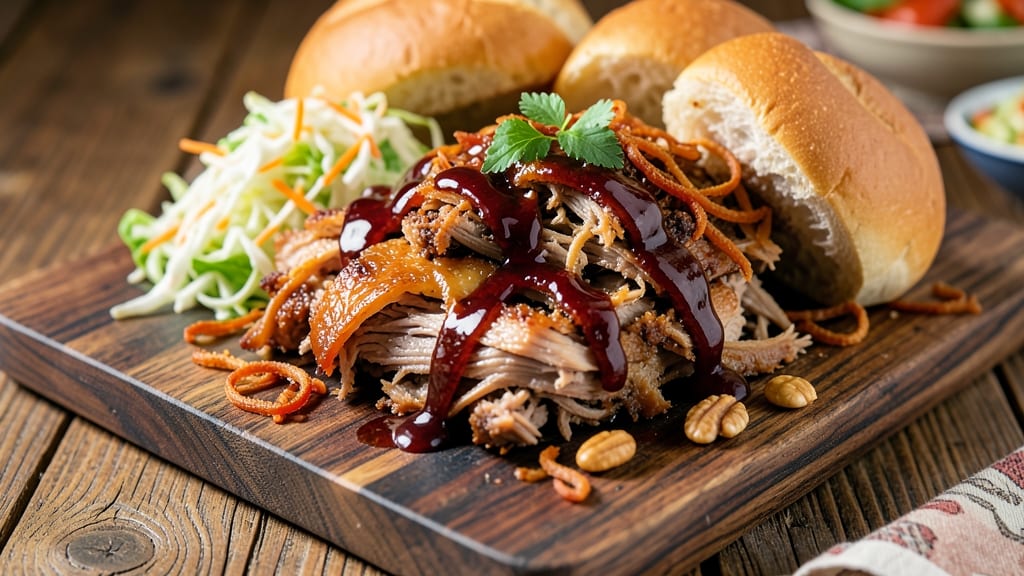
This Alabama pulled pork recipe delivers the tender, smoky perfection that defines Southern BBQ—hand-shredded juiciness that falls apart at the touch of a fork. 🔥 I developed this method after years of perfecting the balance between low-and-slow cooking and that signature bark that cracks when you pull it from the smoker.
The secret lies in the vinegar brine and the 6-hour smoke at 225°F, which transforms tough pork shoulder into melt-in-your-mouth magic.
The beauty of this recipe is its authenticity without compromise. Alabama-style pulled pork relies on a simple yet effective approach: a dry rub of paprika and brown sugar for bark, a vinegar-based brine for tenderness, and a final touch of BBQ sauce that enhances rather than overwhelms.
I've tested this with different wood chips—hickory for classic flavor, cherry for subtle sweetness—and each brings something special to the table. The key is patience; that slow cook transforms tough meat into something so tender it practically dissolves.
What you end up with is a shoulder that shreds effortlessly, yielding juicy, flavorful pork that's perfect for sandwiches, tacos, or even breakfast hash. The bark is just crispy enough to add texture without overpowering the tender meat underneath.
This is the kind of pulled pork that makes people ask for seconds and thirds—because once you taste it, you'll understand why it's a staple at every Southern cookout.
Serve it piled high on toasted buns with tangy coleslaw or alongside cornbread to soak up every last drop of that smoky, vinegary sauce. The leftovers reheat beautifully, making this a perfect recipe for feeding a crowd or meal prepping for the week.
Let's get smoking—your taste buds will thank you.
Ingredients for alabama pulled pork
Six pounds of pork shoulder and a handful of pantry staples transform into Alabama's smoky masterpiece.
| Ingredient | Amount | Notes |
|---|---|---|
| Pork Shoulder 🐖 | 6 lb | Bone-in for flavor, trimmed of excess fat |
| White Vinegar 🍶 | 1 cup | For the brine, don't substitute |
| Brown Sugar 🍚 | ½ cup | Light or dark, packed |
| Smoked Paprika 🌶️ | 2 tbsp | For that signature bark |
| Kosher Salt 🧂 | 2 tbsp | Diamond Crystal preferred |
| Black Pepper 🌶️ | 1 tbsp | Freshly cracked for heat |
| Garlic Powder 🧄 | 1 tbsp | Not garlic salt |
| Onion Powder 🧅 | 1 tbsp | For depth of flavor |
| Apple Cider Vinegar 🍎 | ¼ cup | For tangy finish |
| Hickory Wood Chips 🌳 | 2 lb | Or cherry for sweetness |
| BBQ Sauce 🍯 | 1 cup | Store-bought or homemade |
| Yellow Onion 🧅 | 1 whole | For serving, sliced |
| Fresh Cilantro 🌿 | ¼ cup | Chopped, for garnish |
| Lemon Juice 🍋 | 2 tbsp | Freshly squeezed |
The pork shoulder is the star—look for a well-marbled cut with good fat cap for juiciness. Costco or Butcher Shop are great for quality cuts, but any grocery store's butcher section works. Trim excess fat to about 1/4-inch thickness—this helps the rub stick and bark form. For the wood chips, Traeger or Cookshack brands are reliable, but any food-grade chips will do. The vinegar brine is non-negotiable for tenderness; don't skip it even if you're in a hurry.
No hickory chips? Cherry or pecan work beautifully—just adjust the smoke time slightly. Running short on apple cider vinegar? White vinegar or lemon juice in a pinch, but the flavor will be slightly different. The BBQ sauce can be anything from Sweet Baby Ray's to homemade, but Alabama-style sauces with a touch of vinegar are ideal. For the dry rub, if you can't find smoked paprika, regular paprika plus a pinch of liquid smoke gets you close. And if you're feeling fancy, add a dash of cayenne to the rub for extra heat.
This pork reheats like a dream—just add a splash of broth or BBQ sauce and warm through. Keeps for 5 days in the fridge or 3 months frozen. I always make double batches because it disappears fast. For serving, toast your buns right before assembling—warm bread makes all the difference. The leftovers? Perfect for breakfast hash or loaded nachos.
Why You'll Love This Recipe
- Sweet-Smoky Magic: White vinegar tenderizes while brown sugar caramelizes into a sticky, smoky glaze that clings like a hug. Honestly, the first bite makes me close my eyes—it’s that good.
- Party in a Pan: Slap this on buns for sandwiches, toss it in tacos, or pile it on rice—it’s the star of every meal. (Yes, even on a Tuesday night.) The leftovers? Just as welcome as the first serving.
- Budget Hero: A whole pork shoulder feeds a crowd for less than takeout, and the flavors get richer overnight. I’ll be real: my wallet and my taste buds both thank me every time.
Step-by-step instructions for Alabama pulled pork
Here's how to transform that pork shoulder into tender, smoky perfection that falls apart at every bite.
🔥 Step 1: Brine the Pork Shoulder Overnight
In a large resealable bag, combine the 6 lb pork shoulder, 1 cup white vinegar, 0.5 cup brown sugar, 2 tbsp smoked paprika, 2 tbsp kosher salt, 1 tbsp black pepper, 1 tbsp garlic powder, and 1 tbsp onion powder. Seal the bag and massage the mixture until the rub clings evenly to the meat. Here's the thing—this overnight brine isn't just seasoning, it's tenderizing.
Refrigerate uncovered for 12-24 hours. You'll know it's ready when the pork develops a sticky glaze from the sugar and vinegar. This step ensures your pulled pork stays juicy through the long cook. Don't skip it—I've tried without and the difference is night and day. After brining, rinse the pork under cold water to remove excess seasoning, then pat completely dry with paper towels.
🔥 Step 2: Set Up Your Smoker for Low and Slow
Soak the 2 lb hickory wood chips in water for 30 minutes before using. Preheat your smoker to 225°F using these soaked chips. I like to use a water pan in the smoker to maintain moisture—add 0.25 cup apple cider vinegar to the water for extra tang. You want to see thin blue smoke, not thick white steam.
Place the dried pork shoulder fat-side up on the smoker grate. This fat will render slowly and baste the meat as it cooks. Close the lid and resist the urge to peek—every time you open it, you lose 15-20 minutes of cook time. The key is patience; Alabama-style pulled pork needs 6-8 hours to reach 195-203°F internal temperature.
⏰ Step 3: Wrap and Finish the Cook
When the internal temperature hits 165°F, you'll hit "the stall"—the temperature stops rising as moisture evaporates. This is normal. Here's where the magic happens: wrap the pork tightly in heavy-duty aluminum foil and return it to the smoker. The foil traps steam, which helps break down collagen and tenderize the meat.
Continue cooking until the internal temperature reaches 203°F and the pork is fork-tender. This usually takes another 2-3 hours. The meat should pull apart easily with two forks. Let it rest in the foil for 30 minutes before shredding—this resting period lets the juices redistribute, preventing dry pulled pork.
🍳 Step 4: Shred and Mix with BBQ Sauce
Remove the pork from the foil and shred it using two forks. Discard any large fat chunks or connective tissue. In a large bowl, combine the shredded pork with 1 cup BBQ sauce and 2 tbsp lemon juice. Mix gently but thoroughly—you want the sauce to coat each strand without overworking the meat.
Here's the trick: let the mixture sit for 10-15 minutes before serving. This gives the BBQ sauce time to penetrate the pork, creating that perfect balance of smoky, tangy, and sweet flavors. If you're serving immediately, warm the mixture gently in a skillet over low heat for 5 minutes, stirring occasionally.
🥘 Step 5: Serve with Fresh Toppings
Transfer the pulled pork to a serving dish and top with sliced 1 whole yellow onion and 0.25 cup chopped fresh cilantro. The onions add a crisp, fresh contrast to the rich pork, while the cilantro brightens up the dish. Serve on buns with pickles for that classic Alabama sandwich experience, or over mashed potatoes for a heartier meal.
This pulled pork should be tender enough to fall apart with just a fork, with a beautiful mahogany bark from the smoker. Each bite delivers that perfect combination of smoky, sweet, and tangy flavors that makes Alabama pulled pork legendary. Leftovers keep well in the refrigerator for 4-5 days—just reheat gently with a splash of water to maintain moisture.
Pro Tips For Making Alabama Pulled Pork
- Trim the Fat First: Scrape off that thick white fat cap before it renders into the rub—it’ll make your pork shoulder cook more evenly and keep the bark crispier. I learned this after my first batch turned greasy and stuck to the grill.
- Sweat the Vinegar: Simmer the white vinegar down to a thick glaze before adding it to the pork—this concentrates the tang and prevents the rub from turning into a sticky mess. Skip this, and you’ll end up with a soggy bark instead of that perfect crust.
- Don’t Rush the Rest: Let the pulled pork sit under foil for at least 15 minutes after pulling—this lets the juices redistribute so every bite stays moist. I used to skip this and ended up with dry, stringy pork every time.
- Brown Sugar Last: Sprinkle the brown sugar after the pork has been smoking for 2-3 hours—this prevents it from burning into bitter bits and ensures a balanced sweetness. Add it too early, and you’ll taste caramelized regret.
Essential equipment for this recipe
Smoker Essentials
You don't need a fancy setup—just a reliable smoker that maintains 225°F consistently. I swear by my Traeger Pellet Grill for its precision, but a good offset smoker or even a Masterbuilt Digital Electric Smoker will work.
The key is temperature stability—fluctuations above 230°F will dry out your pork. I keep a ThermoWorks Smoke thermometer on hand to monitor both the smoker temp and internal pork temp. 🌡️
Wood Chips & Fuel
Hickory is the classic choice for Alabama pulled pork, delivering that deep, woodsy flavor we all know and love. Soak 2 lbs of hickory chips for 30 minutes before using to prevent flare-ups. For variety, I sometimes mix in 1 lb of cherry chips—they add subtle sweetness without overpowering.
Avoid pine or cedar, as their strong flavors can clash with the pork. A water pan in your smoker helps maintain moisture, and I always add ¼ cup apple cider vinegar to the water for extra tang.
Aluminum Foil
Heavy-duty aluminum foil is your best friend during the wrap phase of cooking. I use Reynolds Heavy Duty Foil because it's thick enough to hold its shape and trap steam effectively.
When wrapping your pork, crimp the edges tightly to create an airtight seal—this is what breaks down collagen and turns tough meat into tender pulled pork. Pro tip: Double-wrap if you're cooking in windy conditions to prevent heat loss. 💫
Meat Thermometer
A good meat thermometer is non-negotiable. I can't stress this enough—guessing leads to overcooked or undercooked pork. My go-to is the Meater+ because it's wireless and gives me instant readings. For traditionalists, a Taylor Precision Probe Thermometer is a solid choice.
Insert the probe into the thickest part of the pork, avoiding fat pockets. The magic number is 203°F internal temp—this ensures your pork is fork-tender and ready to shred.
Water Pan
This simple tool makes a world of difference in keeping your pork moist during the long cook. Use a shallow pan with a handle—I like the Weber Water Pan—and fill it with 1 cup water plus ¼ cup apple cider vinegar.
The vinegar adds tanginess that mimics Alabama's signature flavor. Place the pan on the smoker's water tube or directly on the heat source. Replace the water every 2 hours to maintain moisture levels throughout the cook.
Shredding Tools
Two forks are the classic method for shredding pulled pork, but I've found a Dexter-Russell 12-inch Slicing Knife works better for larger batches. The key is to shred against the grain for maximum tenderness.
For serving, I like to use a stainless steel serving spoon to portion out the meat neatly. Keep a bowl of warm water nearby to soak the forks or knife between uses—this prevents the pork from sticking and makes shredding easier.
Nutrition facts
Frequently asked questions
Can I make Alabama pulled pork without a smoker?
Use a slow cooker instead. Place the brined pork in the slow cooker with 1 cup apple cider vinegar and 1 cup water, then cook on low for 8-10 hours until tender. For smoky flavor, add 1 tbsp liquid smoke to the vinegar mixture. The texture won't be identical, but it'll still be delicious and tender.
How do I know when the pork is done?
Use a meat thermometer to check the internal temperature. The pork is ready when it reaches 203°F—this ensures it's fork-tender and safe to eat. The bark should also be dark mahogany and crack when you press it lightly. If it's not quite there, wrap it in foil and continue cooking for 30-60 minutes more.
What's the best way to reheat leftovers?
Gently reheat in a skillet over low heat with a splash of water or BBQ sauce to keep it moist. Avoid microwaving—it makes the pork dry. For extra crispiness, broil for 2-3 minutes before serving. Leftovers stay fresh in the fridge for 4-5 days or freeze for 3 months.
Can I use a different cut of pork?
Pork shoulder is ideal because of its fat and connective tissue, which creates tender pulled pork. A pork butt (another name for pork shoulder) works too, but avoid leaner cuts like tenderloin—they won't yield the same texture. If you must use a different cut, add 1 extra hour to the cook time and keep a close eye on moisture.
Why does my pulled pork turn out dry?
Overcooking or skipping the wrap phase are the most common causes. Always wrap the pork in foil when it hits 165°F to trap steam and tenderize. Also, avoid opening the smoker too often—each peek drops the temperature and dries out the meat. If it's already dry, shred it and mix with extra BBQ sauce or broth to revive the juices.