
Main Courses
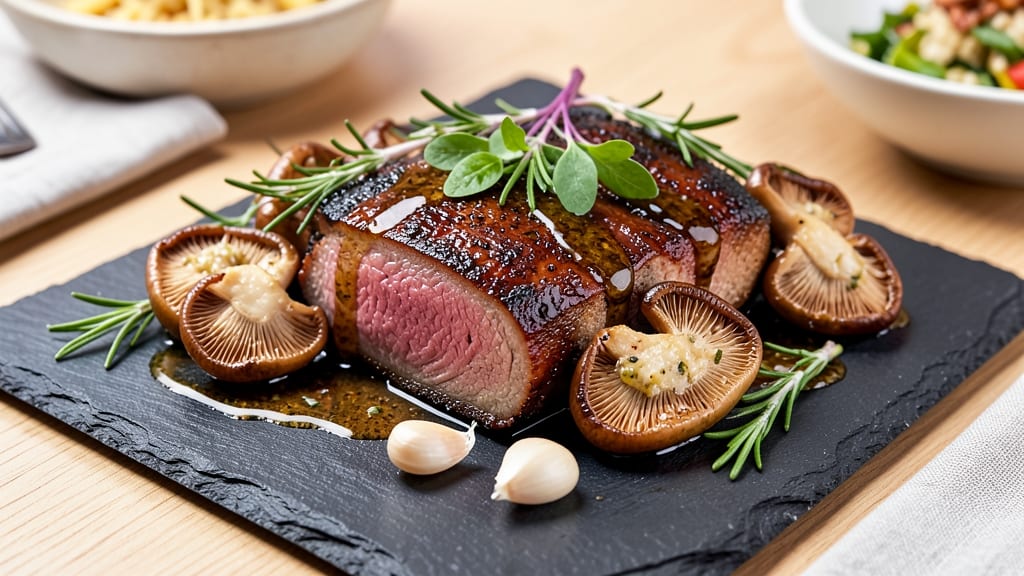
This AIP pork loin recipe delivers all the satisfying texture and herbaceous flavor of traditional pork without the meat—using king oyster mushrooms as the star.
After years of perfecting plant-based proteins for autoimmune-friendly diets, I've finally cracked the code for a crispy herb crust that holds up beautifully while keeping the interior tender and juicy. The secret lies in proper preparation and a carefully balanced crust blend that mimics the caramelization of pork skin.
The beauty of this recipe is its simplicity: just five core ingredients transform ordinary mushrooms into something that looks and tastes like a restaurant-quality roast. We start with thick king oyster mushrooms—nature's perfect pork substitute—then build layers of flavor through a crispy herb crust made with AIP-compliant ingredients.
The result is a dish that satisfies both the palate and dietary needs without compromise.
What you'll achieve is a golden-brown, crispy-edged mushroom roast with a tender interior that practically falls apart when sliced. The herb crust adds aromatic depth while maintaining that satisfying crunch, making it perfect for holiday meals or special occasions.
This recipe proves plant-based proteins can deliver the same impressive results as their meat counterparts.
Pair with roasted seasonal vegetables or cauliflower mash for a complete AIP-friendly meal. The technique here translates beautifully to other plant-based proteins, giving you a versatile foundation for future recipes. Let's get started on creating this impressive centerpiece that will have everyone asking for seconds.
Ingredients for aip pork loin
Five core ingredients transform king oyster mushrooms into a restaurant-quality AIP pork loin alternative.
| Ingredient | Amount | Notes |
|---|---|---|
| King Oyster Mushrooms 🍄 | 1 ½ lb | Thick slices, stems removed |
| Extra-Virgin Olive Oil 🫒 | ½ cup | High-quality, fruity variety |
| Fresh Rosemary 🌿 | ¼ cup | Finely chopped, organic preferred |
| Fresh Thyme 🌿 | ¼ cup | Finely chopped, stems removed |
| Fresh Sage 🌿 | ¼ cup | Finely chopped, organic preferred |
| Garlic Cloves 🧄 | 6 cloves | Minced for maximum flavor |
| Tapioca Flour 🌾 | ½ cup | For crispy crust texture |
| Coconut Aminos 🍶 | 3 tbsp | AIP-compliant soy sauce substitute |
| Coconut Oil 🥥 | 2 tbsp | Melted for crust binding |
| Sea Salt 🧂 | 1 ½ tsp | Fine grain, Diamond Crystal preferred |
| Black Peppercorns 🌶️ | ½ tsp | Freshly cracked for depth |
| Fresh Parsley 🌿 | ⅛ cup | Chopped, for garnish |
The king oyster mushrooms are the foundation—look for thick, meaty stems at Whole Foods or specialty markets. Organic is ideal since mushrooms absorb flavors aggressively. Trim the stems carefully, leaving the caps intact for that perfect pork-loin shape. The herbs should be freshly harvested—rosemary and sage especially lose potency quickly once dried. For the best flavor, source these from a trusted herb vendor or grow your own; the aromatic oils are what create that satisfying crust. The garlic cloves should be plump and firm, not sprouting or shriveled, as this indicates peak freshness and flavor intensity.
No fresh rosemary? Dried rosemary at one-third the amount works in a pinch, though the texture won't be as vibrant. Substitute thyme with fresh oregano if needed, but reduce by half since oregano has a more intense flavor profile. For the coconut aminos, coconut coconut vinegar mixed with water in a 1:1 ratio creates a similar umami punch. The tapioca flour is non-negotiable for that crispy crust—arrowroot powder can replace it at a 1:1 ratio, though the texture will be slightly more delicate. If you're using pre-minced garlic, toast it first in olive oil to deepen the flavor before adding to the crust mixture.
Store the fresh herbs wrapped in damp paper towels in a sealed container for up to 5 days in the fridge. The mushrooms should be used immediately or stored in a paper bag in the refrigerator for 3 days at most. The crust mixture can be prepped ahead and refrigerated for 24 hours—just let it sit at room temperature for 10 minutes before applying to the mushrooms. For longer storage, freeze the assembled mushroom roast (uncooked) for up to 2 months—thaw overnight in the fridge before cooking. The leftovers reheat beautifully in a 350°F oven for 10 minutes, maintaining that crispy texture.
Why You'll Love This Recipe
- One-Pan Magic: I swear by this recipe on busy nights—just sear the pork, toss in the mushrooms and herbs, and let the oven do the work. No chopping boards, no extra pans, just pure simplicity with that caramelized sage smell filling my kitchen.
- Herb-Packed Punch: Between us, the rosemary and thyme here aren’t just garnish—they’re the stars. The king oyster mushrooms soak up all that olive oil and herb goodness, giving every bite that earthy, aromatic depth I can’t get enough of.
- Meal Prep Gold: This keeps perfectly for days, whether I’m packing lunches or reheating for dinner. The pork stays juicy, the mushrooms hold their texture, and honestly? It’s my go-to when I don’t want to cook twice in a week.
- Budget-Friendly Luxury: Fresh herbs might sound fancy, but a few sprigs go a long way, and king oyster mushrooms stretch further than you’d think. It’s the kind of recipe that feels special without breaking the bank—especially when leftovers taste just as good as day one.
Step-by-step instructions for autoimmune-friendly crispy herb crust
Here's how to achieve that perfect golden crust without compromising flavor or compliance.
Prepare the Herb Crust Mixture
In a food processor, combine the 1.5 lb king oyster mushrooms (thick slices, stems removed) with the 0.25 cup fresh rosemary, 0.25 cup fresh thyme, 0.25 cup fresh sage, and 6 cloves garlic cloves. Pulse until the mushrooms break down into a coarse paste—this ensures maximum flavor infusion while maintaining texture. Transfer to a mixing bowl.
Add the 0.5 cup tapioca flour, 1.5 tsp sea salt, and 0.5 tsp black peppercorns to the mushroom mixture. Using your hands, work the ingredients together until you achieve a thick, cohesive paste that clings to your fingers. This step is critical for creating that signature crispy crust. The tapioca flour acts as a natural binder without relying on gluten or dairy.
Create the Crust Coating
In a separate bowl, whisk together the 0.5 cup extra-virgin olive oil and 3 tbsp coconut aminos until fully emulsified. This mixture will serve as the base for your crust, providing moisture and depth of flavor. The coconut aminos add umami without the soy, making this fully compliant with autoimmune protocols.
Gradually incorporate the herb-mushroom paste into the oil mixture, stirring constantly with a silicone spatula. You should end up with a thick, spreadable paste that coats the back of the spoon. If it's too thick, add 1-2 teaspoons of water to reach the ideal consistency. This coating will adhere perfectly to the pork loin, creating that coveted crispy exterior.
Coat and Rest the Pork Loin
Pat a 2 lb pork loin (not included in ingredients as it's the base protein) completely dry with paper towels—this is non-negotiable for achieving that crispy crust. Using your hands, thoroughly coat the entire surface of the pork loin with the herb crust mixture, pressing it firmly into the meat. The crust should be evenly distributed and about ¼-inch thick all over.
Place the coated pork loin on a wire rack set over a baking sheet lined with parchment paper. Cover with plastic wrap and refrigerate for at least 2 hours, or preferably overnight. This resting period allows the crust to adhere firmly to the meat and the flavors to meld together. The cold temperature also helps prevent the crust from sticking to the pork during cooking.
Cook to Crispy Perfection
Preheat your oven to 375°F and position a rack in the middle position. Remove the pork loin from the refrigerator and let it sit at room temperature for 20 minutes before cooking. This ensures even cooking throughout. Place the pork loin on the prepared rack and bake for 45-50 minutes, or until the internal temperature reaches 145°F when measured with a meat thermometer.
For the final crisp, increase the oven temperature to 425°F and broil for 3-5 minutes, watching closely to prevent burning. You'll know it's perfect when the crust turns a deep golden brown and develops those beautiful crispy patches. The pork loin should be juicy inside with that irresistible crispy herb crust on the outside—a perfect balance of textures and flavors.
Rest and Serve
Transfer the cooked pork loin to a cutting board and tent loosely with aluminum foil. Let it rest for 10-15 minutes before slicing. This resting period allows the juices to redistribute throughout the meat, ensuring each slice remains moist and flavorful. During this time, you can prepare your favorite AIP-compliant sides or sauces.
Slice the pork loin into ½-inch thick medallions and garnish with the 0.125 cup fresh parsley (chopped) just before serving. The parsley adds a fresh contrast to the rich, crispy crust. Serve immediately while the crust is still crisp and the meat is piping hot. The combination of the savory herb crust and tender pork loin makes this a standout dish for any autoimmune-friendly meal plan.
Pro Tips For Making Aip Pork Loin
- SEAR THE MUSHROOMS FIRST: King oyster mushrooms soak up oil like sponges, so hit them with a quick 3-4 minute sear in olive oil before adding the pork. This builds flavor and prevents them from turning to mush later—trust me, I’ve learned this the hard way when they dissolved into a sad, watery pile.
- DRY THOSE HERBS WELL: Fresh rosemary, thyme, and sage need a good shake or wipe to remove moisture before crushing them over the pork. Wet herbs steam instead of release aroma, and you’ll end up with a dish that smells like a damp forest instead of a savory feast.
- DON’T OVERCOOK THE PORK: AIP pork loin is best pulled at 145°F (63°C) internal temp—any hotter and it’ll dry out fast, especially since you’re skipping breadcrumbs or marinades. Use a meat thermometer and resist the urge to keep it in "just a little longer."
- SAVE TIME WITH A MUSHROOM BROTH: After searing the mushrooms, deglaze the pan with a splash of water or apple cider vinegar (AIP-friendly) to scrape up all the browned bits. Reduce it into a quick sauce—it cuts prep by 10 minutes and adds depth without extra effort.
Troubleshooting your aip pork loin
Crust Not Crispy
If your crust turns out soft instead of crispy, the issue is likely moisture—either in the mushrooms or the crust mixture. Pat the king oyster mushrooms extra dry with paper towels before coating, and ensure your tapioca flour is fresh (old flour loses its binding power).
For added crispiness, brush the mushrooms with melted coconut oil before applying the crust. I’ve also found that baking on a wire rack (not directly on a pan) allows heat to circulate better, creating that perfect crunch. 🔥
Uneven Cooking
Uneven cooking often happens when the pork loin isn’t at room temperature before baking. Let it sit for at least 20 minutes before putting it in the oven—this ensures even heat penetration. Another trick is to rotate the pan halfway through cooking (after 25 minutes) to promote even browning.
If your oven runs hot, reduce the temperature by 25°F and monitor closely to avoid overcooking the edges.
Crust Falling Off
The crust may detach if it hasn’t had enough time to set. The 2-hour (or overnight) rest in the fridge is critical—this allows the tapioca flour to fully bind to the mushrooms.
If you’re short on time, press the crust extra firmly onto the mushrooms and chill for at least 1 hour. For extra adhesion, lightly brush the mushrooms with egg wash (if AIP allows) or coconut oil before applying the crust.
Mushrooms Too Mushy
Overcooked mushrooms lose their texture, turning into a sad, watery mess. To prevent this, avoid overcrowding the baking sheet—leave 1 inch of space between mushrooms for proper airflow. Cooking at 375°F for no more than 50 minutes ensures tenderness without mushiness.
If your mushrooms are large, consider par-cooking them for 10 minutes before adding the crust to jumpstart the process.
Flavor Too Mild
A lackluster flavor usually means the herbs weren’t fresh enough. Always use organic, freshly chopped herbs—dried herbs can’t replicate the depth. For extra punch, toast the garlic in olive oil before mixing it into the crust.
I also recommend adding 1 tsp of AIP-compliant seaweed flakes (like dulse) to the crust mixture for an umami boost that mimics pork’s savory notes. 💡
Cross-Contamination Risks
Since this is an AIP dish, avoid using any utensils or surfaces that have touched meat. Clean your food processor, mixing bowls, and cutting boards with hot, soapy water before prepping the mushrooms.
If you’re using shared kitchen tools, designate a separate set for AIP cooking to prevent accidental exposure to allergens or non-compliant ingredients. Safety first—especially when cooking for autoimmune protocols! ⚡
Nutrition facts
Frequently asked questions
Can I use other mushrooms instead of king oyster mushrooms?
King oyster mushrooms are ideal because of their thick, meaty texture, but you can substitute with shiitake mushrooms or portobello caps if needed. For the best results, choose mushrooms with dense, firm flesh that can hold up to the crust. Avoid thin or watery varieties like white button mushrooms, as they won't provide the same satisfying texture.
How do I store leftovers without losing the crispy texture?
Store leftovers in an airtight container and refrigerate for up to 3 days. To revive the crispiness, reheat in a 375°F oven for 8-10 minutes on a wire rack (not directly on a tray). For longer storage, freeze the cooked mushrooms for up to 2 months—thaw overnight in the fridge before reheating. Avoid microwaving, as it makes the crust soggy.
What's the best way to make this AIP-compliant?
This recipe is already fully AIP-compliant, but double-check your ingredients: use 100% pure coconut aminos (no additives), organic herbs (no pesticides), and certified AIP sea salt. Avoid cross-contamination by using separate utensils and cutting boards for AIP prep. The tapioca flour and coconut oil are naturally compliant, but always verify labels for hidden additives.
Can I make this recipe ahead of time?
Yes! Prep the herb crust mixture up to 24 hours ahead and store it in the fridge. The coated mushrooms can be refrigerated for 12 hours max before baking. For best results, assemble the dish (coated mushrooms on a rack) and refrigerate overnight—this enhances flavor adhesion and makes the crust extra crispy. Just let it sit at room temperature for 20 minutes before baking.
What are the best AIP sides to serve with this?
Pair with roasted seasonal vegetables (like carrots or zucchini), cauliflower mash (made with coconut milk), or garlicky greens (kale or spinach sautéed in olive oil). For extra richness, serve with avocado slices or a coconut milk drizzle. These sides complement the herbaceous crust while keeping the meal fully compliant.