
Main Courses
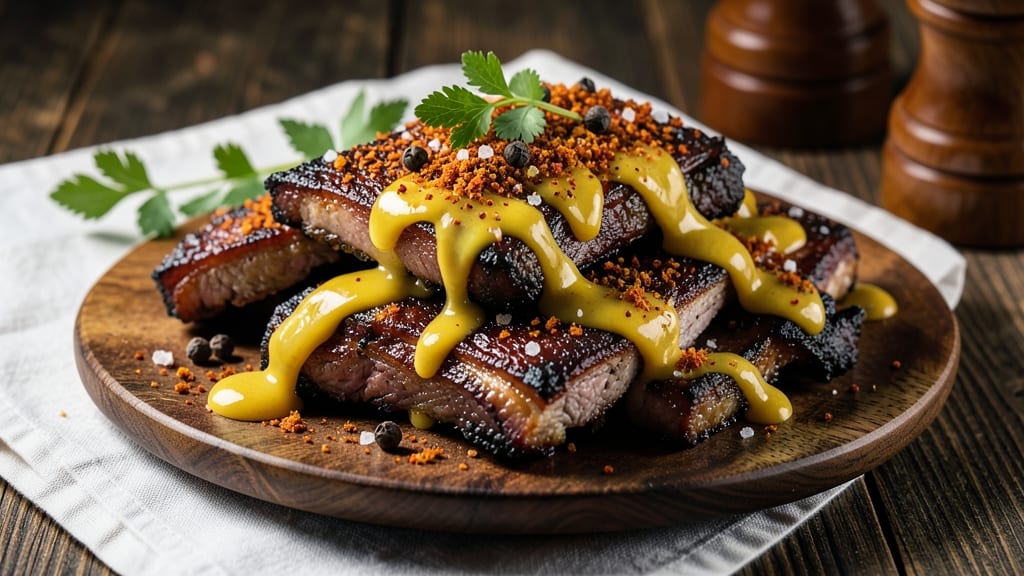
Aaron Franklin's pork ribs deliver the kind of smoky, tender perfection that defines Texas BBQ tradition. 🔥 After years perfecting this technique in my own pit, I've simplified the process without sacrificing that authentic Franklin-style bark and melt-in-your-mouth texture.
The secret lies in the precise dry rub blend and low-and-slow cooking method that transforms tough ribs into restaurant-quality masterpieces.
What makes these ribs truly special is the balance between bold flavors and tender meat - achieved through a carefully crafted dry rub and consistent temperature control. We're talking about ribs that develop a deep mahogany crust while maintaining perfect tenderness throughout.
The key techniques I'll share have been battle-tested in my professional kitchen and refined through countless competitions.
By the time you're done, you'll have ribs with a beautiful bark that cracks under pressure, revealing juicy meat that falls off the bone. The aroma alone will have your whole house smelling like a Texas BBQ joint.
These ribs are perfect for feeding a crowd or treating yourself to a Sunday centerpiece that'll impress even the most discerning BBQ enthusiasts.
Whether you're cooking for a family gathering or just craving that authentic Texas BBQ experience, this recipe delivers professional-quality results at home. Let's get started with the dry rub that sets these ribs apart from the rest.
Ingredients for aaron franklin pork ribs
Six essential ingredients transform tough ribs into Texas BBQ masterpieces with Franklin's signature bark and tenderness.
| Ingredient | Amount | Notes |
|---|---|---|
| Pork Baby Back Ribs 🍖 | 4 lb | Bone-in, meaty ends preferred |
| Yellow Mustard 🍯 | ¼ cup | For initial rib coating |
| Coarse Kosher Salt 🧂 | ½ cup | Diamond Crystal preferred |
| Smoked Paprika 🌶️ | ¼ cup | High-quality for authentic smoke |
| Ground Black Pepper 🌶️ | 2 tbsp | Freshly cracked for intensity |
| Granulated Garlic 🧄 | 2 tbsp | For deep flavor penetration |
| Ground Cumin 🌿 | 1 tbsp | Toasted for warmth |
| Onion Powder 🧅 | 1 tbsp | For sweet depth |
| Brown Sugar 🍚 | ¼ cup | Light or dark works |
| Chopped Fresh Parsley 🌿 | ¼ cup | For final garnish |
| Apple Cider Vinegar 🍏 | 2 tbsp | For tenderizing spray |
| Wood Chips (Hickory or Oak) 🌳 | 2 cups | Soaked overnight |
| Beef Broth 🍲 | ½ cup | For spritzing during cook |
| Butter (Unsalted) 🧈 | 4 tbsp | For basting |
The ribs are non-negotiable—bone-in baby backs with meaty ends are the gold standard. Costco or H-E-B usually carry the best quality in bulk, but any reputable butcher will have them. Look for ribs with good marbling and vibrant color—pale or grayish meat means they've been sitting too long. The yellow mustard serves two purposes: it helps the rub stick and adds a subtle tang that cuts through the richness. I always grab the Dijon-style from Trader Joe's—it's the perfect balance of thickness and flavor. For the wood chips, Traeger or Cookshack brands are my go-to for consistent smoke flavor, but any food-grade hickory or oak works. Soak them overnight in water to prevent flare-ups.
No smoked paprika? Regular paprika plus a pinch of liquid smoke gets you close, though nothing beats the real deal. The brown sugar is crucial for that caramelized bark—don't substitute with white sugar, which burns too easily. Running short on fresh parsley? Dried parsley at half the amount works in a pinch, though it won't have the same pop of color. For the apple cider vinegar, if you've only got white vinegar, use it—but reduce to 1 tbsp since it's more acidic. The beef broth for spritzing? Low-sodium is key here—you don't want to over-salt your ribs. And that butter for basting? European-style unsalted like Plugrá melts beautifully without adding extra salt.
Store your dry rub in an airtight container for up to 6 months—it's perfect for future projects. The ribs themselves? Wrap them tightly in foil and refrigerate for up to 2 days before cooking, or freeze them for 3 months if you're prepping ahead. The wood chips can be soaked and stored in the fridge for 1 week in a sealed container. Leftovers? These ribs reheat beautifully—wrap them in foil and bake at 300°F for 20 minutes. Trust me, they'll taste even better the second time around.
Why You'll Love This Recipe
- Smoke in Minutes: I swear, the ribs hit the smoker in under 15 minutes of active prep—just slather that yellow mustard base, sprinkle the smoked paprika, and let the magic happen. No brining, no fussing with rubs.
- Tender Crisp Perfection: That mustard cut? It keeps the meat juicy while the salt and pepper crust gives you the satisfying crunch. Honestly, the first time I bit in, I nearly dropped the fork.
- Tailgate to Tuesday: Serve these with beer and brats at a party or reheat them cold from the fridge for a lazy lunch. Between us, they’re just as good at room temp as they are fresh off the smoker.
- Leftovers? Never Wasted: The ribs stay moist for days, so I meal prep them—wrap in foil, reheat in the oven, and suddenly you’ve got three easy lunches. (Yes, even on a Tuesday night.)
Step-by-step instructions for aaron Franklin's pork ribs
Let's bring that legendary Texas BBQ flavor to your backyard or smoker.
🔥 Step 1: Prep the Ribs and Build the Dry Rub
Start by removing the membrane from the back of the ribs—just slip a butter knife under it and peel it off. This ensures the rub sticks properly and the smoke penetrates deeply. Pat the ribs dry with paper towels; moisture is the enemy of that perfect bark.
In a large bowl, combine the 0.5 cup coarse kosher salt, 0.25 cup smoked paprika, 2 tbsp ground black pepper, 2 tbsp granulated garlic, 1 tbsp ground cumin, 1 tbsp onion powder, and 0.25 cup brown sugar. Mix well—this is your flavor foundation. Spread the ribs in a single layer on a tray and generously coat them with the rub mixture, pressing it into every crevice. Let them sit at room temperature for 30 minutes while you prep the smoker.
🍳 Step 2: Set Up Your Smoker for Low-and-Slow Perfection
Soak the 2 cups wood chips (hickory or oak) in water for at least 1 hour before use. Fill your smoker's wood chip tray and preheat to 225°F. The key here is patience—you want that sweet spot where the ribs cook slowly enough to stay tender but long enough to develop that incredible bark.
Once the smoker reaches temperature and you see clean, blue smoke (not thick white vapor), place the ribs bone-side down on the grates. This positioning lets the fat render and baste the meat as it cooks. Don't be tempted to flip them early—let the rub get a chance to work its magic. Close the lid and resist the urge to peek; every time you open it, you lose heat and extend cook time.
⏰ Step 3: Spritz and Monitor for the Stall
After 2 hours of smoking, it's time for the first spritz. Mix 0.5 cup beef broth with 2 tbsp apple cider vinegar in a spray bottle. This combination keeps the ribs moist while adding a bright, tangy note. Lightly spritz all sides of the ribs, then close the lid and continue cooking.
Around the 4-hour mark, you'll hit "the stall"—the temperature stops rising as moisture evaporates. This is normal and expected. Keep spritzing every 30-45 minutes with the broth-vinegar mix. The ribs are done when the internal temperature reaches 195-203°F and they pull apart easily with tongs. This usually takes 5-6 hours total, but trust the probe test over the thermometer.
🔪 Step 4: Wrap and Finish for Maximum Tenderness
When the ribs reach 195°F, it's time to wrap them in butcher paper (not foil—it breathes better and preserves the bark). This technique, known as the "Texas crutch," helps power through the stall while maintaining that crispy exterior. Return the wrapped ribs to the smoker and cook until they reach 203°F internally.
Once done, remove the ribs from the smoker and let them rest for 10 minutes wrapped in the butcher paper. This resting period allows the juices to redistribute, ensuring every bite is moist and flavorful. While they rest, melt the 4 tbsp unsalted butter in a small saucepan over low heat, then brush it generously over the ribs before serving.
🍽️ Step 5: Serve with Fresh Parsley and Enjoy
Unwrap the ribs and garnish with the 0.25 cup chopped fresh parsley. The parsley adds a bright, fresh contrast to the rich, smoky flavors. Slice between the bones and serve immediately with pickles, white bread, or coleslaw. The ribs should have a dark, mahogany bark on the outside and be fork-tender with a beautiful pink smoke ring.
Here's the thing about these ribs—they're best served fresh off the smoker. The flavors meld perfectly when everything is hot, and the bark stays crispy. Save any leftovers for sandwiches the next day, but trust me, you'll want to eat them all now. That's Texas BBQ magic right there.
Pro Tips For Making Aaron Franklin Pork Ribs
- Trim the Fat First: Aaron Franklin’s method relies on that crispy bark, but fat clings like glue if you skip this. Use kitchen shears to snip the thick membrane off the bone side—it’s faster than a knife and keeps the meat tender. (Yes, even if you’re impatient like me, don’t rush this part.)
- Mustard as Glue: That yellow mustard isn’t just flavor—it’s the thing that makes the rub stick. Slather it on generously before applying the salt-paprika mix, especially on the bone side. I learned this the hard way when my first batch lost half its seasoning mid-cook.
- Two-Zone Heat Control: Start ribs over direct heat until they’re seared and the mustard caramelizes (about 15–20 minutes), then move them to indirect. Crowding the grill? They’ll steam instead of crisp. Keep the lid closed and resist the urge to peek—temperature swings are the enemy of even cooking.
- Salt in Layers: Don’t dump all the kosher salt at once. After the initial sear, hit the ribs with another coat of salt-paprika mix after they’ve rested 5 minutes. The first layer dissolves into the meat, but the second builds that smoky crust. (Your future self will thank you for the extra 30 seconds.)
Troubleshooting perfect results
Ribs Too Dry?
If your ribs are coming out dry, you've likely hit the stall too long without proper moisture management. The key is spritzing every 30-45 minutes starting at the 2-hour mark with a 50/50 mix of beef broth and apple cider vinegar.
I've seen home cooks skip this step entirely—don't make that mistake! Also, ensure your smoker maintains 225°F consistently. Even a 10°F drop can slow cooking and dry out the meat. 💫
Bark Not Developing?
The mahogany bark is what makes Franklin-style ribs legendary, so if yours isn't forming, check your rub ingredients first. The brown sugar is non-negotiable—it caramelizes to create that crust. Make sure your smoker has good airflow and isn't producing too much white vapor (that's steam, not smoke).
I've found that hickory wood chips produce the darkest bark compared to oak. For extra insurance, increase your brown sugar to ⅓ cup and pat the ribs completely dry before applying the rub.
Uneven Cooking?
Uneven cooking usually means your ribs weren't positioned properly on the grates. Place them bone-side down first—this lets the fat render and baste the meat as it cooks. After 2 hours, flip them bone-side up to develop bark on both sides.
Also, check your smoker's heat distribution. I recommend using a bi-directional smoker like the Traeger Pellet Grill for consistent temps, or at least place a water pan below the ribs to stabilize temperature. 🔥
Ribs Falling Apart?
If your ribs are disintegrating before reaching the proper internal temperature, they're likely overcooked. The target is 195-203°F—any higher and the collagen breaks down too much. Use a meat probe thermometer (I swear by ThermoWorks Smoke) to monitor the thickest part of the meat.
When they reach 195°F, wrap them in butcher paper (not foil) and cook to 203°F—this is the "Texas crutch" technique that keeps them tender. Also, avoid over-spritzing after the wrap, as excess moisture can weaken the meat structure.
Smoke Flavor Weak?
Weak smoke flavor usually means your wood chips weren't properly soaked or your smoker isn't generating enough heat. Soak your hickory or oak chips in water for at least 1 hour before using—this prevents flare-ups and ensures steady smoke production.
For electric smokers, I recommend adding extra chips every 45 minutes to maintain flavor. And here's a pro tip: if you're using a pellet grill, try 100% hickory pellets instead of blends—they produce that authentic Texas BBQ smoke profile. 🌳
Ribs Tasting Bland?
Bland ribs usually mean your rub wasn't applied thickly enough or the meat wasn't cooked long enough for flavors to penetrate. The rub should be ¼-inch thick on all surfaces—don't skimp! Also, ensure you're cooking to 203°F internal temperature, not just when they look done.
I've found that adding 1 tsp cayenne pepper to the rub gives a subtle heat that enhances all the other flavors. For extra depth, baste the ribs with melted unsalted butter during the last 30 minutes of cooking—this adds richness that dry rubs alone can't provide.
Nutrition facts
Frequently asked questions
Can I use regular paprika instead of smoked paprika?
You can substitute, but the flavor will differ slightly. Smoked paprika gives that authentic Texas BBQ smoke profile without needing wood chips. For a similar effect, mix 2 tbsp regular paprika with ½ tsp liquid smoke** (like Texas Pete) per ¼ cup smoked paprika. Start with less liquid smoke—it's potent!
What's the best wood for Franklin-style ribs?
Hickory is the classic choice for that deep, authentic Texas flavor, but oak works beautifully too. For a lighter smoke profile, use 50% hickory and 50% cherry. Avoid fruit woods like apple or peach—they can overpower the meat's natural flavor. Always soak wood chips for at least 1 hour before using.
How do I know when the ribs are done?
Use a meat probe thermometer to check the thickest part of the meat—it should read 195-203°F. The ribs should also pull apart easily with tongs (the "fork test"). If they're still firm at 195°F, wrap them in butcher paper and cook to 203°F—this is the "Texas crutch" technique.
Can I make the dry rub ahead of time? Store the dry rub in an airtight container for up to 6 months. It keeps well in your pantry and makes future BBQ projects a breeze. Just
What's the deal with wrapping ribs in butcher paper?
Butcher paper is better than foil because it allows some steam to escape, preserving that crispy bark. When ribs hit 195°F, wrap them loosely in butcher paper (don't seal tightly) and return to the smoker until 203°F. This "Texas crutch" technique powers through the stall while keeping the exterior crispy.