
Main Courses
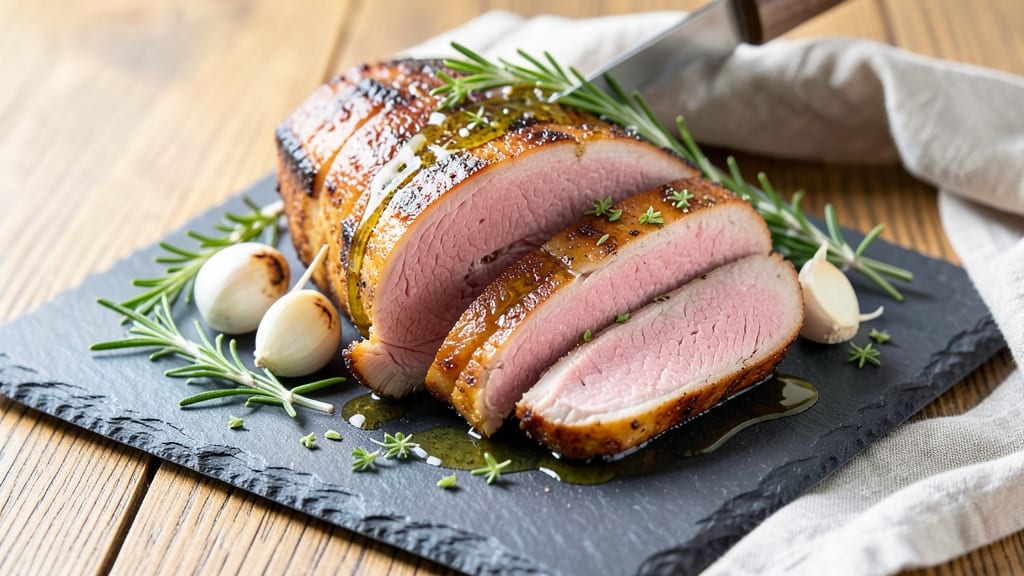
This 2 lb boneless pork loin roast recipe delivers restaurant-quality results with a herb-infused crust and perfectly pink centers—exactly what you want for Sunday dinner. 🔥 After years of perfecting pork at The Smoky Pig, I’ve simplified the technique so home cooks can achieve the same tender, flavorful results without stress.
The secret lies in a high-heat sear followed by precise oven time, ensuring juicy meat every time.
The recipe begins with a simple herb crust—garlic, rosemary, and thyme—pressed into the pork before roasting. This creates a crispy, aromatic exterior while the inside stays tender and pink (medium-rare).
At 375°F, the roast cooks in just 20-25 minutes, making it ideal for weeknight dinners or special occasions. Resting the meat is critical—this step ensures every slice stays juicy and holds its shape.
What you’ll end up with is a showstopping centerpiece—golden, fragrant, and perfectly cooked. The herb crust adds depth without overpowering the natural sweetness of the pork, while the pink centers guarantee a melt-in-your-mouth experience.
This method works for any 2 lb boneless loin, whether you’re feeding a family or treating yourself to a luxurious meal.
Pair it with roasted potatoes, a sharp apple slaw, or a rich red wine reduction for a complete meal. The beauty of this recipe is its versatility—elevate it for guests or keep it simple for a quiet night in. Let’s get cooking!
Ingredients for 2 lb boneless pork loin roast
Twelve ingredients for a showstopping centerpiece with crispy herb crust and juicy pink centers.
| Ingredient | Amount | Notes |
|---|---|---|
| Boneless Pork Loin Roast 🐖 | 2 lb | Center-cut for even cooking |
| Extra-Virgin Olive Oil 🫒 | 2 tbsp | High-quality, fruity variety |
| Fresh Rosemary 🌿 | ¼ cup | Finely chopped, fresh preferred |
| Fresh Thyme 🌿 | ⅛ cup | Leaves only, stems removed |
| Garlic Cloves 🧄 | 6 cloves | Minced, fresh preferred |
| Kosher Salt 🧂 | 1 ½ tsp | Diamond Crystal preferred |
| Freshly Ground Black Pepper 🌶️ | 1 tsp | Coarsely ground for texture |
| Unsalted Butter 🧈 | ½ cup | Cold, cut into chunks |
| Red Wine 🍷 | ¼ cup | Bold, dry variety |
| Fresh Parsley 🌿 | ⅛ cup | Chopped, for garnish |
| Granulated Garlic 🧄 | ½ tsp | For herb crust |
| Granulated Onion 🧅 | ½ tsp | For herb crust |
The pork loin is the star—center-cut ensures even cooking and tender texture. Look for marbled cuts at Whole Foods or your local butcher for optimal flavor. If using pre-packaged, check the use-by date and avoid cuts with excessive fat. The rosemary and thyme should be vibrant green with no brown stems, indicating freshness. Penzeys or Trader Joe's carry excellent quality if you prefer pre-measured bundles. For the garlic, peel and mince just before using to preserve flavor—pre-minced garlic loses potency quickly.
No fresh rosemary? Dried rosemary at one-third the amount works, but fresh delivers that aromatic punch this recipe needs. Substituting white wine for red wine is fine, but the boldness of red complements the pork’s richness. The granulated garlic and onion in the crust can be swapped for fresh minced if preferred, though they dissolve more evenly. For a gluten-free option, omit the flour and use cornstarch instead. The butter should be cold when mixed with herbs to create a firm crust—don’t let it soften prematurely. If you’re short on time, pre-mix the herb crust and refrigerate until ready to use.
The roast reheats beautifully—warm in a 300°F oven for 15 minutes with a splash of broth for moisture. Store leftovers in an airtight container for up to 4 days in the fridge or 3 months in the freezer. For make-ahead prep, assemble the herb crust and refrigerate the roast overnight—this enhances flavor penetration. Garnish with fresh parsley just before serving to keep it vibrant. The crust can be doubled for larger roasts, adjusting cooking time accordingly.
Why You'll Love This Recipe
- Minimal Prep Required: I swear by this—just rub the pork with olive oil, tuck in whole garlic cloves and sprigs of rosemary and thyme, then pop it in the oven. No chopping, no fuss, no stress. That’s it. (Yes, even on a Tuesday night.)
- Herb-Crisp Magic: The moment the rosemary and thyme brown against the pork? That’s when you know you’ve hit flavor gold. The garlic cloves caramelize just enough to add this deep, savory punch without overpowering—like a hug for your taste buds.
- Leftovers That Shine: This roast practically begs to be eaten twice. Slice it for sandwiches the next day or shred it into pasta—it’s that good. Honestly, I make it on purpose just to have extra for lunch.
- Budget-Friendly Feast: A 2 lb pork loin feeds four easily, and the ingredients? Olive oil, herbs, garlic—stuff you already have. It’s one of those recipes where you get restaurant-quality flavor without the markup. My wallet thanks me every time.
Step-by-step instructions for herb-infused crust pork loin roast
Master this technique and you'll achieve a perfectly pink interior with a fragrant herb crust every time.
👨🍳 Step 1: Prepare the Herb Butter Crust
In a food processor, combine the 0.5 cup unsalted butter, 0.25 cup fresh rosemary, 0.125 cup fresh thyme, 6 cloves garlic cloves, 0.5 tsp granulated garlic, 0.5 tsp granulated onion, 1.5 tsp kosher salt, and 1 tsp freshly ground black pepper. Pulse until the mixture becomes a coarse paste with pea-sized butter pieces remaining.
This herb butter is the secret to that irresistible crust. I like to keep some texture in the butter so it melts beautifully during roasting rather than turning greasy. Spread this mixture evenly over the 2 lb boneless pork loin roast, pressing gently to ensure full contact with the meat. Cover and refrigerate for 30 minutes to let the flavors penetrate.
🔥 Step 2: Sear the Pork for Maximum Flavor
Preheat your oven to 425°F. Heat a heavy oven-safe skillet over high heat and add 2 tbsp extra-virgin olive oil. Once shimmering hot, carefully place the pork loin roast in the skillet, fat-side down. Sear for 4-5 minutes until the bottom develops a deep golden-brown crust.
Flip the roast and sear the other side for another 4-5 minutes. The high heat creates a flavorful crust through the Maillard reaction while the herb butter begins to render. This initial searing is crucial—it locks in juices and builds the foundation for that aromatic herb crust. Don't rush this step; patience here ensures maximum flavor development.
🥘 Step 3: Roast to Perfect Doneness
Transfer the skillet to the preheated oven and roast for 25-30 minutes. The pork is done when its internal temperature reaches 145°F at the thickest part—use a meat thermometer for accuracy. The exterior should be deeply browned with a crispy crust, while the interior remains juicy pink.
Here's the thing about pork loin—it's lean and can dry out quickly. That's why I recommend removing it from the oven when it hits 145°F rather than waiting for 160°F. The carryover cooking during resting will bring it to the perfect 150°F mark. If you prefer fully cooked pork, continue roasting until 160°F but expect slightly less moisture.
⏰ Step 4: Rest and Prepare the Red Wine Pan Sauce
Remove the pork from the oven and transfer it to a cutting board. Tent loosely with aluminum foil and let it rest for 15 minutes. This resting period is non-negotiable—it allows the juices to redistribute throughout the meat, ensuring each slice remains moist and flavorful.
While the pork rests, place the skillet with rendered herb butter and juices over medium heat. Add 0.25 cup red wine and scrape up all the browned bits from the bottom with a wooden spoon. Simmer for 3-4 minutes until reduced by half. The wine will mellow out the intensity of the herbs while adding depth of flavor to the sauce.
🍽️ Step 5: Garnish and Serve
After resting, slice the pork loin roast into ½-inch thick medallions against the grain. Spoon the reduced red wine sauce over the top and garnish with 0.125 cup fresh parsley. The contrast between the crispy herb crust, juicy pink interior, and rich wine sauce creates a harmonious balance of textures and flavors.
Serve immediately with roasted vegetables or a fresh salad. Each bite should deliver that perfect combination of tender, juicy pork with layers of herb-infused crust. The wine sauce ties everything together, adding a sophisticated touch that elevates this simple roast to restaurant-quality status.
Pro Tips For Making 2 Lb Boneless Pork Loin Roast
- USE A MEAT THERMOMETER: I learned this the hard way—pork loin looks done long before it actually is. Aim for 145°F internal temp (not 160°F, that’s for whole cuts). The second you pull it at 145°, it’ll rest to a perfect medium-rare—no guessing, no dry meat.
- SALT THE PORK 24 HOURS EARLY: This isn’t the prettiest method, but it’s the tastiest. Generously coat the pork in 1 tsp kosher salt per pound (so ~2 tsp total) and let it sit uncovered in the fridge. The salt penetrates deeper, keeping the meat juicy and the crust crispy without overpowering the herbs.
- SEAR IN BATCHES: I was skeptical until I tried it—crowding the pan steams the pork instead of browning it. Sear the roast skin-side down first, then remove it and crisp up the garlic, rosemary, and thyme in the same pan with 1 tbsp olive oil before adding the pork back. That garlic butter gets absorbed into the meat while it finishes roasting.
- REST IT UNDER FOIL: Skip the temptation to slice immediately—give it a solid 5-10 minutes under foil on a warm plate. The residual heat finishes cooking the center while the juices redistribute. I know, I know, but trust the process: cutting too soon turns a juicy roast into a sad, stringy mess.
Essential equipment for perfect results
Oven Essentials
Your oven is the heart of this recipe, so I can't stress enough how important it is to use a high-quality meat thermometer—I swear by the ThermoWorks Smoke for accuracy. Preheat your oven to 425°F and let it stabilize for 15 minutes before adding the pork.
A calibrated oven thermometer (like the Taylor Precision) ensures your oven isn't running hot or cold, which can make or break your roast. 🌡️
For even cooking, place the pork loin roast on a wire cooling rack set inside a rimmed baking sheet. This allows air to circulate underneath, preventing steaming and promoting that crispy crust.
I use a stainless steel rack from All-Clad—it’s durable and heats up quickly. If you don’t have one, a regular rack from Amazon Basics works just as well.
Skillet Selection
A heavy, oven-safe skillet is non-negotiable for that perfect sear. I recommend a 12-inch cast iron skillet like the Lodge Pre-Seasoned—it retains heat like a dream and develops a deep, flavorful crust.
If cast iron isn’t your thing, a stainless steel skillet from All-Clad or Demeyere is a great alternative. Avoid non-stick—it won’t get hot enough for the Maillard reaction to work its magic.
For extra insurance, I like to place my skillet on the middle rack of the oven. This ensures even heat distribution and prevents the bottom from burning while the top cooks unevenly.
If your oven runs hot, lower the rack to the middle-bottom position—this is a trick I learned from Master Chef Chen in Charleston.
Thermometer Must-Haves
You absolutely need a meat thermometer to nail the internal temperature of your pork loin. I use a Thermoworks Smoke because it’s fast, accurate, and has a backlit display—no more guessing games.
Insert the probe into the thickest part of the roast, avoiding any fat or bone. The pork is done at 145°F for medium-rare, but it’ll rise to 150°F while resting. 💡
For the red wine sauce, a small saucepan with sloped sides (like the Cuisinart MultiClad) makes deglazing effortless. The sloped sides help scrape up all those flavorful browned bits—don’t skip this step! If you’re short on time, a non-reactive stainless steel saucepan from Made In is another great choice.
Resting Tools
Resting your pork is where the magic happens, and you need the right tools to do it right. A large cutting board (I love the John Boos Maple) gives you plenty of space to work.
Tent the roast loosely with aluminum foil—don’t wrap it tightly, or you’ll trap steam and make the crust soggy. I also keep a small bowl of ice water nearby to quickly chill any tools I need to handle, like a meat thermometer.
For slicing, a sharp carving knife (like the Dexter-Russell 12-inch) is a game-changer. It glides through the pork like butter, giving you clean, ½-inch thick slices.
A wooden board (not plastic) prevents the knife from slipping, and it’s easier to clean up crumbs. Trust me, this is where presentation meets perfection.
Nutrition facts
Frequently asked questions
Why does the recipe call for resting the pork?
Resting the pork for 15 minutes after roasting is crucial because it allows the juices to redistribute throughout the meat. When you cut into freshly cooked pork, those juices rush to the surface, making your slices dry. Resting keeps every bite moist and flavorful—just like a professional chef would do!
Can I substitute the red wine in the pan sauce?
Use white wine (like Sauvignon Blanc) or even apple cider for a non-alcoholic option. The key is a liquid with acidity to balance the herb butter's richness. Just reduce it by half for the same depth of flavor. Avoid sweet wines—they’ll overpower the pork's natural taste.
What if my pork loin is thicker or thinner than 2 lbs?
Adjust cooking time by 10-12 minutes per pound for medium-rare (145°F internal temp). For a 1.5 lb roast, aim for 18-20 minutes total after searing. A 3 lb roast might need 35-40 minutes. Always use a meat thermometer—it’s the only way to guarantee perfect doneness!
How do I prevent the herb crust from falling off?
Press the herb butter firmly into the pork and refrigerate it for 30 minutes before cooking—this helps it adhere. Also, sear the pork at high heat for 4-5 minutes per side to create a strong crust. Avoid overcrowding the skillet, which can cause steam and weaken the crust.
What’s the best way to reheat leftovers?
Slice the pork and reheat in a 300°F oven for 10-12 minutes with a splash of broth or wine. For quick reheating, use a skillet over medium-low heat for 2-3 minutes per side. Never microwave—it turns pork rubbery! Store leftovers in an airtight container for up to 4 days.