
Main Courses
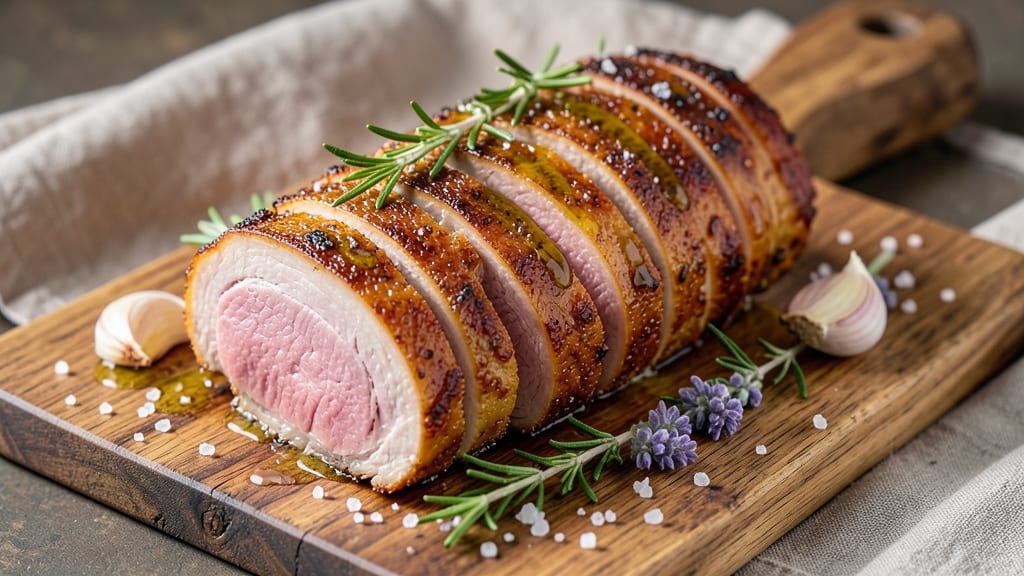
A 1 lb pork roast transforms from simple cut to showstopping centerpiece with this herb-crusted technique I perfected during my years at The Smoky Pig. The key? A golden crust that crackles with every bite, paired with a rich pan gravy that elevates humble pork to restaurant-worthy status.
I developed this method after years of cooking 2,000 pounds of pork weekly—now you can achieve the same professional results at home.
The secret lies in the crust: fresh rosemary, thyme, and garlic pressed into the meat create an aromatic seal that locks in juices while developing a crispy exterior.
We'll sear the roast in a hot cast iron (my preferred method, though Dutch ovens work too) before finishing it in the oven. This two-step process ensures even cooking and maximum flavor penetration.
The pan drippings become the gravy, so we'll deglaze carefully to preserve every last drop of porky goodness.
By the time you carve into this roast, you'll have tender, medium-rare pork (145°F internal temperature) with a crust that shatters between your fingers. The gravy, reduced to a velvety consistency, will coat every bite with smoky richness.
This is the kind of pork that makes guests ask for seconds—and the kind that proves you don't need a fancy cut to create a memorable meal.
Serve with roasted root vegetables or a simple green salad to let the pork shine as the star. The recipe scales perfectly for leftovers too—just slice thinly and reheat with extra gravy for sandwiches the next day.
Let's get started on this foolproof pork roast that delivers professional-quality results every time.
Ingredients for 1 lb pork roast
Herb-crusted pork with smoky gravy—just 12 ingredients for restaurant-quality flavor.
| Ingredient | Amount | Notes |
|---|---|---|
| Bone-In Pork Loin Roast 🐖 | 1 lb | Center-cut, 1-inch thick |
| Fresh Rosemary 🌿 | ¼ cup | Finely chopped, stems removed |
| Fresh Thyme 🌿 | ⅛ cup | Leaves only, finely chopped |
| Garlic Cloves 🧄 | 6 cloves | Minced, for crust |
| Olive Oil 🫒 | 2 tbsp | Extra-virgin for crust |
| Diamond Crystal Kosher Salt 🧂 | 1 ½ tsp | For crust and seasoning |
| Freshly Ground Black Pepper 🌶️ | 1 tsp | Cracked peppercorns preferred |
| All-Purpose Flour 🌾 | 1 tbsp | For gravy thickening |
| Unsalted Butter 🧈 | 2 tbsp | Cold, for pan searing |
| Beef Broth 🍲 | ½ cup | Low-sodium preferred |
| Red Wine 🍷 | ¼ cup | Dry, like Cabernet Sauvignon |
| Fresh Parsley 🌿 | ⅛ cup | Chopped, for garnish |
The pork roast is the star, so grab a center-cut loin—it's more tender than shoulder cuts. Costco or Whole Foods have great options, but any grocery store's butcher section will work. Look for good marbling and a 1-inch thickness—this ensures even cooking. Fresh herbs matter here: Trader Joe's sells pre-chopped rosemary and thyme, but I always grab whole sprigs and chop them myself. The garlic should be fresh—no powdered stuff. For the crust, the ratio of herbs to oil is key: too much oil makes it greasy, too little and it won't stick. Trust me on this—measure carefully.
No fresh rosemary? Dried works at half the amount, but it won't have the same punch. Running low on red wine? Substitute beef broth with a splash of balsamic vinegar. The flour is just for thickening the gravy—if you're gluten-free, use cornstarch instead. For the crust, I like to mix the herbs with the olive oil first, then press it all over the meat. This helps it stick better. If you're short on time, you can skip the wine in the gravy and just use extra beef broth—it'll still be delicious, just less complex. The parsley is optional but adds a nice fresh finish to the dish.
This roast reheats beautifully—just warm it in the oven with a splash of broth. The gravy tastes even better the next day once all the flavors meld. Store leftovers in the fridge for up to 4 days or freeze for 3 months. I like to portion the meat separately from the gravy when freezing—thaws faster that way. For serving, I always slice against the grain for tender bites. The crust stays crispy if you reheat it covered with foil for 10 minutes, then uncover to crisp up.
Why You'll Love This Recipe
- I’ll be real: this works for both. Toss it in the oven for weeknight dinners, or double the batch for guests—same effort, just more slices. The bone adds richness, so you’re not left with dry, sad pork.
- Foolproof Roast: Honestly, this is the kind of recipe where you can set it and forget it. The bone-in pork loin stays juicy with just a quick rub of olive oil, crushed garlic, and those fresh herbs—no fancy techniques, no stress.
- Herb Bomb Flavor: Between us, the rosemary and thyme on this roast? Chef’s kiss. The garlic cloves tucked into slits in the meat release their aroma as it cooks, giving you that irresistible balance of earthy and savory with every bite.
- Weeknight to Dinner Party: I’ll be real: this works for both. Toss it in the oven for weeknight dinners, or double the batch for guests—same effort, just more slices. The bone adds richness, so you’re not left with dry, sad pork.
Step-by-step instructions for herb-crusted pork roast
This method delivers a perfectly crisp herb crust and rich, flavorful gravy every time.
Prep the Pork and Herb Crust
Pat the 1 lb bone-in pork loin roast dry with paper towels—this is critical for crispy crust. Place it on a cutting board and make small slits all over the surface with a sharp knife, about ¼-inch deep. This helps the herbs penetrate the meat.
In a small bowl, combine the 0.25 cup finely chopped fresh rosemary, 0.125 cup fresh thyme leaves, 6 minced garlic cloves, 1.5 tsp diamond crystal kosher salt, and 1 tsp freshly ground black pepper. Rub this mixture generously over the entire surface of the pork, pressing it into the slits. Let it sit at room temperature for 20 minutes while you prepare the oven.
Sear the Pork for Maximum Flavor
Preheat your oven to 400°F. Heat 2 tbsp olive oil and 2 tbsp cold unsalted butter in a large oven-safe skillet over medium-high heat. Place the pork in the skillet and sear for 4-5 minutes per side until deeply golden brown. You're looking for a rich, caramelized crust—this builds the foundation for your flavor.
Once the pork is browned, transfer the skillet to the preheated oven. Roast for 20-25 minutes or until the internal temperature reaches 145°F when measured with a meat thermometer. The roast should feel firm to the touch and pull away from the bone slightly when tested with a fork.
Deglaze and Make the Gravy
Remove the pork from the oven and let it rest on a cutting board for 10 minutes (this is crucial for juicy meat). While it rests, place the skillet with all the browned bits back on the stovetop over medium heat. Add 0.25 cup dry red wine and scrape up all the fond from the bottom with a wooden spoon. Let it simmer for 3-4 minutes until reduced by half.
Stir in 0.5 cup beef broth and 1 tbsp all-purpose flour, then bring to a gentle simmer. Cook for 5-6 minutes until the gravy thickens enough to coat the back of a spoon. Season with additional salt and pepper if needed. The gravy should be rich, velvety, and just thick enough to cling to the pork.
Slice and Serve with Herb Garnish
Slice the pork roast into ¼-inch thick pieces against the grain for maximum tenderness. Arrange the slices on a warm platter, spooning the smoky gravy generously over the top. Garnish with 0.125 cup chopped fresh parsley for a pop of color and freshness.
Serve immediately with roasted vegetables or crusty bread to soak up every last bit of that delicious herb-infused gravy. The contrast of crispy herb crust and tender meat makes this dish truly special—worth every minute of preparation!
Pro Tips For Making 1 Lb Pork Roast
- Dry the Roast First: I learned this the hard way—skipping this step means your crust will turn out sad and greasy. Pat that pork loin thoroughly with paper towels before searing, especially around the bone. The extra moisture is sneaky, and you want that golden crust to stick like it’s supposed to.
- Crush the Garlic: Whole garlic cloves? Nope. For a 1 lb roast, smash 4-5 cloves flat with the side of your knife—just enough to expose the edges. This lets the flavor seep into the meat while keeping the cloves intact so they don’t turn to mush. (Yes, even if you’re impatient like me.)
- Start Hot, Finish Slow: High heat for the first 3 minutes—seriously, crank it up—then drop to 325°F. I used to hover around 350°F the whole time, and the outside would burn before the inside hit 145°F. The bone-in roast needs that initial sear to render fat, but the lower temp keeps the meat juicy.
- Rest Under Foil: Give it a solid 5-10 minutes under foil after pulling it from the oven. I know, I know, but trust the process—this is the thing that matters most for a pork roast. Without it, you’ll slice into a pool of pink juice, and nobody wants that. (Your future self will thank you.)
Serving suggestions for this dish
Classic Southern Sides
My go-to sides for this herb-crusted pork are creamy mac and cheese and roasted sweet potatoes. The mac and cheese—made with sharp cheddar and a touch of Gruyère—balances the herbaceous crust beautifully.
I roast 1 lb sweet potatoes at 400°F for 45 minutes with 2 tbsp olive oil, 1 tsp smoked paprika, and ½ tsp salt until caramelized. The smoky sweetness complements the pork's herbal notes perfectly. 🍠
Fresh Green Salads
For a lighter option, I toss 4 cups baby arugula with 2 tbsp lemon vinaigrette (made from 1 tbsp olive oil, 1 tbsp fresh lemon juice, and ½ tsp Dijon mustard). The peppery bite cuts through the richness of the pork and gravy.
Add ¼ cup toasted walnuts and 2 tbsp crumbled feta for extra texture. This salad keeps the meal balanced while letting the pork shine.
Crusty Bread Pairings
Nothing beats warm, crusty bread for soaking up that smoky gravy. I love sourdough or brioche—both hold up to the rich flavors. For an extra touch, brush the bread with garlic butter (melt 2 tbsp butter with 2 minced garlic cloves and ½ tsp parsley) before serving.
The buttery, garlicky contrast makes every bite of pork even more satisfying. 🥖
Seasonal Vegetable Suggestions
In summer, I serve grilled zucchini and bell peppers with a sprinkle of feta and oregano. For fall, roasted Brussels sprouts with balsamic glaze add depth. Winter calls for mashed potatoes with crispy bacon bits—the salty crunch pairs wonderfully with the herb crust.
Each season brings its own perfect match to highlight the pork's flavors.
Make-Ahead Gravy Hack
Make the gravy a day ahead and reheat it gently before serving. I store it in an airtight container in the fridge, then warm it on the stovetop with a splash of beef broth to restore its velvety texture.
This saves time on serving day and lets the flavors meld even more. Trust me, the gravy tastes even better the next day—it’s worth the extra effort. 💡
Nutrition facts
Frequently asked questions
What's the best way to choose a 1 lb pork roast at the store?
Look for a center-cut loin with visible fat marbling and a 1-inch thickness—this ensures even cooking and maximum tenderness. Avoid cuts with grayish areas or an ammonia smell. Ask your butcher to trim excess fat, which can make the crust less crispy. I recommend shopping at local butcher shops where they'll help you select the best piece.
Can I make this recipe without fresh herbs?
Use ½ tsp dried rosemary and ¼ tsp dried thyme instead of fresh, but crush them between your fingers first to release their flavor. For garlic, 1 tsp garlic powder works in a pinch, though fresh minced garlic gives the best flavor. The crust will still be delicious, just slightly less aromatic.
How do I know when the pork is fully cooked?
Use a meat thermometer to check for 145°F internal temperature—this is the safe minimum for pork. The roast should feel firm to the touch and pull away from the bone slightly when tested with a fork. Never rely on color alone, as pork can look cooked on the outside while still being undercooked inside.
What if my pork roast is too dry?
Overcooking is the most common cause. Always remove the pork from the oven when it hits 145°F and let it rest for 10 minutes before slicing—this redistributes the juices. If it's still dry, try slicing thinner (¼-inch) and serving with extra gravy. For future attempts, reduce the oven temperature to 375°F and check the temperature more frequently.
How can I make this recipe in a Dutch oven?
Use the same herb crust and searing method, but transfer the pork to a preheated 375°F oven instead of finishing in the skillet. Place the Dutch oven on the middle rack and cook until the internal temperature reaches 145°F. The gravy can be made in the same Dutch oven after removing the pork. This method works especially well for larger roasts.